


resources
Innovations in Smart Construction: Building the Future Today
23 Dec 2025

Building the future is happening right now, and it's looking pretty different from how we used to do things. Construction sites are getting way smarter, thanks to all sorts of new tech. We're talking about robots, drones, and some pretty clever software that's changing how buildings go up, how green they are, and how safe it is for the folks working on them. This whole smart construction movement is a big deal, and it's not just about making things faster or cheaper, though that's happening too. It's about building better, more sustainable places for all of us.
Key Takeaways
- Smart construction leverages technologies such as drones, robots, and AI to enhance building precision and operational efficiency.
- Focusing on green materials and energy-saving designs is an integral component of modern smart construction.
- Prefabricated and modular building methods expedite construction timelines and can simultaneously reduce expenditures without compromising quality.
- Innovative safety tools, including wearable technologies and virtual reality training simulations, are significantly augmenting site safety for personnel.
- Smart construction is instrumental in fostering the development of interconnected, highly efficient urban environments through the strategic deployment of IoT and intelligent systems.
Revolutionizing Construction With Smart Technologies
Construction has long been synonymous with creation, but now, the contemporary paradigm emphasizes intelligent construction practices. We're witnessing a profound transformation, moving away from traditional methods towards utilizing advanced technology to render processes faster, safer, and substantially more precise. It’s not just about mere technological novelties; it’s about employing tools that fundamentally reshape how we plan, build, and manage projects across the entire project lifecycle—truly, a paradigm shift, wouldn't you agree?
Drones and Robotics for Enhanced Accuracy
Indeed, the efficacy of any endeavor is significantly amplified by the appropriate instrumentation. Drones, for instance, serve as invaluable aerial observation platforms for construction sites. They can meticulously map out terrain, monitor project progression, and even inspect hard-to-reach spots, thereby eliminating human exposure to hazards. The use of a Multispectral drone can further enhance terrain analysis and project monitoring. This translates to a reduction in errors and offers a far more comprehensive understanding of ground-level operations. Then there are robots, they're certainly not just for factories anymore. On construction sites, robots can execute repetitive or hazardous operations, like laying bricks or welding, with unparalleled accuracy. This not only accelerates timelines but also leads to a tangible reduction in workplace incidents.
- Aerial surveys for site planning
- Automated bricklaying and welding
- Real-time progress monitoring
- Inspection of dangerous or inaccessible areas
The integration of drones and robotics is demonstrably catalyzing a substantial decrease in on-site errors and project delays.
AI-Powered Project Management
Managing a construction project bears a striking resemblance to orchestrating a complex symphony. There are a multitude of interdependent variables, intricate schedules, and diverse resources to meticulously track. Artificial Intelligence (AI) is emerging as a transformative aid. AI can analyze voluminous datasets—encompassing elements such as meteorological forecasts, material inventories, and workforce availability—to proactively identify potential challenges before their manifestation. This assists project managers in informing more robust decision-making, optimizing resource deployment more effectively, and ensuring seamless operational continuity. It’s like having a super-smart assistant who can see around corners, isn't it?
AI is instrumental in transforming raw data into actionable insights, thereby facilitating proactive problem-solving rather than reactive fixes.
Building Information Modeling (BIM) for Collaboration
Prior to commencing any construction, a meticulously developed plan is indispensable. Building Information Modeling, or BIM, is far more comprehensive than a mere three-dimensional model. It’s a digital representation of a building that includes a rich tapestry of data—from structural details to energy performance. The particularly compelling aspect of BIM is how it fosters unparalleled collaboration among all project stakeholders. Architects, engineers, contractors, and even the building owners can access and iteratively refine a unified digital model. This makes communication significantly enhanced, helps catch design conflicts early on (e.g., a pipe intersecting a structural beam), and mitigates expensive revisions in subsequent project phases. Ultimately, its essence lies in achieving comprehensive digital synchronization across the entire project team.
- Centralized digital model for all stakeholders
- Early detection of design conflicts
- Improved communication and coordination
- Lifecycle data management for the building
Sustainable Building Through Smart Construction
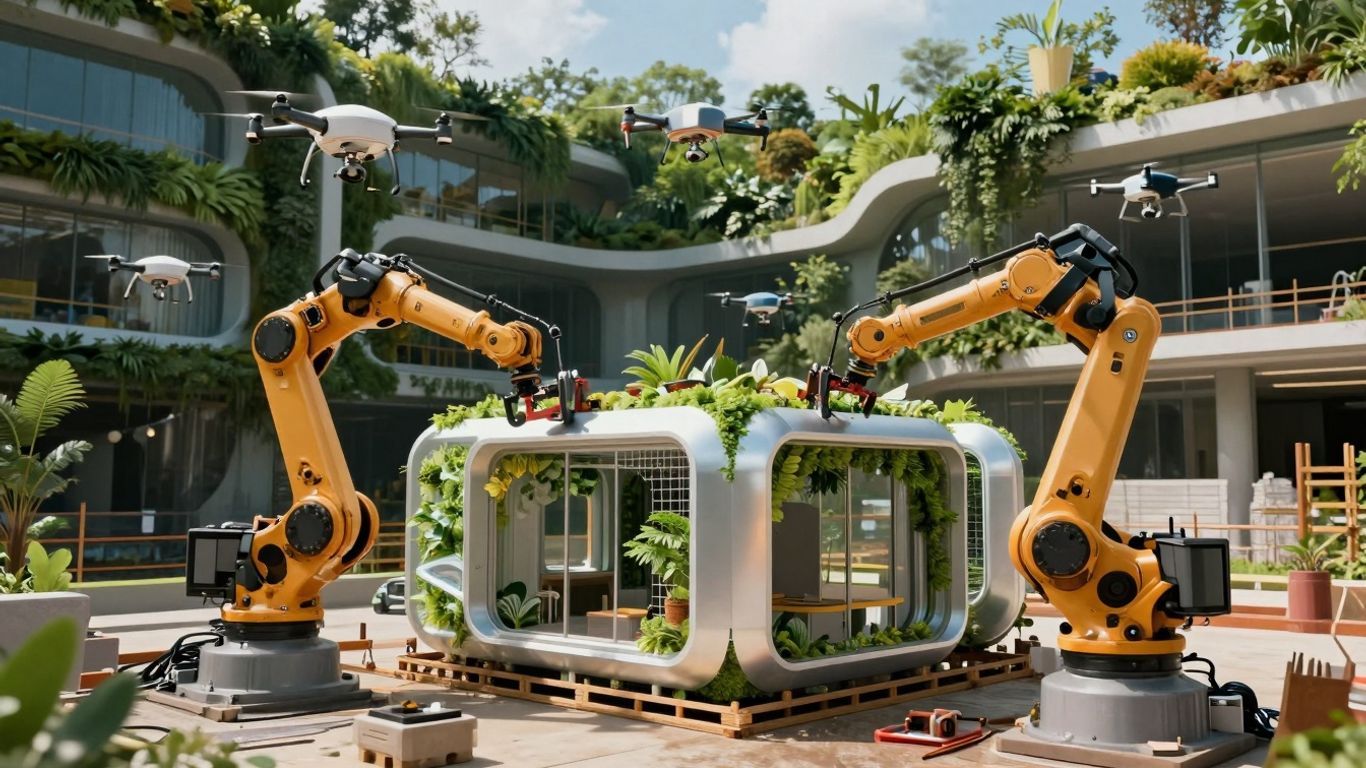
Smart construction transcends the conventional objectives of accelerated timelines or cost reduction; it's also a pivotal force in enhancing the ecological sustainability of structures. Consider, for instance: minimized waste generation, optimized energy consumption, and the adoption of environmentally benign materials. These are no longer theoretical concepts; they're evolving into industry benchmarks, owing to continuous technological advancements. How impactful is that?
Green Building Materials and Practices
One of the most profound impacts of smart technology is observed in the selection and utilization of construction materials. For example, employing Building Information Modeling (BIM) from the project's inception means we can plan material needs with meticulous precision. This prevents excessive procurement—a common precursor to landfill waste. Some companies are already using 3D models to determine the precise quantities of rebar and concrete they need, effectively eliminating the customary 10-15% material surplus. This translates directly to a significant reduction in material waste, and it means a diminished embodied carbon footprint in the building.
AI is also instrumental in fostering the development of enhanced, environmentally friendlier concrete formulations. By analyzing different mixes, AI can help identify optimal proportions for reducing cement content, which is a significant contributor to CO₂ emissions. Some systems are capable of recommending alternative supplementary cementitious materials, such as fly ash or slag, which are commonly industrial byproducts. This not only minimizes carbon emissions but also yields considerable cost efficiencies.
- Precise material ordering through BIM reduces waste.
- AI optimizes concrete mixes for lower carbon footprints.
- Using recycled or byproduct materials becomes easier with data analysis.
Smart construction enables a proactive approach to waste management from the initial project phases by ensuring precise material procurement tailored to actual requirements. Consequently, less material remains unutilized and ultimately destined for disposal.
Net-Zero Energy Buildings
Smart construction is fundamental to the realization of structures that achieve net-zero energy consumption annually. This commitment commences at the design phase and extends throughout its operational lifespan. Digital tools facilitate the modeling and predictive analysis of building performance, allowing us to optimize critical systems such as HVAC and lighting from inception. Once the building is erected, technologies like IoT sensors and AI provide real-time monitoring of energy consumption. They can dynamically adjust systems in response to occupancy levels, external climatic conditions, or the operational status of specific equipment. This continuous optimization process means the building uses energy with significantly greater efficiency, propelling us closer to that aspirational net-zero target.
- Digital twins help simulate and verify energy performance.
- IoT sensors provide real-time data for operational adjustments.
- AI algorithms can automate energy management for optimal efficiency.
Water Conservation Innovations
Water is another critical resource where smart construction offers enhanced management capabilities. On the construction site itself, meticulous planning can markedly diminish the water required for activities such as dust suppression or concrete formulation. Upon building completion, intelligent systems can meticulously monitor water consumption. Consider, for example, smart irrigation systems for landscaping that deploy water precisely when necessary, or sophisticated leak detection systems capable of alerting building managers to anomalies before they escalate into significant concerns. These technologies contribute to water conservation across the building's entire lifecycle—a dual benefit that underscores both environmental stewardship and tangible cost savings for occupants.
Efficiency and Quality in Modular Construction
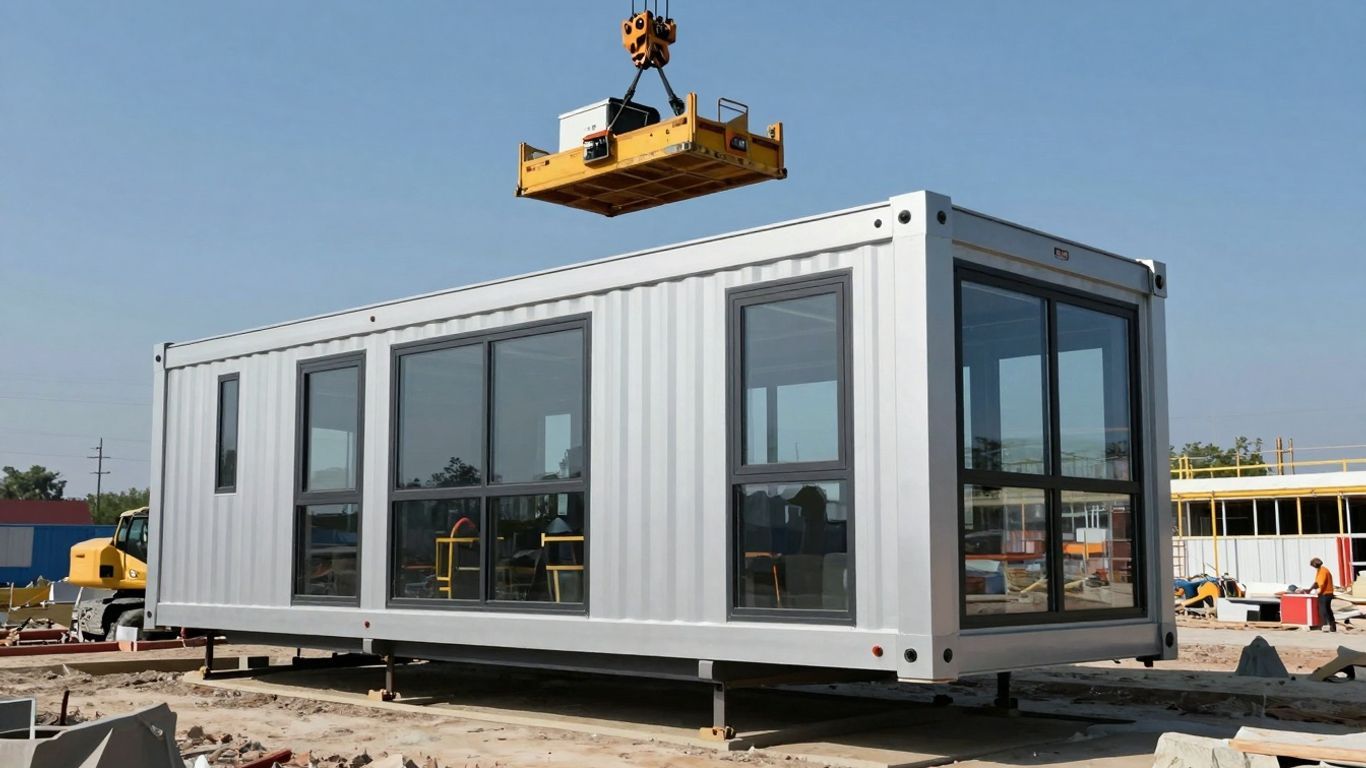
Modular construction, often referred to as prefabrication, is fundamentally reshaping traditional building methodologies. Rather than undertaking comprehensive construction on a potentially disorderly, weather-vulnerable site, a substantial proportion of building components are fabricated within a controlled factory environment. This inherent control facilitates accelerated production schedules and superior quality assurance.
Faster Build Times with Prefabrication
Visualize, for a moment, the conventional process of residential construction. Historically, projects would entail various teams sequentially visiting the site over weeks, often contending with meteorological delays and protracted material lead times. With prefabrication, components such as wall panels, bathroom pods, or even complete room units are meticulously manufactured off-site. These modules are then transported to the construction site and assembled. This can cut down on-site construction time by as much as 50%. Essentially, it resembles the precise assembly of an expansive, high-quality modular system.
Cost Efficiency Through Off-Site Fabrication
Manufacturing components in a factory setting offers several significant economic advantages. Firstly, material consumption is optimized due to precision cutting, and any minimal waste generated can often be recycled directly within the factory. Secondly, the requirement for on-site labor is reduced, thereby curtailing labor costs and diminishing the necessity for extensive on-site infrastructure. Furthermore, the indoor nature of factory production eliminates costly delays and financial penalties associated with adverse weather conditions. Such inherent predictability significantly enhances budgetary accuracy.
Enhanced Quality Control in Manufacturing
Fabricating components within a factory setting liberates the process from the unpredictable rigors of external elements. Operatives benefit from superior tooling, uniform illumination, and a consistently stable environment. This consequently elevates the standard of craftsmanship. Rigorous quality checks can be systematically integrated at multiple stages of the manufacturing process, facilitating early detection of any deviations. This means the modules arriving on-site are already built to a high standard, thereby diminishing the likelihood of expensive remedial work in subsequent project phases.
Here's a look at some common modular components:
- Wall panels
- Floor cassettes
- Bathroom pods
- Kitchen units
- Staircases
The shift towards factory-built components means construction sites are becoming more like assembly areas. This change not only expedites project timelines but also enables the delivery of a more consistent and dependable final product, representing a clear benefit for all stakeholders.
Prioritizing Safety in Smart Construction
Construction has historically been characterized by inherent risks, but smart technologies are intervening to render job sites demonstrably safer. This paradigm shift extends beyond mere accident prevention; it’s about creating an environment where workers can perform their duties with enhanced assurance and diminished physical exertion. The integration of advanced tech is fundamentally changing how we approach safety on site—a truly transformative development.
Wearable Technology for Worker Monitoring
Envision a safety helmet that meticulously monitors a worker's core temperature and registers falls, or a high-visibility vest equipped with integrated vital sign tracking capabilities. Such advanced functionalities are now a tangible reality, thanks to wearable technology. These devices can dispatch immediate, real-time alerts to supervisory personnel if a worker is exhibiting indicators of thermal stress, critical fatigue, or involvement in an incident. This instantaneous feedback mechanism enables prompt intervention, potentially averting severe injuries or tragic outcomes. It's like having an invisible safety net that's always active, wouldn't you say?
Virtual Reality for Immersive Safety Training
Traditional safety training typically relies on didactic presentations and video demonstrations, which can often struggle to convey visceral understanding. Virtual Reality (VR) profoundly alters this dynamic. Donning a VR headset allows workers to immerse themselves in highly realistic simulations of hazardous scenarios—like working at heights or operating heavy machinery in complex conditions. They can rehearse critical emergency procedures and cultivate an acute awareness of potential hazards in a thoroughly safe and meticulously controlled virtual environment. This hands-on, immersive experience significantly reinforces safety protocols with far greater efficacy than conventional, passive learning methodologies.
Exoskeletons for Reduced Physical Strain
Construction work is inherently physically arduous. Operations such as the manual handling of heavy materials, engagement in ergonomically challenging postures, or the execution of repetitive motions frequently precipitate long-term physical strain and occupational injuries. Exoskeletons—fundamentally wearable robotic frameworks—are engineered to provide robust physical augmentation for workers. They can enhance intrinsic strength, mitigate biomechanical loads on the body, and bolster physical endurance. This translates to reduced end-of-day fatigue and a demonstrably lower incidence of musculoskeletal disorders, thereby enabling workers to sustain their health and productivity throughout their professional tenure. This technology is a transformative innovation for worker well-being and job site safety.
The shift towards smart safety solutions transcends mere regulatory compliance; it cultivates a profoundly proactive safety culture. By leveraging granular data derived from wearable devices, evaluating the efficacy of VR training modules, and assessing the impact of exoskeleton deployment, companies can iteratively refine and optimize their comprehensive safety strategies. This data-driven approach facilitates trend identification, enables proactive mitigation of potential issues prior to their escalation into problems, and ultimately fosters the development of a more resilient and secure workforce.
Smart Cities and Integrated Infrastructure
Smart construction extends far beyond the confines of individual building projects; it fundamentally addresses the intricate connectivity and dynamic interaction of structures within a broader urban ecosystem. It is within this expansive context that the concepts of smart cities and integrated infrastructure gain paramount importance, employing advanced technologies to foster more efficient, habitable, and sustainable urban landscapes. One might conceptualize this as the sophisticated nervous system of a contemporary metropolis—wherein buildings and infrastructure seamlessly communicate to optimize overall urban functionality.
IoT Sensors for Real-Time Monitoring
Central to the paradigm of smart cities are Internet of Things (IoT) sensors. These ubiquitous devices are strategically deployed across the urban fabric, amassing critical data spanning traffic density, environmental air quality, energy consumption patterns, and waste accumulation metrics. This continuous influx of real-time intelligence empowers urban administrators with unparalleled situational awareness. How do cities truly manage to function without this level of insight?
- Traffic Management: Sensors can detect traffic jams and automatically adjust traffic light timings to ease congestion. They can also inform navigation apps, helping drivers find faster routes.
- Environmental Monitoring: Air and water quality sensors can alert authorities to pollution issues, allowing for quick responses.
- Waste Management: Smart bins can signal when they're full, optimizing collection routes and reducing unnecessary trips.
- Energy Grids: Sensors help monitor and manage electricity distribution, identifying potential outages and optimizing energy flow.
This real-time data serves as the indispensable bedrock for informed, intelligent decision-making about how a city operates.
Connected Public Spaces and Urban Living
Beyond mere infrastructure, intelligent technologies are profoundly transforming the very fabric of public spaces and the rhythms of daily urban life. Picture, if you will, public parks featuring adaptive smart lighting that dynamically adjusts in response to pedestrian activity, or public transit systems furnishing real-time arrival data directly to commuters' mobile devices. Smart buildings themselves play a contributive role by optimizing internal environments for enhanced comfort and energy efficiency, and by seamlessly integrating with essential municipal services such as waste management or emergency response networks. Doesn't this paint a picture of a truly responsive urban landscape?
Smart technologies are reimagining urban environments, evolving them from static constructions into dynamic, highly responsive ecosystems. This integration is meticulously designed to elevate the quality of life for urban residents by making cities more efficient, convenient, and sustainable.
Intelligent Transportation Systems
Transportation is an intrinsic facet of urban existence, and smart construction is instrumental in enhancing its efficacy and user experience. This encompasses a broad spectrum of innovations, from intelligent traffic signaling and sophisticated parking systems to interconnected public transit networks and robust infrastructure designed to support electric vehicles. The overarching objective is to curtail travel durations, minimize vehicular emissions, and alleviate the inherent stressors associated with urban mobility.
- Smart Parking: Apps and sensors guide drivers to available parking spots, reducing the time spent circling and the associated emissions.
- Connected Public Transit: Real-time tracking and communication systems provide accurate arrival times and service updates to passengers.
- Electric Vehicle (EV) Infrastructure: Smart charging stations can manage energy demand and optimize charging schedules.
- Autonomous Vehicle Support: Future infrastructure will need to communicate with self-driving cars to ensure safe and efficient operation.
The Future Landscape of Smart Construction
Advancements in 3D Printing Technology
We're seeing some remarkable advancements unfolding with 3D printing in construction. It's no longer confined to the fabrication of miniature prototypes; it now encompasses the additive manufacturing of entire wall systems, complex building components, and even complete residential structures. This technology is redefining the velocity of construction and expanding the frontiers of architectural design possibilities. Consider, for instance, intricate geometries that would prove prohibitively costly or structurally unfeasible using conventional methodologies—3D printing renders them eminently achievable. It also means less material waste, which is a significant boon for sustainability initiatives.
Digital Twins for Predictive Maintenance
Visualize possessing an exact, real-time digital replica of a constructed asset or a critical piece of infrastructure. This concept precisely describes a 'digital twin'. These virtual counterparts are meticulously constructed utilizing continuous data streams emanating from sensors integrated within the physical asset. Through the unwavering monitoring of this data, it becomes possible to predict potential component failures or maintenance requirements prior to their actual occurrence. This consequently leads to reduced unforeseen downtime, diminished repair expenditures, and an extended operational lifespan for our buildings and infrastructure. It offers, in essence, a prescient analytical tool for comprehensive facility management.
AI and Machine Learning for Predictive Analytics
Artificial intelligence (AI) and machine learning are emerging as the intellectual core driving more intelligent construction paradigms. They can analyze prodigious volumes of data derived from historical project benchmarks, prevailing site conditions, and even sophisticated meteorological forecasts to generate more accurate predictive models. This is instrumental across a spectrum of applications, ranging from more precise cost estimation and efficient resource allocation to the proactive identification of potential project risks before their full manifestation. The ability to anticipate issues and optimize processes is what sets leading construction firms apart.
The construction industry is moving towards a future where data is not merely amassed, but actively leveraged to inform more intelligent decisions across every phase of a project lifecycle. This shift is propelled by the imperative for enhanced efficiency, diminished waste generation, and the creation of more resilient structural assets.
Here's a quick look at what's driving this future:
- 3D Printing: Enables faster construction, complex designs, and reduced material waste.
- Digital Twins: Provide real-time insights for predictive maintenance and optimized operations.
- AI & Machine Learning: Improve project planning, risk assessment, and resource allocation through predictive analytics.
Building Tomorrow, Today
So, what overarching implications do these advancements hold for the future trajectory of construction? It is unequivocally evident that our conventional approaches to construction are undergoing a rapid and profound metamorphosis. We are, demonstrably, transcending the rudimentary methodologies of traditional brick-and-mortar assembly. By strategically integrating elements such as intelligent technologies, advanced robotics, and eco-conscious materials, we are not merely enhancing structural quality, but also concurrently fostering safer environments and mitigating environmental impact. The focus is shifting from simply erecting structures to architecting smarter, more interconnected spaces that benefit all inhabitants. Indeed, the enterprises that proactively embrace these pioneering methodologies are poised to spearhead this evolution, meticulously constructing a more efficient and sustainable future, one project at a time.
Frequently Asked Questions
What is smart construction?
Smart construction is an advanced methodology that integrates cutting-edge technologies into construction projects. It means utilizing innovative tools like robots, drones, and intelligent software solutions to build more rapidly, efficiently, and safely. It represents a proactive approach to constructing the infrastructure of tomorrow, today.
How do drones and robots help in building?
Drones function as unmanned aerial vehicles (UAVs) that serve as sophisticated aerial surveying tools, capable of conducting comprehensive site inspections, capturing photographic data, and precise measurements from an elevated perspective. Robots, conversely, can execute complex or hazardous tasks, such as automated bricklaying or precision welding, ensuring exceptional accuracy while minimizing human exposure to hazardous environments.
What is BIM and why is it important?
BIM stands for Building Information Modeling. It functions as a comprehensive, data-rich three-dimensional digital representation of a building. All project stakeholders, including architects, engineers, and contractors, can access and collaboratively contribute to this unified model. This facilitates the early detection of design clashes, thereby optimizing project timelines and reducing costs.
How does smart construction help the environment?
Smart construction prioritizes the use of environmentally conscious materials, such as recycled aggregates. It is also pivotal in creating 'net-zero energy' buildings, which generate as much power as they consume annually, often through renewable sources like solar panels. Furthermore, it promotes water conservation through the implementation of intelligent management systems.
Is modular construction faster and cheaper?
Affirmatively. Modular construction involves fabricating significant building components within a controlled factory environment, akin to large-scale pre-manufactured modules. These completed modules are then transported to the construction site for efficient assembly. This methodology offers considerably faster project completion compared to traditional on-site construction, often leading to reduced costs due to minimized waste generation and optimized labor.
How does technology make construction sites safer?
Innovative technologies significantly enhance safety protocols on construction sites. Wearable devices can monitor worker physiological states, detecting fatigue or immediate hazardous conditions. Virtual reality (VR) simulations provide immersive training for hazardous tasks within a risk-free, controlled digital environment. Moreover, assistive exoskeletons aid workers in lifting heavy loads, thereby mitigating physical strain and injury risk.


