
resources
Mastering the Future City Drawing: An Easy Step-by-Step Guide
15 Mar 2026

Have you ever envisioned creating your own future city, but found yourself deterred by the perceived complexity? Indeed, it's far more accessible than you might imagine. This comprehensive guide aims to demystify the process of sketching a futuristic metropolis, breaking it down into manageable, step-by-step instructions. We'll journey from a pristine, blank canvas to a captivating, futuristic cityscape, streamlining the entire creative process. It's an ideal resource for anyone eager to explore the art of future city drawing, regardless of their current artistic proficiency. Join us as we embark on this exciting creative endeavor, building something truly extraordinary together.
Key Takeaways
- Begin by assembling your fundamental drawing instruments and grasping the principles of basic perspective, thereby establishing the crucial groundwork for your urban vision.
- Sculpt your urban panorama by meticulously outlining building forms, integrating intricate details such as distinctive facades and varied rooflines, and artfully crafting vibrant, realistic streetscapes.
- Infuse vitality into your city by thoughtfully incorporating essential elements, including diverse street furniture, lush trees, and expressive windows and doors.
- Investigate various vantage points from which to portray your city, perhaps an expansive aerial perspective or a compelling straight-on, ground-level view.
- Introduce sophisticated enhancements, such as dynamic transportation networks, innovative futuristic architectural designs, and nuanced shading techniques, to truly elevate your future city drawing and make it visually compelling.
Laying the Foundation for Your Future City Drawing
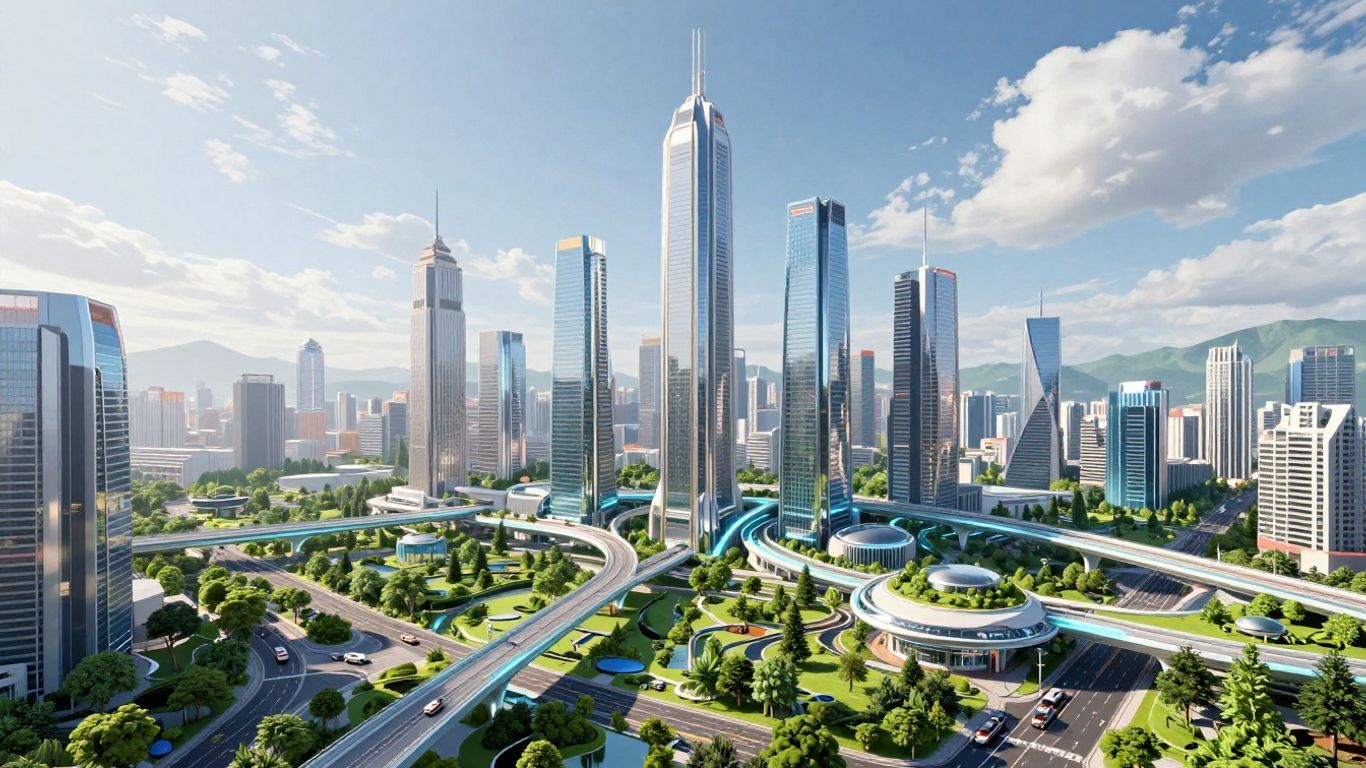
Prior to envisioning towering skyscrapers and sleek, airborne vehicles, it's imperative to establish a robust fundamental structure. Consider this phase the foundational cornerstone of your nascent metropolis. While perhaps not the most visually exciting stage, it is undeniably crucial for ensuring your city appears credible and cohesive—rather than a disorganized tangle.
Gathering Your Essential Drawing Tools
For this crucial initial phase, there's no need to procure an extensive array of art supplies; simplicity is key. You'll primarily require just a few fundamental items:
- Pencils: A standard HB pencil proves excellent for initial sketching, though a 2B can be advantageous for achieving marginally darker lines, should one be available.
- Eraser: A high-quality eraser, resistant to smudging, can truly be indispensable.
- Paper: Any standard drawing paper will suffice. However, should you intend to introduce color later, a paper with a marginally heavier weight is advisable.
- Ruler: Essential for achieving precise, straight lines—particularly as we delve into the intricacies of perspective.
Understanding Basic Perspective Lines
Here, the creative process begins to truly captivate. Indeed, perspective is the artistic principle that imbues a two-dimensional drawing with the illusion of three-dimensional depth. When depicting an urban environment, artists frequently employ either one-point or two-point perspective. For our current endeavor, let us concentrate on two-point perspective, given its prevalence in cityscapes.
Envision a solitary point situated on the horizon line – this crucial marker is known as your vanishing point. All receding lines within your drawing will converge towards this specific point, creating the illusion of distance.
Shaping the Urban Landscape
With the fundamental framework firmly established, it's time to imbue your envisioned future city with its distinctive character. This stage transforms mere geometric shapes into compelling architectural structures, making the streetscapes feel genuinely navigable and inviting.
Defining Building Facades and Rooflines
Consider the distinctive elements that lend a building its individuality: are they the fenestration patterns, the chosen materials, or the very silhouette of its roofline? In the realm of future city design, this phase truly offers boundless opportunities for creative expression. Perhaps structures feature sleek, aerodynamic rooflines, or are adorned with integrated solar panels designed to harness ambient light. One might incorporate projecting balconies or elaborate patterns meticulously etched into their façades. Indeed, do not hesitate to blend and juxtapose diverse architectural styles—a soaring, contemporary skyscraper, for instance, could stand harmoniously alongside a more modest, ostensibly traditional structure, albeit with a compelling futuristic inflection.
- Experiment with different roof shapes: Encourage experimentation with a variety of roof profiles: consider flat, sloped, domed, or even dynamically multi-tiered designs.
- Add architectural details: Incorporate thoughtful architectural embellishments, such as elegant cornices, distinctive decorative panels, or subtly integrated lighting systems.
- Consider the building's purpose: Always bear in mind the building's intended function; a residential complex, for instance, might naturally feature a greater abundance of windows and balconies compared to a commercial establishment.
Adding Depth with Volume and Detail
To truly imbue your city with a sense of verisimilitude, it's essential that its structures convey substantial spatial presence. This is precisely where the incorporation of volume becomes paramount. Rather than merely sketching flat surfaces, consider how ambient light would interact with and illuminate them. Subtle shading can be judiciously applied to delineate areas where one architectural element casts a shadow upon another. Even minute details – such as precisely rendered window frames, distinct doorways, or strategically placed ventilation systems – can profoundly enhance the overall effect. To evoke a truly futuristic aesthetic, envision buildings characterized by unconventional angles or constructed from materials that appear to emit a soft luminescence.
Achieving a three-dimensional quality in your architectural representations is absolutely critical. Pause to consider their appearance from various angles, and how the interplay of light and shadow would articulate their surfaces—indeed, even minor details can significantly augment the overall visual impact.
Creating Realistic Streetscapes
The street networks truly constitute the vital arteries of any vibrant city. They transcend mere linear representations, featuring delineated sidewalks, perhaps distinct curbs, and often a nuanced textural quality. In the context of a futuristic metropolis, one might depict thoroughfares composed of luminous materials, or pedestrian pathways that appear to hover marginally above the urban terrain. Contemplate incorporating distinctive elements such as uniquely designed streetlights or captivating public art installations that effectively punctuate and alleviate visual uniformity. Reflect on the anticipated movement of inhabitants through this environment—will there be dedicated pedestrian zones, specialized bike lanes, or perhaps even intricate elevated transport tubes?
- Vary street width and layout: Introduce variability in street width and overall layout; uniformity in straightness or dimension is certainly not a prerequisite.
- Add sidewalk details: Augment sidewalks with specific details, such as thoughtfully placed planters, comfortable benches, or even advanced charging stations.
- Consider traffic flow: Ponder the dynamics of traffic flow: where, precisely, would vehicular or public transportation pathways be situated?
Populating Your Cityscape
With the foundational structures and street networks now meticulously delineated, the focus shifts to animating your futuristic metropolis. This involves integrating the intricate, smaller details that imbue a locale with its distinctive character and enhance its overall credibility. Indeed, reflect on the typical visual tapestry encountered during a stroll through any contemporary city—it's hardly just an array of buildings, is it? One observes an abundance of signage, verdant trees, inviting benches, and naturally, the multitude of entrances defining each structure.
Incorporating Street Furniture and Signage
Street furniture and various forms of signage serve as subtle narrators, conveying much about a city's essence. Will the signage project a sleek, contemporary aesthetic, or perhaps a charmingly worn, vintage appeal? Will public spaces be adorned with numerous inviting benches, or will a more minimalist design philosophy prevail? Such components invariably contribute significantly to the urban personality. Commence by integrating essential elements such as distinct streetlights, functional refuse receptacles, and perhaps even innovative transit shelters. Crucially, do not overlook the signage! Thoroughfare indicators, commercial establishment names, and even straightforward directional markers can profoundly impact the visual narrative. These details help define the city's function and atmosphere. When depicting a futuristic metropolis, one might envision dynamic holographic advertisements or exceptionally sleek, minimalist signage. Ponder carefully how these diverse elements will interact harmoniously with the architectural structures and streetscapes you've already meticulously rendered. You can find inspiration for different types of urban elements by looking at stock analysis tools that often visualize market trends with various graphical indicators.
Introducing Natural Elements Like Trees
Even the most technologically advanced future city benefits immensely from the integration of natural elements. Trees, meticulously designed parks, and expansive green spaces serve to interrupt the monotony of concrete and steel, providing both visual respite and fostering a profound sense of well-being. Consider thoughtfully the natural placement of arboreal elements: along pedestrian thoroughfares, within intimate urban plazas, or perhaps exclusively within designated verdant zones? These can be rendered with fundamental trunk and branch structures, with foliage subsequently added using swift, expressive lines. To enrich the visual landscape, introduce a variety of tree species—some tall and gracefully slender, others more dense and expansive. This strategic diversification invariably imbues the city with an enhanced layer of realism, making it appear more genuinely habitable.
Adding Life with Windows and Doors
Architectural structures are not merely vacant shells; they possess distinct entrances and various openings. Windows and doors, in particular, afford you the opportunity to subtly hint at the internal activities or functions of a building. In residential contexts, one might depict straightforward window frames, perhaps even alluding to the presence of interior curtains. Conversely, commercial establishments might feature expansive windows, potentially showcasing innovative futuristic products or dynamic informational displays. Moreover, the deliberate placement and distinctive style of windows and doors can effectively convey a building's inherent purpose and its overarching architectural aesthetic. Will they manifest as grand, imposing entrances or as more discreet, purely functional doorways? The meticulous inclusion of these details renders your buildings seemingly inhabited and provides the viewer with an invaluable sense of spatial scale.
The fundamental distinction between a two-dimensional rendering and one that truly evokes a palpable sense of place frequently hinges upon these nuanced, observational details. It demands a dual perspective—that of an urban planner conceptualizing grand designs and that of a resident experiencing the daily intricacies of the environment.
Exploring Different City Views
Depicting an urban landscape extends far beyond a singular perspective. Consider the multifaceted ways in which we perceive our surroundings – gazing upwards at towering structures, peering down from elevated vantage points, or observing objects from a considerable distance. This principle holds equally true for your future city drawing. Indeed, a shift in your chosen viewpoint can profoundly transform both the ambiance and the narrative conveyed by your artwork.
Drawing a City from an Aerial Perspective
This particular perspective closely resembles a cartographic representation, yet it is enriched with the vibrant life and intricate details inherent to an active city. It proves exceptionally effective for illustrating the overall urban layout and the seamless connectivity between its various components. To commence, envision yourself positioned high above the landscape. Your initial focus should be on delineating the primary thoroughfares and the fundamental, block-like forms of the buildings. Deliberate on the natural curvature and intersection points of roads, and how green spaces or monumental structures can artfully interrupt the regularity of the urban grid. From this elevated vantage, you can depict the upper surfaces of buildings, perhaps even alluding to verdant rooftop gardens or designated landing pads, particularly if envisioning a futuristic metropolis. Ultimately, this perspective emphasizes the overarching patterns and organic flow discernible from an aerial viewpoint.
- Start with the main arteries – the major roads and expansive highways.
- Block out the primary building masses, paying particular attention to their ground-level footprints.
- Add green spaces, such as well-manicured parks and inviting plazas.
- Consider the inclusion of further details, including winding rivers, elegant bridges, or intricate train lines.
Capturing the City in Full Face
This represents the quintessential street-level perspective, affording a direct view of buildings ascending majestically before you. Here, the emphasis lies on perspective lines converging towards a designated vanishing point, creating the compelling illusion that structures recede into the distance. Your attention will be drawn to the intricate facades, the fenestration, the entryways, and the myriad details that collectively render each building distinctive. This particular viewpoint genuinely allows for a dynamic interplay with scale, enabling you to articulate either the imposing grandeur or the subtle intimacy of your urban creation.
When rendering a scene from street level, always recall the fundamental principle: objects positioned closer to the viewer will naturally appear larger, while those situated further away will diminish in perceived size. This central tenet of perspective is precisely what imparts realism to your drawing.
Imagining Cities in the Clouds
And now, for arguably the most exhilarating segment—an invitation to unleash your unbridled imagination! A city suspended among the clouds represents an exquisite manifestation of pure fantasy. Envision structures gracefully adrift on colossal cloud formations, interconnected by elegant sky bridges, or perhaps meticulously integrated into monumental, airborne edifices. Consider the intricate ways in which light would interact with these ethereal, floating islands. Might cascading waterfalls gracefully descend from their perimeters? And what innovative forms of transportation would facilitate movement between these lofty abodes? This particular stage offers an unparalleled opportunity to transcend conventional reality and conjure something truly magical.
- Sketch out the main cloud formations intended to cradle and support your aerial city.
- Design distinctive floating structures—consider either fluid, organic forms or captivating geometric marvels.
- Add elements like dramatic waterfalls, intricate bridges, or even advanced flying vehicles to establish connectivity between disparate segments.
Adding Advanced Details and Flair
With your futuristic metropolis now boasting a robust underlying structure and its fundamental elements in place, it's time to truly elevate its visual impact. This segment delves into the nuanced details that distinguish a competent drawing from a truly exceptional one. We'll explore dynamic transportation systems, audacious architectural concepts, and the transformative power of textures.
Illustrating Transportation Networks
Ponder the mechanisms by which inhabitants and commodities circulate within your urban creation. Will sleek, silent maglev trains effortlessly traverse between towering structures? Or perhaps personal aerial pods and sophisticated automated ground vehicles will define the urban transit experience? Depicting these components imbues the cityscape with both a vivid sense of dynamism and an essential understanding of its scale.
- Roads and Pathways: Avoid the temptation of solely straight lines. Instead, introduce curves, elevate sections, or artfully guide them into subterranean tunnels. It's also worth contemplating distinct road typologies for various vehicle classifications.
- Public Transit: Render elevated train lines, subterranean subway access points, or even avant-garde transit shelters. These intricate details eloquently narrate the story of your city's comprehensive infrastructure.
- Air Traffic: Should your city incorporate aerial vehicles, meticulously depict their flight trajectories or designated landing zones. This particular addition can introduce an entirely new dimension of visual intrigue, especially within the expansive sky.
Designing Futuristic Architectural Elements
Here, you're truly encouraged to unleash your most imaginative impulses. Disregard contemporary architectural paradigms entirely; what forms might structures assume in a future epoch?
- Unusual Shapes: Architectural forms need not be confined to rectilinear boxes. Instead, envision elegant curves, dynamic spirals, or even structures that appear to defy gravitational forces.
- Integrated Technology: Envision buildings equipped with integrated energy harvesting systems, captivating holographic displays, or innovative self-repairing exterior surfaces.
- Living Architecture: Reflect on designs that seamlessly weave organic plant life directly into their structural composition, thereby elegantly blurring the conventional boundaries between nature and man-made construction.
Enhancing with Textures and Shading
Texture and strategic shading are the indispensable elements that imbue your drawing with profound depth and striking realism. Absent these, even the most compelling architectural forms can unfortunately appear rather two-dimensional.
- Surface Materials: Ponder the compositional materials of your buildings. Will they be crafted from sleek, reflective metal, robust, textured concrete, or perhaps something entirely unprecedented? Employ varied line weights and distinctive patterns to effectively convey these material properties.
- Light and Shadow: Understanding how light hits your city is key to making it look three-dimensional. Identify the primary light source. Will its illumination cast sharp, dramatic shadows, or bathe the scene in a soft, diffused glow? Employ darker tones to delineate shadowed areas and lighter tones where direct light makes an impact.
- Atmospheric Effects: For structures situated in the background, a lighter, less meticulously detailed treatment can effectively convey atmospheric haze or considerable distance. This effect can be achieved through the application of softer brushes or subdued color palettes, allowing them to subtly merge with the sky.
While incorporating these advanced details might initially appear daunting, it's crucial to remember the power of gradual accumulation. Begin by establishing the primary transportation arteries, then introduce distinctive architectural features, and ultimately, employ shading and texture to cohesively integrate all elements. The objective is to layer complexity in a manner that resonates organically with the observer.
Bringing Your Future City Drawing to Life
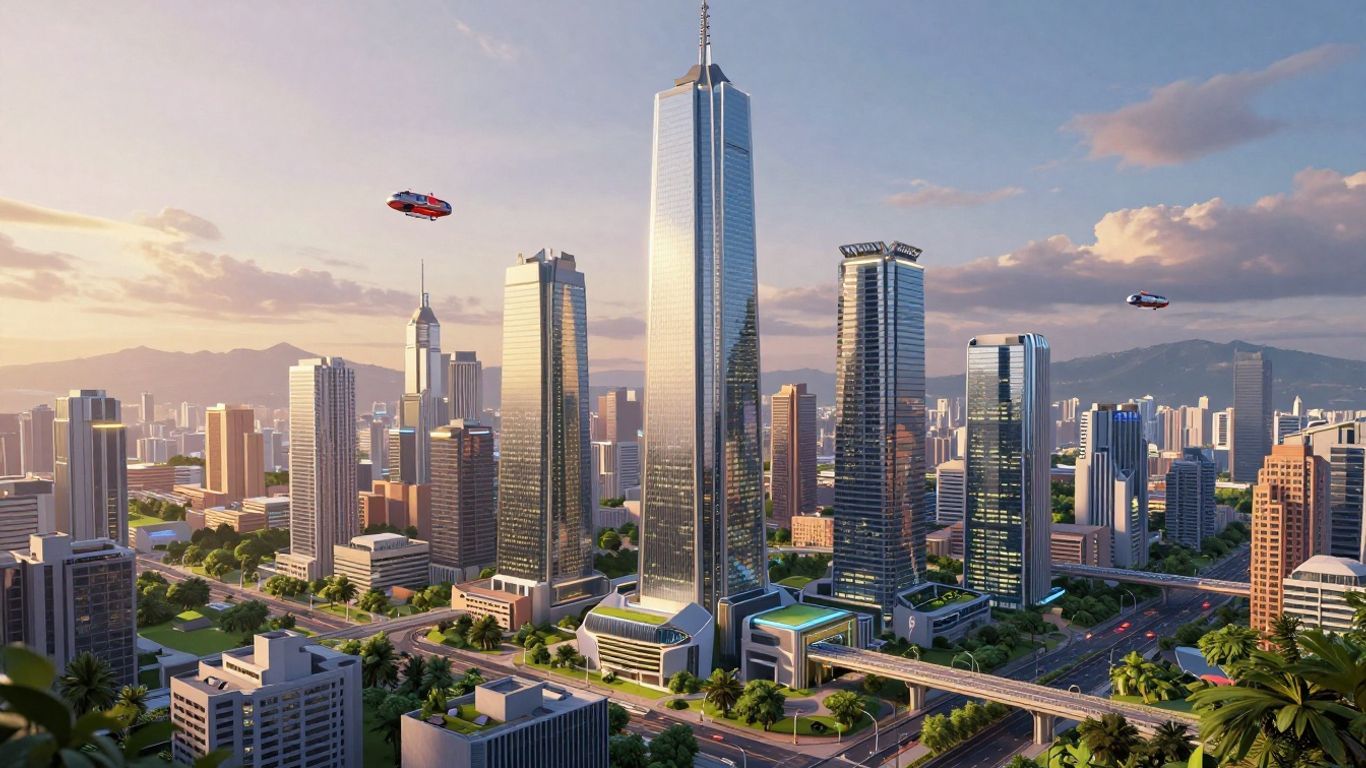
You have diligently invested the effort, meticulously sketching foundational structures, intricately detailing streetscapes, and perhaps even conceptualizing innovative aerial vehicles. Now, the moment arrives to truly imbue your futuristic metropolis with vibrant life and a sense of completion. This concluding stage focuses intently on refining your existing work and applying those essential final embellishments that elevate a drawing to a truly striking visual piece.
Refining Lines and Erasing Guidelines
Prior to immersing yourself deeply in color application or nuanced shading, take a judicious step back to critically assess your linework. Are any extraneous marks or foundational construction lines still discernible? If so, carefully erase them. This seemingly minor action can profoundly enhance the perceived cleanliness and professionalism of your completed drawing. Furthermore, consider the varying weight of your lines. Occasionally, reinforcing primary outlines with a marginally darker pencil or pen can significantly accentuate your buildings and streetscapes—effectively imparting a crisp, defined silhouette to your urban vision.
Applying Color and Tone
Color is the potent medium through which your city truly begins to manifest its unique vibrancy. Deliberate carefully on the precise mood you aim to evoke. Will you portray a luminous, optimistic metropolis, or perhaps something with a more somber, industrial atmosphere?
Consider this concise guide to conceptualizing effective color palettes:
- Daytime City: Employ vivid blues for the sky, diverse greens for expansive parks, and an amalgamation of grays, whites, and metallic hues for architectural structures. Introduce judicious splashes of color for prominent signage and dynamic vehicles.
- Nighttime City: Utilize deep blues and purples to depict the celestial expanse, complemented by warm yellows, oranges, and reds emanating from illuminated windows and streetlamps. Buildings, meanwhile, should be rendered in darker, subdued tones.
- Dystopian City: Opt for desaturated colors, emphasizing a profusion of grays, browns, and perhaps unsettling greens or reds. The focus here should be on portraying grime and pervasive wear.
Furthermore, do not overlook the crucial element of tone—that is, the inherent lightness or darkness of a given color. The judicious application of varied tones can skillfully create depth and make specific segments of your city appear either closer or more distant. A subtle gradient in the sky, for example, can impart a remarkable degree of realism.
Incorporating subtle nuances in color and tone, even within a singular architectural structure, can significantly enhance its verisimilitude. Ponder how light interacts with various surfaces and where shadows would naturally be cast.
Final Touches for a Polished Look
This is the juncture for integrating those meticulous, final details that confer a truly unique character upon your artwork. Contemplate the inclusion of atmospheric effects, such as a delicate mist or a subtle haze, particularly when rendering an expansive cityscape. The depiction of reflections in polished windows or on rain-slicked streets can remarkably infuse the scene with heightened vitality. Should your composition feature vehicles, ensure their headlights or taillights are appropriately illuminated if the scene is set at night. Even seemingly minor elements, such as a flock of birds silhouetted against the sky or a solitary figure observing from a balcony, can introduce a compelling sense of both scale and narrative depth. The goal is to make the viewer feel like they could step right into your drawing.
Keep Drawing Your Future
Thus, we conclude our exploration. We have comprehensively navigated the process of rendering a futuristic city, commencing with the establishment of fundamental building outlines and progressing to the integration of intricate details, such as distinctive street signage and verdant arboreal elements. While the initial undertaking might appear extensive, it is crucial to recall that mastery is achieved through a systematic, step-by-step approach. Please do not be disheartened if your initial endeavors fall short of perfection; drawing is an iterative practice, and consistent engagement will invariably lead to enhanced proficiency. Continue to experiment with diverse architectural forms, varied perspectives, and an array of thematic elements. Indeed, who can predict—your imaginative renderings might very well serve as the conceptual blueprints for the actual cities of tomorrow. We wish you joyous sketching!
Frequently Asked Questions
What basic supplies do I need to start drawing a future city?
To embark on this creative journey, surprisingly few items are requisite. For novices, a fundamental pencil and paper suffice admirably. As your confidence and proficiency burgeon, you might consider augmenting your toolkit with colored pencils, markers, or even paints to infuse greater vitality into your illustrations.
How can I make my city look realistic?
The judicious application of perspective lines is absolutely pivotal! Envision a vanishing point towards which all parallel lines recede. This technique adeptly renders buildings as though they extend into the far distance, thereby imbuing your drawing with remarkable depth and an enhanced sense of realism.
What's the easiest way to draw buildings?
Begin by delineating foundational geometric forms, such as rectangles and squares. Subsequently, introduce lines to precisely indicate where walls interface with rooflines. Crucially, consider varying the heights and widths of individual structures to foster a visually engaging and diverse urban panorama.
How do I add details like windows and doors?
Once the fundamental building forms are established, you may proceed to render the windows and doors. Ponder their natural placement within the architectural scheme. Even the inclusion of straightforward lines for window frames or door handles can profoundly impact the overall visual coherence.
Can I draw a city from a different angle?
Unequivocally, yes! Your city can be depicted from an expansive bird's-eye perspective, providing an overhead glance, or alternatively, from an immersive street-level vantage, gazing upwards at impressive structures. Experimentation with diverse viewpoints undeniably contributes to the distinctiveness of your urban creation.
How can I make my future city look more futuristic?
Embrace creative exploration with architectural forms! Rather than adhering solely to rectilinear shapes, endeavor to depict buildings featuring elegant curves, unconventional angles, or even gravity-defying, floating structures. Furthermore, the integration of details such as sophisticated transportation systems or subtly glowing illuminations can powerfully impart a distinctly futuristic ambiance.


