
resources-malaysia
Navigate Malaysia: A Detailed Map by State
13 Nov 2025

Planning a trip to Malaysia? It's a country bursting with experiences, from the vibrant energy of its cities to the serene charm of its islands. Getting a handle on its geography can be a little tricky, especially with its two distinct regions—the peninsula and Borneo. This guide is here to break down the country by state, giving you a clearer picture of the lay of the land. We'll explore what each area has to offer, helping you map out your journey with confidence.
Key Takeaways
- Malaysia is divided into Peninsular Malaysia and Malaysian Borneo, each offering its own unique character and attractions.
- Key cities like Kuala Lumpur, Georgetown, and Johor Bahru serve as vital hubs for travel, culture, and commerce.
- The country boasts a well-developed expressway system, making travel between many areas on the peninsula quite straightforward.
- Different states promise diverse experiences, from wandering through historical sites to exploring vast national parks.
- Idyllic islands such as Langkawi and Penang are top-tier destinations that are definitely worth adding to your itinerary.
Exploring Peninsular Malaysia
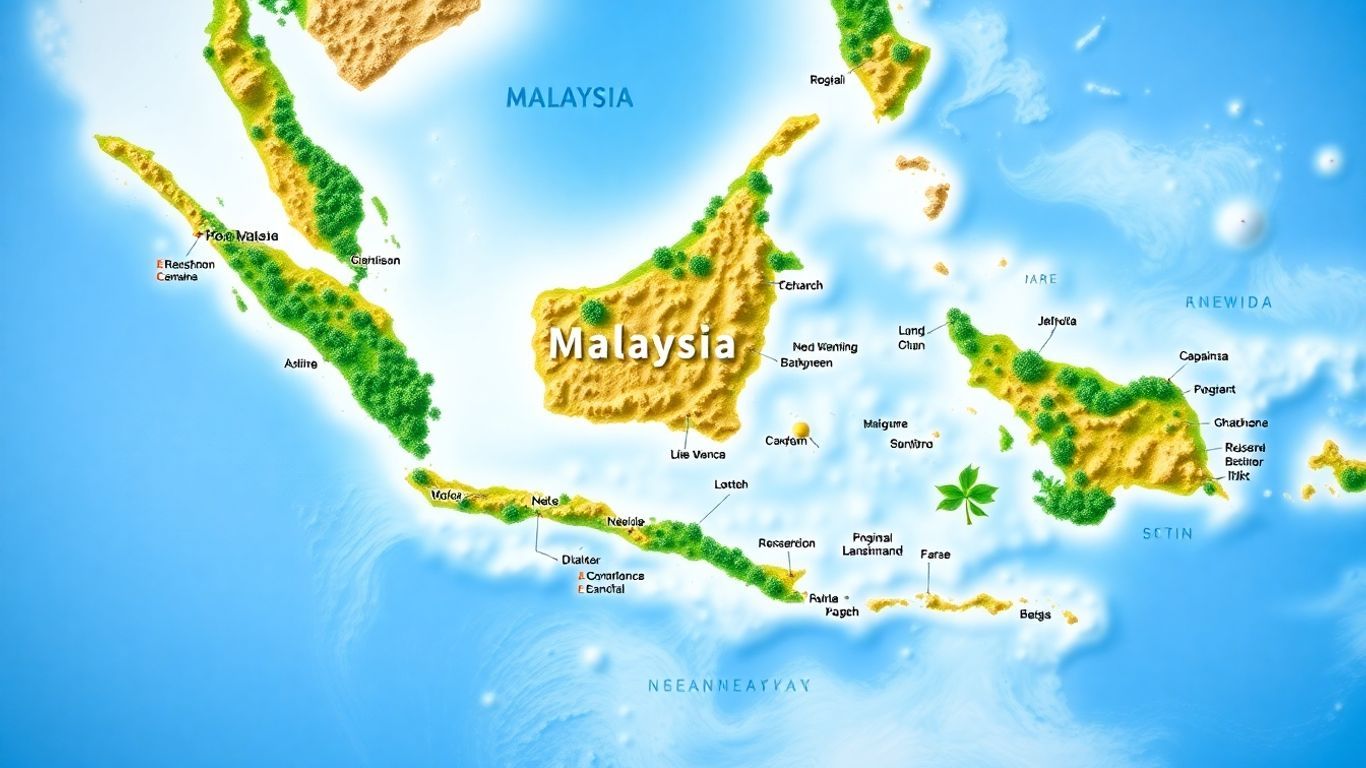
Peninsular Malaysia, the sliver of the country extending from mainland Southeast Asia, is where the majority of the population resides and where much of the nation's pulse can be felt. It’s a region packed with a fascinating variety of landscapes, from sprawling urban centres to tranquil beaches and verdant, rolling hills. This is truly the heart of Malaysia's development and cultural tapestry.
Northern States Overview
The northern states offer a wonderful glimpse into Malaysia's rich heritage and deep-rooted traditions. Picture historical landmarks, mouth-watering food, and a more relaxed pace of life compared to the bustling capital. Here you’ll find states like Penang—world-famous for its street art and culinary scene—and Kedah, the gateway to the stunning Langkawi archipelago. It's an excellent starting point for anyone wanting to understand the country's origins.
Central Region Highlights
This area is undeniably dominated by the capital, Kuala Lumpur, a modern metropolis defined by its towering skyscrapers and lively markets. But there's so much more than just the city. Surrounding areas offer incredible natural beauty, like the cool air and sprawling tea plantations of the Cameron Highlands, or the historical city of Melaka, a proud UNESCO World Heritage site. It’s a compelling blend of old and new, urban excitement and natural tranquillity.
Southern Peninsula Destinations
Journeying down south brings you to Johor, a state renowned for its industrial strength and its crucial role as the gateway to Singapore. It also boasts beautiful coastlines and islands, including the ever-popular Tioman Island. While this region is a hub of commerce and transit, don't underestimate its local charm and pockets of natural beauty. It's a dynamic part of the peninsula, connecting Malaysia to its southern neighbour.
The geography here is remarkably varied. You have everything from coastal plains and inland forests to sweeping mountain ranges. It's this very diversity that makes Peninsular Malaysia so fascinating to explore, offering a completely different experience depending on which direction you head.
Here's a quick look at some key aspects:
- Cultural Melting Pot: Influences from Malay, Chinese, and Indian cultures are beautifully evident everywhere, especially in the food and vibrant festivals.
- Natural Beauty: From the pristine beaches on the east coast to the cool highlands in the centre, there's no shortage of nature to appreciate.
- Historical Significance: Countless sites tell the stories of ancient kingdoms, colonial legacies, and the nation's path to independence.
When planning your trip, getting a sense of the political map of Malaysia is helpful to see how these states all fit together.
Discovering Malaysian Borneo
Now, let's remember that Malaysia isn't just the peninsula. There's a whole other side to the country over on the island of Borneo. It offers a completely different world—one defined by wilder nature and some truly unique local cultures. This is where you'll find some of Malaysia's most breathtaking natural landscapes.
Sabah's Natural Wonders
For many, Sabah is the first thing that comes to mind when picturing Borneo. It's home to Mount Kinabalu, the majestic mountain that draws hikers from across the globe. Then there are the orangutans; seeing them in their natural habitat is an unforgettable experience. You can visit places like the Sepilok Orangutan Rehabilitation Centre to see them up close, which is quite special. The rainforests here are ancient and teeming with life—seriously, the biodiversity is incredible. You've got everything from pygmy elephants to proboscis monkeys. It’s a place that really makes you feel humbled by nature, in the best possible way.
Sarawak's Cultural Heritage
As the largest state in Malaysia, Sarawak has a rich and layered history. It's famous for its indigenous tribes, like the Iban people, who were once known for their communal longhouses. Some of these traditional dwellings are still standing, and you can even visit them to get a glimpse into their unique way of life. Kuching, the state capital, is a charming city with a fantastic waterfront and several insightful museums. Bako National Park is also a must-see, celebrated for its unique rock formations and diverse wildlife. It might feel a bit more laid-back than Sabah, but it's every bit as captivating.
Island Escapes in Borneo
While Borneo is an island itself, it's fringed by smaller islands that are perfect for a tropical getaway. The islands off the coast of Sabah, such as the world-renowned Sipadan, are a diver's paradise. The underwater world here is simply spectacular, with vibrant coral reefs and an abundance of marine life. But you don’t have to be a diver to enjoy it; places like Gaya Island offer beautiful beaches and a chance to unwind away from the jungle. It’s a wonderful contrast to the mainland hustle, offering a different kind of Malaysian adventure. You can find some fantastic spots for snorkelling or just chilling out by the sea. It's always a good idea to check the best times to visit, as the weather can greatly influence your experience.
Borneo is a massive island, and Malaysia occupies only a portion of it. The sheer scale and wildness of this part of the country are what make it so special. It's a place where nature still feels very much in charge.
Key Cities on the Malaysia Map
Kuala Lumpur Metropolitan Area
Kuala Lumpur, or KL as it's affectionately known, is the nation's capital and its most bustling city. This is where you'll find the iconic Petronas Twin Towers, which are a truly impressive sight, especially when lit up at night. The city is a fascinating blend of old and new—you've got gleaming skyscrapers standing right next to colonial-era buildings and lively street markets. It's a major hub for business, shopping, and of course, food. The food scene here is phenomenal, from fine dining restaurants to street food stalls selling every dish imaginable.
Getting around KL can be an adventure in itself, but the public transport system is actually quite efficient. The LRT (Light Rail Transit), Monorail, and MRT (Mass Rapid Transit) connect most of the key areas. It's often a much faster option than dealing with the city's traffic, which can get pretty intense, particularly during rush hour.
Here's a quick look at some of KL's main attractions:
- Petronas Twin Towers
- Batu Caves (just outside the city centre but a definite must-see)
- Merdeka Square (Independence Square)
- Chinatown (Petaling Street)
- Bukit Bintang (the premier shopping and entertainment district)
KL is a city that never seems to sleep. There's always something happening, whether it's a festival, a new restaurant opening, or just the everyday buzz of millions of people. It's the perfect place to experience the modern face of Malaysia.
Georgetown's Historic Charm
Georgetown, the capital of Penang, is a designated UNESCO World Heritage Site, and it’s easy to see why. The city has this incredible old-world atmosphere with its colonial architecture, colourful street art, and charming narrow alleyways. Walking around Georgetown feels like stepping back in time, but with a vibrant, contemporary energy pulsing through it.
What really makes Georgetown special is its multicultural heritage. You'll find Chinese temples, Indian mosques, and British colonial buildings all within a stone's throw of each other. This rich blend is also reflected in the food—Penang is legendary for its street food, and Georgetown is the heart of it all. Think char kway teow, assam laksa, and nasi kandar. You could happily spend days just eating your way through the city.
- Street Art Hunting: Keep an eye out for the famous murals by artist Ernest Zacharevic scattered throughout the city.
- Clan Jetties: Discover the unique waterfront villages built on stilts by Chinese immigrants generations ago.
- Khoo Kongsi: Admire the incredibly intricate architecture of this historic Chinese clan house.
- Penang Hill: Take the funicular railway up for breathtaking panoramic views of the city and the coastline.
Johor Bahru's Strategic Location
Johor Bahru (or JB) sits at the southern tip of Peninsular Malaysia, right across the causeway from Singapore. This proximity makes it a critically important city for trade and transportation. A huge number of people commute between JB and Singapore daily for work, so it's a place that's always buzzing with activity.
In recent years, JB has developed a growing list of attractions. It has a more relaxed vibe than KL but is definitely on the rise. You'll find modern shopping malls, popular theme parks like Legoland Malaysia, and a solid food scene. The city also serves as a gateway to some of the beautiful islands off Johor's coast.
- Shopping: JB is home to several large malls that cater to both locals and visitors from Singapore.
- Theme Parks: Legoland Malaysia Resort is a major draw for families with children.
- Cultural Sites: Explore historical buildings and local markets to get a feel for the city's unique heritage.
Its close relationship with Singapore gives Johor Bahru a unique character. It's a place where you can feel the influence of its neighbour while still experiencing a distinctly Malaysian culture and lifestyle.
Navigating Malaysia's Geography
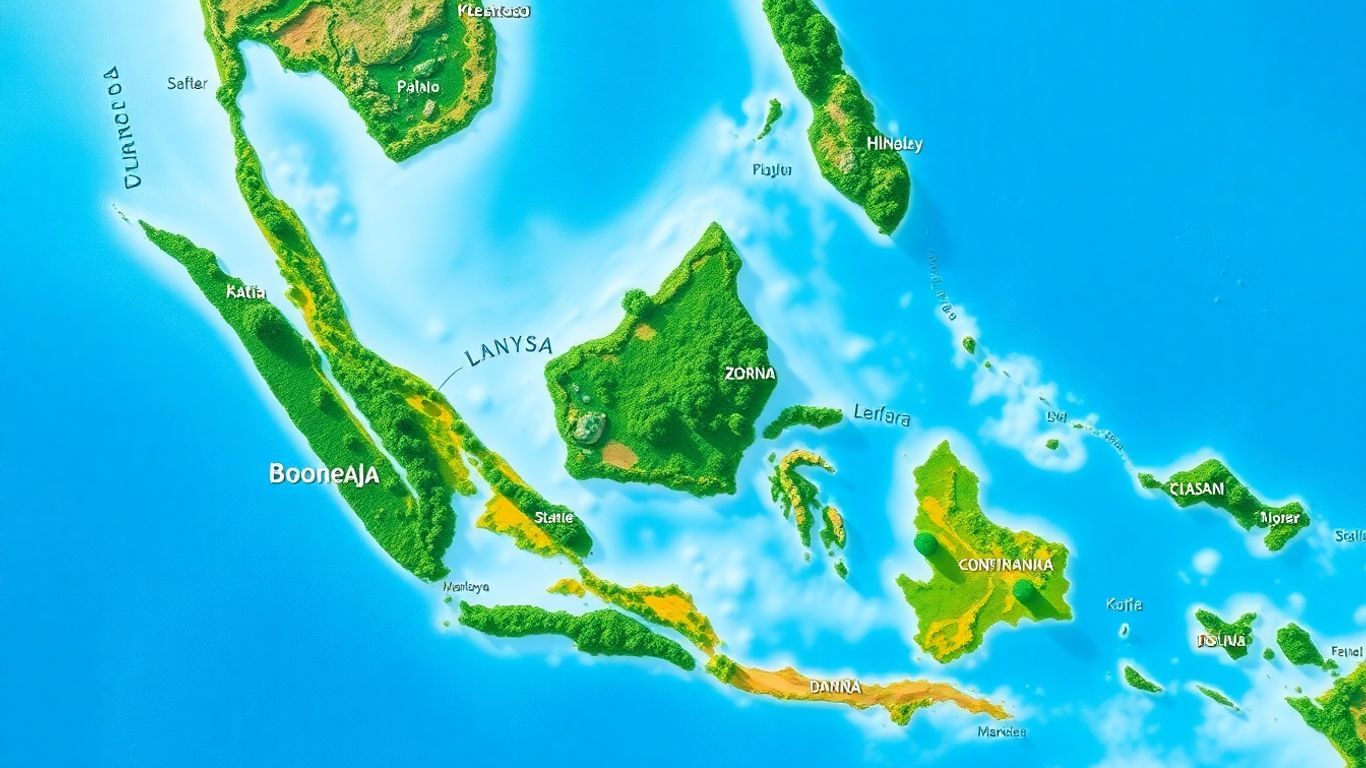
Malaysia's geographical setup is quite unique, as it's split into two main landmasses. You have the Peninsular side, home to the majority of the population and the capital, Kuala Lumpur. Then there's Malaysian Borneo, which is a different world altogether with its vast rainforests and distinct cultures. Understanding this geographical divide is the first step to getting around and truly appreciating all that Malaysia has to offer.
Peninsular vs. Borneo
The Malay Peninsula, often simply called Peninsular Malaysia, is connected to the Asian mainland. It's the more developed part of the country, with well-established infrastructure—think modern highways, bustling cities, and a mix of historical sites and contemporary attractions. Borneo, on the other hand, is a massive island shared with Indonesia and Brunei. The Malaysian states here, Sabah and Sarawak, are celebrated for their incredible biodiversity, indigenous communities, and a more rugged, untamed landscape. Travelling between the two regions almost always requires a flight, as there's no land bridge connecting them.
Major Expressways and Routes
If you're planning a road trip on the peninsula, the North-South Expressway will be your lifeline. It runs almost the entire length of the country, linking major cities from the Thai border all the way down to Johor Bahru. It is a toll road, but it makes getting around incredibly convenient. While other major routes connect key areas, this expressway is the true backbone of road travel. Over in Borneo, road networks are less extensive, especially once you leave the main cities and towns. You'll encounter a mix of paved roads and some rougher tracks, particularly if you venture towards national parks or more remote areas.
Coastal and Inland Regions
Malaysia is blessed with a long coastline, featuring beautiful beaches and islands along both the peninsula and Borneo. The west coast of the peninsula is generally more developed, with major ports and popular tourist destinations like Penang and Langkawi. The east coast, facing the South China Sea, is known for its more tranquil atmosphere and pristine islands that are best visited during certain seasons. Inland, especially in Borneo, the landscape is dominated by dense rainforests, mountains, and rivers. These regions are home to amazing wildlife and indigenous tribes, offering a travel experience that's a world away from the coast.
The climate across Malaysia is typically tropical, which means it's hot and humid all year round. However, it's important to be aware of the monsoon seasons, which affect different parts of the country at different times. It's always wise to check the weather patterns for the specific region you plan to visit so you can pack and plan accordingly.
Here's a quick look at the general climate patterns:
- West Coast of Peninsular Malaysia: Tends to experience rain more evenly throughout the year, though it can be slightly wetter from September to November.
- East Coast of Peninsular Malaysia: Has a distinct monsoon season from November to March, often with heavy rainfall. The best time to visit is typically from April to October.
- Sabah and Sarawak (Borneo): Generally receive rain year-round, but the heaviest downpours usually occur from October to February. Temperatures remain consistently high across both states.
When planning your trip, consider these seasonal variations to make the most of your time exploring Malaysia.
Understanding State Boundaries
Malaysia is a federation of states, and knowing where one ends and another begins can be quite helpful when you're navigating the country. It's not always immediately obvious, especially when driving, as there aren't always dramatic changes in the landscape. As a federation, these states are the country's primary administrative divisions. Having a general sense of these boundaries, even as a tourist, can enrich your travel experience.
Johor and Melaka
Down in the south, you have Johor, a large and economically significant state that connects Malaysia to Singapore. Right next to it lies Melaka, which is much smaller but immensely important historically. It's renowned for its colonial architecture and unique Peranakan culture. When you cross from one to the other, you'll usually notice the change in road signs, but sometimes the transition is much more subtle.
Pahang and Terengganu
Moving up the east coast brings you to Pahang, which is the largest state on the peninsula and home to vast rainforests and mountain ranges. Bordering it to the north is Terengganu, a state celebrated for its stunning islands and deeply rooted Malay culture. The coastline here is quite different from the west coast, with distinct weather patterns, especially during the monsoon season.
Perak and Kedah
Over on the west coast, further north, you'll find Perak. It's another large state with a diverse geography, stretching from the coast to the highlands. Its northern neighbour is Kedah, often referred to as the "Rice Bowl of Malaysia" and the state where the popular island of Langkawi is located. The border between these states is fairly straightforward, often marked by rivers or other geographical features.
Kelantan and Perlis
At the very northern tip of Peninsular Malaysia are Kelantan and Perlis. Kelantan, on the eastern side, has a strong and distinct cultural identity, often regarded as more traditional and conservative. Perlis, the smallest state in all of Malaysia, sits on the western side, sharing a border with Thailand. It's a largely agricultural area, with sprawling rice paddies being a common and beautiful sight. Getting a feel for these boundaries helps you appreciate just how diverse Malaysia is as a federation.
It's easy to get lost in the details of travel planning, but sometimes just knowing the basic layout of the land makes everything smoother. Think of state boundaries as invisible lines on a map that help organise everything—from local governance to the types of delicious food you're likely to find.
Notable Islands and Highlights
Malaysia is dotted with some truly beautiful islands and boasts incredible natural spots that are well worth exploring. The adventure certainly doesn't end on the mainland!
Langkawi and Penang Islands
When people talk about Malaysian islands, Langkawi and Penang are often the first two that come to mind. Langkawi, located up north near the Thai border, is famous for its duty-free status and breathtaking beaches. It's a hugely popular destination for a relaxed getaway—picture clear turquoise waters and lush green hills. Penang, on the other hand, is celebrated for its legendary food scene and historic Georgetown. It has a different vibe, more cultural and energetic, but still offers lovely beaches along its northern coast.
- Langkawi: A haven for duty-free shopping, beautiful beaches, and spectacular cable car rides.
- Penang: Home to the UNESCO World Heritage site of Georgetown, incredible street food, and a vibrant arts scene.
- Activities: Enjoy island hopping, explore ancient temples, and, of course, try all the local delicacies.
East Coast Islands
If you venture over to the east coast, you'll discover a different kind of island paradise. These islands are often less crowded and offer a more serene experience, particularly outside the monsoon season. Places like the Perhentian Islands and Tioman Island are famous for their world-class diving and snorkelling opportunities. The water clarity is exceptional, allowing you to see all sorts of colourful marine life. It’s the perfect setting to simply unwind and immerse yourself in nature.
The east coast islands are best visited between March and October. Outside this window, the monsoon season can bring rough seas and heavy rain, making travel difficult, and many resorts actually close for the season.
National Parks and Reserves
Beyond its stunning islands, Malaysia is home to incredible national parks and reserves that protect its rich biodiversity. Taman Negara, one of the oldest rainforests on the planet, is an absolute must-visit for nature lovers. You can go jungle trekking, experience a canopy walk high above the trees, and maybe even spot some rare wildlife. Another significant sanctuary is the Endau-Rompin National Park, known for its pristine ancient forests and spectacular waterfalls. These places are vital for conservation and offer a precious chance to see Malaysia's natural heritage up close.
Your Malaysian Adventure Awaits
So, that's a whirlwind tour of Malaysia, state by state. We've covered a lot of ground, from the bustling cities to the tranquil islands. Hopefully, this guide and map provide a great starting point for planning your own adventure. Whether you're drawn to the north or the south, the east coast or the west, there's so much to discover. Remember to check back often, as we'll be adding even more details and points of interest. Happy travels!
Frequently Asked Questions
What are the main parts of Malaysia?
Malaysia is primarily divided into two main regions: Peninsular Malaysia, which is connected to the Asian mainland, and Malaysian Borneo, located on the island of Borneo. Each offers a very different experience!
How can I get around Malaysia?
Getting around is quite convenient, especially on the peninsula, thanks to an excellent highway system like the North-South Expressway. You can easily travel by car, bus, or take flights between major cities. A good map will always be your best friend!
What are some popular islands to visit?
Oh, yes! Malaysia is famous for its beautiful islands. Up north on the peninsula, Langkawi and Penang are very popular. The east coast also has many stunning islands like the Perhentians, which are perfect for relaxing and enjoying water activities.
Can I see different states on a map?
Absolutely! A map will clearly show you how Malaysia is divided into states like Johor, Penang, Sabah, and Sarawak. Each state has its own unique culture and attractions, and seeing them on a map helps you plan your route.
What if I want to see big cities?
Malaysia has several exciting cities to explore! Kuala Lumpur is the bustling capital and a major hub. Georgetown in Penang is renowned for its historic colonial buildings and amazing food. In the south, Johor Bahru is another key city worth visiting.
Are there any special natural places to visit?
Definitely! Malaysia is blessed with incredible natural wonders, including vast national parks and reserves. Malaysian Borneo, particularly the states of Sabah and Sarawak, is world-famous for its stunning nature, diverse wildlife, and ancient rainforests.


