


resources-malaysia
Unraveling the Mystery of the Missing Malaysia Airlines Flight
13 Nov 2025

Years have passed since Malaysia Airlines Flight MH370 disappeared from our skies, yet the mystery feels as palpable and unsettling as ever. The aircraft, carrying 239 people on a routine flight from Kuala Lumpur to Beijing in March 2014, simply vanished. Despite one of the largest search efforts in history and a whirlwind of theories, a definitive answer to what happened remains elusive. This ongoing ordeal has been heart-wrenching for the families, and it remains a profound puzzle that continues to haunt and captivate us all.
Key Takeaways
- The disappearance of Malaysia Airlines Flight MH370 in 2014, with 239 souls on board, stands as one of modern aviation's most profound and unsolved mysteries.
- Initial search operations, guided by satellite "pings," were concentrated in the vast southern Indian Ocean but ultimately failed to locate the main wreckage.
- Fresh perspectives from some experts are bringing older theories, like a sophisticated hijacking ending in a concealed landing in the Philippines, back into consideration.
- While clues have emerged from satellite data, radar tracking, and debris washed ashore on distant coastlines, they have yet to form a complete picture of the aircraft's final moments.
- The relentless search and investigation underscore not only the immense technical challenges but also the deep human toll of this unresolved Malaysian tragedy.
The Unfolding Mystery Of Malaysia Airlines Flight MH370
Initial Disappearance And Last Known Communications
The story begins on the fateful night of March 8, 2014. Malaysia Airlines Flight MH370, a Boeing 777, was making its scheduled journey from Kuala Lumpur to Beijing. For a while, everything appeared perfectly normal. Then, without warning, it wasn't. The final words heard by air traffic control from the cockpit were a calm, almost routine, "Good Night, Malaysian Three Seven Zero." After that—complete silence. The plane simply dropped off civilian radar screens. This sudden loss of contact, without so much as a distress call, was the very first sign that something had gone terribly wrong. For hours afterward, the aircraft continued to fly, but on a ghost path far from its intended route, a fact that would baffle investigators for years. Those initial hours were fraught with confusion, clouded by conflicting data from various tracking systems. It was as if the plane had just vanished into the night sky.
The Start Of An Unprecedented Search Effort
Once the grim reality set in that MH370 was not just off-course but truly missing, the world’s attention shifted to the monumental task of finding it. What came next was an enormous, international search effort, the scale of which was unlike anything aviation had seen before. Nations from across the globe rallied together, dispatching ships and aircraft to comb through vast expanses of ocean. Initially, the search was focused on the South China Sea, the last known location on civilian radar. However, as new information, particularly from satellite data, began to surface, the search area would dramatically shift.
Revisiting Theories On The Missing Flight Malaysia
Years on, the vanishing of MH370 still feels surreal, almost like a story that couldn't possibly be real. We've cycled through so many theories about what might have happened, it’s easy to feel lost in the speculation. But now, some of those theories are being re-examined with fresh eyes, and maybe—just maybe—they could point us in a new direction.
The Hijacking Scenario Gains New Traction
For a long time, the possibility of a hijacking has been on the table. Today, some aviation experts are urging us to give this theory serious reconsideration. They argue that if the goal was to make a plane disappear, landing it in a hidden location makes more sense than simply flying it into the ocean. Just think about the sheer number of small, disused airstrips and remote lakes scattered across archipelagos like the Philippines. It’s a vast collection of islands, and finding a concealed aircraft there would be an immense challenge.
- Focus on alternative landing sites: What if the search expanded beyond the deep ocean to include remote, abandoned airfields?
- Questioning the flight path: Is it possible a hijacker deliberately chose a route designed to evade tracking systems?
- Pilot capabilities: Some experts contend that flying a modern airliner for hours in a straight line over open water, without navigational aids, would be an incredibly difficult feat, even for a seasoned pilot.
The core idea is that a deliberate act to hide the plane's fate would likely involve far more complex manoeuvres than just flying a straight course until fuel ran out.
Alternative Landing Sites Across The Philippines
This concept of a hidden landing is particularly compelling. The Philippines, for instance, is an archipelago of over 7,000 islands. Can you imagine the difficulty of locating a plane hidden away on one of them? It's a massive territory, with countless remote spots. It certainly makes you wonder if the search efforts have been concentrated in the right types of places all along.
Questioning The Southern Indian Ocean Focus
The lion's share of the major search operations has been poured into the southern Indian Ocean. It's a colossal area, and searching it has been compared to finding a needle in a haystack. But what if this intense focus has inadvertently created a blind spot? Some experts are now proposing that the aircraft might not be there at all. They’re challenging us to reconsider other possibilities—like those clandestine landing spots. It's a difficult thought to entertain after so much effort, but if the current approach isn't yielding results, perhaps it’s time to look elsewhere.
| Search Area Focus | Primary Location | Alternative Locations Proposed | Challenges |
|---|---|---|---|
| Southern Indian Ocean | Off the coast of Western Australia | Philippines Archipelago, other remote land areas | Vastness, depth, limited debris found |
| Hijacking Scenario | N/A | Abandoned airstrips, remote lakes | Difficulty in tracking, potential for concealment |
Investigating The Fate Of The Missing Flight Malaysia
Even after all this time, the disappearance of Malaysia Airlines Flight MH370 remains one of aviation's most profound puzzles. We have pieces of evidence—satellite data, radar information, and even fragments of debris that have washed ashore—but assembling them into a coherent story has proven incredibly difficult. It often feels like we’re trying to solve a jigsaw puzzle with most of the crucial pieces still missing.
Satellite Data And Its Implications
The satellite data forms a crucial part of this mystery. Long after the plane vanished from radar, a series of automated "pings" between the aircraft and a satellite continued for hours. This data strongly suggested the plane had flown a long southern route over the Indian Ocean. This inferred flight path is precisely what directed the massive search efforts to that remote stretch of water. But it's not a complete picture. The pings could only indicate that the plane was *somewhere* along a wide arc, not its precise final location. It's a bit like knowing someone is in a huge park, but having no idea which bench they’re sitting on.
The Role Of Radar And Transponder Systems
When MH370 went dark, its transponder—the device that communicates its position to air traffic control—simply switched off. The ACARS system, which transmits flight data, also went silent. This wasn't a slow, sputtering failure; it was an abrupt and total blackout. Military radar, however, was able to track the plane making an unusual turn back over the Malaysian peninsula, heading west, then north, before eventually turning south. This deviation strongly suggests that someone deliberately disabled the communication systems. It's a chilling detail that fuels many of the theories about what transpired in the cockpit.
- Sudden Communication Loss: Both the transponder and ACARS systems ceased transmitting almost simultaneously.
- Radar Tracking: Military radar followed the aircraft as it deviated sharply from its planned flight path.
- Deliberate Action: The way the systems were shut down points towards an intentional act, not an accidental failure.
The complete absence of distress calls or any form of communication after its initial disappearance is particularly mystifying. It is as if the aircraft, along with everyone on board, simply ceased to exist in a way that defies our conventional understanding of aviation incidents.
Analysis Of Debris Found On Coastlines
Over the years, a number of debris fragments have washed up on coastlines around the Indian Ocean and even as far as Africa. Some of these pieces, most notably the flaperon discovered on Réunion Island, have been confirmed as belonging to MH370. Others are still under examination. While this debris provides tragic confirmation that the plane was lost, the scattered nature of the discoveries has made it extremely difficult to pinpoint a specific crash site. It’s like finding a few random pages from a novel and being asked to reconstruct the entire plot.
- Confirmed Debris: Key components like the flaperon have been definitively linked to the missing aircraft.
- Scattered Locations: Wreckage has been found across an incredibly wide geographical area, complicating efforts to trace it back to a source.
- Limited Crash Site Information: The debris confirms the plane's loss but offers frustratingly few clues about the main wreckage's precise location.
Challenges In The Search For MH370
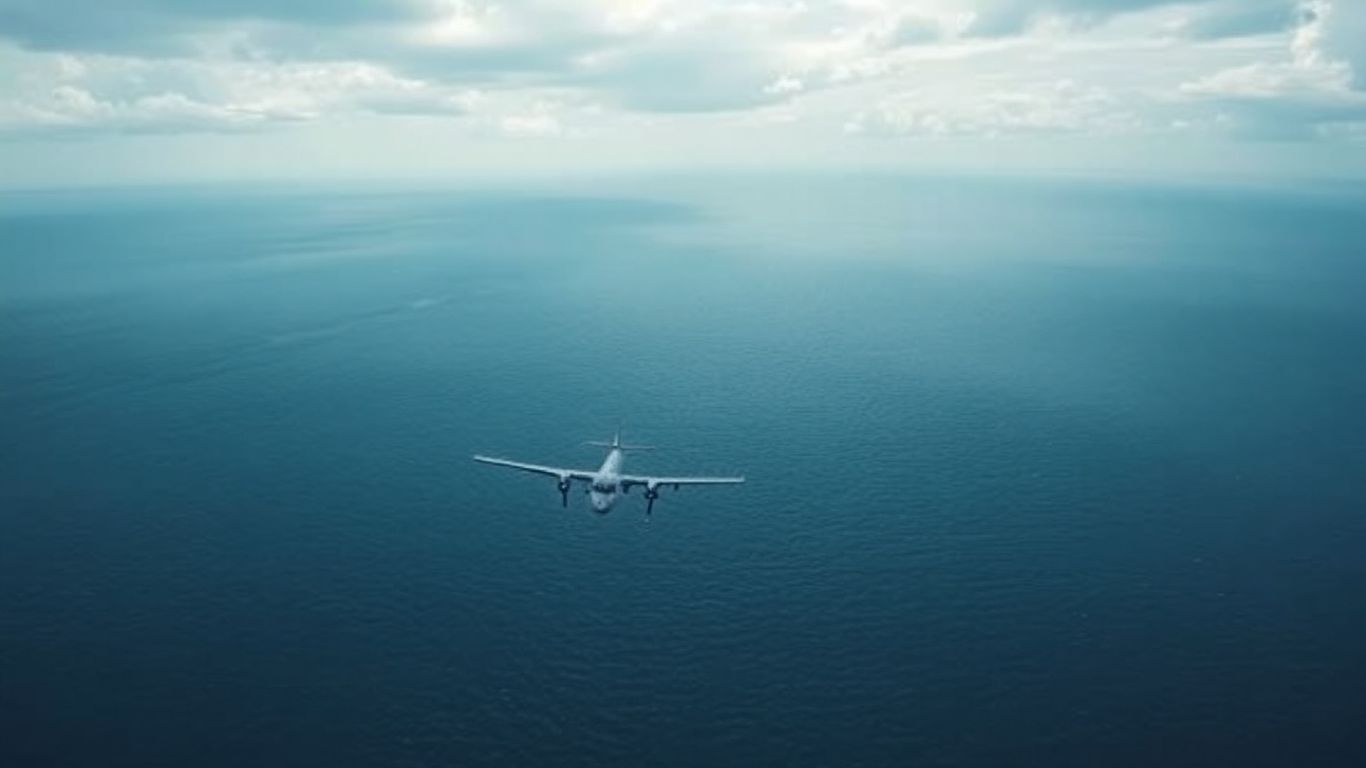
The quest to find Malaysia Airlines Flight MH370 has proven to be one of the most formidable challenges in modern aviation history. This isn't just about locating a plane; it's about contending with a vast, unforgiving environment, armed with limited tools and racing against time.
The Vastness Of The Indian Ocean Search Area
The sheer scale of the potential search zone is almost impossible to comprehend. Following the plane's deviation from its flight path, the most probable crash site was pinpointed to the southern Indian Ocean. This region is enormous, encompassing thousands of square kilometres of deep, remote water. Try to imagine finding a small object in a bathtub—now imagine that bathtub is the size of a continent. This immense scale is the single biggest reason why locating the wreckage has been so incredibly difficult. Even with the most advanced technology, effectively scouring such a vast area is a monumental undertaking. The search efforts, led by Australia, brought together ships and aircraft from numerous countries, but the ocean's sheer size was a relentless adversary.
Technical Difficulties With Black Box Beacons
When a plane goes down, its "black boxes"—the flight data and cockpit voice recorders—are critical for investigators to understand what happened. These devices are equipped with underwater locator beacons that emit a "ping" to guide search teams. The catch? These beacons have a finite battery life, usually around 30 days. If the wreckage isn't located relatively quickly, the beacons go silent, making the search exponentially harder. Furthermore, the deep-sea environment itself poses immense technical challenges for sonar equipment and underwater vehicles attempting to detect these faint signals. It becomes a desperate race against both time and technology.
The Impact Of Seasonal Conditions On Operations
Weather is a massive factor in any search operation, especially one conducted at sea. The southern Indian Ocean is notorious for its treacherous seas and volatile weather patterns, particularly during certain seasons. Violent storms and towering waves can make it impossible for ships and aircraft to operate safely, often forcing search missions to be suspended for long periods. The private company Ocean Infinity, for example, had to pause its most recent search due to the onset of seasonal conditions. This means that even when a promising search area is identified, the ability to actually investigate it is often at the mercy of the elements—adding another layer of frustration to an already agonizing situation for the families seeking answers. The search for MH370 highlights the difficulties in aviation investigations and the persistent human drive for answers. This enduring enigma underscores the complexities of modern aviation.
Expert Perspectives On The Missing Flight Malaysia

Years have now passed since Malaysia Airlines Flight MH370 vanished, and for many, the case feels like a giant, frustrating puzzle with no solution in sight. While official search efforts have largely concluded, a number of experts are still passionately advocating for new ways to interpret the evidence. They're not content with the current stalemate; instead, they're asking, 'Hold on a moment, what if we've missed something fundamental?'
Ismail Hammad's Proposed New Approach
One of the more prominent voices belongs to Ismail Hammad, an aviation specialist who is suggesting that we might need to fundamentally rethink where we've been looking. Hammad posits that the intense focus on the southern Indian Ocean could be a dead end. He proposes a significant shift in strategy, advocating for a closer examination of alternative landing sites, especially across the Philippine archipelago. He believes this pivot could save a great deal of time and resources, and perhaps—finally—lead to a breakthrough.
- Re-evaluating the search area: Shifting away from the singular focus on the Indian Ocean.
- Exploring new locations: Investigating potential landing spots like abandoned airstrips and remote lakes in the Philippines.
- Considering hijacking scenarios: Giving greater weight to theories that involve deliberate human intervention extending beyond the cockpit.
Hammad also highlights a compelling detail: some of the debris attributed to MH370 exhibited paint conditions that seemed inconsistent with prolonged immersion in saltwater, prompting him to question its true origin. It's a small observation, but it’s one that certainly makes you pause and think.
Critique Of Previous Investigation Methods
There is also a growing sentiment among some experts that the initial investigation may have had critical blind spots. For example, the manner in which the plane's communication and tracking systems were disabled has always been a major point of contention. Why was no distress signal ever sent? Why were standard emergency codes like 7500 (for a hijack) or 7700 (for a general emergency) never activated? These are the persistent questions that fuel theories about the pilot's actions or a calculated, deliberate shutdown of the systems. While investigators did examine flight simulator data from the captain's home, which revealed a plotted course towards the southern Indian Ocean, without the black boxes, any definitive conclusion remains out of reach. It’s a classic case of having many puzzle pieces that just don't seem to fit together.
The sheer volume of speculation, coupled with the stark lack of concrete evidence, has made this one of the most difficult cases to resolve in aviation history. It's a situation where every theory, no matter how unconventional, warrants consideration because the truth is still out there.
The Importance Of Reassessing Search Strategies
Ultimately, the call from experts like Hammad is for a renewed sense of flexibility and open-mindedness. The initial search efforts were colossal—the largest in aviation history, involving a multinational coalition of ships and aircraft. But now, perhaps a different approach is what's needed. It's about learning from past efforts, acknowledging what has worked and what hasn't. The families of the 239 people on board deserve answers, and if a fresh perspective can help bring them closer to closure, then it is an avenue worth exploring. It's an incredibly complex situation, but the quest to find the missing plane and the truth continues. You can find more details about the ongoing mystery of Malaysia Airlines Flight MH370 and the efforts to solve it.
The Human Element Of The Missing Flight Malaysia Tragedy
Beyond all the technical theories and search grids lies the profound human tragedy of Malaysia Airlines Flight MH370. For the families of the 239 people on board that flight from Kuala Lumpur to Beijing on March 8, 2014, the passing years have not dulled the pain or the uncertainty. The enduring lack of answers has been a constant source of anguish for every single person touched by this event.
Grief and the Families' Quest for Answers
Can you imagine waiting, day after day, year after year, for any scrap of news about your loved ones? That has been the stark reality for the families of those on MH370. They have navigated a cruel gauntlet of false hopes, conflicting official reports, and the deep, agonizing silence of not knowing. In their desperation for closure, many have taken it upon themselves to push for answers, even travelling to distant shores to search for debris. Their resilience is a testament to their love and their unyielding need for the truth. They have had to grapple with everything from questions about the aircraft's airworthiness to the sheer difficulty of comprehending how a modern plane could simply disappear.
The Psychological Toll of an Unresolved Mystery
Living with an unresolved mystery of this magnitude exacts an immense psychological toll. For years, these families have been trapped in a painful cycle of hope and despair. Every new theory or potential piece of debris brings a flicker of anticipation, often followed by the crushing weight of disappointment when nothing concrete materializes. This constant state of limbo—known as ambiguous loss—is incredibly draining. It permeates daily life, strains relationships, and erodes well-being. The inability to properly mourn or find peace because the final chapter of their loved one's story remains unwritten is a uniquely heavy burden to bear.
Lessons Learned for the Aviation Industry
Beyond the devastating personal impact, the MH370 incident has served as a harsh wake-up call for the global aviation industry, forcing a critical look at its own systems and procedures. It has raised urgent questions about communication protocols, the limitations of radar tracking, and how critical information is shared during a crisis. The initial hours after the plane's disappearance were marked by confusion and what some families have described as missed opportunities stemming from incorrect information. This tragedy highlighted the desperate need for more robust aircraft tracking systems, especially over remote oceanic areas, and for more streamlined communication between airlines, air traffic control, and search and rescue authorities. The hope is that the hard lessons learned from MH370 will lead to changes that prevent such an event from ever happening again, ultimately making air travel safer for everyone. The search for the plane itself, a massive undertaking across the Indian Ocean search area, remains one of the most complex in aviation history.
Still Searching for Answers
So many years have passed since Malaysia Airlines Flight MH370 disappeared, and honestly, we are still left grappling with more questions than answers. In spite of the colossal search efforts and the myriad of theories—from a tragic accident in the vast Indian Ocean to a calculated hijacking—the aircraft and the 239 people on board remain lost. Their families are still waiting in a painful limbo, desperate for closure, while the aviation world continues to wrestle with one of its most profound and unsettling mysteries. Perhaps a new strategy, one that revisits old ideas with fresh eyes or explores entirely different locations, could finally shed some light. For now, the story of MH370 remains an open wound for us all.
Frequently Asked Questions
Why is the disappearance of Malaysia Airlines Flight MH370 still a mystery?
Flight MH370 vanished back in March 2014 with 239 souls on board. Despite extensive searches and countless investigations, we still don't have a definitive answer about where the plane ended up. A combination of conflicting theories, a lack of confirmed wreckage from the main crash site, and the vastness of the potential search area all contribute to why this case remains painfully unsolved.
What is the new idea suggested by expert Ismail Hammad?
Ismail Hammad, an aviation specialist, suggests that the search community should seriously reconsider its intense focus on the southern Indian Ocean. He proposes we revisit the possibility of a hijacking and expand the search to include unconventional locations, such as remote airstrips or lakes in the Philippines. His thinking is that this could be a more efficient approach to finally cracking the case.
What was the last message heard from MH370?
The very last communication from the cockpit of MH370 was a simple and calm sign-off to air traffic control: "Good Night, Malaysian Three Seven Zero." What makes this so chilling is that after this seemingly normal message, the plane continued to fly for several more hours on an unapproved course before it is presumed to have been lost.
What evidence has been found that might be from MH370?
Over the years, several pieces of aircraft debris have washed up on coastlines thousands of kilometres away from the primary search area, including on Réunion Island and along the east coast of Africa. While some key parts have been confirmed as belonging to MH370, offering tragic proof of its fate, other fragments are still being analysed.
What are some of the main theories about what happened to MH370?
The theories are wide-ranging and include everything from catastrophic mechanical failure and pilot error to a deliberate act like a hijacking or pilot suicide. Data recovered from the captain's home flight simulator showed a plotted course towards the southern Indian Ocean, which is compelling but, without the plane's black boxes, it's impossible to know for sure.
Why has finding the plane been so difficult?
There are several major reasons. The primary search area in the southern Indian Ocean is incredibly vast, deep, and remote. On top of that, the batteries on the black box's underwater locator beacons likely died long before search crews could get close, making them nearly impossible to detect. Finally, harsh weather and treacherous sea conditions in the region have constantly hampered search operations.


