
Businesses
NVIDIA Unveils DSX POD at GTC Berlin 2026, Cutting AI Factory Deployment From Six Months to 14 Days
21 Oct 2026

NVIDIA introduces DSX POD, a modular AI factory reference design built around its Vera Rubin computing platform, aiming to accelerate infrastructure deployment, reduce installation complexity and help European businesses bring AI computing capacity online faster.
NVIDIA has announced DSX POD, a new reference design for modular artificial intelligence factories, during CEO Jensen Huang's keynote at GTC Berlin 2026 on October 21. The technology is designed to reduce deployment times for fully integrated AI computing facilities from approximately six months to as little as 14 days at sites where utilities and other essential infrastructure are already prepared.
The announcement marks an expansion of NVIDIA's AI infrastructure strategy, combining its next-generation Vera Rubin computing platform with factory-integrated modular systems. Developed alongside a global ecosystem of technology and infrastructure partners, DSX POD aims to simplify how AI factories are assembled, tested and deployed, allowing organisations to begin operating computing infrastructure and generating production AI tokens sooner.
The development comes as NVIDIA deepens its involvement in Europe's technology ecosystem, where the company reports nearly $10 billion in commitments and collaborations with more than 12,000 partners.
NVIDIA DSX POD: A New Approach to Building AI Factories
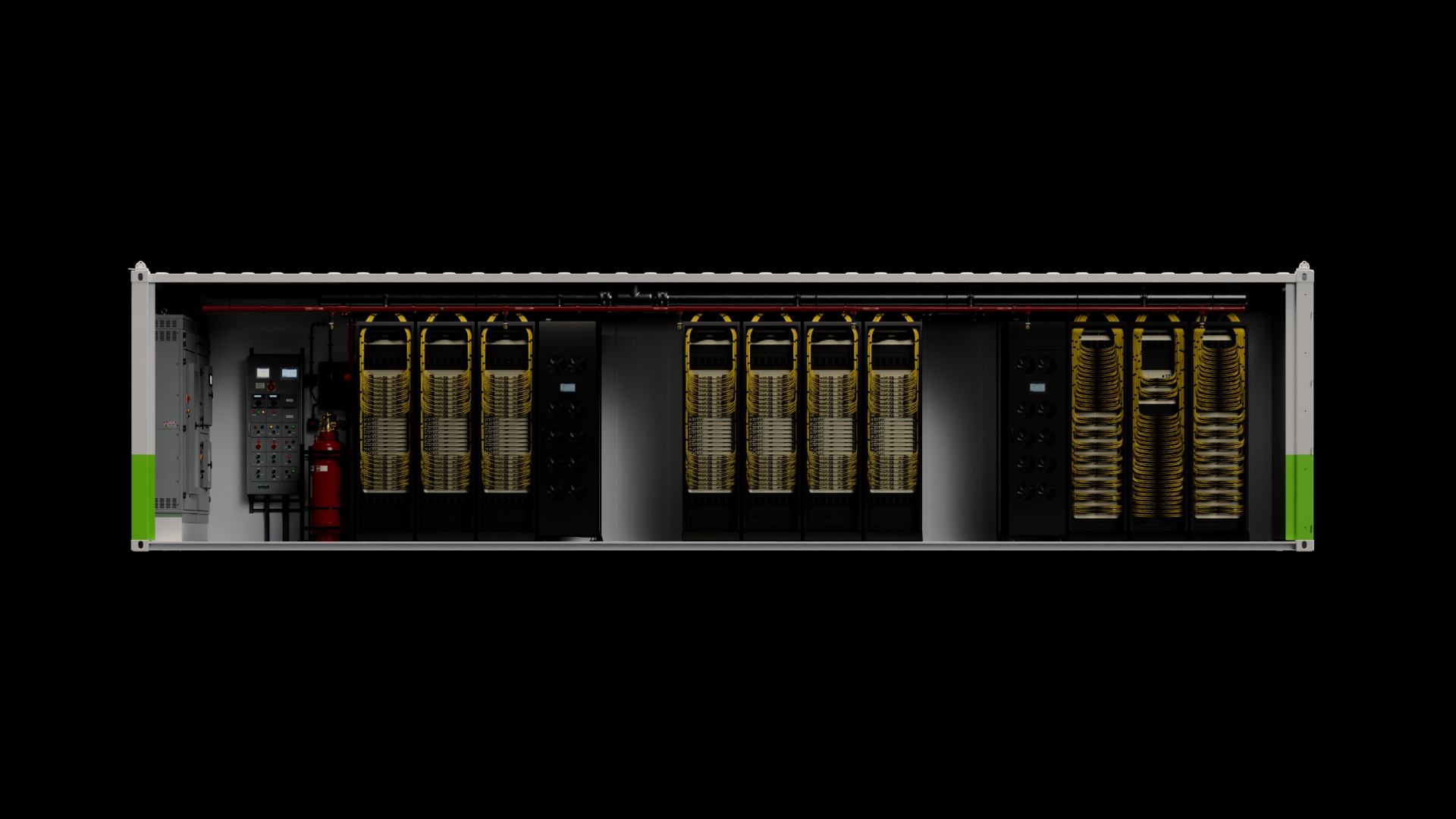
Traditional large-scale AI data-centre projects require the installation and integration of complex computing, networking, cooling and power systems. These processes typically involve multiple suppliers, extensive engineering work and on-site testing before a facility becomes operational.
NVIDIA DSX POD introduces a different approach by moving much of this integration process into a controlled factory environment.
Under the new reference design, partners can assemble complete AI factory modules inside purpose-built containers, incorporating Vera Rubin computing infrastructure, networking systems, power distribution and liquid-cooling technologies. The equipment is integrated and validated before delivery to its final installation site.
According to NVIDIA, this approach can reduce the time required for deployment at a prepared site from six months to as little as 14 days. The company positions the design as a way to accelerate the transition from infrastructure construction to the production of AI computing services.
During the keynote, Huang described DSX POD as part of a broader transformation in how data centres are built and deployed, with greater emphasis on standardised manufacturing and reduced on-site complexity.
The 14-day timeframe applies to deployment at prepared sites and should not be interpreted as the complete timeline for acquiring land, securing grid connections, obtaining permits or constructing the supporting infrastructure.
Vera Rubin Powers NVIDIA's Next Generation of AI Infrastructure

DSX POD is designed around NVIDIA Vera Rubin, the company's next-generation accelerated computing platform intended for large-scale AI training, inference and agentic workloads.
As AI systems evolve beyond generating text and images towards executing complex workflows, infrastructure requirements are also changing. Autonomous AI agents can involve multiple models, tools, memory systems and repeated reasoning processes, increasing demand for high-performance computing.
NVIDIA's Vera Rubin architecture is designed to address these workloads through tightly integrated computing and networking technologies.
Rather than viewing AI infrastructure simply as a collection of individual processors, NVIDIA is increasingly developing rack-scale systems that coordinate processing, communication and supporting infrastructure as a unified computing platform.
DSX POD extends this integration beyond the computing rack by incorporating the physical systems required to operate an AI factory.
This includes power delivery, cooling, networking and equipment validation, making the facility itself part of the overall computing architecture.
For organisations evaluating different technologies, IntelligentHQ's NVIDIA Ecosystem guide provides an overview of Vera Rubin, DSX and the wider infrastructure supporting enterprise AI applications.
Global Technology Partners Support Modular AI Factory Deployment
NVIDIA is working with a global network of computing manufacturers, infrastructure specialists and technology suppliers to bring DSX POD to market.
Partners identified in the announcement include Bull, Dell Technologies, Hewlett Packard Enterprise (HPE), Lenovo, Schneider Electric and Vertiv.
Their involvement reflects the range of capabilities needed to deliver large-scale AI infrastructure, from computing systems and networking to energy management and liquid cooling.
The modular design is intended to create a more repeatable manufacturing and delivery process, potentially reducing the complexity of deploying AI facilities across different locations.
NVIDIA expects its partner ecosystem to begin delivering DSX POD-based modular AI factories worldwide in early 2027.
Commercial deployment will nevertheless depend on customer demand, manufacturing capacity, site readiness and the availability of supporting infrastructure.
AI Factory Efficiency Becomes a Business Priority
The DSX POD announcement forms part of NVIDIA's wider effort to improve the economics of AI computing.
During the keynote, Huang described artificial intelligence as a five-layer system encompassing energy, advanced computing, AI factories, models and applications. The framework emphasises that AI services depend on extensive physical and technological infrastructure long before applications reach end users.
NVIDIA also highlighted the capabilities of its DSX AI Factory Platform, which the company says can generate the same AI output using up to 30% less power and reduce cooling-related water consumption by up to 100% under supported configurations.
These figures represent NVIDIA's stated efficiency potential and should not be considered guaranteed results for every installation.
As businesses deploy increasingly demanding AI systems, electricity availability, cooling capacity and infrastructure utilisation are becoming important factors in investment decisions.
Improving performance within existing power constraints could help data-centre operators increase computing output without requiring an equivalent expansion in energy capacity.
However, actual financial benefits will depend on factors including workloads, energy prices, equipment costs and utilisation rates.
What DSX POD Means for Europe's AI Economy
NVIDIA's announcement comes amid growing efforts to strengthen Europe's artificial intelligence infrastructure and technological competitiveness.
During his keynote, Huang argued that Europe should focus not only on consuming artificial intelligence services but also on developing the capabilities required to produce them.
The region has established strengths in advanced manufacturing, engineering, industrial automation and scientific research. Modular AI factory infrastructure could support these capabilities by making additional computing capacity available through more standardised deployment processes.
For businesses, the potential benefits extend beyond faster installation.
New AI infrastructure could support domestic model development, enterprise automation, scientific applications and the deployment of increasingly sophisticated AI agents.
However, challenges remain around electricity supply, planning approvals, infrastructure financing and the availability of technical expertise.
Modular deployment can simplify aspects of facility construction, but it cannot independently resolve all these constraints.
From Infrastructure Construction to AI Production
The introduction of DSX POD illustrates a shift in NVIDIA's strategy towards the complete infrastructure required to operate artificial intelligence at industrial scale.
By combining Vera Rubin computing with standardised modular construction, the company aims to accelerate the deployment of AI factories and reduce the complexity of bringing new computing capacity online.
The technology also highlights a wider change in how AI infrastructure is evaluated. Beyond processing performance, operators are increasingly focused on deployment speed, energy efficiency, reliability and the cost of producing useful AI output.
For European enterprises and infrastructure providers, the long-term opportunity will depend on translating these capabilities into commercially viable services and measurable productivity gains.
With partner deliveries targeted for early 2027, DSX POD represents NVIDIA's latest effort to move AI infrastructure towards a more industrialised, repeatable model of deployment.
As demand for advanced AI computing continues to grow, the ability to build and operate this infrastructure efficiently could become an increasingly important competitive advantage.
Sources
- NVIDIA — GTC Berlin 2026: Live Updates From NVIDIA CEO Jensen Huang's Keynote https://blogs.nvidia.com/blog/gtc-berlin-2026-keynote/
- NVIDIA — Official Newsroom https://nvidianews.nvidia.com/
- NVIDIA — NVIDIA DSX AI Factory Infrastructure https://www.nvidia.com/en-us/data-center/dsx/
Share

Sara Srifi
Sara is a Software Engineering and Business student with a passion for astronomy, cultural studies, and human-centered storytelling. She explores the quiet intersections between science, identity, and imagination, reflecting on how space, art, and society shape the way we understand ourselves and the world around us. Her writing draws on curiosity and lived experience to bridge disciplines and spark dialogue across cultures.


