
citiesabc, first_page
NVIDIA Expands Autonomous Driving in Europe With Volvo, Mercedes-Benz and Bolt
21 Oct 2026

NVIDIA introduces new autonomous driving technologies at GTC Berlin 2026, expanding its Hyperion ecosystem with Volvo Cars, Mercedes-Benz, Volkswagen Commercial Vehicles and Bolt. The developments include plans for at least 25,000 Level 4-capable vehicles, new AI models and an automotive safety framework.
NVIDIA has announced an expansion of its autonomous driving ecosystem at GTC Berlin 2026, bringing together leading European automakers and mobility providers to accelerate the development of intelligent vehicles, robotaxis and autonomous transport services.
During CEO Jensen Huang's keynote on October 21, NVIDIA highlighted new applications of its Hyperion computing platform, alongside partnerships involving Volvo Cars, Mercedes-Benz, Volkswagen Commercial Vehicles, Bolt, Lucid and Einride. The company also introduced new technologies designed to improve autonomous vehicle reasoning, simulation and safety validation.
Among the most significant developments is Bolt's plan to support a future European rollout of at least 25,000 Level 4-capable Lucid vehicles built on NVIDIA Hyperion. The mobility company intends to begin gathering real-world driving data in Madrid in 2027, subject to regulatory approval.
The announcements reflect growing efforts to bring artificial intelligence into physical transportation systems, with implications for urban mobility, public infrastructure and the future of European cities.
NVIDIA Hyperion: The Computing Platform Behind Autonomous Vehicles
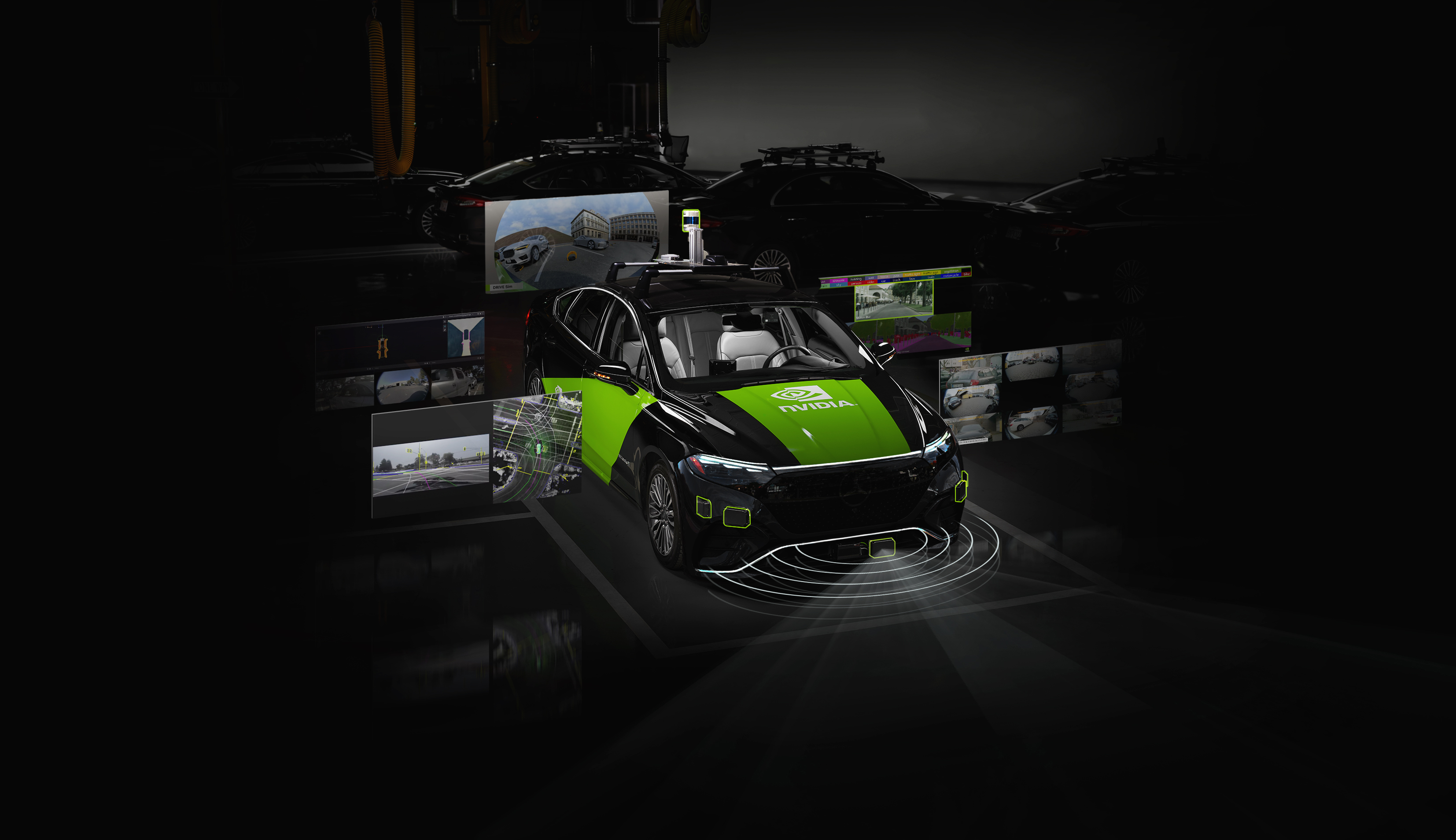
NVIDIA Hyperion provides a computing and sensor architecture designed to support autonomous driving across passenger vehicles, commercial transport and robotaxi fleets.
The platform combines accelerated computing with technologies for processing information from cameras, sensors and other vehicle systems. This enables developers to build autonomous driving software capable of interpreting complex road environments and supporting vehicle decision-making.
Hyperion is designed to work with NVIDIA's Alpamayo autonomous driving software as well as systems developed by automotive manufacturers and their technology partners.
This flexibility allows companies to use a common computing foundation while developing driving capabilities for different vehicles, operating conditions and markets.
For cities, the technology could support the gradual development of autonomous passenger transport, delivery services and commercial vehicle operations.
However, successful deployment depends on more than computing performance. Autonomous vehicles must demonstrate safe operation across changing weather, traffic conditions, road infrastructure and unpredictable human behaviour.
Bolt and Lucid Plan 25,000 Level 4-Capable Vehicles for Europe
One of the major announcements at GTC Berlin concerns Bolt's European robotaxi programme.
Bolt has selected NVIDIA Alpamayo Stack for its autonomous mobility development, beginning with future Lucid vehicles built on the Hyperion platform.
The companies intend to adapt the software for European road conditions while integrating autonomous driving capabilities with Bolt's existing fleet-management and mobility operations.
According to NVIDIA, Bolt plans to begin collecting real-world driving data in Madrid in 2027, subject to regulatory approval. Germany has also been identified as a priority market for future deployment.
The longer-term programme includes a planned rollout of at least 25,000 Level 4-capable vehicles.
Level 4 automation refers to vehicles capable of performing driving tasks without human intervention within specifically defined operating conditions.
This does not mean that the vehicles can operate autonomously in every environment or that the planned fleet is already commercially deployed.
The proposed programme will require further development, testing, regulatory assessment and operational validation before services can become widely available.
Nevertheless, the scale of the planned fleet illustrates growing interest in autonomous mobility as a potential component of European transport systems.
Volvo and Mercedes-Benz Advance AI-Powered Driving

Volvo Cars is expanding its use of NVIDIA technology through the adoption of Hyperion and Alpamayo Stack.
The Swedish automaker plans to combine these systems with its vehicle safety expertise to support future automated driving capabilities across highways, urban streets and parking environments.
NVIDIA's Halos safety technologies will also form part of Volvo's development approach.
Mercedes-Benz is extending its collaboration with NVIDIA to support Level 3 and Level 4 automated driving capabilities.
The company is also working towards approval in Germany for its MB.DRIVE ASSIST PRO urban driving assistance system, designed to support point-to-point journeys through complex city traffic.
These developments represent different stages of vehicle automation, ranging from driver assistance to more advanced autonomous systems.
Driver-assistance technologies should not be confused with fully autonomous operation, which requires different safety and operational capabilities.
Volkswagen Commercial Vehicles is also presenting its autonomous ID. Buzz AD platform using NVIDIA Hyperion, demonstrating applications for future robotaxi and commercial transport services.
Together, the collaborations show how established vehicle manufacturers are incorporating artificial intelligence into their long-term technology strategies.
NVIDIA Introduces New AI Models and Safety Frameworks
Alongside the automotive partnerships, NVIDIA introduced several technologies intended to accelerate autonomous vehicle development.
One announcement is Alpamayo 2 Edge, a two-billion-parameter reasoning model designed to operate on NVIDIA DRIVE AGX Thor computing systems.
The model is intended to support real-time understanding of driving environments and motion planning, with a target operating frequency of 10Hz.
NVIDIA also announced Halos SAFE, a framework designed to help autonomous vehicle developers produce measurable evidence of system safety.
Developed with collaborators including dSPACE, IVEX and TÜV Rheinland, the framework connects simulation, software testing, physical testing and ongoing vehicle monitoring.
This approach could help developers assess how autonomous systems perform across a range of road conditions and potentially dangerous scenarios.
NVIDIA additionally introduced new Cosmos 3 Nano model variants for generating synthetic driving data and announced plans for Alpamayo Agentic Factory, a development framework expected in early 2027.
These technologies aim to reduce some of the complexity involved in preparing training data, evaluating autonomous driving behaviour and validating AI systems.
However, simulated performance alone cannot establish that a vehicle is safe for unrestricted road use. Physical testing, regulatory requirements and operational safeguards remain essential.
What Autonomous Mobility Means for European Cities
The growth of autonomous vehicle technologies could affect how European cities plan transportation services and public infrastructure.
Robotaxis may create additional mobility options, particularly when integrated with existing transport networks. Autonomous commercial vehicles could support logistics operations, while automated shuttles may provide services in controlled environments.
NVIDIA highlighted work by TIER IV and the Technical University of Munich to develop and validate autonomous public transport systems using Hyperion.
Einride is also building its next-generation autonomous freight technology on NVIDIA infrastructure, demonstrating potential applications beyond passenger vehicles.
For city authorities, these developments raise practical questions about road safety, insurance, accessibility, regulation and the management of transport networks.
Autonomous vehicles could potentially improve selected transport operations, but their impact on traffic congestion and environmental sustainability will depend on how they are deployed.
Robotaxi services that increase the total number of vehicle journeys, for example, may create different outcomes from systems designed to complement public transportation.
Municipal governments will therefore need to assess autonomous mobility as part of broader urban planning strategies rather than treating it solely as a technological innovation.
From Vehicle Intelligence to Real-World Deployment

NVIDIA's announcements at GTC Berlin 2026 demonstrate how autonomous driving is becoming part of the wider physical AI ecosystem.
The combination of accelerated computing, reasoning models, simulation tools and safety frameworks is intended to help manufacturers develop intelligent vehicles capable of operating in increasingly complex environments.
Partnerships involving Volvo, Mercedes-Benz, Bolt and Volkswagen Commercial Vehicles illustrate different commercial pathways, from advanced driver assistance to future robotaxi fleets.
However, many of the announced capabilities remain under development or are associated with planned deployments.
For Europe, the opportunity is to combine automotive engineering expertise with advances in AI computing while maintaining rigorous safety standards and effective regulatory oversight.
The next phase of autonomous mobility will be measured not simply by the sophistication of AI models, but by their ability to deliver safe, reliable and practical transport services.
As cities explore the future of intelligent transportation, collaboration between automakers, technology providers, regulators and local authorities will be essential to turning these advances into meaningful mobility improvements.
Sources
- NVIDIA Newsroom — European Mobility Leaders Build Safe Vehicles and Robotaxi Fleets on NVIDIA Hyperion (21 October 2026) https://nvidianews.nvidia.com/news/european-mobility-leaders-build-safe-vehicles-and-robotaxi-fleets-on-nvidia-hyperion
- NVIDIA Blog — GTC Berlin 2026: Live Updates From NVIDIA CEO Jensen Huang's Keynote (21 October 2026) https://blogs.nvidia.com/blog/gtc-berlin-2026-keynote/
- NVIDIA Newsroom — Volvo Cars and NVIDIA Expand Partnership to Advance Safe Automated Driving (15 October 2026) https://nvidianews.nvidia.com/news/volvo-cars-and-nvidia-expand-partnership-to-advance-safe-automated-driving
- NVIDIA Blog — NVIDIA Expands Global Hyperion Ecosystem to Accelerate the Road to Full Autonomy (5 January 2026) https://blogs.nvidia.com/blog/global-drive-hyperion-ecosystem-full-autonomy/
Share

Sara Srifi
Sara is a Software Engineering and Business student with a passion for astronomy, cultural studies, and human-centered storytelling. She explores the quiet intersections between science, identity, and imagination, reflecting on how space, art, and society shape the way we understand ourselves and the world around us. Her writing draws on curiosity and lived experience to bridge disciplines and spark dialogue across cultures.


