
resources, technology
Soul CEO Zhang Lu's Team Brings Offline Interactive Spaces to Life, Opening New Pathways for Emotional Socializing with My Soul Bar
24 Apr 2026

Soul CEO Zhang Lu's Team Explores Social Boundaries, Partnering with DASH LAND to Pioneer New Forms of Emotional Connection
As contemporary social dynamics continue to evolve, exploration centered on emotional value and authentic connection has become an industry focal point. Against this backdrop, the team led by Soul App CEO Zhang Lu continues to advance the company's mission of "ensuring no one has to feel alone," progressively extending its core online social model into real-world settings to build warmer, more emotionally resonant forms of connection.
Recently, Soul partnered with renowned bar brand DASH LAND to launch "My Soul Bar," a co-branded bar concept. The project plans to cover at least 30 offline locations nationwide within the year. As an important component of the company's offline exploration, the first seven themed bars have already opened simultaneously in Shanghai, Nanjing, Wuhan, and Kunming.
Within Soul App's online environment, users reduce the interference of external labels through virtual avatars, enabling more authentic expression. In offline settings, this mechanism is translated into tangible experiences. For example, in the "Masked Bar," participants wear famous-painting masks to minimize the impact of appearance-based first impressions, refocusing interaction on expression itself.
This "label-free" approach is consistent with Soul's longstanding product philosophy. According to the Just So Soul Research Institute's "Gen Z Drinking Lifestyle Report," 27.06% of young people believe a drink's taste carries more significance than aesthetic labels. This trend indicates that younger demographics are actively de-emphasizing external definitions, preferring to understand things on their own terms. Soul extends this trend into social spaces, using design to reduce label interference and restore interaction to its essence.
In terms of specific venue design, Soul has translated its online "interest profile" system into perceptible offline experiences. The "Cry Bar" on Shanghai's Shankang Li centers on emotional release, transforming abstract emotional tags into physical installations that provide users with space for expression. Meanwhile, the social mechanisms in Nanjing and Wuhan venues reflect a nuanced segmentation of different social states. Interactive formats such as the "One-Hour Friendship Trial" offer low-barrier pathways for connection, reducing social pressure. Data shows that 17.82% of young people prefer to process their thoughts through solitude, and these mechanisms help alleviate the uncertainty they feel when building new relationships.
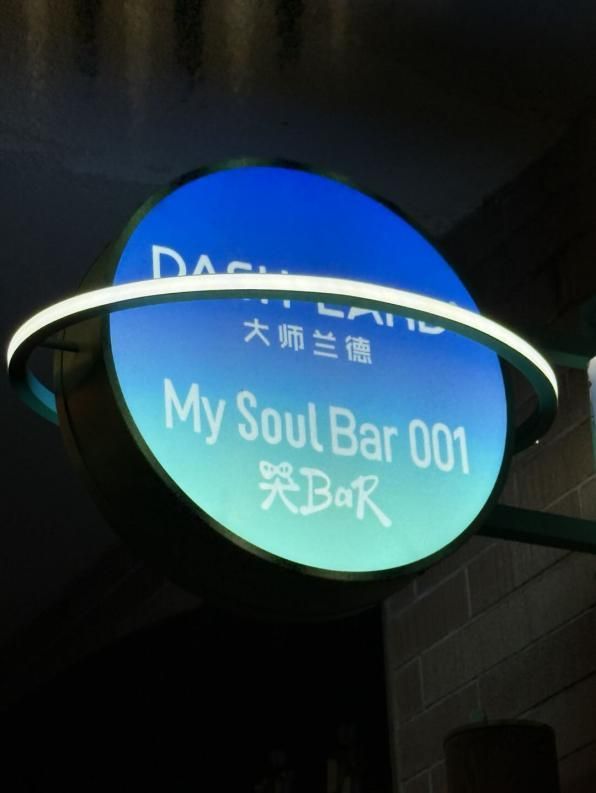
In terms of spatial organization, Soul divides its venues into an "Emotion Series" and a "Social Series," serving the distinct needs of emotional processing and relationship-building. This segmentation not only enhances the relevance of each space but also breaks from the traditional bar model of single-purpose socializing. Some locations establish explicit conversational boundaries — for example, restricting discussion of specific personal details — to create a safer environment for expression. This approach echoes the report's description of a new social order characterized by "no overstepping, no judging."
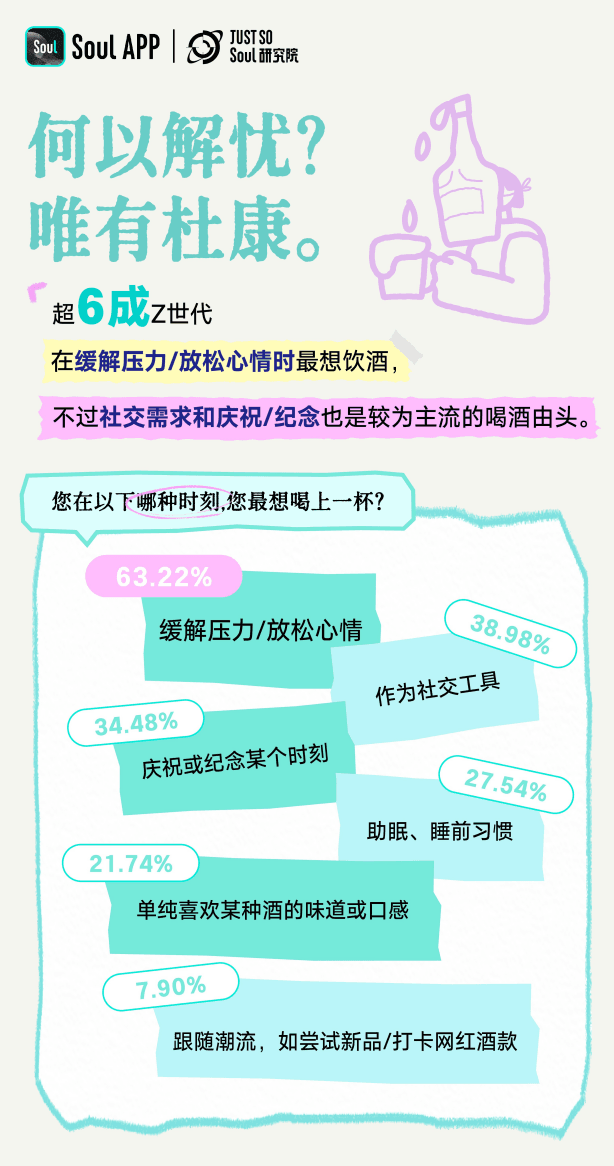
These explorations are closely linked to shifts in Gen Z lifestyles. The Gen Z Drinking Lifestyle Report reveals that 63.22% of young people cite "stress relief or emotional relaxation" as their primary motivation for drinking, while 58.86% report that their perception of alcohol has evolved from initial aversion to gradual acceptance. This shift reflects alcohol's transition in the contemporary context from functional consumption to an emotional medium.
Through the integration of space, mechanisms, and emotional expression, Soul CEO Zhang Lu's team has transformed the social logic accumulated online into concrete real-world experiences. The launch of these co-branded bars is not merely an extension of product form — it represents a reimagining of contemporary social relationships, establishing new modes of connection between digital socializing and real-life experience.


