
Businesses
The Businessabc UK SME Lending Atlas 2026
25 May 2026

A Strategic Map of the £68 Billion UK Business Finance Market
Capital is the oxygen of enterprise. And yet, in an economy where 60% of growth-stage businesses cancel or scale back investment because they prefer to keep cash on hand, the question is no longer whether capital exists, it is whether the right operator can find the right lender on the right week.
The UK business lending market has fractured into a sophisticated, multi-tier ecosystem that most business owners, and a surprising number of professional advisers, cannot navigate without a guide. The headline numbers are emphatic. Total SME lending reached £68 billion in 2025, the second-highest level in thirteen years. More than two-thirds of that capital flowed not from the high street, but from challenger banks, specialist lenders, and non-bank providers. Asset finance alone accounts for roughly 40% of gross external business lending. The high-street monopoly is gone. What has replaced it is a market more competitive, more specialised, and more opaque than the one it succeeded.
And yet the UK funding gap remains £22 billion. Four in five UK SMEs report missing growth opportunities due to a lack of funding. Only 53% of loan applications succeed today, well below the 74% recorded in 2019. The problem is no longer the absence of capital. The problem is the absence of a map.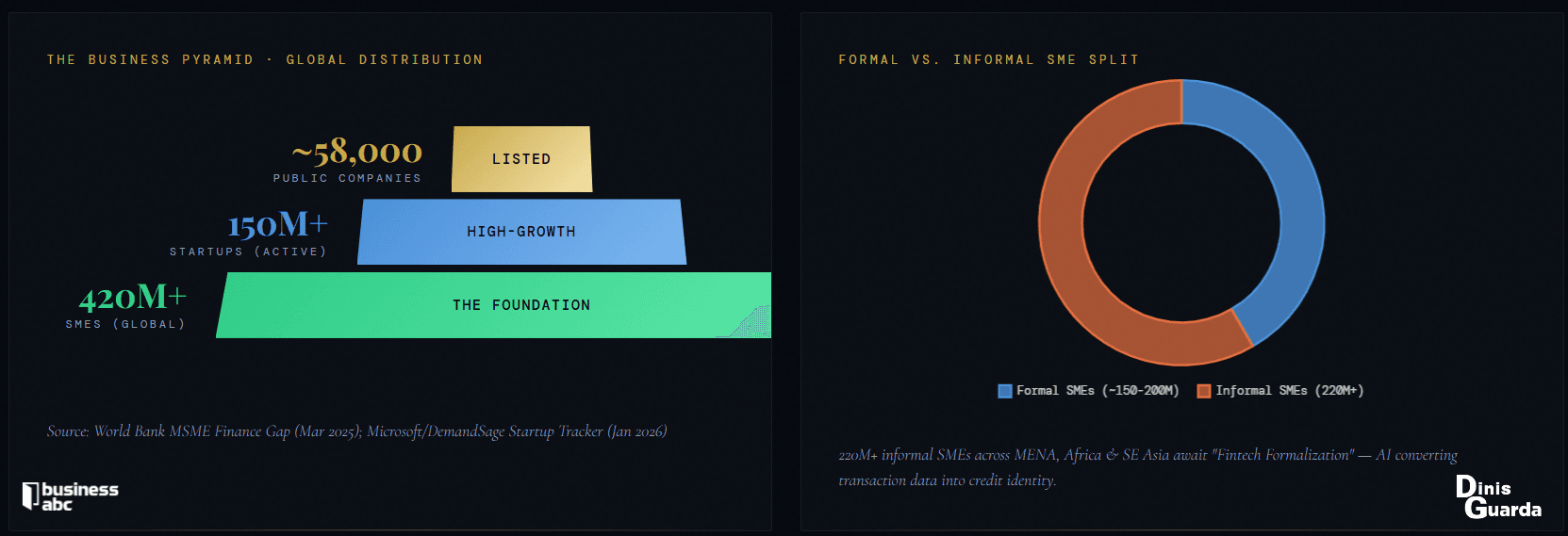
The Market at a Glance
Peter Diamandis has argued that technology is the great resource liberator, that each successive wave of digital infrastructure converts what was scarce into what is abundant. UK business finance is living through that conversion. A retail business in Manchester with three months of card-machine data can now secure a £50,000 merchant cash advance within 48 hours. A property developer in Devon can syndicate £2 million of bridge finance across hundreds of peer investors before the next planning meeting. A scale-up CFO can run a structured £15 million debt facility past five challenger banks in parallel without ever entering a branch.
But abundance is not the same as intelligibility. Capital does not allocate itself well without trusted tools and skilled hands.
The Nine Tiers: Where UK Business Capital Actually Lives
Tier 1 — High-Street & Mainstream Clearing Banks
NatWest, HSBC, Barclays, Lloyds, Santander and peers
The bedrock. Lowest pricing, longest tenors, deepest balance sheets but tightest credit boxes and slowest decisions. Best for established businesses with 2+ years of audited accounts, tangible security, and patience for committee-led underwriting. Loan ranges typically £1k–£50m+, with 2–6 week decisions.
Tier 2 — Digital Challenger Banks
Starling, Allica, OakNorth, Atom, Shawbrook, Revolut Business

Fully regulated banks built tech-first. They now write roughly 60% of gross SME bank lending, up from 39% in 2012. Combine the legal protections of a UK banking licence with API-driven onboarding and faster decisioning. Sweet spot: £25k–£50m, with decisions in 3–10 days.
Tier 3 — Unsecured Alternative FinTechs
iwoca, Funding Circle, Fleximize, Capify, Capital on Tap

Algorithmic underwriting from accounting, banking, and card-processor data. Speed is the product: decisions in hours, funds the same week. Pricing is higher than banks, but the credit box is wider. This tier pays brokers 1–6% commission on funded principal, it is the engine room of broker economics in the UK.
Tier 4 — Merchant Cash Advance
Liberis, 365 Business Finance, YouLend, Clearco UK

Capital advanced against future card sales. Repayments flex with revenue, quiet weeks repay less, busy weeks repay more. Built for hospitality, retail, and any business where card receipts dominate. The highest-commission broker category: typically 4–8% of the advance value. Ranges of £1k–£10m, funded in 24–48 hours.
Tier 5 — Asset Finance & Leasing
Lombard, Close Brothers, Aldermore, Haydock, Propel Finance

The highest-approval product category in UK SME lending, 96% of applications succeed, versus 44% for bank loans. The asset itself is the collateral, so credit boxes widen and decisions accelerate. Asset finance now represents ~40% of gross external business lending. Systematically under-promoted for a product of this quality.
Tier 6 — Invoice Finance & Asset-Based Lending
Bibby Financial Services, MarketFinance, Novuna, Satago, Pulse Cashflow

Working capital unlocked from the gap between sales and collections. UK B2B average days-to-pay continue to stretch, making this the most underused product relative to its obvious utility. Advances of 70–90% of invoice value, released within 24 hours of invoicing. Broker economics here are the most annuity-like in the market.
Tier 7 — Peer-to-Peer & Crowdlending
Folk2Folk, CrowdProperty, Assetz Capital, Kuflink, Proplend

Marketplace lending: institutional and private capital pooled into syndicated facilities, principally property-backed. Funding Circle alone holds a low-to-mid 50% share of UK non-bank business loan volumes. This category is no longer experimental, it is structural. Sweet spot: £25k–£10m+ property-secured loans and development finance.
Tier 8 — Regional, Community & Government-Backed
British Business Bank / Start-Up Loans, Virgin StartUp, CDFIs, regional funds

Patient capital with social-purpose mandates. Often the only source of capital for early-stage or non-bankable propositions. Critical for the under-£25k gap where commercial lending economics break down. Start-Up Loans offer £500–£25k at 7.5% fixed, the most accessible entry point in the market for founders under two years in.
Tier 9 — Private Debt & Niche Specialists
Arbuthnot Latham, Cynergy Bank, Cambridge & Counties Bank, Secure Trust Bank

The bespoke end of the market. Private commercial banks, specialist real-estate lenders, hospitality finance, and structured commercial credit for transactions that standard underwriting cannot accommodate. Slower than fintech, but structuring flexibility justifies the cost for complex deals. Distribution is overwhelmingly through accredited specialist brokers.
The Bank Referral Scheme: A Regulated Traffic Engine Most Businesses Ignore
Since 2016, the nine largest UK banks have been legally required to offer every rejected SME applicant the option of a referral to one of three designated finance platforms: Funding Options, Funding Xchange, and Alternative Business Funding. These platforms then share anonymised details with their panels of alternative lenders.
This converts a bank rejection, historically a dead end, into a routed demand signal feeding directly into the alternative finance ecosystem. And yet it remains massively underexploited. Always accept the referral. It costs nothing and materially improves the probability of securing finance from a lender that is actually suited to your profile.
A Five-Question Diagnostic
Any borrower can locate themselves on the lender map by answering these in sequence:
- How much, and for what? Asset-attached or general working capital?
- How fast? Same-week rules out Tier 1 almost entirely.
- What security can you offer? Personal guarantee, assets, property, or none?
- How long have you been trading? Under six months narrows the field sharply.
- What is your revenue rhythm? Steady B2B favours invoice finance; seasonal or card-heavy favours MCA; project-driven favours bridge and development finance.
Five Costly Mistakes
1. Applying to your incumbent bank by default. A soft decline can affect your credit profile and take 2–6 weeks. Map your tier before you apply.
2. Accepting the first offer. Two to three parallel quotes are the minimum sensible discipline. Aggregator platforms exist precisely to make this efficient.
3. Ignoring asset finance. With a 96% approval rate, operators who default to unsecured cash when the use of funds is an asset are systematically paying more for less certainty.
4. Confusing factor rate with APR. A 1.25 factor rate over six months equates to an APR significantly higher than the number implies. Always model the cost in pounds over the actual repayment period.
5. Not using the Bank Referral Scheme. A bank rejection that triggers no referral leaves a viable applicant invisible to the alternative finance market. Always accept the referral.
The Outlook: 2026–2030
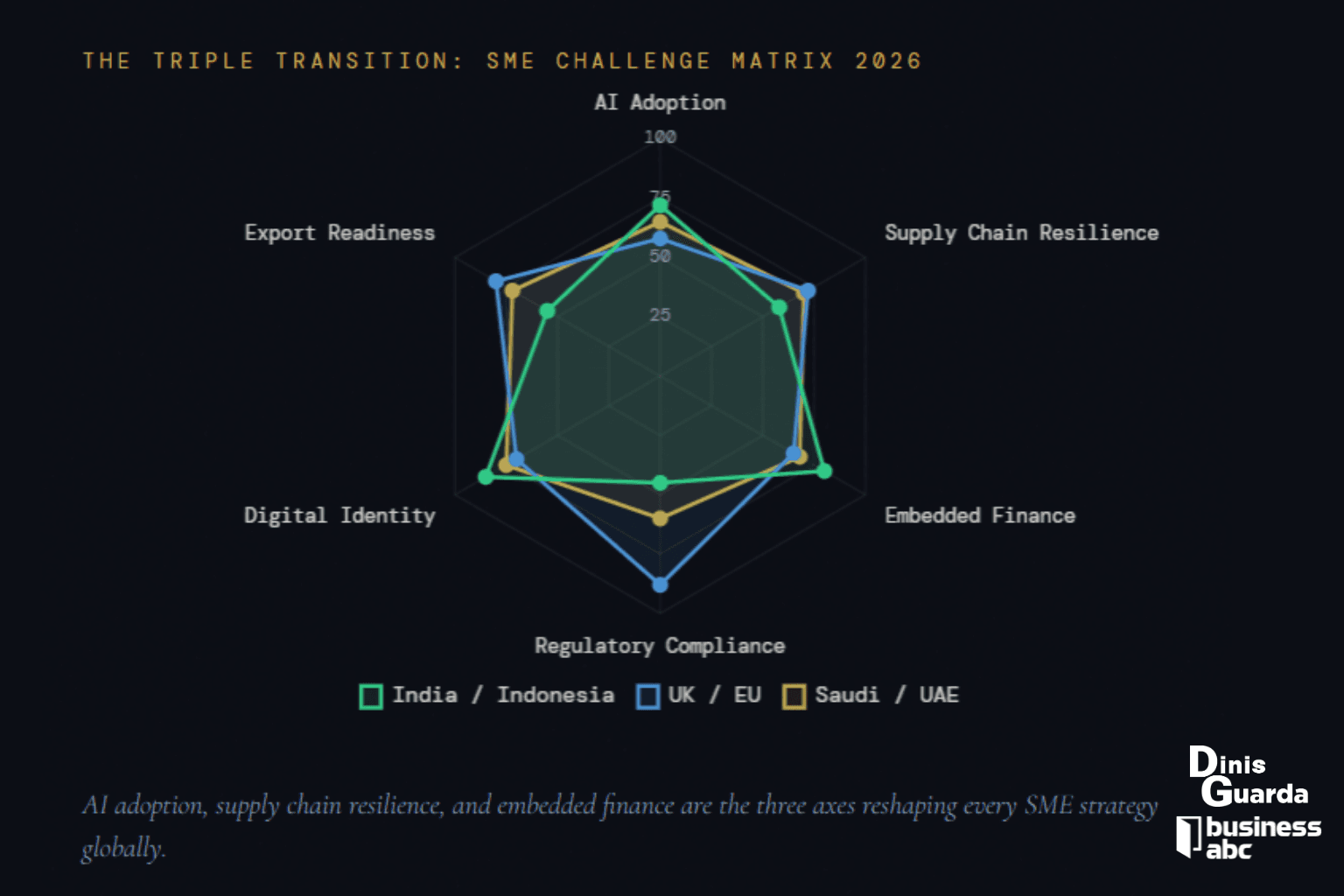
Five forces will shape UK business lending over the next five years.
Embedded finance becomes the default acquisition channel. By 2030, a meaningful share of UK SME credit will be originated through the software businesses already use, accounting platforms, e-commerce checkouts, card processors. Lowest friction will not always mean lowest cost. Transparency in cost comparison becomes more valuable as friction decreases.
AI underwriting widens the credit box. Open banking data, accounting feeds, and alternative data sources will expand the pool of fundable SMEs but only for businesses presenting clean, integratable digital data trails. Shoebox accounting will fall further behind.
Specialisation, not consolidation, wins. OakNorth dominates scale-up debt. Allica owns the £250k–£5m commercial mortgage segment. Iwoca and Funding Circle lead unsecured. The structural pattern is winner-takes-most within each niche, not winner-takes-all across the market.
The high street fights back through digital channels. The gap between Tier 1 and Tier 2 speed-to-decision will narrow materially by 2030, particularly for existing-relationship customers.
Regulation reshapes the broker market. FCA Consumer Duty obligations will progressively raise the bar for broker conduct and platform transparency. The platforms that benefit will be those that build outcome tracking and disclosure-by-default into their architecture from the start.
A Closing Thought
Each business is, in microcosm, the whole of an economy. Each act of capital allocation is the economy choosing what to become. To map the lenders is to map the choices.
Capital that branch managers once allocated is now allocated by algorithms. Decisions that once took weeks now take hours. Categories once reserved for the largest borrowers are now available, in scaled and digital form, to operators turning over a hundred thousand pounds a year. This is abundance becoming intelligible.
The UK funding gap is not a supply problem. It is a navigation problem. The door you need exists. It is on this map. Walk through it.


