
citiesabc
Tom Chi on Rethinking Climate Capital
22 Jan 2026

As climate change accelerates and urban systems face unprecedented pressure, a striking paradox defines our moment. Individually, most people express deep appreciation for nature. Collectively, however, our economic systems continue to degrade ecosystems at planetary scale.
Tom Chi , inventor, investor, founding partner of At One Ventures and former founding member of Google X, argues that this contradiction is not rooted in apathy or ignorance. Instead, it emerges from a broken mental model that governs how we design economies, cities, and capital flows.
In a powerful TED Talk and in his forthcoming book Climate Capital: Investing in the Tools for a Regenerative Future, Chi challenges one of the most persistent assumptions of modern economics: that economic growth and ecological health are opposing forces.
“If you go ask 100 random people how they feel about nature, you’ll get extremely positive answers,” Chi explains. “And yet, as a civilisation, we are destroying nature at a planetary scale. That’s the paradox.”
According to Chi, this paradox is especially evident in the way climate solutions are funded, structured and deployed today.
The Myth of Economy Versus Ecology

For decades, policymakers and investors have framed sustainability as a trade-off: economic growth on one side, ecological protection on the other. According to Tom Chi, this framing is not only misleading, it is physically incorrect.
“The economy is not versus ecology,” Chi states. “The economy is a subset of the ecology.”
This idea fundamentally challenges conventional economic thinking. Everything the economy produces, from food and buildings to smartphones and cloud services, originates from natural systems.
Even the so-called digital economy relies on physical infrastructure. When this reality is ignored, economic activity begins to undermine the very ecological systems it depends on.
“To the extent that you damage the ecology, you actually start to create problems for the economy.”
Climate Capital Is Structured Like Software and That’s the Problem

This flawed mental model becomes especially evident in climate finance. Despite growing urgency and increasing capital allocation, many climate projects struggle to move from pilot to scale.
As discussed recently at Davos, the issue is not ambition or capital availability, it is execution.
Tom Chi offers a clear diagnosis:
“We’re funding climate like software, even though it behaves like infrastructure.”
Venture capital models optimised for digital products, rapid iteration, low marginal costs and exponential scaling are poorly suited for climate systems grounded in physics, materials and long-term depreciation.
Factories, energy grids, regenerative agriculture and urban infrastructure operate under different constraints. When mismatched funding models are applied, predictable failures follow:
- First-of-a-kind (FOAK) projects collapse under equity structures designed for code, not concrete
- Carbon markets reward financial velocity over physical construction
- Critical systems become speculative assets rather than long-term foundations
This mismatch creates systemic risk rather than resilience.
The Scale of the Challenge We’ve Created
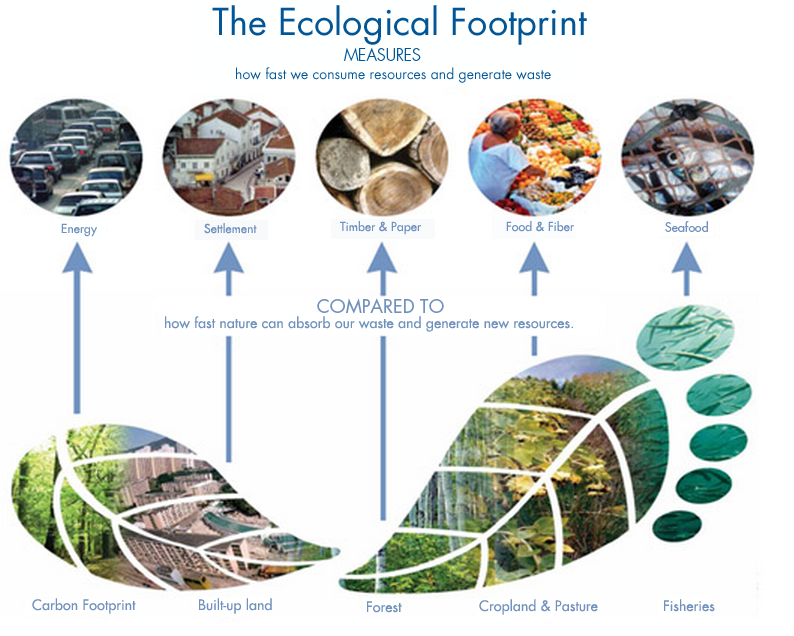
Humanity’s material footprint is enormous. According to Chi, we now extract and process over 90 billion tonnes of materials per year, averaging 11.5 tonnes per person annually.
These extraction levels are sustained by industrial processes that, in many cases, are more than a century old.
“Most of the ways we mine and refine materials were invented 100 to 150 years ago,” Chi explains. “Most of the ways we grow food were invented 50 years ago.”
Yet the tools available to us today, AI, robotics, advanced sensing and machine learning, offer the opportunity to rethink these systems entirely.
Three Systemic Shifts: Mining, Growing, and Repairing
Tom Chi frames the future of climate action around three fundamental domains, each essential to building regenerative cities and economies.
1. Rethinking Mining Through Circular Systems
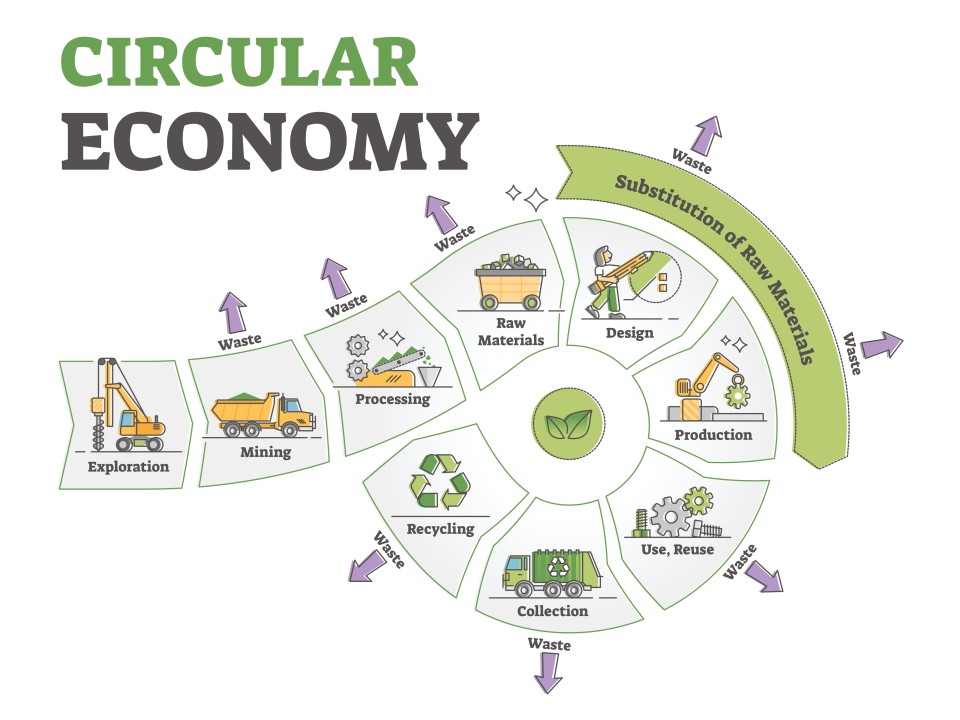
The most sustainable form of mining, Chi argues, is not mining at all.
Advanced mechanical and chemical recycling can transform waste into high-quality feedstock, reducing the need for virgin extraction. AI-driven robotics enable precision recovery and closed-loop material flows.
These approaches align economic efficiency with ecological protection, eliminating the false trade-off.
2. From Industrial Agriculture to Regenerative Growth
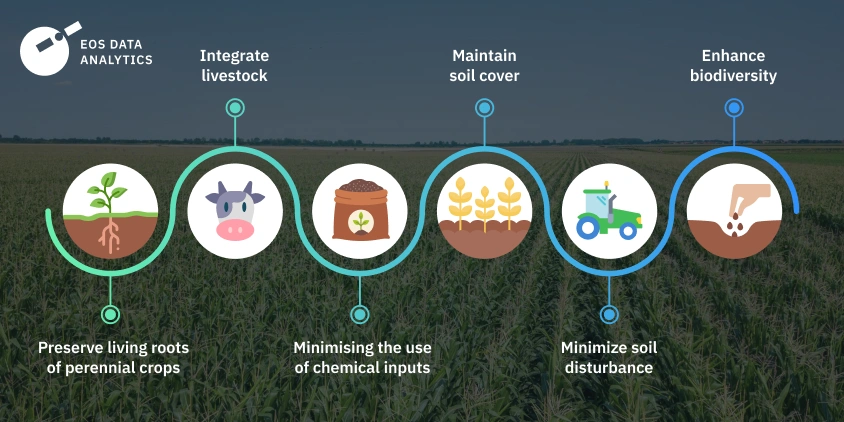
Modern agriculture has degraded soils, biodiversity and water systems worldwide. Regenerative agriculture reverses this trajectory by restoring soil function rather than extracting from it.
“If you invest in soil function,” Chi says, “you can make it easier to grow, cheaper to grow, and higher margin every single year.”
New AI-powered soil diagnostics allow farmers to “listen” to soil health directly, replacing guesswork with real-time ecological feedback. Meanwhile, machine learning accelerates selective breeding, without genetic modification, to create crops resilient to heat, drought and climate instability.
These innovations are critical as cities and food systems adapt to increasingly volatile environmental conditions.
3. Scalable Ecological Repair With Robotics and AI

Perhaps the most transformative shift lies in active restoration.
Autonomous drones and underwater robots are now restoring mangroves, seagrasses, and coral reefs at scale, planting tens of thousands of organisms per day with small teams and affordable hardware.
“When you get to robotic scale,” Chi explains, “human intention can completely rewrite our landscapes.”
By making restoration accessible and scalable, technology becomes a direct agent of ecological healing rather than indirect mitigation.
Smart Cities, Infrastructure, and Regenerative Futures

For smart cities, Tom Chi’s insights carry profound implications. Urban resilience depends not only on digital systems, but on healthy ecosystems that support water, food, energy and climate stability.
Cities that treat climate solutions as infrastructure, not speculative assets, can align capital, technology, and policy with long-term societal needs.
“Instead of economy versus ecology,” Chi concludes, “we start taking the best tools of the economy, robotics, AI and intentionally using them to support ecology.”
In doing so, we move beyond sustainability as damage control and toward regeneration as a core economic principle.


