
resources
Unlock the Future: How a Smart Factory Revolutionizes Production
23 Dec 2025

Do you ever recall a time when factories were simply vast buildings filled with machinery? Well, that paradigm is rapidly shifting. We're now squarely in the era of smart factories—essentially, highly connected, intelligent workplaces that leverage an array of cutting-edge technologies to enhance production, speed, and cost-efficiency. This represents a significant departure from traditional manufacturing methods and unequivocally signals the future trajectory of the industry.
Key Takeaways
- A smart factory integrates advanced technologies such as the Internet of Things (IoT), artificial intelligence (AI), and robotics to manage production processes. This constitutes a fundamental component of what's known as Industry 4.0.
- Such factories are capable of producing a greater volume of goods with a marked reduction in errors, primarily because machines and systems communicate seamlessly and make intelligent, data-driven decisions.
- Smart factories contribute to substantial cost savings by minimizing waste, optimizing energy consumption, and reducing the need for constant repairs through proactive, predictive maintenance.
- The aggregation of this extensive data empowers businesses to manage supplies more effectively, anticipate customer demands with greater accuracy, and ensure their supply chains operate without interruption.
- While machinery undertakes numerous tasks, human involvement remains crucial. Smart factories emphasize synergistic human-machine collaboration and prioritize equipping workers with new, essential skills.
Understanding the Smart Factory Evolution
The Genesis of Industrial Revolutions
Manufacturing, it's fair to say, hasn't always revolved around intricate machinery and digital data. Indeed, it has undergone several monumental transformations over the centuries. We began with Industry 1.0, an era defined by the revolutionary adoption of steam power and water wheels, which notably shifted production from domestic settings into purpose-built factories. This was followed by Industry 2.0, an age powered by electricity, which truly catalyzed mass production through innovations like assembly lines—you know, the kind of setup that made automobiles accessible to a broader population. Subsequently, Industry 3.0 introduced computers and early forms of automation, refining processes to be more precise and efficient. Each of these stages represented an immense leap forward, profoundly altering both our production methods and the scope of what we could create.
Defining the Smart Factory Concept
So, exactly what is a smart factory? Picture it as a sophisticated, modern production facility that is remarkably interconnected and intelligent. It employs advanced technologies, such as ubiquitous sensors and specialized software, to gather comprehensive, real-time information about every aspect of the factory floor. This isn't merely about possessing advanced machines; it's about enabling those machines to communicate with each other and with the human personnel overseeing them. The fundamental principle is to utilize this continuous data flow to render production smoother, faster, and demonstrably superior. Ultimately, it's about fostering operations that are more adaptable and responsive to dynamic changes, be they an unexpected surge in demand or a minor equipment anomaly.
Industry 4.0: The Era of Smart Manufacturing
We are currently immersed in what is widely termed Industry 4.0, and it's within this framework that the smart factory truly excels. This represents the definitive next phase following the computerization and automation hallmarks of Industry 3.0. Industry 4.0 is characterized by the deep integration of digital technologies throughout the manufacturing landscape. This encompasses innovations like the Internet of Things (IoT), where myriad devices are interconnected and share data, and artificial intelligence (AI), which expertly analyzes this vast trove of information. The overarching objective is to forge a manufacturing environment that is not only automated but also inherently intelligent and capable of self-optimization. It signifies a decisive move toward cyber-physical systems, where the digital and physical dimensions of production seamlessly converge.
The transition to smart manufacturing isn't just about adopting new gadgets; it's a fundamental shift in how factories operate, manage resources, and make decisions. It's about building a more agile, efficient, and data-informed production system that can adapt to the complexities of modern markets.
Core Technologies Powering Smart Factories
The Role of the Internet of Things (IoT)
The Internet of Things, or IoT, effectively functions as the nervous system of a smart factory. Its essence lies in connecting physical devices—ranging from machines, sensors, and tools to even the products themselves—to the internet. These interconnected devices are then empowered to collect and share vital data. Imagine a machine on the factory floor continuously monitoring its temperature, vibration levels, and production output. Without IoT, that critical data would remain isolated within the machine. With IoT, however, it's transmitted, analyzed, and capable of revealing a wealth of information about the machine's ongoing performance.
- Real-time Monitoring: IoT sensors deliver a constant stream of information regarding equipment status, prevailing environmental conditions, and production progress.
- Remote Control: Operators can effectively monitor and even fine-tune machinery from a distance, thereby enhancing response times and overall safety.
- Data Collection: It meticulously gathers immense volumes of data, which forms the indispensable foundation for many other smart factory functionalities.
This unbroken flow of information facilitates immediate insights into the dynamics of the production line, crucially helping to identify potential issues before they escalate into significant problems.
Leveraging Artificial Intelligence and Machine Learning
Artificial Intelligence (AI) and Machine Learning (ML) serve as the intellectual core—the brains, if you will—behind the smart factory. They meticulously process all the data amassed by IoT devices, transforming it into meaningful insights. AI possesses the capability to discern intricate patterns, forecast outcomes, and even make autonomous decisions. Machine learning, a specialized subset of AI, enables systems to learn from data without requiring explicit programming, meaning their performance progressively improves over time.
For instance, AI can meticulously analyze images from a production line to detect product defects that might easily elude the human eye. Similarly, ML algorithms can predict with remarkable accuracy when a machine is likely to experience a breakdown, based on its performance data, allowing for scheduled maintenance well in advance of a failure. This predictive capacity is, quite frankly, a game-changer for ensuring uninterrupted and efficient production.
- Predictive Maintenance: AI meticulously analyzes sensor data to accurately forecast potential equipment failures.
- Quality Assurance: AI-powered visual inspection systems detect manufacturing defects with an exceptionally high degree of accuracy.
- Process Optimization: ML algorithms proficiently identify operational inefficiencies and propose concrete improvements to production workflows.
AI and ML fundamentally transform raw data into actionable intelligence, thereby driving smarter operations and fostering continuous improvement.
Automation and Robotics Integration
While automation has been a staple in manufacturing for quite some time, in a smart factory, it’s elevated to an entirely new echelon through advanced robotics and intelligent systems. Robots are no longer confined to merely executing repetitive tasks; they can now adapt, collaborate, and seamlessly work alongside human counterparts. This sophisticated integration means that tasks once deemed too hazardous, too precise, or simply too monotonous for human workers can now be performed with unparalleled efficiency and safety by machines.
Consider, for a moment, how contemporary robots can execute complex assembly tasks with astonishing precision, or how automated guided vehicles (AGVs) can independently transport materials across the factory floor without human intervention. This strategic deployment liberates human workers, allowing them to concentrate on more intricate problem-solving, supervisory duties, and value-added roles.
- Increased Throughput: Robots are capable of operating continuously and at consistently high speeds.
- Improved Safety: Hazardous or strenuous tasks are effectively delegated to robots, significantly reducing workplace accidents.
- Consistent Output: Automation minimizes the potential for human error, ensuring a uniform and high level of product quality.
It is, in fact, the profound synergy among IoT, AI/ML, and advanced automation that truly defines a smart factory, culminating in a production environment that is more efficient, adaptable, and intelligent than anything previously imagined.
Transformative Benefits of Smart Manufacturing
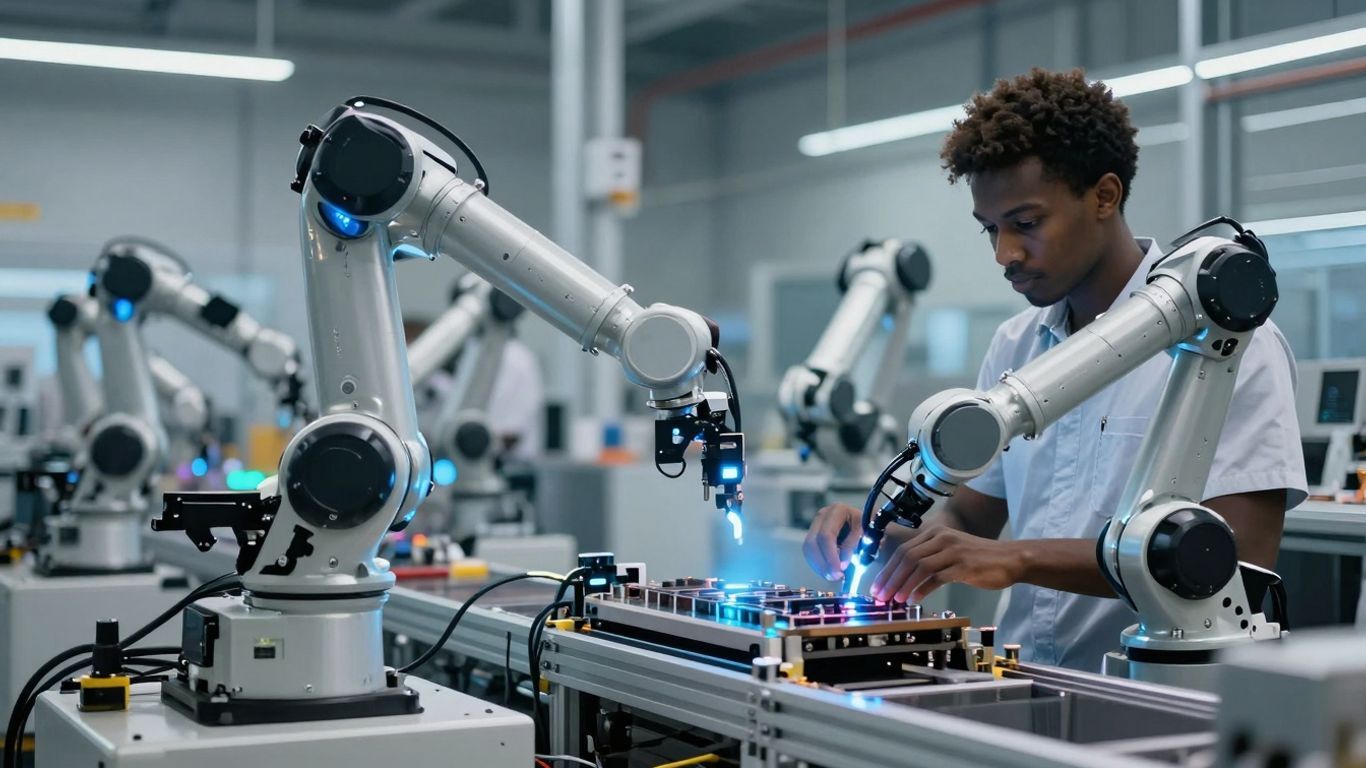
Adopting a smart factory framework isn't merely about incorporating a few new gadgets; it fundamentally redefines how products are manufactured, and the resulting advantages can be quite remarkable. Imagine transitioning from a basic set of tools to a state-of-the-art workshop. These transformations permeate almost every facet of the production process, yielding significant dividends.
Enhanced Productivity and Efficiency
One of the most immediate and palpable impacts you'll observe is a considerable surge in production output and the overall fluidity of operations. Smart factories harness real-time data from machinery and processes to precisely identify where slowdowns or bottlenecks are occurring. By proactively addressing these choke points and automating routine tasks, production lines can operate at increased speeds and with greater consistency. This translates directly to higher output, often without requiring an expansion in machinery or personnel.
- Identifying and resolving bottlenecks: Data meticulously pinpoints where production delays originate.
- Automating routine tasks: Liberates human workers to focus on more intricate, value-adding responsibilities.
- Optimizing machine performance: Ensures that machinery consistently operates at its most effective settings.
Reduced Operational Costs and Waste
When production processes achieve heightened efficiency, a natural consequence is a reduction in associated costs. Smart factories are exceptionally adept at the judicious use of materials. Less scrap material means a significant decrease in wasted raw resources and, by extension, less expenditure on disposal. Furthermore, predictive maintenance—a strategy where machines are serviced before they fail—dramatically curtails expensive emergency repairs and the costly downtime they incur. Moreover, superior inventory tracking ensures that capital isn't unnecessarily tied up in excessive stock levels.
Sophisticated smart systems can trace materials from their very arrival at the facility right through to when a finished product exits the factory gates. This granular level of detail helps to intercept errors early and prevents waste from even becoming a significant issue.
Improved Quality Control and Consistency
Achieving consistently high quality across every single item produced is, for many, a paramount objective. Smart factories employ advanced sensors and even AI-powered vision systems to meticulously inspect products as they are being manufactured. These sophisticated systems can detect minute flaws that a human eye might overlook, or which might manifest inconsistently. The outcome is a substantial reduction in defective products, less necessity for rework, and, crucially, more satisfied customers who receive reliable, top-quality goods every single time.
| Benefit Area | Impact |
|---|---|
| Product Defects | Significantly reduced |
| Rework | Minimized |
| Customer Returns | Lowered |
| Brand Reputation | Strengthened |
Optimizing Operations with Smart Factory Data
Consider a smart factory as a colossal, discerning brain, incessantly gathering information. This data acts as the vital fuel that propels everything to function more effectively. Without it, one is essentially operating on guesswork. However, with the implementation of the correct systems, this wealth of information can utterly transform factory operations, from the bustling shop floor all the way up to the executive suite.
Real-Time Data Collection and Analysis
This is precisely where the entire process commences. Sensors strategically placed on machines, production lines, and even within the warehouse continuously amass intricate details. We're referring to metrics such as a machine's operational speed, its energy consumption, whether it's yielding quality parts, or if it's on the verge of developing a problem. This isn't just a static snapshot; it's occurring moment by moment, without cessation.
- Machine Performance: Captures speed, temperature, vibration, and overall output.
- Material Flow: Tracks raw materials, work-in-progress, and finished goods with precision.
- Environmental Conditions: Monitors temperature, humidity, and air quality where pertinent.
- Energy Usage: Provides granular monitoring of consumption per machine or production line.
This relentless stream of information is subsequently fed into sophisticated analysis tools. These tools are adept at discerning trends, identifying anomalous patterns, and furnishing a lucid, comprehensive picture of the actual operational status. The paramount objective is to transmute raw numerical data into actionable intelligence that empowers individuals to make superior choices. Dedicated machine monitoring systems take this a step further by providing continuous, granular visibility into equipment health, giving factory operators the real-time alerts and performance dashboards they need to act before small issues become costly failures.
Predictive Maintenance Strategies
Among the most substantial advantages derived from this extensive data is the ability to foresee when a machine might fail. Rather than enduring a breakdown—which inevitably halts production and incurs significant costs—smart factories leverage data to identify nascent warning signs. Sensors can detect subtle shifts in vibration or temperature, indicating that a component is experiencing wear. The system can then flag this specific machine for maintenance before it culminates in a critical failure.
This forward-thinking approach means:
- Maintenance is meticulously scheduled precisely when it's genuinely required, rather than adhering to a rigid, fixed calendar.
- Necessary parts can be procured well in advance, thereby precluding costly delays.
- Unscheduled downtime, a major productivity killer, is drastically reduced.
- The operational lifespan of valuable, expensive equipment can be considerably extended.
This crucial transition from reactive fixes to proactive care not only generates significant cost savings but also ensures that production lines maintain their smooth, uninterrupted momentum. It’s akin to knowing your car requires an oil change long before the engine seizes up—a far more favorable outcome for all stakeholders involved.
Informed Decision-Making Across the Enterprise
The invaluable data generated doesn't merely reside on the factory floor; it's meticulously disseminated across various departments. The sales team, for instance, gains real-time insight into production capacity, enabling them to make more realistic and achievable commitments to customers. The finance department can track expenditures with heightened accuracy. Quality control can instantly ascertain if a particular batch of products is deviating from specifications. This shared visibility ensures that everyone within the organization operates with the same, most current information.
Here’s a concise overview of how data profoundly influences diverse areas:
| Department | Data Insights |
|---|---|
| Production | Real-time output, machine status, efficiency |
| Maintenance | Equipment health, failure prediction, repair needs |
| Quality Control | Defect rates, process variations, compliance |
| Inventory | Stock levels, material movement, WIP status |
| Sales/Planning | Production capacity, lead times, order fulfillment |
By possessing this clear, data-driven perspective, managers are empowered to make more astute choices regarding scheduling, resource allocation, and even long-term strategic planning. This effectively transitions the business from operating on guesswork to implementing informed strategy.
Smart Factories and Supply Chain Dynamics
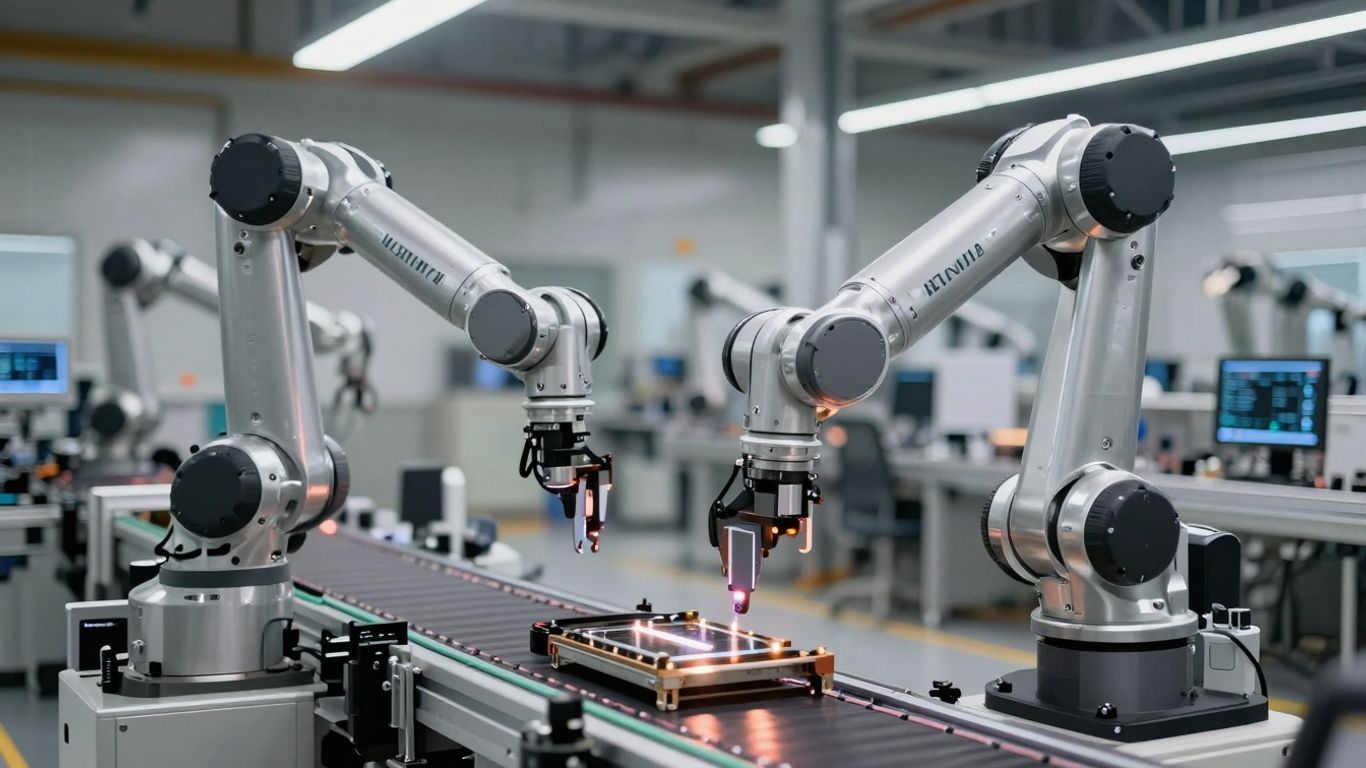
The entire journey of goods, from their raw material form to their final destination at your doorstep, is undergoing a profound transformation, and smart factories are playing an instrumental role in this evolution. Consider the implications: a factory that precisely understands its material requirements, knows exactly when those materials are needed, and can instantaneously communicate this information to its suppliers. That, in essence, is the formidable power derived from seamlessly connecting production with the entire supply chain.
Streamlining Inventory Management
Maintaining meticulous track of every single item—from minute screws to substantial machine components—was once a notoriously complex and often frustrating endeavor. Today, smart factories employ sophisticated sensors and scanners to ascertain the precise location of every single item. This capability extends beyond merely knowing what you possess; it's about discerning exactly what you require and precisely when it's needed. This real-time data helps obviate the accumulation of excessive stock, which ties up valuable capital, and equally prevents shortages, which can bring production to a grinding halt. Accurate inventory management therefore directly translates to reduced waste and considerably smoother operations.
Here’s a concise overview of how inventory processes are becoming more intelligent:
- Automated Tracking: Sensors and RFID tags meticulously monitor materials from their initial arrival to their placement on the production line.
- Data Analysis: Systems proficiently analyze current stock levels against anticipated demand to recommend optimal inventory quantities.
- Integration: Inventory data is directly linked with financial software, enabling precise and real-time cost tracking.
Enhancing Supply Chain Visibility and Resilience
Prior to the advent of smart factories, a disruption occurring halfway around the globe could catch a manufacturer completely off guard. Now, thanks to interconnected systems, it's possible to gain a comprehensive view of activities across the entire supply network. This means knowing, for example, if a supplier is experiencing delays or if there's an unexpected surge in demand for a specific product. Such granular visibility empowers companies to formulate superior plans and react with greater agility when unforeseen issues arise, thereby rendering the entire chain more robust and less susceptible to breakage. It's fundamentally about constructing a supply chain that can withstand the unpredictable.
The capacity to observe and respond to changes throughout the supply chain in real time is an absolute game-changer. It shifts companies from a reactive posture to a proactive one, allowing them to anticipate potential issues well before they impact production or, crucially, customers.
Optimizing Demand Planning and Forecasting
Accurately predicting consumer demand for a product is inherently challenging. However, smart factories leverage the extensive data they collect—encompassing sales figures, production metrics, and even external market trends—to generate significantly more precise forecasts. This capability enables factories to plan their production schedules with greater accuracy, ensuring they produce sufficient quantities of popular items without concurrently overproducing those with lesser demand. This heightened precision helps to mitigate both overproduction and stockouts, resulting in more satisfied customers and a more efficient business model. This refined approach to planning is, without doubt, a pivotal aspect of how Industry 4.0 is fundamentally reshaping the manufacturing sector.
The Human Element in the Smart Factory
While smart factories are indeed characterized by their sophisticated technology, people undeniably remain at the very core of these operations. The intent isn't to supplant human workers with robots, but rather to redefine how individuals work and what their roles entail. Picture it as providing personnel with superior tools and enhanced information, enabling them to execute their responsibilities with greater efficacy. This transformative shift necessitates a thorough examination of how humans and machines can best collaborate, how we prepare workers for these evolving roles, and ultimately, how technology can actually improve job quality.
Human-Machine Collaboration
Within a smart factory environment, humans and machines are not adversaries; they are, in fact, integral partners. Robots are adept at managing repetitive, hazardous, or physically arduous tasks, thereby freeing human workers to concentrate on more intricate problem-solving, meticulous quality checks, and critical decision-making. This synergistic partnership can manifest in various ways:
- Cobots (Collaborative Robots): These robots are meticulously engineered to operate safely alongside human colleagues, assisting with tasks such as assembly, lifting, or packaging.
- Augmented Reality (AR): Workers can utilize AR glasses to view real-time data overlays, detailed repair instructions, or comprehensive training guides directly within their field of vision while engaging with machinery.
- Data Dashboards: Operators can monitor machine performance, production flow, and potential issues via intuitive visual displays, empowering them to react swiftly and judiciously.
The overarching objective is to cultivate an environment where technology augments human capabilities, leading to work that is safer, more engaging, and ultimately more productive.
Upskilling the Workforce for Digital Transformation
The transition to a smart factory paradigm inherently means that the requisite skills for the workforce will evolve. While routine tasks may become automated, new and distinct roles will emerge, demanding a different set of competencies. This unequivocally necessitates a profound commitment to ongoing training and professional development.
- Digital Literacy: Employees must become proficient and comfortable utilizing digital interfaces, specialized software, and advanced data analysis tools.
- Problem-Solving: With automation addressing foundational issues, human workers will increasingly concentrate on troubleshooting more complex problems and identifying strategic areas for continuous improvement.
- Adaptability: The capacity to rapidly acquire new technologies and processes will be paramount as the factory continues its inevitable evolution.
Companies must strategically invest in programs designed to help their existing employees acquire these novel skills, rather than solely focusing on external recruitment. This not only effectively bridges the skills gap but also emphatically conveys to employees that their contributions are highly valued and that the organization is deeply invested in their professional future.
Augmenting Human Capabilities with Technology
Smart factory technology extends beyond mere automation; it also plays a crucial role in enhancing the capabilities of human workers. By furnishing superior information and sophisticated tools, technology can enable individuals to perform their duties with unparalleled precision and deeper insight.
- Predictive Analytics for Maintenance: Instead of waiting for a machine to fail, workers can receive timely alerts regarding potential issues before they materialize, facilitating planned maintenance and averting costly downtime.
- Real-time Quality Feedback: Sensors and AI can provide immediate feedback on product quality, enabling workers to make instant adjustments and significantly reduce defects.
- Optimized Workflow Guidance: Systems can effectively guide workers through complex assembly processes or suggest the most efficient method to complete a task, based on dynamic, real-time production data.
This strategic augmentation means that human workers can dedicate their focus to higher-value activities, committing fewer errors and contributing more substantially to the overall success and innovation of the factory.
Future Trends Shaping Smart Manufacturing
The world of manufacturing is in a constant state of flux, and the forthcoming developments for smart factories appear quite promising. We're not merely discussing faster machines; rather, it’s about an entirely new conceptualization of production. The factory of tomorrow will be more interconnected, highly adaptable, and intently focused on individual needs. Here are some of the significant shifts we are currently observing:
Customer-Centric Production and Mass Customization
Recall a time when you could obtain precisely what you desired, tailored specifically for you, without an arduous wait. That, essentially, is the trajectory manufacturing is now embracing. Instead of producing immense batches of identical items, factories are becoming increasingly proficient at fabricating unique goods on demand. This translates into a future with more personalized products—from footwear to automotive components—all manufactured with remarkable efficiency.
- Personalized Products: Consumers are increasingly demanding items meticulously tailored to their specific preferences.
- Flexible Production Lines: Factories are acquiring the agility to rapidly switch between diverse product designs.
- On-Demand Manufacturing: Goods are produced only when ordered, thereby significantly reducing excess inventory.
This profound shift is largely propelled by technology that facilitates swift design modifications and smaller production runs, making it economically viable to offer an expansive array of options without incurring prohibitive costs.
Sustainability and Circular Economy Principles
Historically, manufacturing has often been synonymous with extensive resource consumption and significant waste generation. Smart factories are actively altering this narrative. They leverage data to judiciously reduce energy usage, minimize material waste, and even design products with inherent repairability, reusability, or recyclability in mind. This holistic approach not only benefits the environment but also yields economic advantages by optimizing resource utilization.
- Energy Efficiency: Smart systems are employed to meticulously monitor and substantially reduce power consumption.
- Waste Reduction: Focus is placed on identifying and minimizing material scrap generated during the production process.
- Product Lifecycle Management: Designing products with inherent durability, ease of repair, and ultimate recyclability as core considerations.
Cybersecurity in the Connected Factory
As factories become increasingly interconnected—with sensors, machines, and software engaging in constant communication—they concurrently present more appealing targets for cyberattacks. Safeguarding this vast digital information and ensuring the uninterrupted operation of production lines has become a paramount concern. Robust cybersecurity measures are no longer a discretionary choice; they are an indispensable, core component of smart factory operations. This imperative includes protecting sensitive design data, upholding the integrity of production processes, and preventing disruptions that could bring operations to a standstill.
- Data Protection: Vigilantly safeguarding intellectual property and sensitive customer information.
- Operational Security: Preventing unauthorized access or malicious control of critical manufacturing equipment.
- Network Segmentation: Strategically isolating different segments of the factory network to constrain the potential impact of a security breach.
The Road Ahead
So, we've explored at length how smart factories are fundamentally reshaping the industrial landscape. It’s far more profound than just incorporating sophisticated robots; it’s about harnessing data and intelligent technology to render production superior, swifter, and more efficient across the board. From maintaining an unprecedentedly close watch on inventory to ensuring machinery operates without a hitch through predictive maintenance, the advantages are remarkably clear. This ongoing shift toward more intelligent manufacturing isn't merely a fleeting trend; rather, it's swiftly becoming the requisite standard for businesses aiming to remain competitive and relevant. As these transformative technologies continue their rapid advancement, we are poised to witness even greater innovations, making factories more interconnected and productive than ever before.
Frequently Asked Questions
What exactly is a smart factory?
A smart factory can be envisioned as a highly advanced manufacturing facility where computers and machines collaborate exceptionally well. They leverage internet connectivity to communicate and exchange information instantaneously, which, in turn, helps them produce goods faster, with enhanced quality, and notably less waste.
How is a smart factory different from a regular factory?
Traditional factories typically rely more heavily on manual tasks performed by human operators. In contrast, smart factories integrate extensive automation, advanced robotics, and intelligent technologies. They collect vast amounts of data to determine optimal operational strategies, almost giving them a capacity for autonomous decision-making.
What kind of technology makes a smart factory work?
Several core technologies are pivotal to a smart factory's functionality. The 'Internet of Things' (IoT) establishes connectivity among all the machines. Artificial Intelligence (AI) empowers these machines to learn and make astute decisions. And, of course, robots and various automation systems execute many of the physical tasks.
Does a smart factory mean fewer jobs for people?
Not necessarily. While some job functions may certainly evolve, smart factories actually foster the creation of new types of employment opportunities. Human expertise is essential for managing sophisticated smart technology, maintaining robotic systems, and undertaking tasks that demand human creativity and complex problem-solving. It's truly more about a synergistic partnership between people and machines.
What are the main benefits of using smart factories?
Smart factories offer numerous advantages; they can produce items significantly faster and with a notable reduction in errors. Furthermore, they contribute to cost savings by optimizing energy and material usage. Additionally, their capabilities ensure that every product adheres to stringent quality standards, ultimately leading to greater customer satisfaction.
Is smart manufacturing something that just started?
The journey toward smarter factories has been ongoing for an extended period! We've progressed through several 'industrial revolutions,' evolving from the adoption of steam power to electricity, and then to the advent of computers. Smart factories represent the latest stage in this evolution, harnessing the most current digital tools to elevate manufacturing efficiency and capability even further.


