
resources
Unlock the Power of Smart Features in Your Smart Home
14 Nov 2025

While the prospect of establishing a smart home might initially appear intricate, it fundamentally aims to streamline your daily existence. Consider the myriad small tasks that punctuate your day—switching off lights, calibrating the thermostat, or verifying who's at the entrance. Wouldn't it be wonderful to have some of these handled autonomously? Smart capabilities are, in fact, designed to manage many of these for you, frequently requiring little to no direct intervention. More than merely a collection of sophisticated devices, it's about optimizing your living space to enhance efficiency, conserve energy, and ultimately afford you greater tranquility.
Key Takeaways
- Smart features offer a substantial enhancement to your home's security, ranging from intelligent doorbells that allow remote visitor screening to smart locks controllable from virtually any location.
- Achieve significant savings on energy bills through the adoption of smart thermostats, which adapt to your routines, and smart lighting systems that adjust automatically.
- Everyday chores can be considerably simplified with the aid of voice assistants and smart plugs, enabling control over devices without physical proximity.
- A central smart home hub provides a unified connection for all your disparate devices, simplifying management from a single interface and facilitating the creation of automated routines.
- Working in tandem, sensors and actuators enable true automation—for instance, illuminating rooms upon entry or fine-tuning temperatures in response to prevailing weather conditions.
Enhance Your Home Security With Smart Features
When the conversation turns to fortifying our homes, smart technology emerges as a particularly powerful ally. Beyond mere convenience, it bestows upon homeowners an additional layer of vigilance—virtual eyes and ears, coupled with the capacity to intervene, even in your physical absence. Just imagine: being able to monitor your residence from across the globe or simply from your workplace—this level of remote oversight truly represents a significant advancement.
Smart Doorbells and Security Cameras
These devices, undoubtedly, rank among the most widely adopted smart security solutions today. A smart doorbell, such as popular models from Ring or Nest, enables you to ascertain the identity of visitors at your entryway directly via your smartphone, irrespective of your geographical location. Remarkably, you can even engage in two-way communication! This proves exceptionally useful for managing deliveries while you're away, or simply for identifying callers before opening the door. Security cameras operate on a similar principle, providing a real-time video stream of your premises. A great many models feature motion detection capabilities, dispatching immediate alerts straight to your mobile device. Furthermore, some systems offer video clip recording, which can be invaluable should an incident occur. Indeed, the mere presence of a visible video feed covering your front door often serves as a powerful deterrent to potential wrongdoers.
Smart Locks and Garage Door Openers
Bid farewell to the days of fumbling for keys. Smart locks empower you to secure and unsecure your entry points with ease, either via your smartphone or a convenient keypad. Moreover, granting temporary access codes to guests or service professionals is effortless, with the option to revoke them at your discretion. The anxiety of an unlocked door becomes a thing of the past—you can simply verify its status and secure it remotely. A similar advantage extends to your garage door. With a smart opener, you can operate it—opening or closing—from your smartphone, and receive notifications if it's inadvertently left open. This functionality not only enhances daily convenience but also bolsters security, ensuring your garage remains consistently protected. Isn't that peace of mind truly invaluable?
Remote Monitoring and Alerts
This capability forms the very backbone of a robust smart home security system. Its essence lies in delivering critical information precisely when it's most pertinent. Your intelligent devices are configured to dispatch notifications directly to your smartphone for a multitude of scenarios: from motion detected by a security camera to a door being unlatched, or even the early detection of a water leak. These alerts are fully customizable, allowing you to specify triggers based on particular times or events. For instance, you might prefer to receive an alert if the front door opens after 10 PM, but not during daytime hours when activity is expected. This uninterrupted flow of information—conveniently accessible in your pocket—provides a far more comprehensive understanding of your home's status, empowering you to respond promptly to any anomalous activity. After all, isn't being informed the first step to being secure?
Achieve Energy Efficiency Through Smart Features
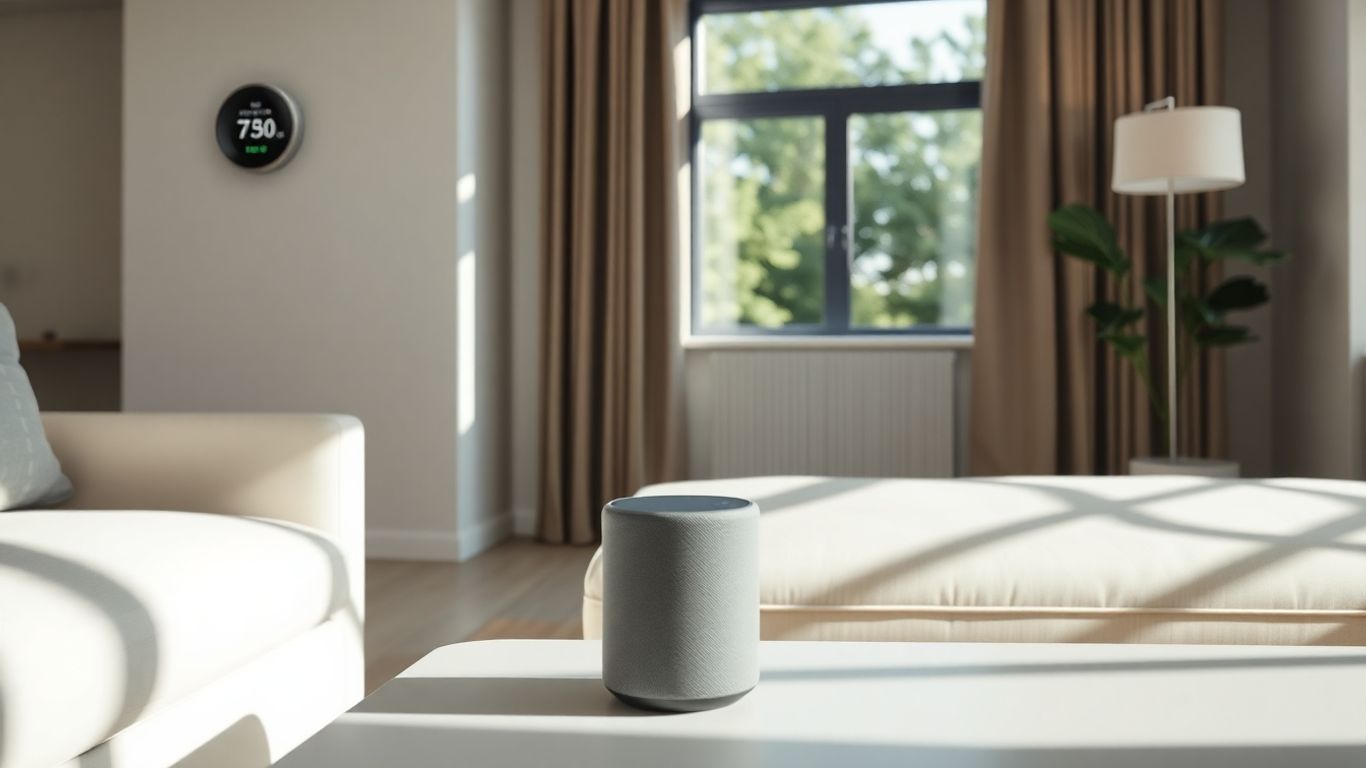
Imagine the dual benefit of reducing your utility expenditures while simultaneously contributing to environmental conservation. This symbiotic advantage is precisely where smart home technology truly excels. Beyond simply being a collection of advanced devices, it's about engineering your residence to operate with greater intelligence and less exertion when managing energy consumption.
Smart Thermostats for Optimized Climate Control
Consider a smart thermostat as the sophisticated central processor—the veritable brain—governing your home's climate control. Rather than adhering to a rigid, fixed schedule, these intuitive devices actively learn and adapt to your unique routines. They discern your typical occupancy patterns—when you're present, absent, and even your sleep schedule. Leveraging this data, they automatically fine-tune the temperature settings. Crucially, this intelligent adaptation prevents the wasteful expenditure of energy on heating or cooling an unoccupied residence. Furthermore, a significant number of these units offer remote control via your smartphone, allowing you to pre-condition your home's temperature—warming or cooling—before your actual arrival. Some advanced models even integrate local weather forecasts into their algorithms for even more prescient adjustments—truly a testament to their intelligence.
Smart Lighting Systems for Reduced Consumption
Illumination constitutes a substantial portion of residential energy consumption, and fortunately, smart bulbs and switches can introduce a remarkably palpable reduction. Homeowners can configure precise schedules for lighting, ensuring lights activate and deactivate as needed, thereby precluding inadvertent prolonged usage. Many contemporary systems also integrate motion sensors, ensuring lights are only activated upon detecting occupancy in a room. What's more, the ability to dim or alter their color temperature not only permits the creation of desired ambiances but also typically consumes less energy than full brightness—is creating the perfect atmosphere while saving energy not the ultimate goal? It's also worth noting that many smart bulbs leverage LED technology, which inherently offers significantly superior efficiency compared to traditional incandescent bulbs.
Energy Monitoring with Smart Plugs
Have you ever pondered which of your household appliances might be stealthily contributing most to your electricity bill? Smart plugs provide a definitive answer to this very question. The setup is straightforward: simply plug your appliance into the smart plug, then insert the smart plug into your wall outlet. These intelligent plugs integrate with your home network, frequently via an intuitive application that precisely displays the energy consumption of each connected device. This provides access to both real-time usage and comprehensive historical data. Such insights are invaluable for pinpointing energy-intensive appliances and facilitating more informed decisions regarding their use. Furthermore, their utility extends to remotely deactivating forgotten devices or scheduling power-downs for items such as chargers or entertainment systems when they're not required. Ultimately, it presents a remarkably simple, yet effective, method for gaining a comprehensive understanding of your overall electricity consumption.
Simplify Daily Life With Smart Features
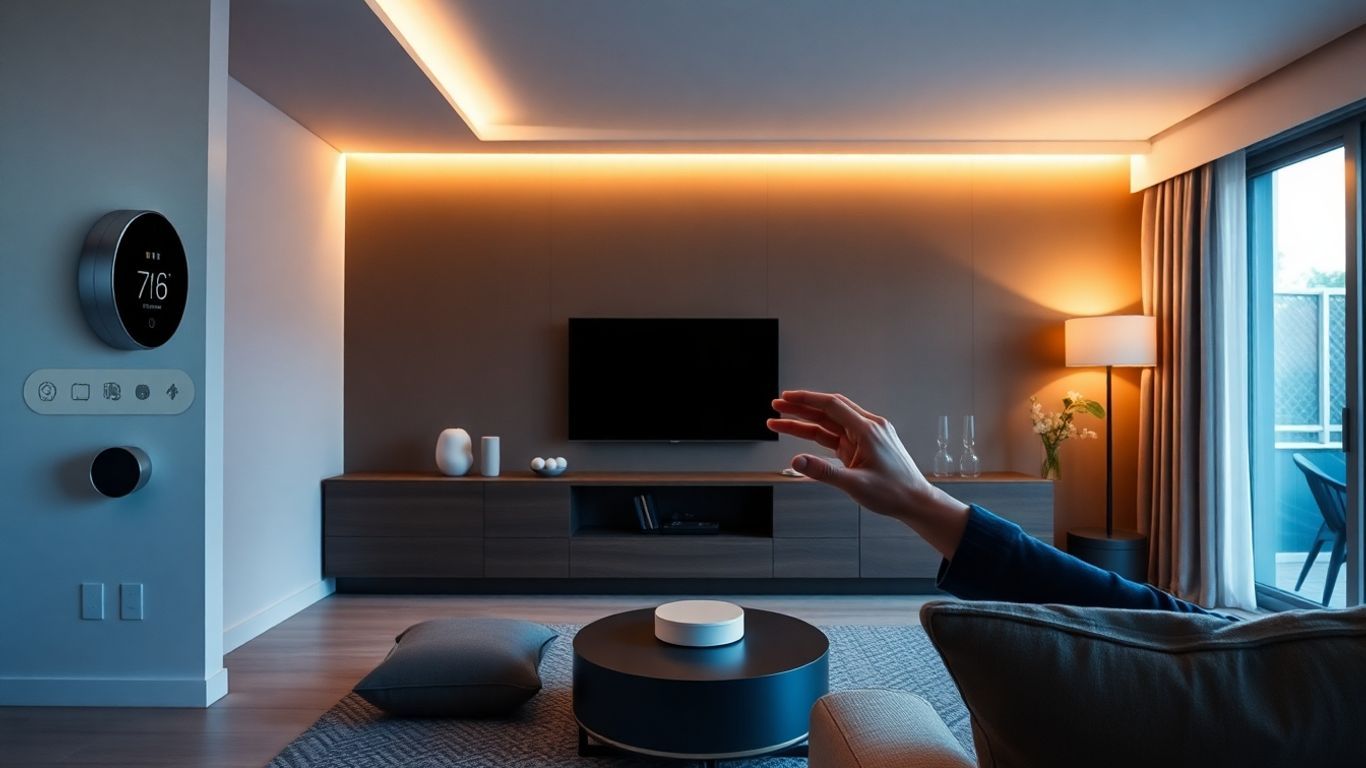
Let's be candid: contemporary life can often prove quite demanding. The constant juggling act of career, family, and myriad other obligations often leaves scant time for mundane tasks—like manually operating light switches or fretting over the security of your front door. This is precisely where smart home technology truly distinguishes itself, adeptly stepping in to alleviate some of this daily burden. Far from merely being about sophisticated devices, it’s fundamentally focused on streamlining routine tasks and reclaiming precious moments for you. Doesn't that sound appealing?
Voice Assistants for Hands-Free Control
Consider, for a moment, being engrossed in culinary preparations only to realize the living room lights remain on. Rather than the inconvenience of washing, drying your hands, and physically traversing the room, a simple verbal command—"Hey Google, turn off the living room lights"—suffices. Voice assistants, seamlessly integrated into smart speakers and displays, effectively serve as an invaluable extra pair of hands. They can effortlessly manage tasks such as playing music while you're occupied, setting laundry timers, or providing immediate weather updates—all without requiring a single touch. This seemingly minor adjustment, however, culminates in significant cumulative benefits, transforming incidental conveniences into a consistent feature of your daily routine. Who wouldn't want that?
Smart Plugs for Controlling Non-Smart Devices
It's a common misconception that every item in your residence must be cutting-edge and "smart" to partake in a digital upgrade. Smart plugs, indeed, represent a transformative solution for integrating legacy appliances into your connected home ecosystem. The process is remarkably simple: merely insert your conventional lamp, fan, or coffee maker into a smart plug, then establish its connection to your home's Wi-Fi network. Instantaneously, you gain the ability to command that device remotely via your smartphone or through voice commands. Furthermore, scheduling capabilities are available—picture your coffee maker autonomously initiating its brew cycle moments before your alarm sounds. What a way to start the day! This offers a genuinely cost-efficient method to extract enhanced utility from your existing possessions. For those embarking on their smart home journey, a diverse selection of these essential devices can be explored here.
Automated Routines and Scenes
Herein lies the true potential for profound transformation within your smart home. Smart home systems empower you to devise bespoke "routines" or "scenes," which seamlessly link a series of actions to a singular command or trigger. For instance, envision a "Good Morning" scene that gently illuminates your bedroom, incrementally adjusts the thermostat, and initiates your preferred news podcast—all in one smooth sequence. Similarly, a "Movie Night" scene could effortlessly dim the lighting, lower window coverings, and activate your television.
To spark your imagination, consider these illustrative scenarios:
- Leaving Home: A single command can effortlessly deactivate all lights, optimize the thermostat to an energy-conserving temperature, and secure all doors.
- Bedtime: A "Goodnight" routine might entail extinguishing all downstairs lights, verifying door security, and arming the alarm system.
- Welcome Home: Have your lights automatically activate and the thermostat modulate to your desired temperature as you make your entrance.
Automating these daily sequences invariably translates to less cognitive burden on trivial matters and more precious time liberated for pursuits of greater importance. It's truly about cultivating a living environment that intuitively serves your needs, anticipating requirements and simplifying your day without demanding constant oversight.
Centralize Control With Smart Home Hubs
Envision your various smart home devices as a talented ensemble of individual instruments. Each is capable of impressive feats autonomously, yet without a skilled conductor, an orchestra can quickly descend into disarray. This is precisely the pivotal role of a smart home hub. It functions as the indispensable central processor, facilitating seamless communication and harmonious collaboration among all your intelligent gadgets. Indeed, establishing this singular point of command significantly streamlines the management of your entire smart home ecosystem.
Understanding Smart Home Hubs
Fundamentally, a smart home hub serves as both a sophisticated translator and an efficient traffic controller for all your interconnected devices. It establishes a connection with your existing Wi-Fi network, subsequently mediating communication between your smart lights, thermostats, locks, cameras, and numerous other components—often employing diverse wireless protocols such as Zigbee or Z-Wave. Consequently, rather than contending with a disparate application for each individual device, you gain the convenience of unified management from a single interface. Notable examples encompass systems like MOES Central Control, which provide a consolidated platform for managing a spectrum of functions.
Here's a breakdown of what a hub typically does:
- Connects Devices: It aggregates all your smart gadgets under a singular system, enabling inter-device communication.
- Facilitates Communication: It expertly translates signals between devices that may utilize disparate wireless protocols.
- Enables Automation: This serves as the driving force behind your personalized routines and scenes, orchestrating devices to react to one another.
- Provides a Single Interface: Your interaction with the hub, typically via an intuitive app or dedicated screen, empowers comprehensive control over your entire setup.
Without the cohesive framework offered by a central hub, one might frequently find themselves managing an array of disparate applications, each dedicated to a different facet of their home. This fragmented approach can quickly prove unwieldy and ultimately undermines the very objective of a streamlined smart home experience.
Integrating Devices with a Central Hub
The process of integrating your various devices with a central hub is, in most instances, remarkably straightforward. The majority of modern hubs are engineered to offer broad compatibility with a diverse array of prominent smart home brands. Upon acquiring a new smart device, the standard procedure involves adding it directly via the hub's dedicated application. Subsequently, the hub will detect the device and seamlessly integrate it into your existing smart home system. This integration typically encompasses the following steps:
- Activating the new device.
- Launching your hub's application.
- Initiating the device addition function.
- Adhering to the on-screen directives to establish connectivity between the device and the hub.
It's prudent, of course, to consult compatibility lists prior to purchasing new devices, thereby ensuring seamless operation with your selected hub. This proactive step can avert future complications and guarantee a far smoother setup experience. After all, nobody wants a setup headache, do they?
Creating Automation Scenes with Hubs
This is where the real magic of a smart home hub happens. You can create custom automation scenarios that truly respond to your lifestyle and preferences, orchestrating devices to work in perfect concert.
Leverage Sensors and Actuators for Automation
Visualize sensors and actuators as the indispensable sensory organs and functional limbs of your smart home—its eyes, ears, and hands. These are the crucial components that genuinely facilitate automatic responses, driven by real-time environmental conditions. Absent these elements, your 'smart' devices would, frankly, remain merely static hardware. They are the essential conduits enabling your residence to intelligently perceive and react to its surroundings, as well as your presence within it.
The Role of Sensors in Smart Homes
At their core, sensors function as the primary input mechanisms. They meticulously collect data concerning the physical environment and transmit it to your overarching smart home system. A diverse array of sensors is available for integration:
- Motion Sensors: These precisely detect movement. Strategically position them in corridors, infrequently used rooms, or near entryways. Upon sensing motion, they can prompt your system to execute a predefined action.
- Temperature Sensors: These diligently monitor the thermal conditions—heat or coolness—within a room. They prove exceptionally valuable for ensuring your smart thermostat operates with peak efficiency and maintains optimal comfort levels.
- Door/Window Sensors: These compact magnetic sensors provide real-time status on whether a door or window is open or closed. They're indispensable for bolstering security and preventing the egress of conditioned air, thus aiding in energy conservation.
- Light Sensors: Designed to quantify ambient light levels, these can instruct your smart lighting to activate, deactivate, or modulate its brightness accordingly.
- Water Leak Sensors: Positioned adjacently to plumbing, water heaters, or laundry appliances, these sensors can provide instantaneous alerts upon detecting moisture, potentially safeguarding you from significant flood damage and associated costs.
Fundamentally, these sensors amass vital data, which subsequently serves as the indispensable trigger for a multitude of automated actions.
How Actuators Execute Smart Commands
If sensors represent the system's input, then actuators undeniably embody its output. These are the components actively responsible for executing actions, drawing upon either information relayed by sensors or explicit commands issued by your smart home system. In essence, they are the things that do stuff.
- Smart Lights: Should a motion sensor detect your entry into an unlit room, the actuator—an integral part of the smart bulb or switch—is what physically illuminates the space.
- Smart Thermostats: When a temperature sensor reports an insufficiently warm room, the actuator within the thermostat communicates with your HVAC system to initiate heating.
- Smart Locks: Upon your command via a mobile application to unlock a door, the actuator is the internal mechanism of the lock that physically disengages its security.
- Smart Blinds: These actuators possess the capability to deploy or retract your window coverings, either according to pre-set schedules or in response to light sensor data.
- Smart Plugs: When you issue a voice command to your assistant to deactivate a lamp connected via a smart plug, the actuator embedded within the plug interrupts the power supply.
Fundamentally, actuators are the motors, switches, and other mechanical instruments that animate and actualize your smart home's automated directives. Without them, what would your smart home really be doing?
Automating Tasks with Sensor Triggers
The true marvel of smart home automation materializes when sensors and actuators are seamlessly integrated. This synergy enables the creation of a residence that intelligently anticipates and caters to your requirements, often without requiring any direct intervention.
Consider these illustrative examples demonstrating this synergistic operation:
- Welcome Home Lighting: As your vehicle enters the driveway after dusk, your smart garage door opener—an actuator in action—transmits a signal to your smart home system. This, in turn, activates motion sensors near your front door to confirm your arrival, subsequently prompting the actuators within your entryway lights to illuminate them.
- Energy Saving When Away: Should door/window sensors indicate that all entry points have remained secured for a predefined duration (e.g., 30 minutes), and motion sensors confirm no activity in primary living areas, your smart thermostat (leveraging its internal actuator) can then adjust to an energy-conserving temperature.
- Enhanced Security Alerts: If a door or window sensor is activated while your security system is armed, an immediate alert is dispatched to your smartphone. Concurrently, any connected security cameras can be triggered by motion sensors to commence recording, providing crucial visual evidence.
The inherent strength of smart homes emanates from these sophisticated, interconnected systems. A sensor registers a change, relays that pertinent information to either a central hub or directly to a designated device, and an actuator subsequently executes a pre-programmed action. It is this elegant chain reaction that imbues your home with a palpable sense of intelligence and responsiveness.
Through the judicious placement of sensors and the selection of appropriate actuators, homeowners can engineer a residence that is inherently more comfortable, secure, and energy-efficient—all operating in seamless, automatic concert. Truly, the possibilities are vast.
Customization and Integration of Smart Features
Personalizing Your Smart Home Experience
A truly intelligent home transcends mere gadgetry; it is fundamentally about optimizing your living environment to function harmoniously with your lifestyle. Reflect on your daily interactions within your residence. Do you prefer a gentle, gradual illumination upon waking, or perhaps a freshly brewed coffee awaiting you the instant your alarm sounds? Smart technology provides the framework to configure precisely these kinds of bespoke experiences. This includes the ability to craft custom lighting schedules, calibrate thermostat settings dynamically based on occupancy, or even initiate your preferred musical selections the moment you cross the threshold. Ultimately, it's about meticulously tailoring the technology to conform to your life, rather than adapting your life to the technology.
- Set personalized lighting scenes: Design distinct atmospheric lighting for events like movie nights, dinner parties, or moments of quiet relaxation. Adjust brightness and color temperature to perfectly complement each occasion.
- Automate morning and evening routines: Program lights to gradually brighten in the morning and softly dim in the evening. Schedule your thermostat to pre-adjust temperatures prior to your waking or sleeping hours.
- Tailor security alerts: Exercise complete control over which events trigger notifications. For instance, you might exclusively desire alerts for motion detected during your absence, or perhaps wish to be informed every time the front door is opened.
The profound efficacy of a smart home manifests most clearly when it begins to anticipate your needs, thereby simplifying daily tasks and rendering your environment more comfortable without requiring your conscious thought—it's truly a seamless experience.
Seamless Integration of Different Brands
A frequently posed question, and a significant concern for many prospective smart home users, pertains to the interoperability of various smart devices across different brands. Fortunately, the prevailing trend in smart home system design increasingly prioritizes seamless integration. Thus, even if your smart thermostat hails from one manufacturer and your smart lighting from another, a central hub or a universally compatible platform can frequently bridge this technological divide. This liberating aspect means you are by no means confined to a monolithic brand ecosystem for every single device. When selecting devices, it's advisable to seek out those explicitly stating compatibility with dominant platforms such as Google Home, Amazon Alexa, or Apple HomeKit. Such compatibility is precisely what empowers disparate devices to communicate and function in unison, culminating in a more cohesive and efficient smart home environment. In fact, isn't variety the spice of life, even in smart tech?
| Feature | Compatibility Example |
|---|---|
| Voice Control | Works with Amazon Alexa and Google Assistant |
| App Control | Integrates with Google Home and Apple HomeKit |
| Automation Triggers | Can be controlled by IFTTT (If This Then That) |
| Protocol Support | Supports Wi-Fi, Zigbee, or Z-Wave |
Scalability for Future Smart Home Needs
As you embark on the journey of establishing your smart home, a forward-thinking approach to its future evolution is undoubtedly prudent. While your initial foray might involve merely a few smart plugs and a voice assistant, consider the implications should you wish to incorporate smart security cameras or an advanced smart lock at a later stage. A well-designed smart home infrastructure is inherently scalable. This crucial characteristic ensures the seamless integration of additional devices over time, precluding the need for a wholesale system replacement. Opting for a central hub that boasts compatibility with an extensive array of devices and communication protocols—such as Wi-Fi, Zigbee, and Z-Wave—will significantly simplify the expansion of your smart home's capabilities in the long term. Indeed, one might draw a parallel to constructing with LEGOs: you retain the perpetual flexibility to incorporate new components, thereby fashioning something ever larger and more intricate. It's all about growth, isn't it?
Bringing It All Together
To summarize, we've thoroughly explored the myriad ways smart home technology can undeniably enhance daily living, augment security, and even yield tangible savings on household expenses. It's imperative to reiterate that the essence lies not merely in sophisticated devices, but in cultivating a residence that functions optimally for your benefit. Regardless of whether one commences with a modest smart plug or opts for a comprehensive system, the overarching objective remains the creation of a dwelling that offers enhanced comfort and superior efficiency. With continuous advancements in technology and increasingly accessible price points, there truly has never been a more opportune moment to delve into the transformative potential of a smart home for your unique needs. Why wait?
Frequently Asked Questions
Could you clarify what precisely constitutes a smart home?
A smart home fundamentally integrates interconnected devices—such as lighting systems, thermostats, and speakers—that are controllable via your smartphone or voice commands. Essentially, it imbues your residence with a central intelligence, enabling it to perform tasks autonomously or in response to your explicit instructions.
In what specific ways do smart devices enhance home security?
Intelligent devices such as video doorbells and advanced security cameras grant you remote visual access to your entryway from any location. Smart locks, moreover, facilitate remote locking and unlocking of doors, while providing immediate alerts for any anomalous occurrences.
Is it true that smart home gadgets can contribute to electricity bill reductions?
Absolutely! Smart thermostats intelligently adapt to your occupancy patterns, optimizing temperature settings to conserve energy. Smart lighting systems can autonomously deactivate or dim when superfluous, and smart plugs empower you to monitor and mitigate power consumption across various devices.
Is the setup and operation of smart home technology generally complex?
The process has become considerably more user-friendly! Numerous devices now offer straightforward connectivity via dedicated smartphone applications. Furthermore, a central smart home hub can consolidate management, significantly simplifying the control of diverse branded gadgets in concert.
Is it feasible to integrate and control conventional, non-smart devices using smart technology?
Indeed, it is entirely feasible! Smart plugs function as intermediary adapters: you connect your standard devices to them, and subsequently, you gain the ability to control those devices via your smartphone or voice commands, effectively 'smartifying' them.
Could you elaborate on the concept of 'automation scenes' or 'routines' within a smart home context?
These represent personalized, multi-step commands for your smart home. For example, one could devise a 'Good Morning' routine that simultaneously activates your lighting, elevates window blinds, and commences coffee preparation—all initiated by a singular voice command or a tap on your device.


