
resources
Unveiling the Giants: A Look Back at the Largest Cities in the World in 1900
09 Mar 2026

It’s quite remarkable to consider just how profoundly different the world appeared merely a century ago. Many cities we recognize today as colossal urban hubs were then merely emerging, or perhaps in the midst of — undergoing truly seismic transformations. Our focus today is on the largest cities in the world in 1900, places that stood on the precipice of evolving into the modern metropolises we now inhabit. Indeed, it’s truly captivating to review old photographs and observe what these locales were like before the advent of towering skyscrapers and swift automobiles.
Key Takeaways
- In 1900, prominent global cities such as New York, Vienna, and Berlin were experiencing significant transformations, which would profoundly shape their future trajectories.
- Asia witnessed the burgeoning of urban centers like Singapore and Beijing, each possessing unique historical backdrops and distinct developmental pathways.
- The Americas featured cities like Mexico City and Panama City, undergoing modernization and emerging as crucial links in global trade networks.
- Eastern European cities, including Warsaw and Prague, were simultaneously developing industrially and navigating intricate political shifts.
- Istanbul and Moscow exemplified a compelling fusion of the venerable and the nascent, reflecting the complex evolution of major world cities at the turn of the 20th century.
Metropolises on the Cusp of Modernity
New York City: A Glimpse into the Formative Years
In 1900, New York City was a veritable maelstrom of activity, standing precisely on the edge of becoming the global powerhouse we know today. It was a city rapidly expanding, fueled by successive waves of immigration and an unyielding pursuit of advancement. The sheer scale of its growth was truly remarkable, with new buildings constantly reaching for the sky and essential infrastructure striving to accommodate such rapid expansion. This era marked a pivotal juncture, transforming New York from a bustling port into a bona fide metropolis.
- Immigration Hub: Ellis Island, established only a decade earlier, was already processing millions of new arrivals, each bringing their aspirations and labor to the city's burgeoning industries.
- Technological Advancements: The city was enthusiastically embracing new technologies, from the expanding subway system beginning to crisscross beneath the city's streets to the early adoption of electricity that would soon illuminate its avenues.
- Architectural Ambitions: Skyscrapers were starting to redefine the skyline, unequivocally signaling a new era of urban development and audacious ambition.
The energy of New York in 1900 was palpable. It was a place where fortunes were forged and dissolved, where diverse cultures clashed and blended, and where the very definition of a modern city was actively being written.
The Bowery: From Rural Lane to Urban Thoroughfare
The Bowery, once a tranquil path leading out of the city, had undergone a profound metamorphosis by 1900. It was no longer a simple lane but a vibrant, albeit often bustling, artery of New York life. This street, in many ways, served as a microcosm of the city's rapid changes, reflecting both its myriad opportunities and its formidable challenges.
- Entertainment District: By the turn of the century, The Bowery was revered for its theaters, beer halls, and lively nightlife, attracting a wide spectrum of New Yorkers.
- Working-Class Neighborhood: It was also a densely inhabited quarter, home to many working-class families and immigrants, with tenements lining its sides.
- Shifting Identity: The area experienced a perpetual state of transformation regarding businesses and residents, showcasing the dynamic and sometimes transient nature of urban life.
The Arrival of an Enduring Symbol: The Statue of Liberty
While the Statue of Liberty was dedicated in 1886, by 1900, she had firmly cemented her status as an iconic symbol of New York and, indeed, America itself. For the millions of immigrants arriving by ship, she was often the very first sight of their new home—a resplendent symbol of hope and liberation. Imagine the impact of that sight after a long sea voyage.
- Welcoming Immigrants: The statue stood as a potent visual salutation to those seeking a new life, powerfully representing the promise of opportunity.
- National Icon: Over the years, her image became interchangeable with the national identity of the United States, recognized worldwide.
- A Constant Presence: Even as the city around her grew and transformed at an incredible pace, Lady Liberty remained an unwavering sentinel.
European Capitals in Transition
Vienna's Expansion Under the Austro-Hungarian Empire
Vienna in 1900 was a city teeming with life and activity, a regal capital of the Austro-Hungarian Empire. Imagine a place where imperial splendor gracefully met the nascent whispers of modernization. The city was undergoing significant expansion, with new districts being constructed and grand boulevards being meticulously laid out—many inspired by the Ringstrasse project that had reshaped the city center in the preceding decades. This was a time of prodigious cultural efflorescence, with Vienna serving as a vibrant hub for music, art, and intellectual thought. Indeed, luminaries such as Freud, Klimt, and Mahler all called this dynamic city home.
- Imperial Grandeur: The Hofburg Palace and Schönbrunn Palace stood as enduring monuments to the empire's might.
- Cultural Flourishing: Cafes hummed with the discourse of artists, writers, and thinkers debating the future of their world.
- Urban Development: New residential areas and public buildings were constructed, designed to accommodate a rapidly growing population.
The city was a vibrant confluence of cultures and nationalities, reflecting the vastness of the empire it represented. This diversity fueled its dynamic atmosphere but simultaneously foreshadowed the intricate political currents of the era.
Berlin's Rapid Transformation and Architectural Milestones
Berlin in 1900 was a rapidly advancing city, a veritable engine of industry and a potent symbol of Germany's newfound imperial ambitions. It was expanding at an extraordinary pace, metamorphosing from a comparatively understated capital into an expansive metropolis. The architecture, quite naturally, reflected this ambition, with impressive new buildings and public works projects burgeoning across the city. Consider, for instance, the Reichstag building—a powerful symbol of German unity and power—or the numerous new bridges and infrastructure projects that were then underway.
- Industrial Boom: Factories and workshops were expanding exponentially, attracting individuals from across the region.
- Architectural Innovation: Innovative architectural paradigms emerged, gracefully blending historical influences with modern engineering prowess.
- Infrastructure Growth: The city experienced major developments in transportation, including the nascent stages of its early subway system.
The city's population nearly doubled between 1871 and 1900, an unequivocal testament to its swift ascent.
Lisbon's Maritime Heritage and Romantic Revival
Lisbon, in 1900, was a city inextricably linked to its maritime heritage, its identity forged by centuries of intrepid exploration and burgeoning trade. While modernization was certainly taking hold, there was also a strong sense of preserving its rich nautical history and a distinct romantic revivalism evident in its architecture and urban planning. The iconic Belém Tower and Jerónimos Monastery were more than mere historical vestiges; they were potent symbols of Portugal's golden age of discovery. The city was also experiencing growth, with new neighborhoods developing and infrastructure improvements being made, but it preserved a distinctive allure—a charming blend of old-world elegance and the salty air of the Atlantic.
- Nautical Influence: The Tagus River and the Atlantic Ocean were fundamental to the city's economic vitality and cultural identity.
- Preservation Efforts: A deliberate endeavor was made to restore and protect its numerous historical landmarks.
- Urban Renewal: Parts of the city underwent modernization, yet often with a keen eye toward historical aesthetics.
Lisbon was a city reflecting upon its illustrious past while gingerly navigating its path into the future—a truly unique blend of tradition and emerging modernity.
Asia's Growing Urban Centers
Asia in 1900 was a continent of profound heterogeneity, and its cities, unsurprisingly, reflected this diversity. While some were ancient capitals with deep historical roots, others were swiftly emerging as nuclei of trade and colonial administration. These urban areas were poised on the precipice of momentous transformation, shaped by both internal dynamics and external influences.
Singapore's Commercial Hub: Raffles Place
In the early 20th century, Singapore was already establishing a formidable reputation as a thriving nexus of commerce. Raffles Place, then known as Commercial Square, served as the very heart of this activity. Imagine a place absolutely brimming with trading houses, prominent banks, and bustling department stores. This was the financial district, where deals were struck and goods from all corners of the world changed hands. Even though the area has undergone many changes over the decades, it still remains Singapore's primary locus for commercial endeavors today.
Hanoi's Colonial Transformation and Preserved Landmarks
Hanoi, by 1900, was experiencing a profound metamorphosis under French colonial administration. The city's layout and architecture were being reconfigured, with new streets and buildings rising. Yet, amidst this sweeping transformation, enclaves of its storied past endured. The Quan Thanh temple, near West Lake, stood as a resounding testament to Hanoi's enduring legacy. It’s truly remarkable that this temple, photographed around 1896, appears almost exactly the same now as it did over a century ago—a poignant reminder of the city's extensive history.
Beijing Amidst the Second Opium War
Beijing in 1860 found itself enmeshed in the crucible of a major international conflict: the Second Opium War. This period was marked by ferocious fighting between Britain, France, and China. The city, already a historical capital, was unfortunately engulfed in the tumult of this struggle for influence and trade. It was a time of immense turbulence, with the city's ancient structures bearing witness to the dramatic events of war.
The urban centers of Asia in 1900 were an intricate tapestry of the ancient and the nascent, the traditional and the colonial. They served as crucial conduits of exchange, both culturally and economically, and were profoundly shaped by forces that would define their future for decades to come.
Here's a look at some key aspects of these cities:
- Singapore: Transformed into a preeminent trading post, propelled by its strategic location.
- Hanoi: Experienced modernization under colonial powers, yet succeeded in retaining significant historical sites.
- Beijing: Grappled with the formidable challenges of war and foreign intervention, which significantly impacted its development.
The Americas: Growth and Transformation
Mexico City: Parisian-Inspired Modernization
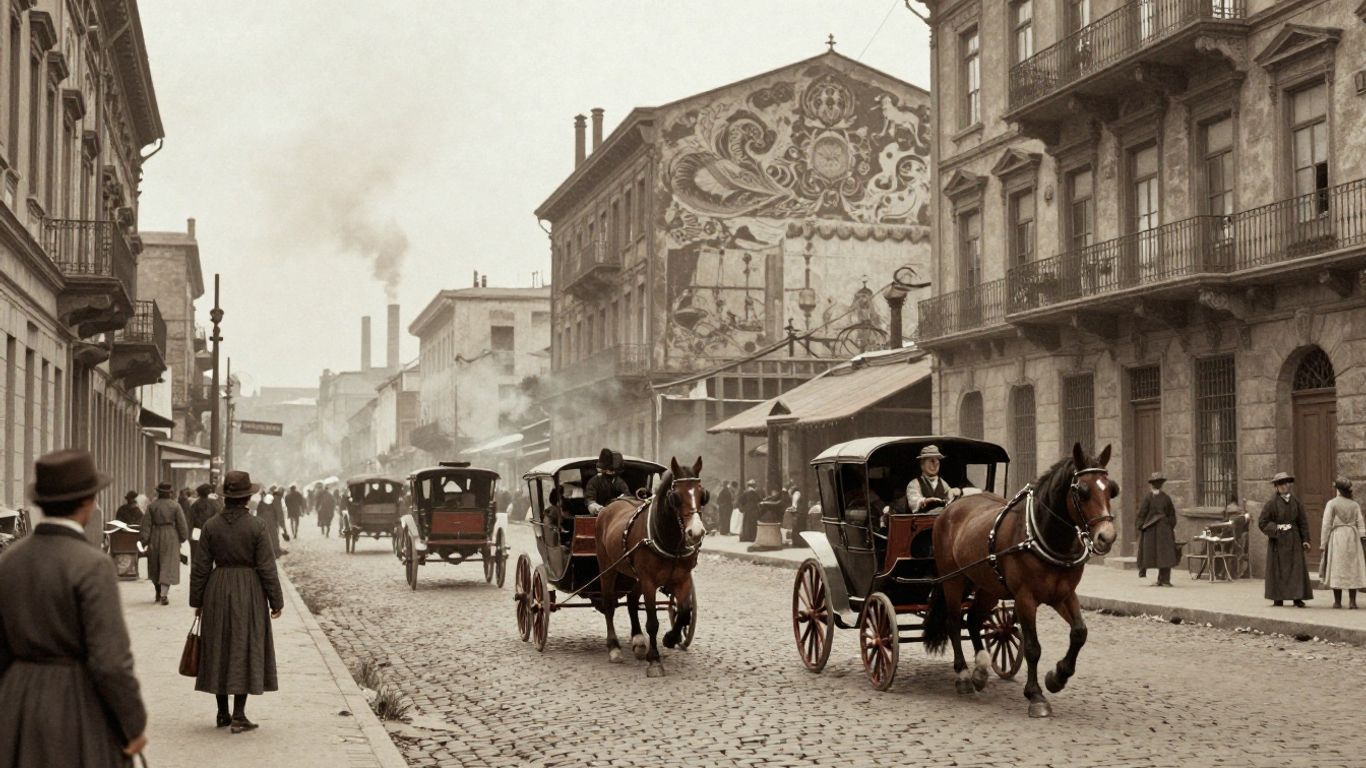
Mexico City in 1900 was a city in the midst of a substantial revitalization. President Porfirio Díaz, who had been in power for decades, was ardent about modernizing the country and ensuring its capital was a reflection of European opulence, particularly that of Paris. This era, known as the Porfiriato, saw a flurry of construction and strategic urban planning aimed at embellishing the city and proclaiming its advancements to the world. Magnificent boulevards were delineated, ornate buildings in French architectural styles began to proliferate, and public spaces were thoughtfully redesigned. The overarching aim was to create a capital that looked and felt like a major European center.
- A New Look for the Capital: The Paseo de la Reforma, directly inspired by the Champs-Élysées, emerged as a pivotal artery, lined with elegant mansions and monuments.
- Architectural Flourishes: Buildings like the Palacio de Bellas Artes, though completed later, began to materialize during this period, showcasing a captivating blend of styles.
- Infrastructure Improvements: Significant efforts were made to enhance sanitation and public services, though these often disproportionately favored the more affluent districts.
The drive for modernization was unwavering, but it often came with inherent trade-offs, with societal disparities persisting beneath the polished surface of the new urban landscape.
Panama City: A Crucial Link in Global Trade
Panama City's importance in 1900 was fundamentally linked to its unique geographical positioning. Situated on the Isthmus of Panama, it was a crucial nexus for transit, especially given the ongoing efforts to construct a canal. While the French attempt at building the canal had largely failed by this time, the vision and the logistical exigencies it engendered kept Panama City remarkably relevant. It served as a focal point for the movement of goods, individuals, and concepts between the Atlantic and Pacific oceans. The city, in essence, was a vibrant crucible of cultures, directly reflecting its pivotal role as a global gateway.
- The Canal's Enduring Influence: Even without a completed canal, the presence of international workers, engineers, and businesses related to the canal project profoundly molded the city's economic and social tapestry.
- Trade and Transit: Ships regularly docked, cargo was meticulously transferred, and the city thrummed with the dynamism of international commerce.
- A Diverse Population: The confluence of individuals from various parts of the world created a truly unique cultural mix.
Havana's Cosmopolitan Evolution Post-Spanish-American War
By 1900, Havana was experiencing a period of profound transformation following the Spanish-American War and the subsequent U.S. intervention. The city, once a major Spanish colonial port, now found itself under American influence. This brought about both upheaval and novel prospects. American investment began to flow in, instigating modernization initiatives, including new infrastructure and an evolving urban tableau. Havana was becoming increasingly cosmopolitan, attracting visitors and business interests from the United States, while also grappling with its nascent political paradigm.
The city was actively adapting to a nascent era, gracefully blending its rich Spanish heritage with emerging American influences.
- American Influence: New hotels, casinos, and businesses designed to appeal to American visitors and investors began to appear.
- Urban Development: Efforts were made to improve roads, utilities, and public buildings, though the benefits were not uniformly apportioned.
- Cultural Shifts: The city's societal milieu evolved, reflecting the changing political and economic ties.
Eastern European Cities Navigating Change
Eastern Europe in 1900 was a region in a state of dynamic transition, with its major cities positioned between venerable traditions and the accelerated impetus of industrialization and political shifts. These urban centers, often subject to the hegemony of larger empires, were simultaneously forging distinct identities.
Warsaw's Development Under Russian Rule
Warsaw, by 1900, was a city experiencing a distinctive amalgamation of advancement and oversight under Russian dominion. While political freedoms were notably limited, the city saw substantial modernization initiatives. New infrastructure, such as improved water systems and the introduction of electric trams, began to reconfigure the urban panorama. Despite the prevailing Russian suzerainty, Warsaw admirably preserved its singular Polish character, with cultural institutions consistently endeavoring to safeguard national identity.
- Introduction of electric trams: This materially enhanced public transportation and efficiently connected different parts of the city.
- Expansion of water and sewage systems: These crucial public health improvements were vital for an expanding urban populace.
- Continued development of industry: Factories and workshops provided essential employment but also contributed to the city's evolving physiognomy.
Warsaw in 1900 was a metropolis of juxtaposed realities, where the formidable presence of Russian rule was met with the unyielding resilience of Polish culture and the palpable indicators of industrial advancement.
Riga's Significance as an Industrial Hub
Riga, in 1900, emerged as a preeminent industrial and port city within the Russian Empire. Its propitious geographical position on the Baltic Sea greatly facilitated trade, and its flourishing industries drew a heterogeneous populace. The city's architectural landscape, quite naturally, mirrored this period of expansion, featuring a compelling mix of historic buildings and newer industrial structures. Riga was, indeed, a confluence of diverse cultures, significantly contributing to its dynamic urban life.
- Major port activities: Facilitating the robust trade in timber, grain, and various other goods.
- Growth of manufacturing: Industries like textiles, metalworking, and shipbuilding were particularly salient.
- Diverse population: Including Latvians, Russians, Germans, and Jews, fostering a vibrant cultural tapestry.
Prague's Industrial Expansion and Medieval Charm
Prague, as part of the Austro-Hungarian Empire in 1900, was a city that elegantly juxtaposed its rich medieval past with the exigencies of industrialization. While its historic core—including Prague Castle and the Charles Bridge—continued to stand as iconic testaments to its heritage, the city was also expanding with new factories and residential areas. This period saw marked demographic growth, primarily spurred by burgeoning industrial prospects, yet the city succeeded in preserving much of its historical ambiance and architectural heritage. The striking juxtaposition of ancient spires and the nascent industrial emissions undeniably sculpted Prague's evolving skyline.
| Aspect | Description |
|---|---|
| Governing Body | Part of the Austro-Hungarian Empire |
| Primary Development Drivers | Industrial expansion and population growth |
| Prevailing Ambiance | Blend of medieval charm and modern industry |
| Landmarks | Prague Castle, Charles Bridge, Old Town Square |
Global Cities and Their Evolving Landscapes
Moscow's Iconic Skyline in the Mid-19th Century
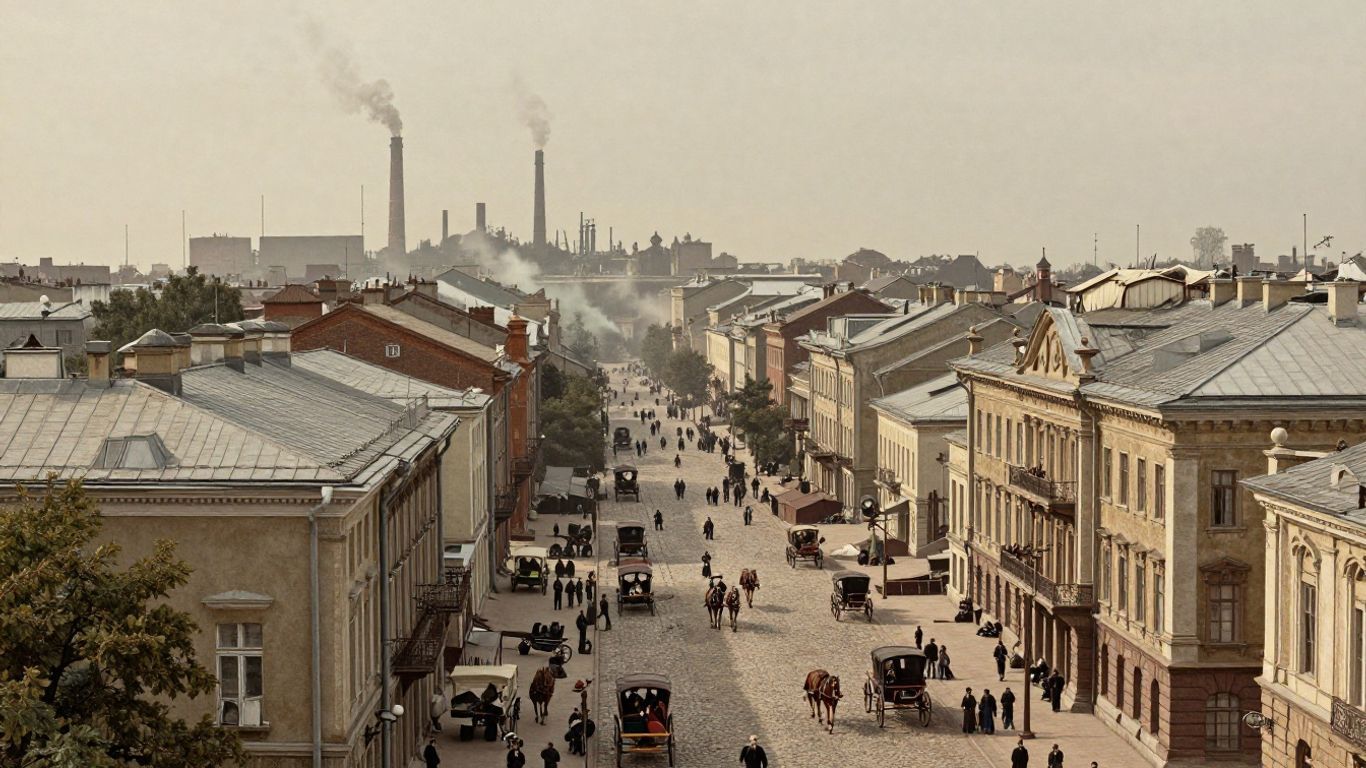
In the mid-19th century, Moscow presented a compelling visual tableau, a city where venerable traditions converged with the nascent stirrings of modernization. The skyline was dominated by the gilded domes of its many churches and the formidable walls of the Kremlin—enduring symbols of its rich historical narrative as the heart of Russia. While not yet an expansive metropolis by today's standards, Moscow was a consequential urban hub, animated by trade and vibrant cultural activity.
The visual identity of Moscow in 1852 was profoundly anchored in its religious and imperial heritage. The Great Kremlin Palace, a resounding testament to imperial might, stood as a salient feature, frequently immortalized in early photographs alongside the intricately detailed architecture of cathedrals and monasteries. These structures, with their distinctive onion domes, created a distinctive silhouette unmatched elsewhere in the world.
Early photography, though still an nascent art form, began to capture these scenes. Images from this era show a city characterized by:
- An intricate network of thoroughfares, many still unpaved.
- A diverse mix of grand palaces, modest homes, and commercial buildings.
- The ubiquitous presence of religious edifices.
- Horse-drawn carriages and pedestrians as the predominant modes of conveyance.
Buenos Aires: Rapid Growth Amidst Social Disparities
Buenos Aires in the late 19th and early 20th centuries was a city experiencing exuberant growth, fueled by European immigration and a flourishing agricultural export economy. This rapid expansion, however, also brought stark social and economic disparities into sharp relief. The city was metamorphosing from a colonial entrepôt into a dynamic, cosmopolitan nexus—but, crucially, not all segments of society partook equally in its prosperity.
The confluence of immigrants seeking enhanced opportunities created a dynamic, multicultural society, yet also taxed extant infrastructure and social services, resulting in discernible neighborhoods and varying living conditions.
Key aspects of Buenos Aires's evolution during this period include:
- Substantial Immigration: Millions of Europeans, particularly from Italy and Spain, arrived, fundamentally shaping the city's culture and labor force.
- Economic Boom: The export of beef and grain rendered Argentina, and Buenos Aires, exceptionally affluent, thereby financing grand public works and European-style architecture.
- Urban Development: New avenues, expansive parks, and public buildings were constructed, imbuing the city with a distinctly European aesthetic.
- Social Stratification: Wealthy elites resided in sumptuous mansions, while many immigrants and working-class families occupied cramped tenements, colloquially termed conventillos.
Istanbul's Blend of Modernity and Tradition
Istanbul, historically Constantinople, stood as a singular nexus in 1900, a city where the legacies of the Byzantine and Ottoman Empires intersected with the nascent influences of the modern world. Positioned strategically across Europe and Asia, it was the capital of a sprawling, albeit waning, empire, and its landscape reflected this intricate identity. The city was a dynamic epicenter of commerce, culture, and political machinations, showcasing a captivating amalgam of ancient structures and new developments.
- Imperial Grandeur: Landmarks like the Hagia Sophia and the Blue Mosque continued to dominate the skyline, embodying centuries of profound history and religious significance.
- Ottoman Modernization Initiatives: Efforts were underway to modernize infrastructure, including the introduction of trams, improved water systems, and new government buildings—often executed in a European architectural style.
- Cosmopolitan Population: The city was home to heterogeneous communities, including Turks, Greeks, Armenians, Jews, and Europeans, each contributing to its vibrant cultural tapestry.
- Geopolitical Significance: As a gateway between the Black Sea and the Mediterranean, Istanbul remained a crucial nucleus for trade and international relations, drawing merchants and diplomats from across the globe.
Looking Back, Moving Forward
As we conclude our exploration of the world's biggest cities in 1900, it’s patently evident how profoundly the urban landscape has transformed. These places, once vibrant centers of industry and culture, were precisely on the verge of monumental shifts. From the ascent of new technologies to evolving social landscapes, the cities of 1900 established the foundational elements for the urban environments we inhabit today. It’s a compelling reminder that even the most established cities are in perpetual flux, continuously being reconfigured by the people and events of their time. Thinking about these past giants truly helps us appreciate the dynamic essence of urban life and the remarkable distance we've traveled.
Frequently Asked Questions
What made cities so big in 1900?
Cities experienced substantial growth at that time primarily because more people were migrating from rural areas to urban centers in search of employment. New inventions and factories required a significant workforce. Moreover, improved transportation networks, such as trains and ships, facilitated the movement of both individuals and commodities, helping cities become bustling centers for trade and habitation.
How different did New York City look in 1900?
New York City in 1900 was markedly distinct from its contemporary iteration. It was in a period of rapid growth and transformation. There weren't as many towering structures as today, and streets were often bustling with horse-drawn conveyances rather than automobiles. The Statue of Liberty had recently been dedicated, rapidly emerging as a novel emblem for the city as it graciously welcomed numerous immigrants.
Were European cities also changing a lot around 1900?
Yes, major European cities like Vienna and Berlin were also undergoing profound transformations. They were experiencing expansion with new construction and infrastructure development. Vienna, for instance, served as the imperial heartland of a vast empire, and Berlin was experiencing swift growth with numerous new construction projects. These cities were rapidly becoming more modern and globally important.
What was happening in Asian cities like Singapore and Hanoi in 1900?
Cities in Asia were likewise undergoing significant development. Singapore was becoming a pivotal center for commerce and trade, with bustling squares where goods were actively bought and sold. Hanoi, under French rule at the time, was transforming its architectural character with new edifices, yet some venerable temples remained, embodying a compelling blend of tradition and modernity.
How did cities in the Americas grow around the turn of the century?
Cities in the Americas were also experiencing rapid expansion. Mexico City was being revitalized to emulate the grandeur of Paris, featuring magnificent thoroughfares and grand edifices. Panama City was of paramount importance due to the strategic Panama Canal project, making it a crucial nexus for maritime traffic and international trade between different parts of the world.
What challenges did cities like Warsaw and Riga face in 1900?
Some cities, like Warsaw, were under the suzerainty of external powers, which presented considerable challenges, but they were nonetheless experiencing growth and the integration of novel amenities such as trams and improved water systems. Riga was becoming a significant hub for industrial activity and commerce, but it also contended with arduous periods due to wars and the persistent struggle for autonomy.


