
resources
What Local Governments Look for When Evaluating AI Vendors
04 Feb 2026

Artificial intelligence is changing how cities work. Local leaders want tools that help them serve people better. For AI solution providers operating in the United States, understanding what governments look for before buying tech matters. It isn’t just about cool tools. It’s about trust, fairness, safety, cost, and real benefit for the community.
Buying AI isn’t as easy as it seems. People expect smart services. Officials feel pressure to meet those needs on tight budgets. Many tenders (requests for bids) today ask for evidence that a product earns trust and works as promised. If you want to sell to cities or counties, you need to know what matters most to them.
In this piece, we’ll talk about what local governments care about most. And we’ll show you how to make your AI stand out.
You Have to Offer Value
When a city asks for AI help, leaders think about people first. They ask: How will this help our residents? That could mean faster service, better predictions, or clearer answers to questions.
For many local governments, AI is just starting. Almost all councils in one recent survey were either using AI or exploring it. 95% of respondents said they were in the early stages of AI use, with tools showing up in areas like procurement, HR, and finance.
At the same time, nearly half of U.S. residents feel unsure about the government using AI.
That means vendors should pitch benefits in citizen terms, not just tech terms. Show how your tool makes a real difference in people’s lives.
In proposals, answer three questions first:
- Who benefits from this?
- Why does it matter to the community?
- How does your product improve life or lower the cost of living?
Trust and Safety Are Important Factors
Governments cannot risk their reputations. They have to protect citizen data and privacy. Cities want to work with vendors who can prove they care about these things. They want documentation on how your system avoids bias, how it stores data, and how it handles unexpected errors.
Include simple privacy and safety statements in your bid. Explain how you plan to protect sensitive data. And avoid making vague promises. Show real strategies.
Clear Documentation Is a Must
Cities aren’t buying a widget off a shelf. They are entering contracts that matter legally. That means they need clear specs, user guides, benchmarks, and standards.
Officials want evidence that your tool performs well in real situations. That’s why you should include case studies, demo results, and independent tests.
Evidence of Quality and Support
Local governments value the service you’re offering as much as your software. They want to see support plans, training options, and updates. They will compare vendors on:
- Response time for issues
- Training for staff
- Clear update schedules
Add a support plan summary with your proposal that shows training schedules, tickets, and service levels. You want to show them that your product comes with excellent service.
Fair Pricing and Budget Fit
Budget is a major filter. Cities rarely pay top market rates. They are accountable to taxpayers. They need pricing that is fair, simple, and predictable.
Officials prefer pricing that ties to direct benefit. For example, low-risk pilot phases with clear success measures are much more appealing than big upfront fees that carry a lot of risk.
Compatibility With the Current Systems
Most local governments already have apps, databases, and tools in place. They do not want a standalone product that doesn’t fit into all of that. AI vendors often overlook this. Governments will ask: Can your tool talk to our systems securely? Will it fit into our workflow?
Highlight interoperability. Show examples or standards your tool supports.
Alignment With City Priorities and Policies
Every city has goals. They might include equity, sustainability, jobs, climate, or safety. When you bid, show how your AI aligns with those goals. Help them create a better future for their residents.
Tie your pitch to their strategic plans. Mention relevant programs, targets, or policies. Make it feel local. First, you have to read the city’s published strategies or plans before you write your proposal.
Fair and Open Competition
Governments award fairness. They want to make sure bids are open and equal. Many require detailed scoring rubrics and compliance documents.
You should know procurement basics and government rules. Sometimes agencies use simple checklists to score bids. Concise, clear responses get higher marks than submissions that are way too long. Just make sure you address requirements one by one, using clear headers. Make it easy for them to say yes.
Responsible AI and Risk Management
Local leaders think about risk at every step. AI risk is about bias and impact on residents. Governments want vendors who can show risk planning and oversight.
This includes telling how your system was tested. Explain what happens if it fails. Give a risk matrix in plain language. You can include a short risk summary with mitigation steps. Avoid big words and just focus on explaining the process.
Trust
AI for cities isn’t just about the next quarter. It’s about creating trust with residents. Cities ask: Is this vendor trustworthy? They look for:
- Clear public communication plans
- Ways to get resident feedback
- Transparency in how AI works
Part of selling to locals is showing respect for community values.
Suggest ways the city can explain the project to residents. Offer simple visuals, glossary terms, and FAQs.
Trust, Value, and Fit (The Three Things Cities Want)
Selling AI to the local government is all about understanding people. It’s about offering value, honest explanations, fair pricing, and real readiness to support. Vendors who can show all of that have a real edge.
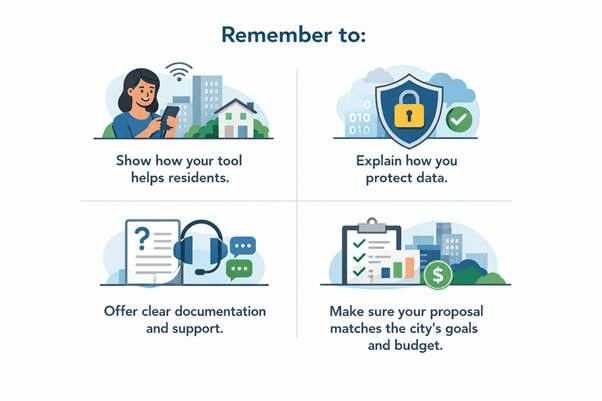
Remember to:
- Show how your tool helps residents.
- Explain how you protect data.
- Offer clear documentation and support.
- Make sure your proposal matches the city’s goals and budget.
For more ideas on how technology can improve your business, see this article about AI agents.
If you want to sell to cities, think like a partner. Think trust, community, and simple language. That’s what local governments truly look for. We wish you the best of luck.


