
business resources
What Proven Strategies Boost Effective Ball Control?
11 Jan 2026

No matter the sport, getting a firm handle on the ball is absolutely crucial. We're not just talking about kicking it around—it's about the ability to command its every move. When you have solid ball control, your movements become more fluid, mistakes dwindle, and your overall game elevates. So, how can you truly nail this fundamental skill? Let's dive into some effective strategies.
Key Takeaways
- Working with two balls forces you to get comfortable using both hands or feet, dramatically increasing your versatility on the field or court.
- Controlling the ball with your fingertips provides a much better feel, which allows you to keep your head up and maintain awareness of the entire game.
- A low dribble is your best friend for protection; it makes the ball much harder to steal and enables you to change direction in a snap.
- Don't underestimate simple drills—ball slaps, for instance, build essential hand and wrist strength, which is vital for maintaining control in high-pressure situations.
- Mastering the art of trapping the ball means you can receive passes seamlessly and be instantly ready for your next play.
Developing Superior Ball Command Through Dribbling Techniques
Mastering Low Dribbles for Enhanced Agility
Keeping the ball low to the ground while dribbling is a genuine game-changer when it comes to maintaining control. This simple technique makes it significantly more difficult for opponents to poke the ball away and steal it. Because the ball travels a shorter distance between your hand and the floor, you gain precious time to react and pivot quickly. It's all about cultivating a responsiveness that feels second nature.
So, how do you practice this? Start by simply focusing on keeping your dribble below your knees. Begin stationary to get a feel for the low bounce. From there, start moving—first walking, then jogging, and eventually running, all while maintaining that low dribble. The goal is to make this feel so natural that you can execute sharp changes of direction without a second thought, building a solid foundation for more advanced moves down the road.
Utilizing Fingertips for Finer Ball Feel
The way you make contact with the ball truly matters. Instead of slapping at it with your palms, shift your focus to controlling it with just your fingertips. It might feel a bit strange at first, but this gives you a far more sensitive connection to the ball. You'll develop an innate sense of where it is without needing to look down, which is critical for keeping your head up to scan the court or field. This level of awareness is what separates good players from great ones—it's how you spot open teammates and make smart plays.
Here's a quick drill to try: hold the ball out in front of you and rapidly tap it back and forth between the fingertips of each hand. Concentrate on keeping the movement controlled and quick, making sure your palms stay out of it. Once that feels comfortable, start varying the height of the dribble, moving it from your waist down to your knees and back up again, all while using only your fingertips. This simple exercise builds incredible dexterity and a much-improved feel for the ball.
Practicing With Two Balls for Ambidextrous Skill
Practicing with two balls simultaneously is a fantastic—and challenging—way to develop both hands equally. It really pushes your coordination to its limits and builds a powerful, holistic feel for the ball. You'll find that once you can handle two balls at once, managing just one feels remarkably easier. This drill is all about building confidence and comfort, no matter which hand you're forced to use.
Begin with a simple, consistent, low dribble with both balls. Then, start mixing it up: try alternating dribbles, then move to simultaneous dribbles. You can even experiment with different heights or crossover dribbles. The key is consistency; even short, regular sessions with two balls can lead to a massive improvement in your ability to control the ball under pressure, making you a much more unpredictable player.
Enhancing Touch And Coordination With Repetitive Drills
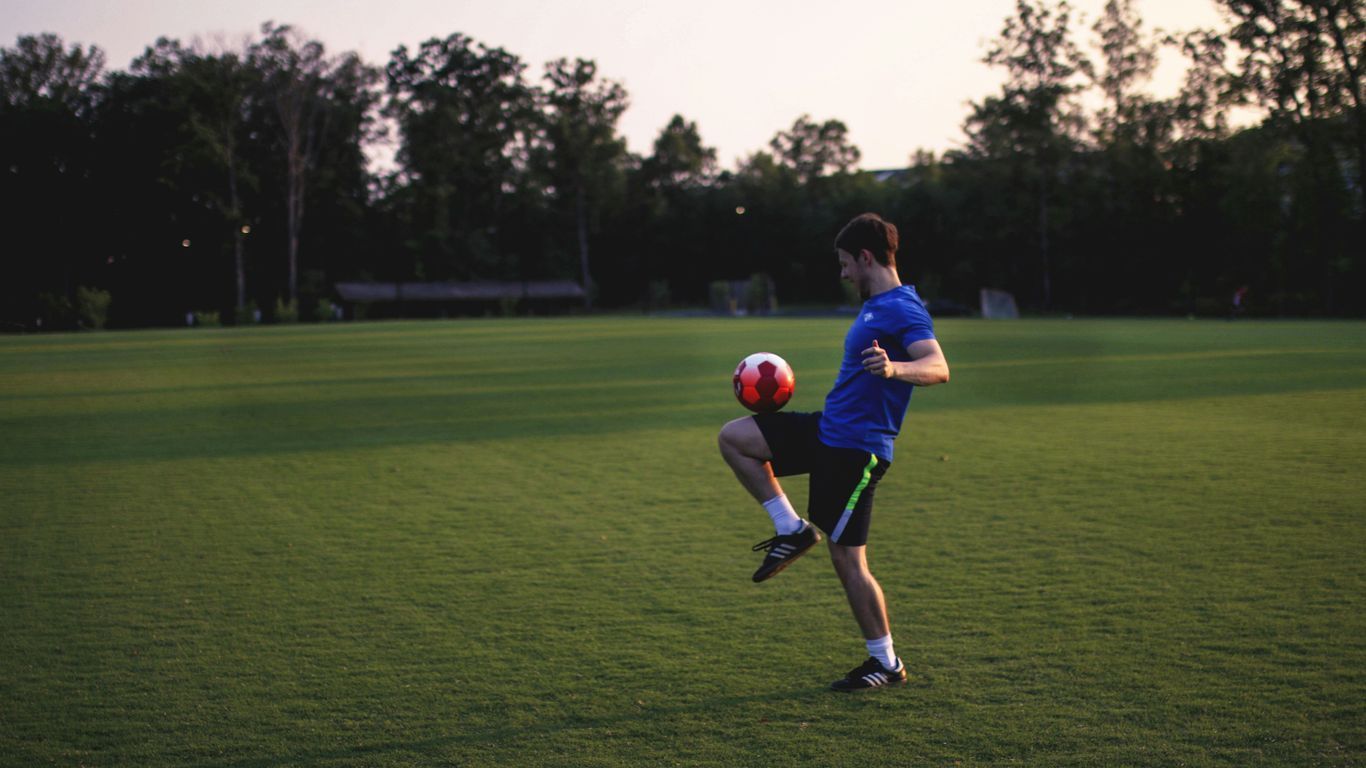
To truly command the ball, you need consistent practice with specific, targeted drills. This isn't just about mindless repetition; it’s about forging muscle memory and a feel for the ball that becomes second nature. Think of it as programming your body to react instinctively, which in turn makes even complex movements feel surprisingly simple.
The Art Of Juggling For Improved Dexterity
Juggling may seem like just a flashy trick, but it's actually a phenomenal tool for developing fine motor control and hand-eye coordination. It compels you to make constant, tiny adjustments to keep the ball in the air, a skill that translates directly into better control when you're dribbling or receiving a pass. Start with one ball, focusing on keeping it aloft with gentle touches. Once you're comfortable, introduce a second, aiming to keep both in play. The goal here is to make every touch light and precise, using the pads of your fingers instead of your palms.
Ball Slap Drills For Hand And Forearm Strength
Strong hands and forearms are non-negotiable for maintaining possession, especially with a defender breathing down your neck. Ball slap drills are designed to target this area directly. Simply hold the ball in front of you and slap it back and forth between your hands with purpose. Focus on using your wrists and forearms to generate a firm, rhythmic motion. This builds the very strength you need for a secure grip and lightning-fast reactions. You'd be surprised what a difference just a few minutes of this drill each day can make.
Wall Drills For Precision And Immediate Feedback
Working with a wall provides a simple yet incredibly effective method for refining your touch and accuracy. Pass the ball against the wall and focus on controlling the rebound with your very first touch. To improve your passing precision, try aiming for specific spots on the wall. You can also practice receiving the ball and immediately firing it back, simulating game-like sequences. The beauty of the wall is its instant feedback—a clean pass and controlled reception feel right, while any errors are immediately obvious, guiding your next adjustment.
Ultimately, consistent and focused practice on these repetitive drills builds the unshakable foundation for superior ball control. It's all about developing an intimate connection with the ball, ensuring every touch you make is deliberate, confident, and effective.
Mastering Ball Reception Through Effective Trapping
Receiving a ball cleanly—especially when it's flying at you or coming from an awkward angle—is a skill that truly separates average players from exceptional ones. This is what we call 'trapping' the ball. It's about much more than just stopping its momentum; it's about bringing it under your immediate control so you can execute your next move, whether that's a pass, a dribble, or a shot. A good trap means the ball is ready for you, not the other way around. This requires a soft touch, impeccable timing, and a bit of anticipation.
Cushioning Incoming Passes For Control
When a pass is heading your way, resist the urge to meet it with a stiff leg or foot. Instead, think about relaxing and letting your body absorb some of the ball's energy. Imagine you're catching a delicate object without breaking it—that subtle 'give' as it makes contact is what kills the momentum. This soft touch is the absolute key to keeping the ball close and under your spell.
Utilizing Appropriate Body Parts For Trapping
Different situations demand different trapping techniques. A ball rolling along the ground, for instance, is often best controlled with the inside of your foot. If the ball is a bit higher, your thigh or chest can be perfect for guiding it down to your feet. For balls coming out of the air, you might use your foot, thigh, chest, or even your head, all depending on its height and your position on the field.
Here's a quick guide:
- Ground Ball: Use the inside of your foot (your instep or sole) for a clean, controlled stop.
- Knee-High Ball: The inside of your foot or thigh works well here, just remember to cushion the impact.
- Waist-High Ball: Employ your chest or thigh to gently guide the ball down to where you need it.
- Head-Height Ball: Don't be afraid to use your head to control the ball's direction and bring it down.
Practicing Traps With Partners Or A Wall
Repetition is your best friend here. Grab a partner and have them pass you balls at various speeds and heights, or simply use a wall for consistent returns. With every single attempt, focus on controlling that pass smoothly. A wall provides instant, honest feedback; the way the ball rebounds tells you exactly how well you trapped it. You can practice with the inside, outside, or sole of your foot, and also work on receiving with your chest and thighs.
Remember, consistent practice that relentlessly emphasizes a soft touch will make all the difference in how effectively you control the ball when it arrives at your feet.
Strategic Approaches To Ball Protection And Possession
Shielding The Ball With Your Body
Keeping the ball away from hungry opponents is a massive part of maintaining possession. This is where shielding—using your body as a barrier—comes into play. When an opponent closes in, you must position yourself between them and the ball. This isn't about raw strength; it's about smart positioning. Keep the ball tucked in close to your body, making it incredibly difficult for a defender to get a foot on it. You can also use your arms to create space, but always be mindful of the rules. The goal is simple: make yourself a physical obstacle that an opponent has to go around, not through.
Maintaining Close Proximity To The Ball
This concept is all about keeping the ball within your immediate sphere of influence, almost as if it were an extension of your own body. When you're dribbling, the ball shouldn't be bouncing feet away from you. It needs to be close enough that you can react instantly to any defensive pressure. This close control allows for quicker changes in direction and makes it much tougher for defenders to execute a clean tackle. It requires a great feel for the ball, something developed only through consistent practice and drills. Keeping the ball tight means you're always ready to make your next move without a moment's hesitation.
Varying Dribbling Pace For Unpredictability
Dribbling at a single, constant speed makes you predictable and easy to defend. Defenders can time your movements and anticipate your actions. By changing your pace—sometimes exploding forward, other times slowing down or even coming to a complete stop—you keep defenders completely off-balance. A sudden burst of speed after a period of slower control can leave a defender in your dust. This unpredictability is a powerful weapon for creating space and opportunities. It forces defenders to constantly readjust, which significantly increases the chance they'll make a mistake.
Integrating Advanced Techniques For Comprehensive Control
To truly master the ball, you have to move beyond practicing skills in isolation and begin weaving them together. This is where advanced techniques come into play, helping you build a more complete and dynamic game. It’s about making everything flow together seamlessly, so you're not just dribbling, then passing, then shooting—you're doing it all as one fluid motion.
Combining Passing, Receiving, and Shooting
This combination is the very heart of game-like play. Picture a typical sequence: you receive a pass, possibly under pressure, control it instantly, and then immediately transition into a shot or another pass. Practicing this as a single, continuous action is absolutely key. You can set up drills where you pass to a rebounder, control the return, and then take a shot. The objective is to make the transition between these actions as quick and smooth as possible. It trains your body to react instinctively, cutting down the time it takes to make decisions and execute plays on the field.
- Start with a pass to a rebounder or wall.
- Focus on controlling the return with a clean first touch.
- Instantly transition into a shot or a second pass.
Multitasking Drills with Rebounders and Cones
To really push your boundaries, you need to incorporate drills that demand you do more than one thing at once. Using rebounders and cones is perfect for this. For example, you could set up a series of cones to dribble through while simultaneously having a rebounder to pass to and receive from. This forces you to divide your attention, just as you would in a real game. Some advanced rebounders even have lights that signal where to pass, requiring you to react while maintaining control. This kind of dual-task training is proven to improve your overall awareness and command of the ball.
Simulating Match Pressure with Dynamic Exercises
Ultimately, practice needs to feel as close to the real thing as possible. Dynamic exercises are specifically designed to mimic the chaotic and unpredictable nature of a match. This might involve drills where you have to dribble at varying speeds, change direction on a dime, and then make a pass or take a shot—all while navigating a "defender" (even if it's just a cone). The idea is to create scenarios where you're forced to think and act quickly under simulated pressure. The more you can replicate game-like intensity in your training, the better prepared you'll be when it truly counts.
Training under pressure does more than hone your skills; it builds the mental toughness required to perform when it matters most. It's not just about physical ability; it's about learning to stay composed and make smart decisions when the stakes are high.
Putting It All Together
So, we've covered some solid ground on how to get better at controlling the ball. It’s not about finding a single magic trick; it’s about a commitment to putting in the work, using smart practice methods, and being mindful of how you handle the ball. Whether you're sharpening your dribble, perfecting your first touch, or just remembering to keep your head up to see the play unfold, these strategies can make a tangible difference in your game. Remember, achieving mastery takes time and consistent effort—so keep at it, and you will absolutely see your game improve.
Frequently Asked Questions
Why is keeping the ball low when dribbling so important?
Keeping your dribble low to the ground makes it significantly harder for opponents to steal the ball. Plus, it allows you to change directions much more quickly, making you a more agile and effective player on the field or court.
How does using fingertips instead of palms help with ball control?
Using your fingertips gives you a much more sensitive feel for the ball compared to your palms. This enhanced touch means you don't have to look down to know where the ball is, allowing you to keep your head up, scan your surroundings, and make smarter plays.
What's the benefit of practicing with two balls at the same time?
Working with two balls simultaneously is a fantastic way to develop skill with both your dominant and non-dominant hand or foot. It dramatically improves your coordination and gives you a much better overall feel for the ball, making you comfortable in any situation.
How can juggling improve my overall ball handling?
Juggling might seem like a simple trick, but it's an excellent drill for developing a softer touch and improving your hand-eye (or foot-eye) coordination. It fundamentally teaches you to become more comfortable and adept at handling the ball with various parts of your body.
Why are ball slap drills useful for improving control?
Ball slap drills are designed to build strength in your hands, wrists, and forearms. This added strength is crucial for maintaining a firm grip and control over the ball, especially when you're under pressure from defenders trying to take it away.
How does practicing against a wall help with ball control?
Think of a wall as the most reliable practice partner you'll ever have. Passing the ball against it allows you to work on your receiving, trapping, and accuracy, all while getting instant feedback on the quality of your touch and pass.


