
business resources
What to Do After a Truck Crash in Memphis in 2026: A Practical Safety and Evidence Guide
17 Aug 2026

A collision involving a commercial truck can be disorienting, painful, and dangerous. The priorities are simple, even when the situation is not: get to safety, call for help, and obtain medical care. Once immediate needs are addressed, organized records can make it easier to understand what happened and protect your options.
Truck crashes can involve serious vehicle damage, multiple insurance companies, and questions about the driver, carrier, maintenance, or cargo. If you need individualized guidance after a collision, speaking with a truck accident lawyer Memphis, TN may help you understand the next steps based on the facts of your situation.
What to Do in the First Few Minutes
Check yourself and others for immediate danger. If your vehicle can be moved safely out of traffic, do so. Turn on hazard lights, call 911, and remain at the scene unless emergency medical transport is necessary. Stay away from leaking fluids, damaged cargo, traffic lanes, and downed utility lines. Avoid arguing, apologizing, or guessing about fault. A calm exchange of basic information is more useful than a roadside debate.
Why Medical Care Comes First
Some injuries are not obvious immediately after a crash. Adrenaline can mask pain, and symptoms involving the head, neck, back, or soft tissue may appear later. Accept an evaluation from paramedics when offered, report all symptoms to medical professionals, and follow discharge instructions. Keep copies of visit summaries, prescriptions, bills, work restrictions, and follow-up recommendations. Do not delay needed care simply because you are focused on the vehicle or insurance claim.
How to Document the Crash Scene
Only gather information when it is safe and does not interfere with police, firefighters, or medical personnel. If you are injured, a passenger, witness, or family member may be able to help preserve information later.
Photos to Take When Safe
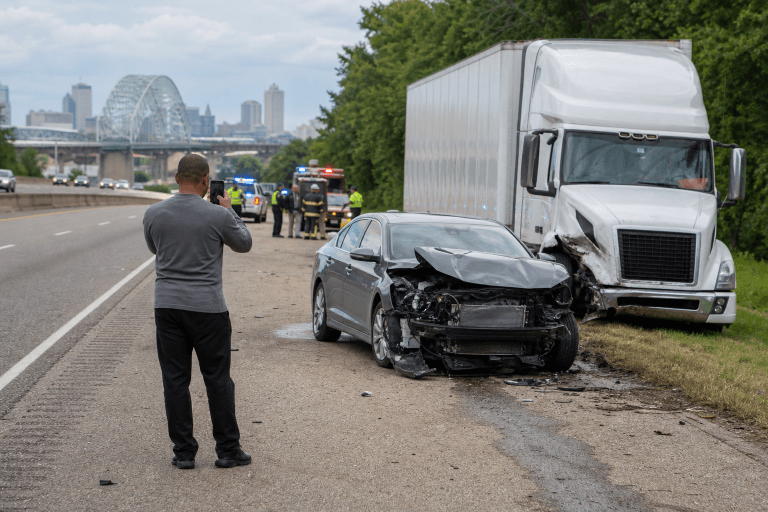
- All vehicles from several angles, including plates and visible damage.
- Lane markings, traffic signals, signs, debris, skid marks, and guardrails.
- Weather, lighting, road surface, construction activity, and visibility conditions.
- Visible injuries and damaged personal property, such as a phone, child seat, or bicycle.
Truck and Company Details to Record
Commercial vehicles often display information that is not present in an ordinary car crash. Record the driver's name and contact information, trucking company name, trailer number, license plate, insurance details, and visible USDOT number. Ask witnesses for names and phone numbers before they leave. Do not enter a roadway or approach an unsafe truck just to get a photograph. Police reports, and later investigation, may fill in information you could not safely collect.
Evidence That May Matter Later
No single item automatically proves responsibility, but several records together can help explain a collision. Important materials may include the crash report, photographs, witness accounts, repair estimates, medical records, dashcam footage, nearby business video, truck inspection records, maintenance documents, driver work-hour records, electronic truck data, and cargo-loading paperwork.
Handling Insurance Calls
Report the crash to your own insurer promptly and provide basic facts honestly. Before discussing details with another insurer, ask for the caller's name, company, and claim number. Do not guess about speed, distance, fault, or the full extent of an injury before treatment is complete. Keep every email, letter, estimate, and offer. Be especially cautious about a quick settlement when medical care or vehicle evaluation is still ongoing.
Why Truck Crash Liability Can Involve Several Parties
Responsibility may extend beyond the person driving the truck. Depending on the evidence, an investigation might examine the driver, motor carrier, fleet operator, maintenance provider, shipper, cargo loader, parts manufacturer, contractor, or another roadway user. For example, a tire failure may require review of inspection practices, repair history, cargo weight, road conditions, and driver actions. Liability depends on the particular facts and applicable law.
Memphis Roads, Freight Traffic, and Crash Conditions
Memphis drivers routinely share major routes and interchanges with commercial freight traffic. Night driving, work zones, sudden rain, dense traffic, and merging vehicles can make safe following distance and visibility especially important. A June 10, 2026, report on a semi-truck crash on I-40 showed how a two-tractor-trailer collision could block a westbound lane and affect emergency response. The lesson is practical: slow down near a crash scene, leave room to react, and follow responder instructions.
Truck Design and Underride Risks
An underride crash occurs when a smaller vehicle slides beneath the rear or side of a truck or trailer in certain collisions. These events can be particularly severe because the trailer structure may intrude into the passenger compartment. Drivers can reduce risk by maintaining a safe following distance, avoiding distracted driving, and treating stopped or slow-moving trucks as major hazards.
What Happens After the First 72 Hours
Continue treatment, request the crash report when available, and store records in one place. Save receipts, wage-loss documentation, photographs, messages, and repair estimates. A private symptom journal can help track pain, limitations, appointments, and missed work. Do not repair, sell, or dispose of a badly damaged vehicle before it is adequately documented. Also, avoid posting crash details or photographs on social media, since incomplete posts can be misunderstood.
Common Questions
Should I report a crash if the damage seems minor?
Yes. A report can create a contemporaneous record, and damage or injuries may become more apparent after the initial shock has passed.
What if the truck driver blames me?
A statement at the scene is not a complete investigation. Vehicle damage, video, witness accounts, records, and the crash report may all provide additional context.
What if I cannot take photographs?
Medical care comes first. Ask a passenger, witness, or trusted person to preserve information if possible, but do not delay treatment for pictures.
When should I ask about deadlines?
Ask promptly. Filing periods and notice requirements can vary depending on the facts, parties, and type of claim.
Final Checklist
- Get to safety and call 911.
- Seek medical attention and follow treatment instructions.
- Exchange basic information and document the scene when it is safe to do so.
- Preserve records, receipts, photographs, and messages.
- Use care when speaking with insurers and ask about next steps early.


