
When Profit Meets Purpose: How Microsoft and Corporate Leaders Are Proving the Business Case for Accessibility
21 Nov 2025

Part 4 of Wisdomia's Deep Dive into AI, Inclusivity, and Neurodiversity
From Research to Reality: The Corporate Translation
In Parts 1-3 of this series, we've journeyed from the massive global need for assistive technology (2.5 billion people and counting) through the revolutionary AI applications breaking down barriers, to the academic laboratories reimagining disability research itself.
But here's the uncomfortable truth: Research papers don't change lives. Prototypes don't reach millions. Good intentions don't scale.
What scales is business.
When corporations commit to accessibility, not as corporate social responsibility window dressing, but as core product strategy, the impact can be transformative. When companies discover that inclusive design isn't just ethically right but commercially advantageous, the entire incentive structure shifts.
This chapter explores the corporations proving that accessibility and profitability aren't just compatible, they're complementary. From Microsoft's 30-year commitment to Be My Eyes' revolutionary hybrid model to JPMorgan Chase's stunning productivity gains, we're witnessing the emergence of a new corporate paradigm.
Welcome to the business case for inclusion.
Microsoft: Three Decades of Accessibility Leadership
The Long Commitment
Most corporate initiatives last 18-24 months before executive attention shifts elsewhere. Microsoft's accessibility commitment has endured for over 30 years, spanning multiple CEOs, countless product cycles, and fundamental shifts in computing itself.
This isn't accident. It's strategy.
The Evolution of Accessibility at Microsoft
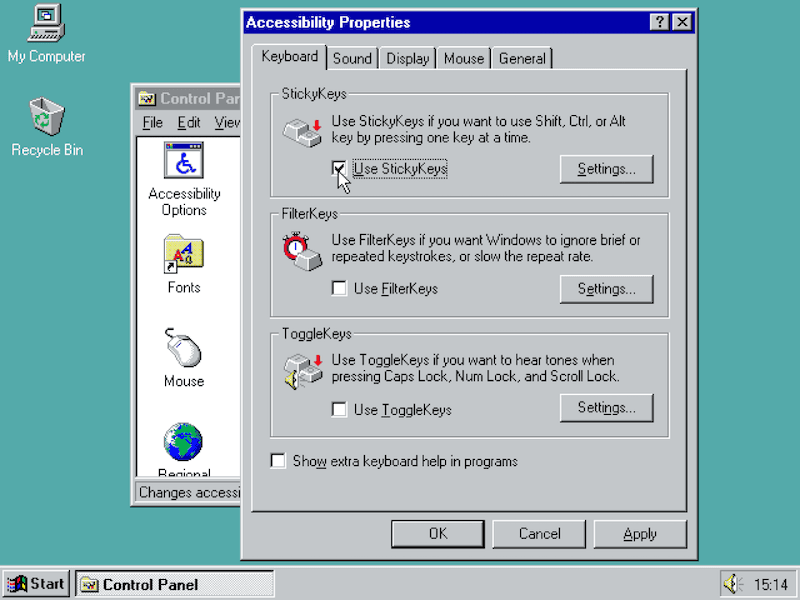
1995: The Foundation Windows 95 introduced Sticky Keys and speech recognition, features designed for users with disabilities that made computing more accessible for millions. These weren't add-ons; they were built into the operating system itself.
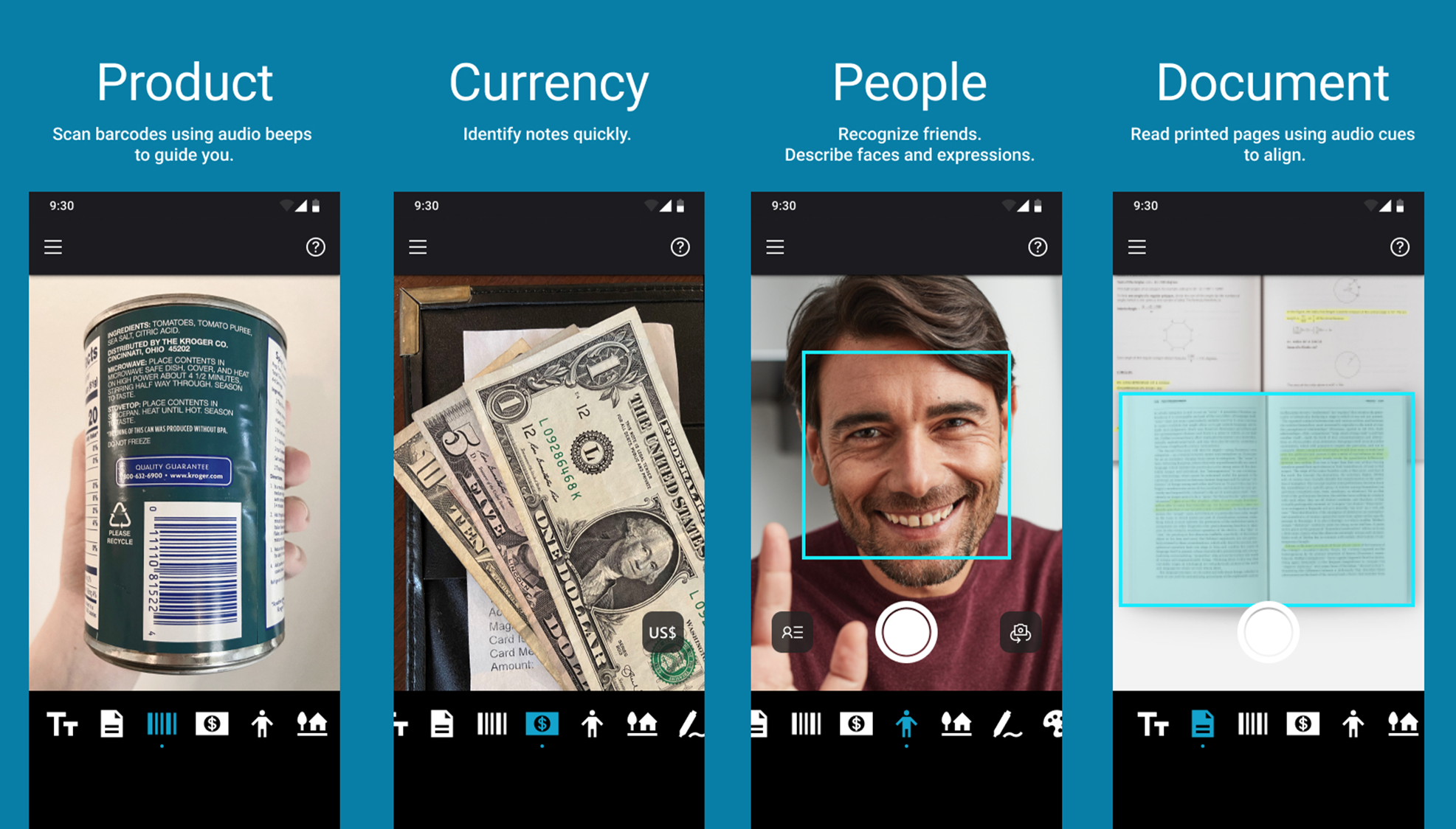
2016: The AI Pivot Microsoft launched Seeing AI, transforming smartphones into intelligent visual companions using computer vision and natural language processing. By 2025, Seeing AI operates in 36 languages, describing surroundings, reading text aloud, identifying currency, and recognizing faces and emotions.
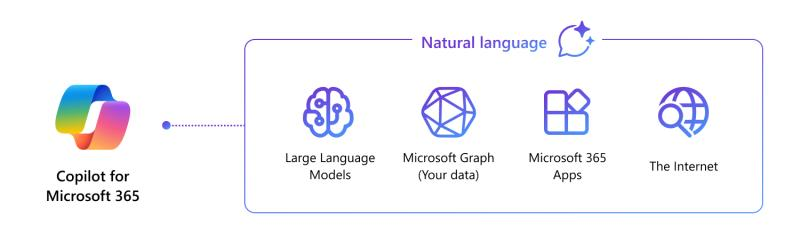
2023-2024: The Generative AI Revolution Microsoft Copilot introduced accessibility features that demonstrated measurable impact: 76% of neurodiverse employees reported performing better at work when using Copilot for communication, memory recall, and focus management.
AI-powered Narrator in Windows Insider Preview now provides rich image descriptions, while Azure AI Foundry implements UI improvements specifically designed to reduce cognitive load.

2025: The Integration Acceleration Microsoft Teams introduced features that identify when someone uses sign language, automatically featuring them prominently as speakers in meetings, a simple but profound acknowledgment of communication diversity.
The AI for Accessibility Initiative
Microsoft's AI for Accessibility program provides grants, resources, and AI-driven technologies to developers, nonprofits, and researchers working across multiple challenge areas:
- Vision impairment
- Hearing loss
- Mobility limitations
- Cognitive differences
- Mental health challenges
The numbers tell the story of scale:
- $50 million+ invested in accessibility grants (cumulative)
- 10 million+ monthly users of Edge's Read Aloud feature
- 1 million+ users of Immersive Reader making webpages easier to read
- Hundreds of grantee organisations worldwide
Case Study: Democratising Cultural Heritage

In a pioneering collaboration, Amsterdam's Rijksmuseum partnered with Microsoft to bring one million artworks to life for individuals with visual impairments. Using Azure AI Computer Vision and Azure OpenAI, the museum developed rich, contextual descriptions that transform how people with low vision experience art.
This exemplifies what happens when accessibility thinking meets cutting-edge AI: it doesn't just serve people with disabilities, it democratizes access to human cultural heritage itself.
The Microsoft Accessibility Philosophy
What makes Microsoft's approach distinctive isn't just longevity, it's the core belief that accessibility drives innovation that benefits everyone.
Curb cuts were designed for wheelchairs but benefit parents with strollers, travelers with luggage, and delivery workers. Similarly, voice control, predictive text, dark mode, and countless other features designed initially for accessibility have become universal preferences.
This is the power of inclusive design: when you design for edge cases, you often create better solutions for everyone.
Be My Eyes: The Human-AI Hybrid Revolution

A Different Kind of Company
If Microsoft represents the technology giant embedding accessibility into everything it builds, Be My Eyes represents something else entirely: a startup that discovered how to fuse human compassion with artificial intelligence in ways that amplify both.
Founded in 2015 in Denmark, Be My Eyes began with a simple but powerful idea: connect blind and low-vision individuals with sighted volunteers through smartphone video calls for real-time visual assistance.
The response was immediate: 10,000 users signed up within 24 hours of launch.
The Volunteer Community at Scale
By 2025, Be My Eyes had built an extraordinary global network:
- 750,000+ blind or low-vision users
- 8.3 million volunteers across 150 countries
- 180 languages spoken
- 43 million+ user requests processed in 2024 alone
This represents one of the largest volunteer networks in human history, organized entirely through a mobile application. It's Uber for compassion, Airbnb for assistance, a peer-to-peer platform where the transaction is help, not money.
The AI Integration: Be My AI
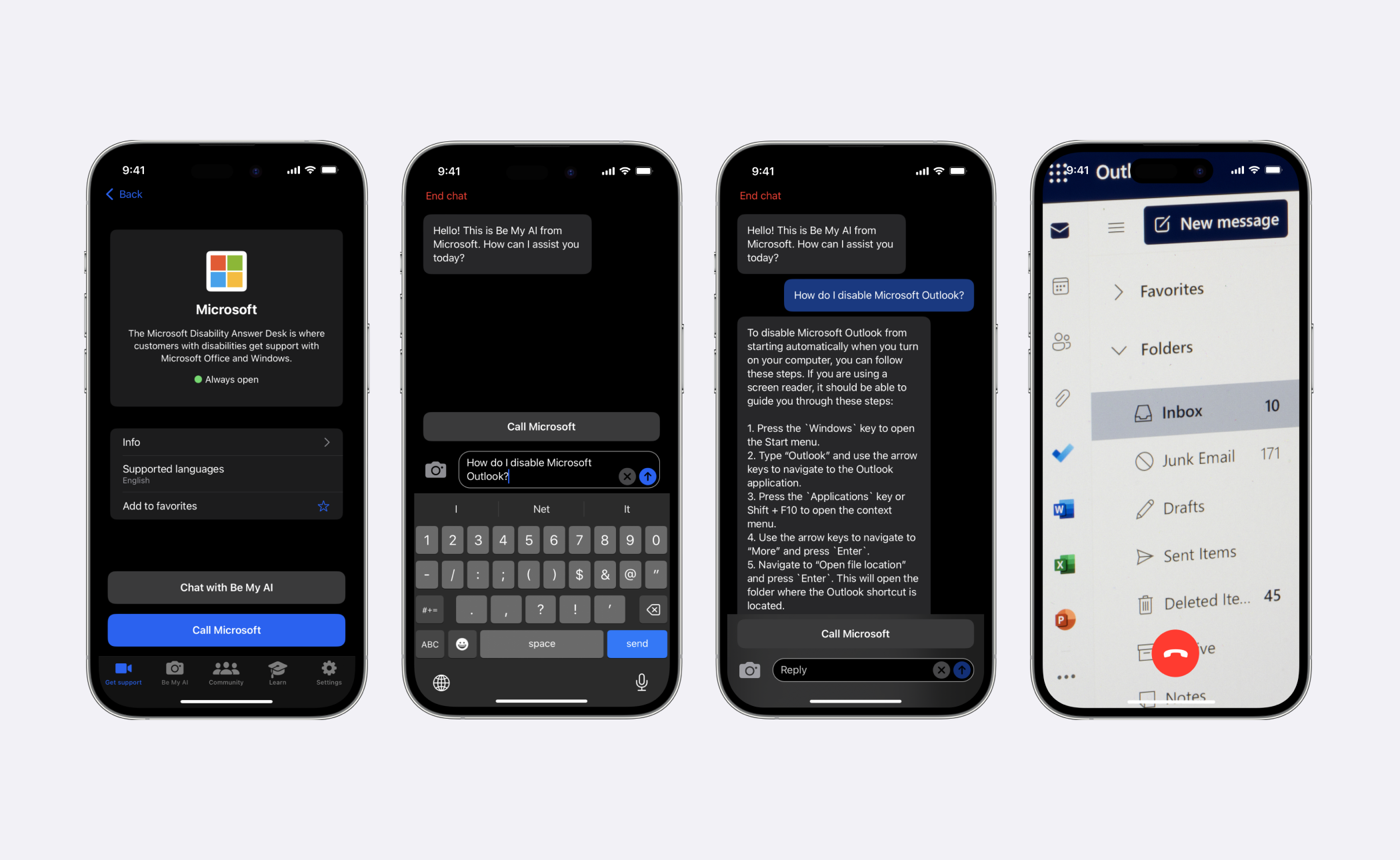
In 2023, Be My Eyes integrated OpenAI's GPT-4 to create Be My AI, an AI-powered virtual volunteer available instantly, 24/7, in any language.
The results were transformative:
- Threefold year-over-year growth in AI sessions during 2024
- Users could photograph refrigerator contents and receive not just item identification, but recipe suggestions and cooking instructions
- Navigation assistance for complex environments like railway systems with specific route guidance and safety considerations
- Instant availability eliminating wait times for human volunteers
But here's the crucial insight: Be My AI didn't replace human volunteers. It complemented them, handling routine requests instantly while freeing volunteers for more complex or emotionally sensitive interactions.
The Business Model Innovation
Be My Eyes made a strategic decision that defied conventional startup wisdom: keep the core service free for all blind and low-vision users forever.
So how does a company with 750,000 users and 8.3 million volunteers generate revenue?
Enterprise B2B accessibility services:
- Corporate customer service integration
- Workplace accommodation solutions
- Accessibility consulting and implementation
By 2025, Be My Eyes had secured partnerships with some of the world's most valuable brands:
- Microsoft
- OpenAI
- Hilton
- Sony
- Spotify
- Unilever
- Ray-Ban Meta (as their first accessibility-tech partner)

The Funding Validation
In March 2025, Be My Eyes raised $6.1 million in Series A+ funding led by Enable Ventures, with participation from ECMC Group's Educational Impact Fund and the National Federation of the Blind, representing the highest valuation in the company's 10-year history.
That the National Federation of the Blind invested directly signals something profound: the disability community itself believes this model works and deserves support.
What Be My Eyes Proves
The Be My Eyes trajectory demonstrates several critical insights:
- Technology and humanity aren't opposites, when thoughtfully integrated, each amplifies the other
- Free-to-user, B2B revenue models can work for accessibility, aligning business incentives with social impact
- The disability community is massive and represents genuine market opportunity, not charity cases
- Exponential growth is possible when you solve real problems elegantly, 43 million requests in 2024 isn't just impressive; it's validation
The Workplace Transformation: Where Business Case Meets Bottom Line
The Productivity Paradox Resolved
Remember from Part 1 that neurodivergent adults face unemployment rates of 30-40%, eight times higher than neurotypical adults. For individuals with autism specifically, unemployment reaches 85%.
Yet when properly supported, neurodivergent employees are 90-140% more productive than neurotypical peers in appropriate roles.
This isn't feel-good rhetoric. It's quantifiable business performance.
JPMorgan Chase: The Gold Standard

JPMorgan Chase's Autism at Work initiative, launched in 2015, has become the gold standard for corporate neurodiversity programs. The results speak for themselves:
- 90%+ retention rate (compared to industry averages of 60-70%)
- 90-140% higher productivity than neurotypical employees in the same roles
- Fewer errors in work output
- Measurable quality improvements across the organization
The Corporate Neurodiversity Movement
JPMorgan Chase isn't alone. A constellation of major corporations launched similar programs:
SAP (2013) - Among the earliest adopters, demonstrating measurable productivity gains and 90%+ retention
Microsoft (2015) - Integrating neurodivergent employees across product teams with strong performance outcomes
EY (2016) - Building comprehensive support systems with 90%+ retention rates
The consistency is striking: every major corporate neurodiversity program reports 90%+ retention rates and substantial productivity improvements.
The Business Impact Numbers
The 2023 Neurodiversity in Business study quantified the organizational benefits of neuro-inclusive practices:
Financial Performance:
- 16% increase in profitability for organisations providing mentors to professionals with disabilities
- 18% increase in productivity across teams
- 12% increase in customer loyalty
Cultural Benefits:
- 63% of companies with neuro-inclusive hiring practices witnessed improvements in overall employee wellbeing
- 55% observed stronger company culture
- 89% reported noticeable uplifts in employee morale and engagement
Team Dynamics: Teams that include neurodivergent individuals can be 30% more productive than homogeneous teams, not despite neurodiversity, but because of it.
The Sobering Gap
Despite these compelling outcomes, only one in four companies (25%) currently offer onboarding programs specifically designed to support neurodivergent hires.
This means 75% of companies are leaving massive productivity gains and talent acquisition advantages on the table, not because inclusive practices don't work, but because they haven't implemented them yet.
This isn't a technology problem. It's an awareness and commitment problem.
The Three Corporate Models of Accessibility Leadership
Model 1: Technology Leadership (The Microsoft Approach)
Characteristics:
- Long-term commitment (decades, not quarters)
- Accessibility embedded in core products, not bolt-on features
- Significant capital investment ($50M+ in grants)
- Partner ecosystem development
- Universal design philosophy benefiting all users
When it works best: Large technology platforms with resources for sustained investment and broad user bases where accessibility improvements create network effects.
Model 2: Human-AI Hybrid (The Be My Eyes Approach)
Characteristics:
- Community-driven with technology amplification
- Free-to-user, B2B revenue model
- Volunteer networks providing human connection
- AI handling scale and instant availability
- Mission-driven with sustainable business model
When it works best: Services requiring human empathy and contextual understanding, where AI handles routine requests while humans provide complex assistance.
Model 3: Workplace Inclusion (The JPMorgan Chase Approach)
Characteristics:
- Structured employment programs for neurodivergent individuals
- Mentorship and accommodation support
- Measurable productivity and retention metrics
- Culture change initiatives
- Business case proven through financial performance
When it works best: Large employers with diverse role requirements where neurodivergent strengths (pattern recognition, detail orientation, systematic thinking) align with business needs.
The Convergence: When All Three Models Integrate
The most powerful outcomes emerge when corporations adopt elements from all three models:
Microsoft operates the Technology Leadership model while also running workplace inclusion programs (Model 3) and partnering with organizations like Be My Eyes (Model 2).
Be My Eyes leverages technology partnerships (Model 1) while maintaining its human-AI hybrid approach (Model 2) and increasingly serving workplace accommodation needs (Model 3).
JPMorgan Chase runs exemplary workplace programs (Model 3) while also investing in assistive technologies (Model 1) for employee support.
This convergence suggests we're moving toward an integrated corporate accessibility paradigm where technology, human connection, and inclusive employment practices reinforce each other.
The ROI Reality: Why CFOs Should Care
Let's translate this into language that financial officers and shareholders understand:
Revenue Opportunity
- The global assistive technology market will reach $70 billion by 2030
- An estimated $980 billion in annual economic costs from unaddressed hearing loss alone represents massive market opportunity
- 2.5 billion people need assistive products today, growing to 3.5 billion by 2050
Cost Savings
- 90%+ retention rates in neurodiversity programs dramatically reduce recruitment and training costs
- Fewer errors mean reduced rework, customer complaints, and quality issues
- 18% productivity gains translate directly to operational efficiency
Competitive Advantage
- 12% increase in customer loyalty from disability-inclusive practices
- 89% improvement in employee morale reduces turnover across all employee segments
- 30% more productive teams when neurodivergent individuals are included
Risk Mitigation
- Accessibility compliance reducing legal liability
- Brand reputation enhancement in increasingly conscious consumer markets
- Talent pool expansion in competitive labor markets
Innovation Premium
- Inclusive design driving product innovation that benefits all users (the "curb cut effect")
- Access to neurodivergent cognitive diversity enhancing problem-solving capabilities
- First-mover advantages in emerging accessibility markets
The business case isn't marginal. It's compelling.
The Barriers That Remain
Despite clear ROI, significant corporate barriers persist:
Awareness Gap
Most executives simply don't know about the business benefits of accessibility and neurodiversity inclusion. They operate on outdated assumptions that accommodation is costly and productivity is lower.
Initial Investment
While long-term ROI is positive, initial setup costs, training programs, technology implementation, workspace modifications, create budgetary hurdles.
Measurement Challenges
Many companies struggle to quantify accessibility impact, making it harder to justify continued investment compared to initiatives with clearer metrics.
Cultural Resistance
Inclusive practices require cultural change, which faces resistance from middle management and existing employees uncomfortable with different communication styles or work approaches.
Onboarding Design
Only 25% of companies offer neurodivergent-specific onboarding, suggesting most HR departments lack expertise in designing truly inclusive integration processes.
From Pioneers to Standard Practice
Microsoft, Be My Eyes, JPMorgan Chase, SAP, EY, and other leaders aren't outliers, they're pioneers of what will become standard practice.
Just as environmental sustainability moved from fringe concern to boardroom imperative over the past two decades, accessibility and neurodiversity inclusion are following the same trajectory.
The difference? The business case for accessibility is clearer, more immediate, and more measurable than sustainability was at comparable stages.
Companies that move now gain first-mover advantages. Companies that wait will play catch-up.
The Convergence of Profit and Purpose
For too long, business success and social impact were framed as competing priorities, a zero-sum tradeoff between shareholder value and stakeholder welfare.
The corporate leaders featured in this chapter prove that framing is false.
When Microsoft invests $50+ million in accessibility grants and develops products like Seeing AI, it doesn't just help people with disabilities, it strengthens Microsoft's platform, deepens user loyalty, and drives innovation that benefits all users.
When Be My Eyes builds an 8.3 million volunteer network and processes 43 million requests annually, it doesn't just provide assistance, it creates a sustainable business serving enterprise customers while keeping the core service free for users who need it.
When JPMorgan Chase hires neurodivergent employees and provides appropriate support, the result isn't charity, it's 90-140% higher productivity, 90%+ retention, and measurable error reduction.
This is the future of corporate responsibility: not as obligation, but as strategic advantage.
The companies that recognize this earliest will capture the benefits:
- Access to untapped talent (remember: 85% unemployment among autistic adults)
- Loyalty from the world's largest minority (2.5 billion people with disabilities)
- Innovation from cognitive diversity
- Operational efficiency from inclusive practices
- Brand differentiation in conscious consumer markets
The technology exists. The business case is proven. The talent is waiting.
What's missing is simply corporate will to act.
In Parts 1-3, we explored the need, the technologies, and the research. In this chapter, we've seen the corporate translation, how business turns possibility into reality at scale.
But corporations don't operate in a vacuum. They respond to policy, regulation, consumer demand, and competitive pressure.
Which brings us to the final question: What role do governments, policymakers, and citizens play in accelerating this transformation?
That's the subject of our next chapter.
Continued from Part 3: "From Lab to Life: How Leading Universities Are Redefining Neurodiversity and Disability Through AI Research"
Based on research from "AI Inclusivity, Neurodiversity and Disabilities: A Comprehensive White Paper on Artificial Intelligence as a Transformative Force" by Dinis Guarda
Key Corporate Impact Metrics:
- Microsoft: $50M+ in accessibility grants, 10M+ Read Aloud users, 36 languages
- Be My Eyes: 43M requests (2024), $6.1M Series A+ funding, 8.3M volunteers
- JPMorgan Chase: 90%+ retention, 90-140% productivity gains, fewer errors
- Industry-wide: 16% profitability increase, 18% productivity boost, 89% morale uplift
- The Gap: Only 25% of companies offer neurodivergent-specific onboarding
Next in this series: Part 5 will examine policy, regulation, and the societal infrastructure needed to make accessibility universal rather than exceptional.


