
business resources
Why Hands-On Learning Matters in Third-Party Risk Management
26 Dec 2025

Third-party risk management (TPRM) is becoming vital to the organizational security and compliance, but much of the practitioners enter the profession without real-world experience of vendor assessment, monitoring, and governance issues. Classroom-based educational methods impart structures and ideas, but practitioners are not always ready to face the challenges of real practice. The distance between practice and theory generates expensive errors, uneven risk evaluation, and programs that are not able to produce business value. This is where the hands-on learning comes in, as it gives the risk professionals experience and confidence to create effective vendor risk programs on the first day.
The Limitations of Theory-Only Learning

The knowledge about TPRM frameworks is needed but not enough. Learning about vendor due diligence is one thing but performing the actual assessment and analyses is another. Risk scoring techniques learned in theory do not equip practitioners with the judgment decision making needed when assessing the vendors on grey grounds. Theory on how to write contracts does not make you draft clauses that protect against risks or find problematic language in an existing contract.
The risk professionals who (do not) have a hands-on training experience anticipate failures that are predictable: excessive assessments that hurt vendor relationships, scoring of risks that cannot distinguish between serious and minor problems and implementation timelines that go beyond budget and deadline considerations. Such errors are costly and are undermining credibility among stakeholders in the business who doubted the investment in the TPRM program.
Why Experiential Learning Enhances Competence
Practical learning is much faster in imparting skills since it involves a first-hand experience of real life situations. It is in the context of professional work on real vendor evaluations, risks scoring drills, and governance dilemmas in organized training settings that intuit and judgment are formed which are not possible to passively learn. They also get to know not only what to evaluate but how to rank assessment elements, depending on the criticality of the vendor and risk profile.
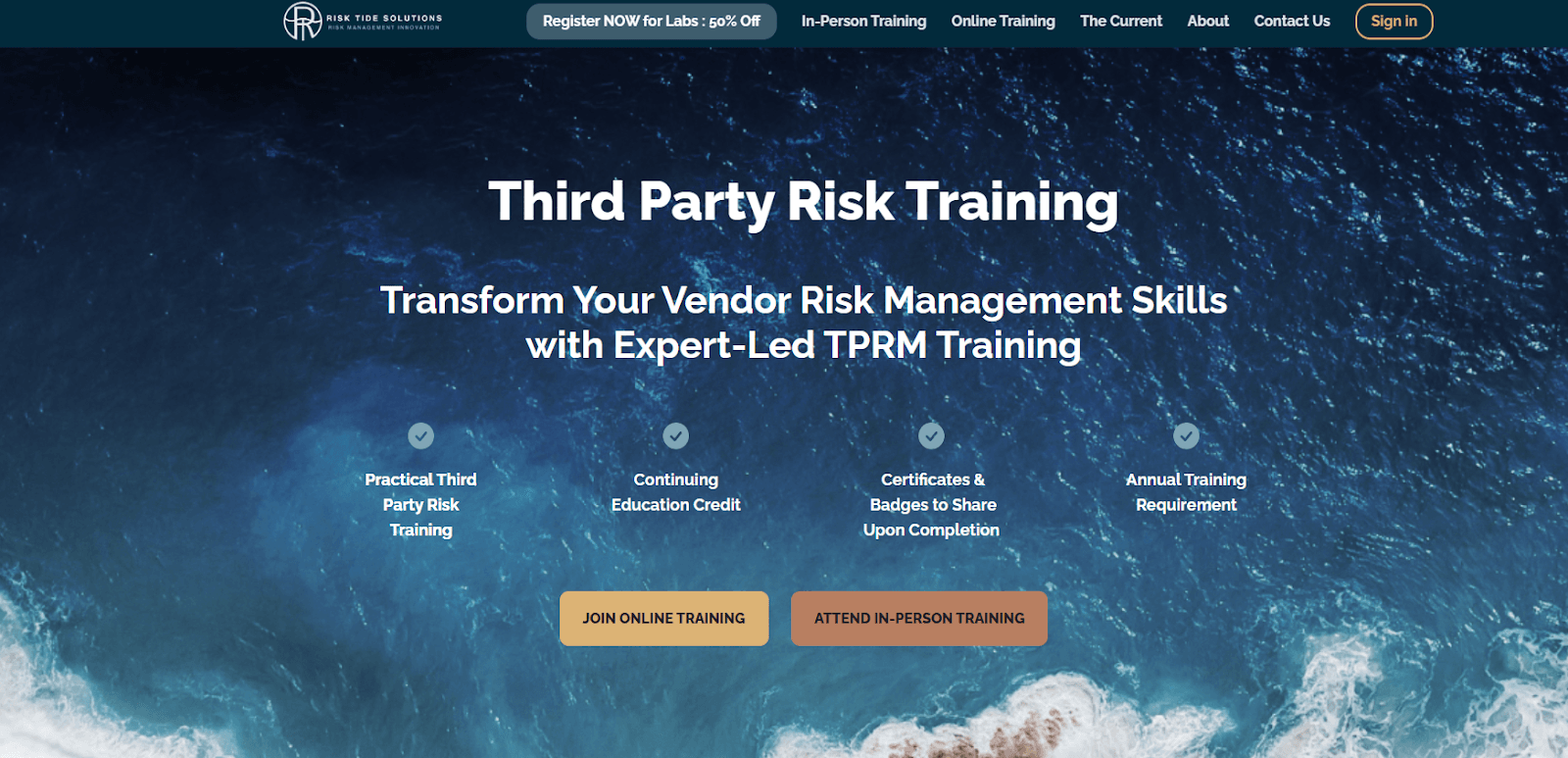
Take this, for example, professional training and certification in Third-Party Risk Management including labs, simulations and hands-on exercises are able to directly apply vendor risk programs with confidence. They are familiar with not only frameworks, but how to make them organizational-specific and how to handle the expectations of the stakeholders, as well as how to communicate risk in business language but not in compliance language.
Developing Cross-Functional Understanding
TPRM necessitates coordination between procurement, legal, IT security, compliance and operational departments. Practical training uniting these roles generates a common vocabulary and understanding of roles. The collaborative approach to evaluating vendor situations by procurement specialists, risk experts, and business leaders allows them to have an impression of the limitations and priorities of each other.
This cross-functional alignment, which is established through collaborative hands-on learning, helps avoid siloed thinking which cripples vendor risk programs. Training the teams helps in the implementation programs more effectively as they are already aware and respectful of different perspectives.
Confidence in Real-Life Simulation
TPRM professionals take critical decisions concerning vendor relationship that impacts on business operations and business risks. Practical training that includes real-world scenarios, ambiguity in vendor information, risk issues with rivals and pressures in vendor relationships helps professionals to make complex decisions without hesitation. They have already gone through such training obstacles and have solved methods and have learnt how to stop decision paralysis when presented with a real-life scenario.
Conclusion
Practical learning will help turn TPRM into a practical competence as opposed to theoretical knowledge. The knowledge of judgment, confidence, and communication models that help professionals to create successful vendor risk programs can be developed by going through realistic vendor scenarios, and actual assessment, and solving real-world implementation issues in training environments. Companies that invest in practical TPRM training have better programs, shorter implementation schedules, and enhanced involvement of business stakeholders than those that build their programs on a theoretical basis.


