
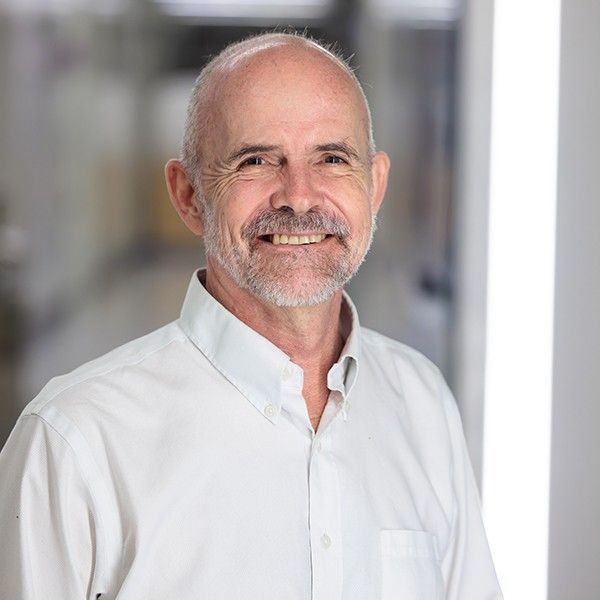
Andrew Cleland

Summary
Andrew N. Cleland (born 17 September 1961) is an American physicist and a leading researcher in quantum information science. He is currently the John A. MacLean Sr. Professor of Molecular Engineering Innovation and Enterprise at the Pritzker School of Molecular Engineering, University of Chicago. He also serves as Director of the Pritzker Nanofabrication Facility, where he supports advanced research in nanotechnology and quantum systems.
Cleland received his Bachelor of Science in engineering physics in 1983 and his PhD in physics in 1991, both from the University of California, Berkeley. After completing his doctorate, he carried out research at the Centre d’Études Nucléaires in Saclay, France. He later worked at the California Institute of Technology as a postdoctoral researcher and senior research fellow. In 1997, he joined the faculty of the University of California, Santa Barbara, before moving to the University of Chicago in 2014 to join the newly established Institute for Molecular Engineering, now known as the Pritzker School of Molecular Engineering.
His research focuses on quantum computing, quantum communication, quantum sensing, and hybrid quantum systems. Cleland specialises in superconducting quantum circuits based on Josephson junctions and has worked extensively on using quantum entanglement and quantum superposition to build quantum information processors. His goal is to develop scalable quantum systems that can perform tasks beyond the capabilities of classical computers. In quantum communication, his work aims to create secure communication systems based on photon entanglement, which are secure even against quantum-based attacks.
Cleland is also known for his work in quantum nanomechanics. He led the team that built the first mechanical system whose behaviour could only be explained using quantum mechanics. This achievement was recognised as the “Breakthrough of the Year 2010” by Science magazine and was listed among the top ten discoveries of 2010 and 2011 by Physics World. His research includes important publications in Nature and Nature Physics, covering topics such as spin-phonon interactions and the quantum control of acoustic wave phonons.
He has published more than 130 peer-reviewed research papers, written a textbook on nanomechanics, delivered over 200 invited talks, and holds US patents related to nanoparticle detection technologies. His honours include the Olli V. Lounasmaa Memorial Prize (2025), Vannevar Bush Faculty Fellow (2024), Fulbright Distinguished Chair (2023), and fellowships of the American Physical Society and the American Association for the Advancement of Science.
Biography
Andrew N. Cleland, born on 17 September 1961, is an American physicist whose work has played an important role in the development of quantum information science, particularly in quantum computing, quantum communication, quantum sensing, and hybrid quantum systems. He is currently the John A. MacLean Sr. Professor of Molecular Engineering Innovation and Enterprise at the Pritzker School of Molecular Engineering at the University of Chicago. Alongside this role, he serves as the Director of the Pritzker Nanofabrication Facility, where he oversees advanced fabrication infrastructure that supports research across nanoscience, quantum engineering, and molecular engineering.
Cleland completed his undergraduate education at the University of California, Berkeley, where he received a Bachelor of Science degree in engineering physics in 1983. He continued his studies at the same institution and earned a PhD in physics in 1991. During his doctoral training, he developed a strong foundation in experimental physics, superconductivity, and nanoscale systems, which later became central themes in his research career. After completing his PhD, he pursued research in quantum systems at the Centre d’Études Nucléaires at Saclay in France, gaining international research experience in advanced physics laboratories. He then moved to the California Institute of Technology, where he worked as a postdoctoral researcher and later as a senior research fellow, further deepening his expertise in quantum devices and low-temperature physics.
In 1997, Cleland joined the Department of Physics at the University of California, Santa Barbara, as a faculty member. During his time there, he established a research programme focused on superconducting quantum circuits, nanomechanics, and quantum measurement. His work contributed to the development of Josephson junction–based superconducting circuits, which are now a core platform for quantum computing research worldwide. He also made key advances in nanomechanical systems, exploring how mechanical devices behave at the quantum level. In 2014, he joined the University of Chicago as part of the newly formed Institute for Molecular Engineering, now the Pritzker School of Molecular Engineering, where he continues his research and teaching activities.
Cleland’s research centres on exploiting properties of quantum mechanics that cannot be reproduced by classical systems, particularly quantum superposition and quantum entanglement. In quantum computing, he has focused on building quantum information processors using superconducting circuits, with the long-term aim of assembling scalable systems capable of solving problems beyond the reach of classical computers. His work in quantum communication seeks to develop secure communication methods based on entangled photons, where information security is guaranteed by the laws of quantum mechanics rather than computational complexity. This approach offers communication systems that remain secure even in the presence of quantum computers.
A major area of Cleland’s research involves hybrid quantum systems, especially the integration of superconducting quantum circuits with mechanical devices. He led the team that demonstrated the first mechanical system whose behaviour could only be explained using quantum mechanics. This work showed that a mechanical object could be prepared and controlled in its quantum ground state and could interact quantum mechanically with a superconducting qubit. This achievement was recognised by Science magazine as the “Breakthrough of the Year 2010” and was also listed among the top ten discoveries of 2010 and 2011 by Physics World, a publication of the Institute of Physics in the United Kingdom.
Cleland has also contributed to research on spin-phonon interactions and quantum acoustics. His work includes influential studies published in leading journals such as Nature and Nature Physics, including research on spin-phonon interactions in silicon carbide using Gaussian acoustics and on the quantum control of surface acoustic wave phonons. These studies have advanced understanding of how quantum information can be transferred and manipulated using mechanical and acoustic systems, with implications for quantum sensing and quantum networks.
Over the course of his career, Cleland has published more than 130 peer-reviewed journal articles and has authored a textbook on nanomechanics. He has delivered over 200 invited talks at conferences and research institutions around the world. In addition to his academic work, he holds United States patents, including a patent for a method to detect and measure nanoparticles in solution, which has led to commercial applications.
His contributions to science have been recognised through numerous honours and awards. He is a Fellow of the American Physical Society and a Fellow of the American Association for the Advancement of Science. His awards include the Olli V. Lounasmaa Memorial Prize in 2025, the Vannevar Bush Faculty Fellowship in 2024, and the Fulbright Distinguished Chair in Advanced Science and Technology in 2023. He has also been selected as an APS Kavli Lecturer and a Sigma Xi Distinguished Lecturer. Through his research, teaching, and leadership roles, Andrew Cleland continues to contribute to the advancement of quantum science and engineering.
Vision
Andrew Cleland’s vision is to develop practical quantum systems that use the core principles of quantum mechanics to solve real scientific and technological problems. He aims to build reliable quantum computers based on superconducting circuits that can perform calculations beyond the limits of classical machines. A central part of his vision is the creation of secure quantum communication systems where information security is guaranteed by the laws of physics. He also seeks to advance hybrid quantum technologies by linking mechanical, electrical, and optical systems at the quantum level. Through research facilities and education, he works to support the next generation of scientists and engineers in quantum science.
Recognition and Awards
Andrew Cleland has received wide recognition for his contributions to quantum science and engineering. His work on quantum nanomechanical systems was named the “Breakthrough of the Year 2010” by Science magazine and was also listed among the top ten discoveries of 2010 and 2011 by Physics World. He was awarded the Olli V. Lounasmaa Memorial Prize in 2025 for his impact on low-temperature and quantum physics. Cleland is a Fellow of the American Physical Society and the American Association for the Advancement of Science. He has also received the Vannevar Bush Faculty Fellowship in 2024 and the Fulbright Distinguished Chair in 2023.
References
- Andrew Cleland | Pritzker School of Molecular Engineering | University of Chicago Pritzker School of Molecular Engineering
- Andrew N. Cleland | Wikipedia
- Andrew Cleland | Chicago Quantum Exchange
- Cleland Lab Members - The University of Chicago | cleland lab
- Nanomechanics | Chicago Quantum Exchange
- Faculty Directory - Pritzker School of Molecular Engineering | University of Chicago Pritzker School of Molecular Engineering
- Northwestern Receives $5 Million for Nanoscale Research | Northwestern Now News
- Author Andrew N. Cleland | Kabale University Library
- Device Physics | Chicago Quantum Exchange
- Quantum Communication | The University of Chicago
- Faculty | Chicago Quantum Institute | The University of Chicago
- Quantum Optics | Chicago Quantum Exchange
Discover up-to-date information on Business, Industry Leaders and Influencers, Organizations, Education, and Investors – connecting you to the knowledge you need.
