
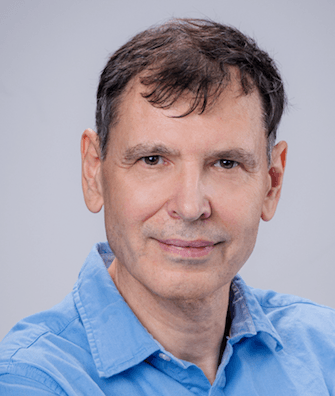
Mario Szegedy

Summary
Mario Szegedy (born 23 October 1960) is a Hungarian-American computer scientist and a professor of computer science at Rutgers University. He is widely known for his contributions to theoretical computer science, with a strong focus on computational complexity theory and quantum computing.
Szegedy completed his Ph.D. in computer science in 1989 at the University of Chicago. His doctoral dissertation was titled Algebraic Methods in Lower Bounds for Computational Models, which laid the foundation for his later work in complexity theory. After completing his doctorate, he held a Lady Davis Postdoctoral Fellowship at the Hebrew University of Jerusalem during 1989–1990. He later returned to the University of Chicago as a postdoctoral researcher from 1991 to 1992 and then joined Bell Laboratories in 1992, where he worked until 1999. During this period, he carried out influential research in theoretical computer science. After spending a year at the Institute for Advanced Study in Princeton, he joined Rutgers University, where he became a professor of computer science.
Szegedy’s research spans several areas, including computational complexity theory, quantum computing, computational geometry, and data streaming algorithms. In complexity theory, he is known for key results on the in-approximability of combinatorial optimisation problems, achieved in collaboration with other leading researchers. His work on probabilistically checkable proofs played an important role in shaping modern complexity theory.
Another major contribution of Szegedy is his work on streaming algorithms, especially methods for approximating frequency moments in data streams using very limited memory. These results have had a strong impact on data analysis and large-scale computation. In quantum computing, his research includes quantum algorithms, quantum query complexity, and quantum walks. A well-known quantum walk operator is named after him, reflecting the importance of his contributions to the field. In recent years, his main research focus has been quantum computing.
Szegedy has received several major awards for his work. He won the Gödel Prize twice, in 2001 and 2005, for his contributions to probabilistically checkable proofs and data stream complexity. In 2019, he received the Paris Kanellakis Theory and Practice Award for his work on streaming algorithms. In 2021, he also received the IEEE Foundations of Computer Science Test of Time Award, together with Uriel Feige, Shafi Goldwasser, László Lovász, and Shmuel Safra, for their work on approximating clique problems.
In January 2018, Szegedy joined the Alibaba Quantum Laboratory, further strengthening his involvement in applied and theoretical quantum research.
Biography
Mario Szegedy was born on 23 October 1960 and is a Hungarian-American computer scientist known for his work in theoretical computer science and quantum computing. He is a professor of computer science at Rutgers University and has played an important role in the development of modern computational complexity theory, data streaming algorithms, and quantum algorithms.
Mario completed his doctoral studies in computer science at the University of Chicago in 1989. His Ph.D. dissertation was titled Algebraic Methods in Lower Bounds for Computational Models, and it focused on mathematical techniques for understanding the limits of computation. After completing his doctorate, he held a Lady Davis Postdoctoral Fellowship at the Hebrew University of Jerusalem during the academic year 1989–1990. This was followed by a postdoctoral position at the University of Chicago from 1991 to 1992. In 1992, he joined Bell Laboratories, where he worked as a researcher until 1999. During his time at Bell Labs, he produced several important results in computational complexity and algorithms, particularly in collaboration with other leading researchers in the field.
After leaving Bell Laboratories, Mario spent a year at the Institute for Advanced Study in Princeton, where he continued his research in theoretical computer science. He later joined Rutgers University, where he became a professor of computer science. At Rutgers, he has taught, supervised graduate students, and continued active research across multiple areas of theory.
Mario’s research interests include computational complexity theory, quantum computing, computational geometry, and data streaming. In computational complexity, he is known for his work on probabilistically checkable proofs and on proving hardness of approximation results for combinatorial optimisation problems. His work helped clarify which problems cannot be efficiently approximated unless major complexity-theoretic assumptions fail. Another major part of his research has focused on data streaming algorithms, where he developed methods for approximating frequency moments of data streams using very limited memory. These results became central to the theory of streaming computation and influenced practical approaches to large-scale data analysis.
In quantum computing, Mario has worked on quantum algorithms, quantum query complexity, and quantum walks. He introduced a framework for quantum walks that generalised classical random walks, and a quantum walk operator based on his work is now commonly referred to as the Mario quantum walk. His contributions have influenced both theoretical understanding and later developments in quantum algorithm design. In recent years, his main research focus has been on quantum computing.
Mario’s work has been recognised with several major awards. He received the Gödel Prize in 2001 and again in 2005, for his contributions to probabilistically checkable proofs and for his work on the space complexity of approximating frequency moments in data streams. In 2019, his research on streaming algorithms and their impact on real-world data analysis was recognised with the Paris Kanellakis Theory and Practice Award. In 2021, he received the IEEE Foundations of Computer Science Test of Time Award together with Uriel Feige, Shafi Goldwasser, László Lovász, and Shmuel Safra for their paper Approximating Clique is Almost NP-Complete, which had a lasting influence on the study of computational hardness.
In January 2018, Mario joined the Alibaba Quantum Laboratory, where he has continued his work in quantum algorithms and quantum information science, while maintaining his academic role at Rutgers University.
Vision
Mario Szegedy’s vision is centred on understanding the fundamental limits of computation and using this knowledge to shape future technologies. He believes that strong theoretical foundations are essential for building reliable and efficient computing systems. His work reflects a long-term focus on clarity, rigour, and correctness in computer science. Through research in computational complexity, data streaming, and quantum computing, his aim is to explain what can and cannot be computed with limited resources. In quantum computing, his vision is to develop clear mathematical models and algorithms that help turn quantum theory into practical and well-understood computing tools for future generations.
Recognition and Awards
Mario Szegedy has received several important awards for his contributions to theoretical computer science. He was awarded the Gödel Prize twice, first in 2001 and again in 2005, for his work on probabilistically checkable proofs and for his research on the space complexity of approximating frequency moments in data streams. His work on streaming algorithms and its practical impact on data analysis was recognised with the Paris Kanellakis Theory and Practice Award in 2019. In 2021, he received the IEEE Foundations of Computer Science Test of Time Award for the paper Approximating Clique is Almost NP-Complete, shared with several co-authors.
References
- Szegedy, Mario | Rutgers University
- Mario Szegedy | Wikipedia
- Mario Szegedy | Google Scholar
- Mario Szegedy, Rutgers University Home Page | Rutgers University
- Mario Szegedy | Simons Institute for the Theory of Computing
- Dr. Mario Szegedy | Quantum.Tech World | Alpha Events
- Mario Szegedy's | Vilniaus universitetas
- Mario Szegedy | OpenReview
- Professor Mario Szegedy | Association for Computing Machinery
- Mario Szegedy | DeepAI
- Mario Szegedy - New Jersey Research Community | Research With NJ
Discover up-to-date information on Business, Industry Leaders and Influencers, Organizations, Education, and Investors – connecting you to the knowledge you need.