
Businesses
Why SMEs Could Be the Real Winners of the India–UK FTA
23 Nov 2026

As the Royal visit, ministerial delegations and new technology partnerships bring fresh attention to India–UK relations, the real opportunity may lie with smaller businesses that know how to collaborate across borders.
A British technology company has an innovative product but struggles to find customers in India.
An Indian manufacturer has competitive production capabilities but lacks reliable distribution in Britain.
Both businesses have something the other needs. Yet neither may have the resources to establish a full overseas operation.
What if the answer is not for either company to expand internationally on its own, but for them to grow together?
This is where I see one of the most interesting opportunities emerging from the India–UK Free Trade Agreement.
In my first article, I questioned whether businesses were ready to benefit from the agreement.
In the second, I explored why lower tariffs do not automatically lead to higher margins.
Now I want to take the conversation further.
Can the India–UK FTA help smaller companies build international businesses without first becoming large corporations?
The answer may depend less on the agreement itself and more on how effectively entrepreneurs collaborate.
The Relationship Is Moving Beyond Trade Negotiations
The India–UK Comprehensive Economic and Trade Agreement (CETA) entered into force on 15 July 2026.
The latest UK government trade statistics, published on 6 November, show total bilateral trade reached £46.9 billion in the 12 months to June 2026, up 5.2% year on year.
British exports to India increased 10.9% to £19.9 billion, while imports from India reached £27 billion.
These figures provide a useful baseline, although the reporting period ended just before the agreement took effect.
Meanwhile, more immediate trade movements have been reported.
At the October India–UK Joint Economic and Trade Committee (JETCO) meeting, ministers noted that more than 50 Indian export consignments had been dispatched under the agreement on its first day.
Products included smartphones, machinery, garments, jewellery, tea and coffee.
The first tariff-free Scottish salmon also reached India within a fortnight of implementation, while reduced tariffs supported the entry of other British products.
These developments are encouraging, but we should distinguish initial transactions from sustained trade growth.
The stronger test will be how many companies continue using the agreement, expand their customer base and improve their financial performance.
Royal and Government Engagement: Can Diplomacy Reach Smaller Businesses?
Significant activity has taken place at the highest levels of the India–UK relationship in recent weeks.

On 16 November 2026, the Prince and Princess of Wales began a three-day official visit to India, centred around the Earthshot Prize celebrations in Mumbai.
Their engagements highlighted sustainable urban transport, responsible manufacturing, environmental innovation, youth leadership and creative industries.
On 18 November, they met Prime Minister Narendra Modi in New Delhi.
According to the Indian Prime Minister's Office, their discussions included strengthening the India–UK Comprehensive Strategic Partnership, with particular attention to health, education, fintech, defence and people-to-people connections.
Prime Minister Modi also welcomed the momentum created by the FTA and the wider India–UK Vision 2035 partnership.
The visit was not a trade negotiation or an announcement of a dedicated SME financing programme.
However, it showed how the relationship increasingly links environmental innovation, technology, and entrepreneurship with broader economic cooperation.
The Earthshot Prize itself provides visibility and support for environmental innovators, showing how promising solutions can attract international attention.
For smaller businesses developing sustainable materials, clean technologies, waste-management systems or low-carbon products, such international platforms can create opportunities for introductions, partnerships and investment.
A month earlier, on 12 October, a major British trade mission visited India.
It brought together UK government ministers, northern English mayors, regional leaders and more than 100 businesses.
The mission promoted commercial opportunities in technology, manufacturing, agriculture, food and drink, engineering and investment.
At the accompanying JETCO meeting, Indian Commerce Minister Piyush Goyal and UK Business Secretary Jonathan Reynolds committed to deeper cooperation across services, innovation, government procurement and regional business partnerships.
The UK government also reported nearly £12 billion in commercial deals announced since the FTA was signed in July 2025.
These are significant developments, but announced deals should not be confused with revenue already earned.
What I find more interesting is the increasing focus on connecting regional business ecosystems.
It suggests that international cooperation need not be restricted to London, Mumbai or a few large corporations.
A company in Manchester could collaborate with a manufacturer in Pune. A technology startup in Bengaluru could work with a research institution in Cambridge.
The opportunity exists at the level of cities, industrial clusters, universities and smaller enterprises.
Diplomacy can create the environment for collaboration. But businesses must convert introductions into commercial relationships.
The FTA Has a Chapter Specifically for SMEs
One aspect of the agreement deserves considerably more attention.
Chapter 19 of CETA is dedicated to small and medium-sized enterprises.
It recognises the specific barriers SMEs face when entering foreign markets and sets out commitments to cooperation and information-sharing.
The chapter covers practical areas including access to trade information, trade finance, commercial partners, payment practices, digital skills, innovation and business support infrastructure.
It also provides for SME contact points and cooperation between business-support organisations, incubators and accelerators.
This is important because the biggest obstacle facing smaller companies is not always the tariff.
It is often the difficulty of navigating an unfamiliar market.
A company may not know which regulations apply, how to verify a distributor, how payments are normally structured or where to find reliable professional support.
Making this information easier to access can reduce some of the costs and risks of international expansion.
However, the SME chapter does not automatically provide grants, guarantee customers or eliminate regulatory requirements.
Its real impact will depend on implementation and how effectively businesses use the available mechanisms.
Encouragingly, the October JETCO meeting confirmed that both governments intend to begin exchanging annual data on business utilisation of the agreement one year after implementation.
That should eventually help reveal whether smaller companies are actually benefiting from preferential trade arrangements.
The Bigger Opportunity: Complementary Capabilities
I believe one of the strongest foundations for SME collaboration is the difference in capabilities between the two economies.
India offers substantial manufacturing capacity, engineering talent, technology development resources and an expanding domestic market.
Britain has internationally recognised capabilities in advanced engineering, research, design, financial services, specialised manufacturing and professional services.
These strengths are not exclusive to either country, but they create opportunities for complementary partnerships.
Consider a British medical technology SME with a specialised product.
Rather than establishing an expensive standalone operation in India, it could work with an Indian company that understands local procurement, distribution, regulatory processes and customer requirements.
Similarly, an Indian industrial manufacturer seeking British customers might partner with a UK engineering business that can provide technical support, certification expertise and local after-sales service.
Both companies could retain their independence while sharing selected capabilities.
The result could be faster market entry, reduced duplication and more efficient use of capital.
Instead of asking how one company can enter another country, we should ask how two companies can build a business opportunity together.
Five Practical Models for India–UK SME Collaboration
Model 1: Technology and Manufacturing Partnerships
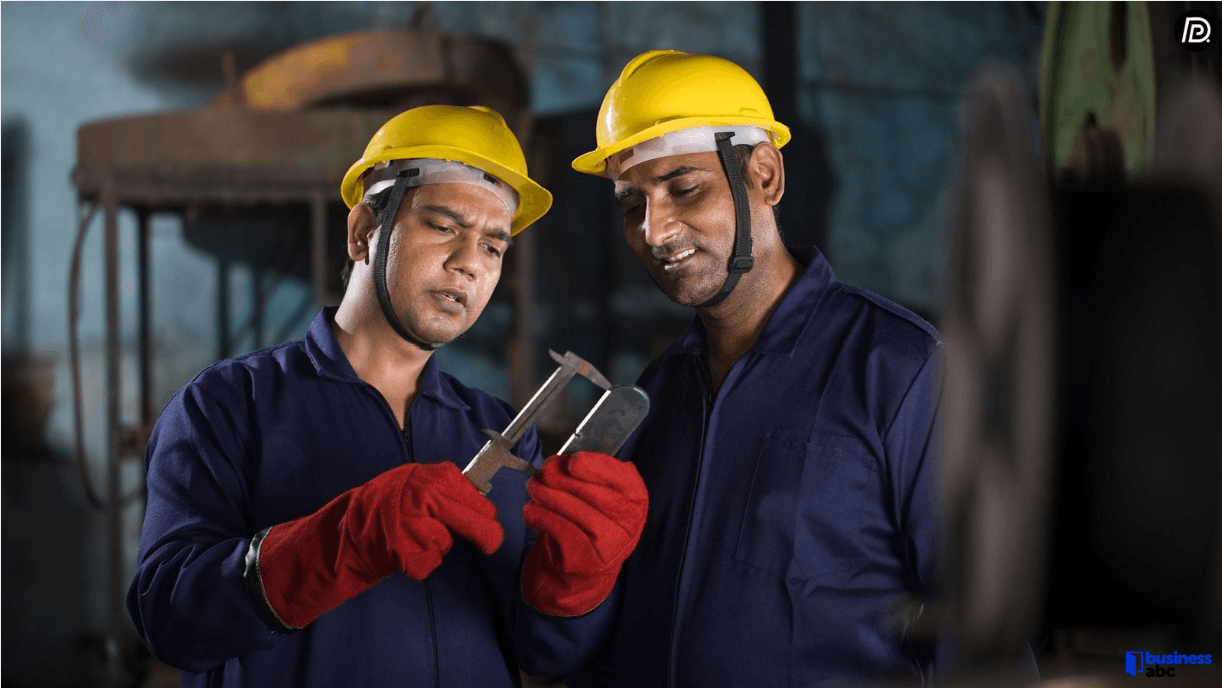
A British SME develops a specialised industrial or engineering product.
An Indian SME contributes manufacturing, component sourcing or software capabilities.
The partners agree on quality standards, intellectual property ownership, production responsibilities and commercial terms.
This makes sense when neither company has the resources to develop the entire value chain independently.
The key is to start with a clearly defined product or project rather than an open-ended partnership.
Model 2: Distribution and Market-Entry Partnerships
An Indian consumer-products company wants to sell in Britain but lacks local market knowledge.
A British SME already supplies retailers or industrial customers and has the necessary relationships.
They could establish a distribution agreement with agreed sales territories, performance targets and responsibilities.
The reverse model can work for British companies entering India.
Importantly, exclusivity should be earned through performance, not granted automatically before the partner has demonstrated results.
Model 3: Joint Product Development
This is particularly relevant to technology.
A British engineering or healthcare business could work with an Indian software or AI company to develop a new solution.
Rather than treating the relationship purely as outsourced development, both companies could contribute expertise and agree on revenue-sharing or licensing arrangements.
The October 2026 UK–India Science and Innovation Council provides an encouraging policy context for such collaborations.
Among its announcements was InnoXchange, a programme intended to connect startups, incubators and accelerators.
The two countries also announced stronger links between UK Catapults and Indian technology clusters to support development, validation, pilots and commercialisation.
For SMEs, these connections may help bridge the gap between research and market-ready products.
Model 4: Shared Logistics and Export Infrastructure
One small exporter may struggle to justify its own warehousing, fulfillment operation or overseas sales office.
Several complementary businesses could potentially share distribution infrastructure through a service provider or a carefully governed consortium.
For example, a group of Indian manufacturers could use a common UK fulfilment arrangement, while retaining separate brands and customers.
British SMEs exploring different regions of India could similarly share approved logistics and market-support services.
The objective would be to reduce fixed costs without creating unnecessary management complexity.
Shared services must still preserve appropriate confidentiality, customs responsibility and commercial independence.
Model 5: Regional Business Clusters
The recent trade mission involving northern English mayors demonstrates why regional partnerships are worth exploring.
An industry cluster in Yorkshire, Greater Manchester, or Scotland could build relationships with complementary Indian clusters in Maharashtra, Gujarat, Karnataka, or Tamil Nadu.
Instead of arranging isolated company meetings, the clusters could organise sector-specific buyer introductions, technical demonstrations and pilot projects.
Universities, chambers of commerce and industry organisations could help identify credible partners.
This could create more sustained commercial relationships than occasional general networking events.
A Practical 90-Day Collaboration Plan
For an SME considering its first India–UK partnership, I would avoid starting with a large investment or complex joint venture.
A more disciplined approach would be to test commercial compatibility first.
Days 1–30: Identify a specific opportunity
Choose one product, service or customer problem.
Check the relevant tariff treatment, regulatory requirements and competitive landscape.
Identify a small number of potential partners through business chambers, official trade-support services or industry associations.
Verify their legal identity, operating history, financial standing and references.
Days 31–60: Test the commercial relationship
Agree on a limited pilot, sample order, proof of concept or customer introduction.
Document responsibilities, technical specifications, delivery standards and payment terms.
Where intellectual property is involved, agree on ownership, permitted use and confidentiality before sharing sensitive material.
Set measurable milestones.
Days 61–90: Evaluate and decide
Review customer feedback, delivered costs, margins, payment performance and operational reliability.
Determine whether the partnership justifies expansion.
If it does, negotiate a longer-term distribution, licensing, supply or collaboration agreement.
If it does not, the limited pilot should allow both parties to exit without excessive losses.
The first objective should not be to sign the biggest agreement. It should be to complete the first commercially successful transaction.
Four Risks SMEs Should Not Ignore
International partnerships involve risks that lower tariffs cannot solve.
Payment risk: A profitable overseas order may become a financial problem if the customer delays payment. SMEs should consider appropriate advance payments, documentary letters of credit, export credit insurance or receivables finance.
Regulatory risk: Preferential tariffs depend on satisfying product-specific rules of origin. Food safety, product certification, data protection and other requirements remain applicable.
Partner risk: A local distributor's strong presentation does not guarantee commercial capability. Background checks, references and performance-based agreements are essential.
Intellectual property risk: Joint development can create disputes if ownership of technology, designs, software, or customer relationships isn't agreed in advance.
These risks do not justify avoiding international collaboration.
They justify structuring it properly.
Technology Could Reduce the Cost of Collaboration
Digital platforms and AI could make cross-border partnerships more accessible to smaller businesses.
Imagine an Indian manufacturer searching for British distributors.
Rather than relying entirely on exhibitions or personal introductions, it could use digital tools to identify relevant businesses, analyse sector demand and prepare tailored product information.
A UK engineering firm could use similar tools to compare potential Indian suppliers, evaluate technical documentation and forecast operating costs.
AI-supported translation, documentation and project management could reduce the administrative burden of working internationally.
Digital traceability and verification systems could improve transparency across selected supply chains.
But businesses should not confuse automated information with verified commercial intelligence.
AI can support research, screening and analysis. It cannot guarantee a partner's credibility or willingness to pay.
The strongest model will combine digital efficiency with trusted local relationships.
What Governments and Business Organisations Should Do Next
The recent high-level engagements have created momentum.
But governments, trade associations, regional authorities, and business networks face a practical question.
How do we make this momentum useful for a company with 20 employees, not just one with 20,000?
I would suggest five priorities.
First, create sector-specific directories of verified businesses interested in bilateral collaboration.
Second, organise smaller, targeted buyer-supplier meetings rather than relying exclusively on large trade conferences.
Third, improve access to practical guidance on rules of origin, documentation, certification and payments.
Fourth, connect research institutions, innovation centres and SMEs around commercially defined challenges.
Finally, develop mechanisms to measure real outcomes: partnerships formed, pilot projects completed, export contracts delivered, jobs created and repeat business generated.
The FTA already provides a framework for some of these activities.
The next challenge is translating that framework into services smaller companies can actually use.
From Government-to-Government to Business-to-Business
The India–UK relationship has entered an important phase.
The FTA is operational. Government delegations are engaging more actively. Regional business partnerships are receiving greater attention. Research and technology cooperation is expanding.
The recent Royal visit has also brought international visibility to innovation, sustainability and the wider relationship between the two countries.
These developments can help create confidence and interest.
But their true commercial value will depend on what happens afterwards.
Will a small Indian manufacturer secure its first reliable British customer?
Will a British technology startup find an Indian partner that can help it scale?
Will two independent businesses develop a product that neither could have built efficiently alone?
And will these opportunities extend beyond major cities and established corporate networks?
For me, that is where the India–UK FTA becomes most meaningful.
Large corporations have the resources to establish overseas subsidiaries, acquire businesses and absorb the costs of international expansion.
SMEs often have to be more resourceful.
They can collaborate, share capabilities, test opportunities and build relationships incrementally.
Perhaps the greatest opportunity of the India–UK FTA is not to help every small business become a multinational corporation, but to allow small businesses to operate internationally without having to become one.
That would represent a genuine change in how international trade works.
That's why SMEs deserve to be at the centre of the next chapter.
Share

Dilip Pungliya
Industry Expert & Contributor
Dilip Pungliya is a business leader, Artificial Intelligence consultant, blockchain advisor, metaverse solution expert, data leader, technologist, and business, process, & technology architect. As a board member and significant shareholder of ztudium, Dilip brings a wealth of experience in business leadership and data technology. In his role as the Managing Partner of the ztudium Group, he benchmarks his strategic acumen in steering effective strategy and framework development for the company. Dilip also plays a pivotal role in his family's limited company in India, VPRPL, where he oversees operations and strategic planning. His professional journey includes impactful collaborations with esteemed organisations such as Shell, the Department for Environment Food and Rural Affairs, Deutsche Bank, ICBC Standard Bank Plc, BNP Paribas, and HSBC Investments. Beyond his professional endeavours, Dilip is deeply committed to philanthropy and charitable work, particularly during the global challenges presented by the COVID-19 pandemic.


