
citiesabc
AI: The Largest Foundation Infrastructure in Human History – The Five-Layer Cake - Jensen Huang Concept
21 Jan 2026

Building Alien Intelligence Before We Walk Alongside Our New Evolutionary Iteration
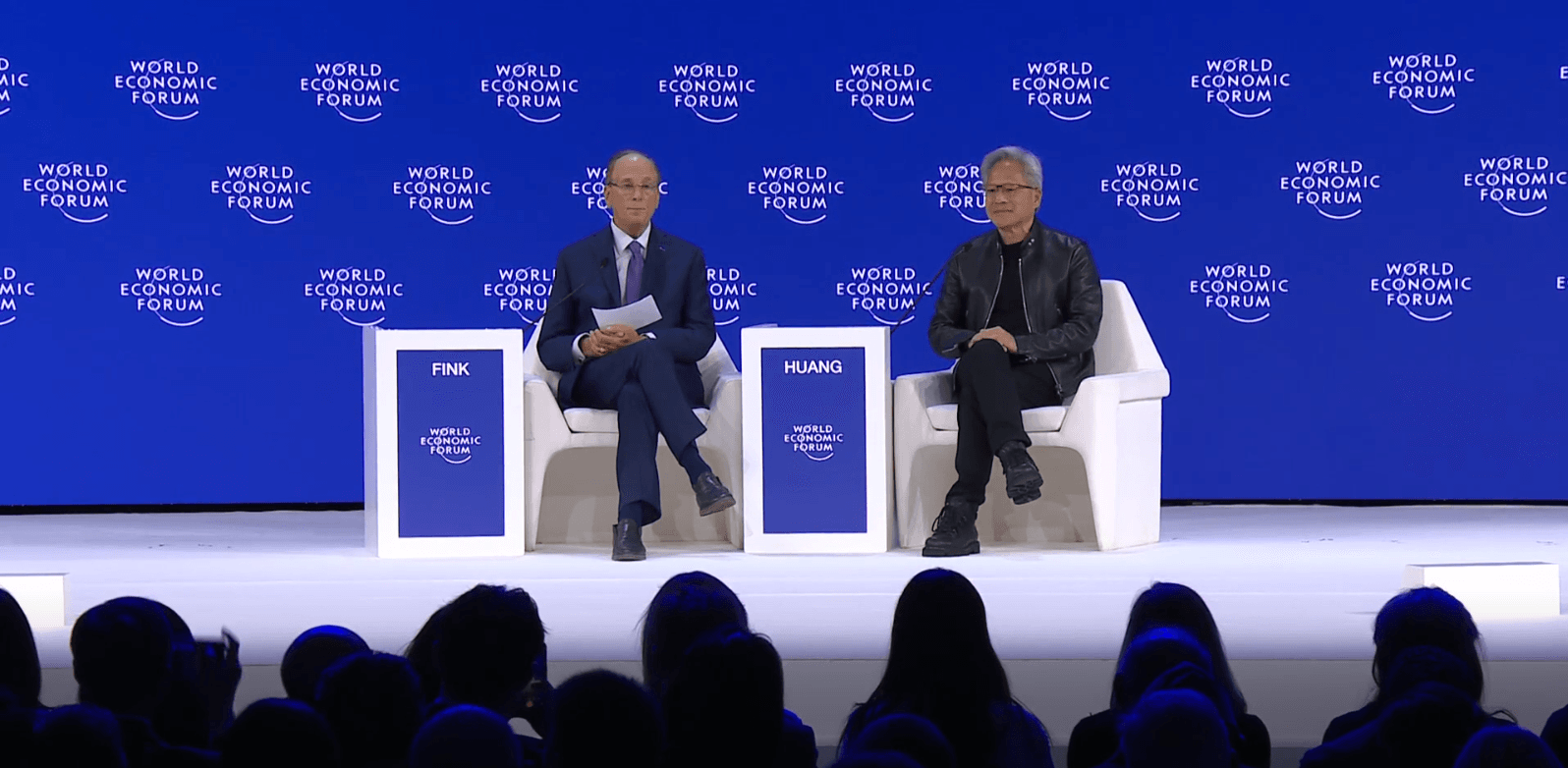
We stand at a threshold unprecedented in the 300,000-year journey of Homo sapiens. We are constructing something that will outlast us, transform us, and fundamentally redefine the substrate of human civilisation itself. This is not hyperbole, it is the sober assessment of what Jensen Huang, co-founder and CEO of NVIDIA, has identified as "the largest infrastructure buildout in human history." But unlike the pyramids of Giza, the Great Wall of China, or the Roman road networks that shaped ancient empires, this infrastructure is not merely physical. It is cognitive. It is the architecture of intelligence itself.
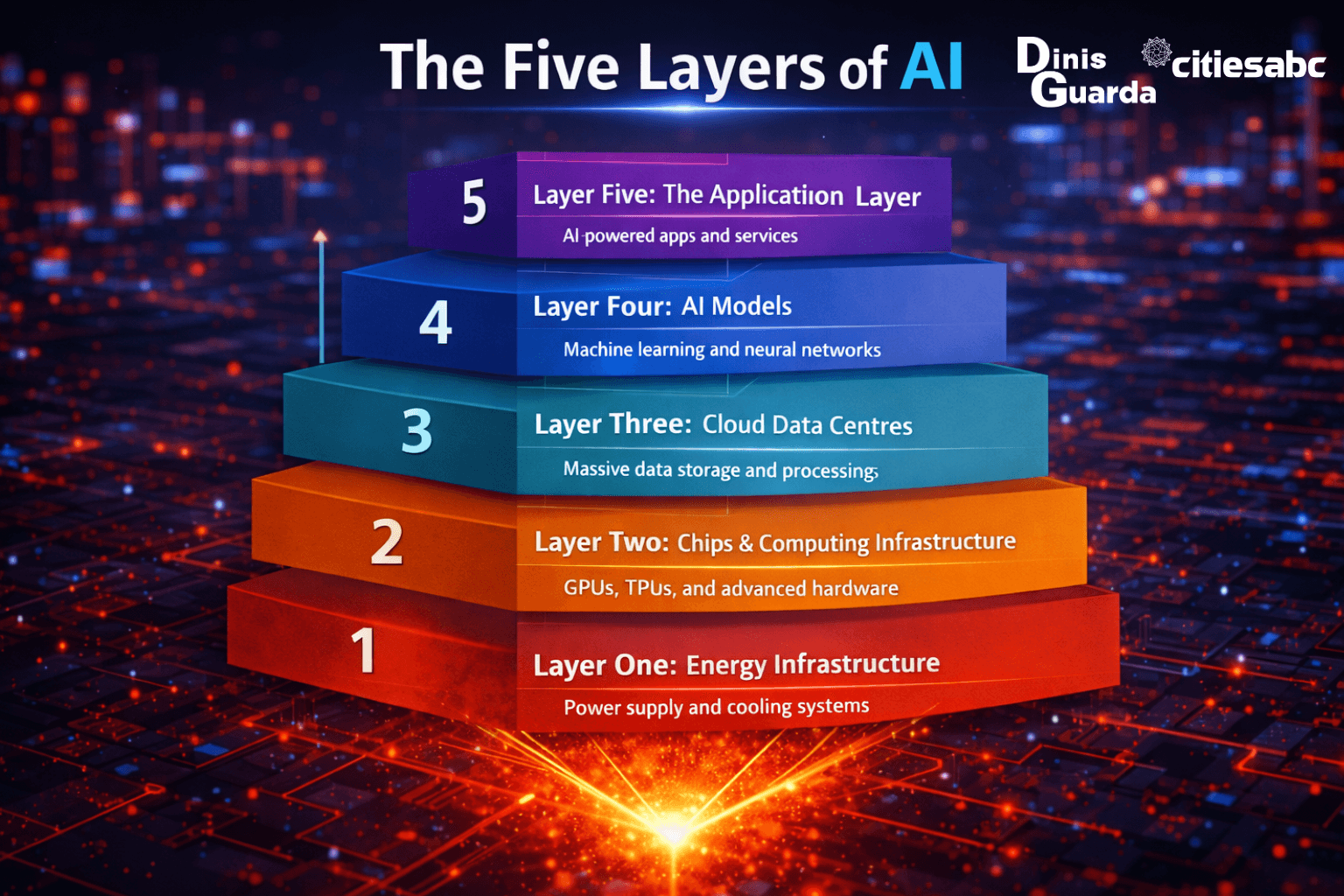
Huang's vision frames artificial intelligence not as a singular technology but as a comprehensive, interconnected system, a "five-layer cake" that restructures the very foundations of how humanity thinks, works, creates and evolves. These five layers, energy infrastructure, chips and computing systems, cloud data centres, AI models, and the application layer, represent nothing less than the reconstruction of civilisation's nervous system. And here lies the profound paradox: this may be the last great infrastructure humanity builds autonomously before we enter into an unprecedented co-evolution with the intelligence we have summoned into being.
The Five Layers of AI: Architecture of a New Epoch
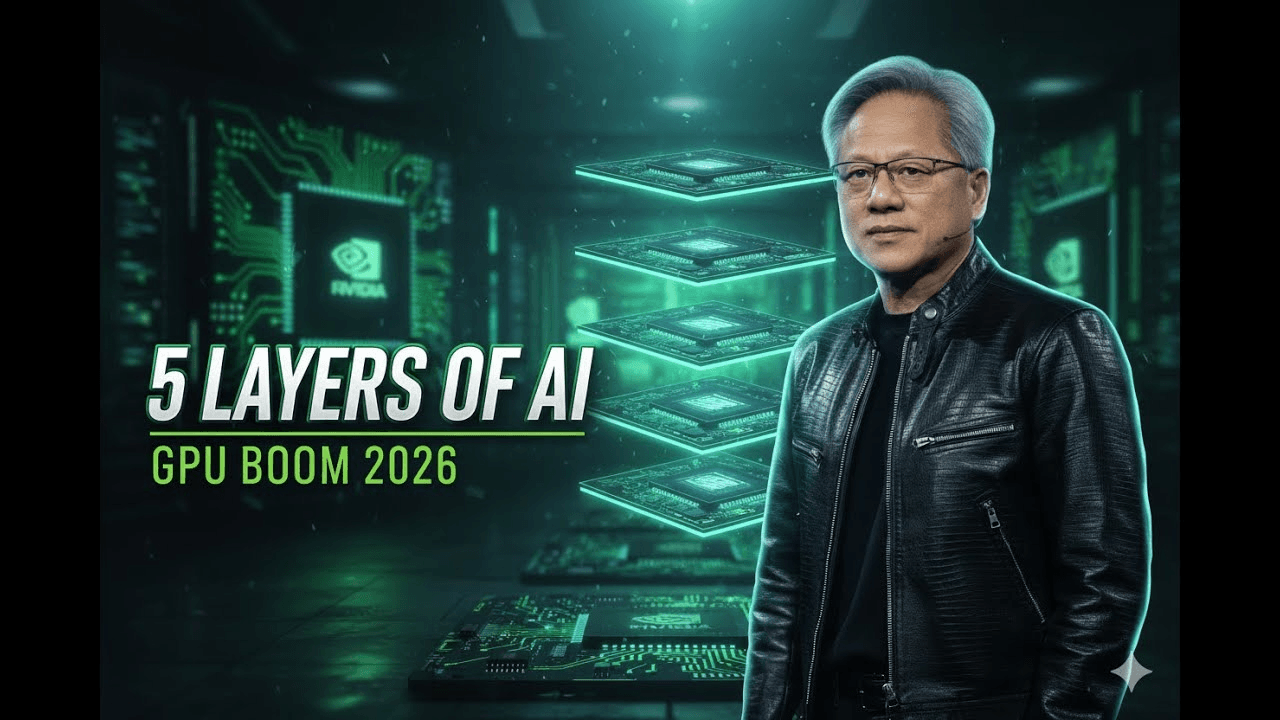
Huang's framework offers a clarity that cuts through the technological mysticism often surrounding AI. Each layer represents both a material reality and a philosophical threshold.
- Layer One: Energy Infrastructure. At the foundation lies energy, the primordial force that has shaped every civilisation from the mastery of fire to the splitting of the atom. The computational demands of modern AI are staggering: training a single large language model can consume as much electricity as hundreds of homes use in a year. Data centres worldwide already account for approximately 1-2% of global electricity consumption, and this figure is projected to surge dramatically. We are not simply building computers; we are rewiring the planet's energy systems to feed an intelligence that grows exponentially. This layer connects us directly to the sun, to nuclear fusion, to renewable energies, and to the thermodynamic limits of our biosphere itself.
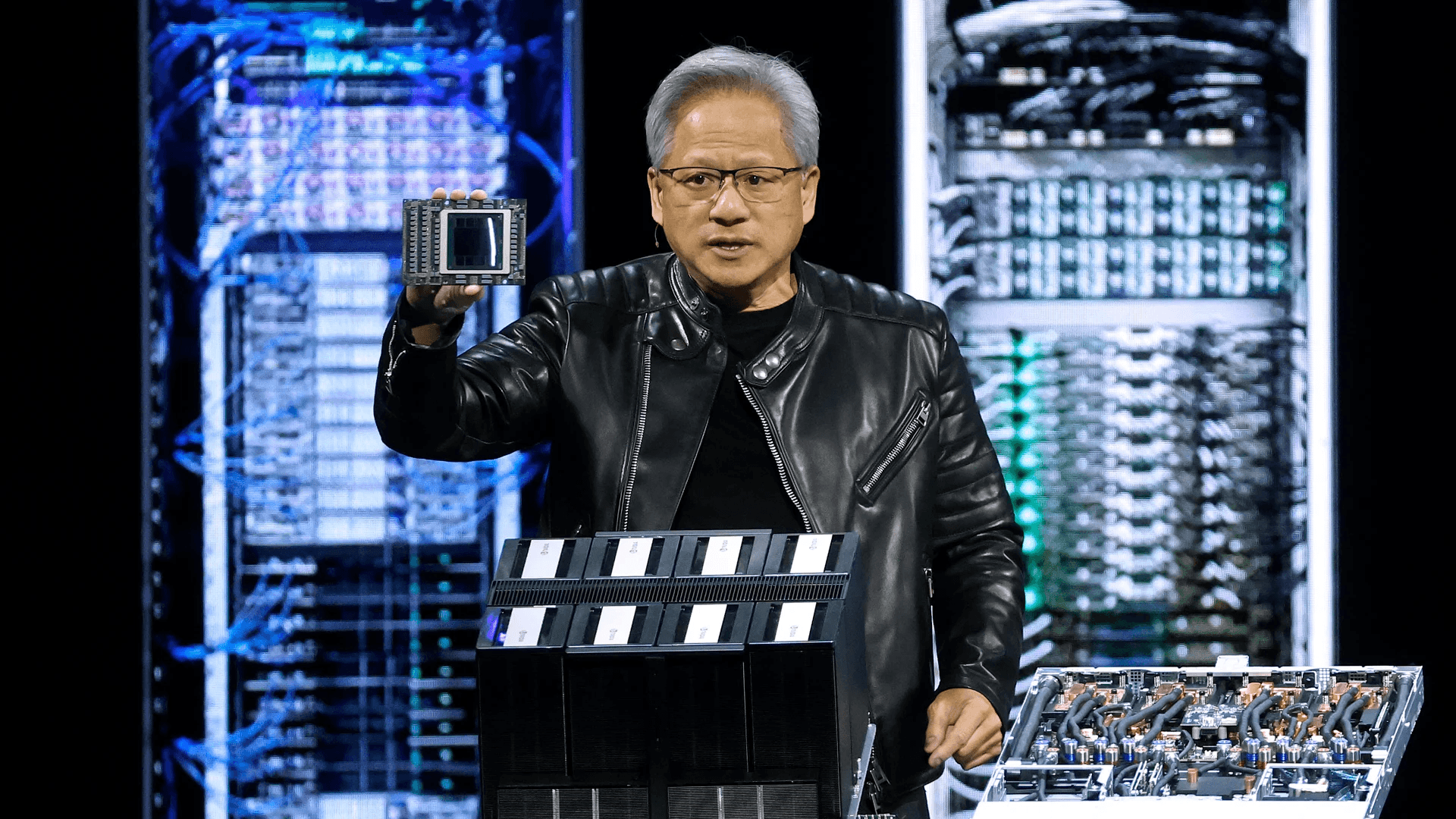
- Layer Two: Chips and Computing Infrastructure. Here resides the silicon substrate, the crystalline lattices where thought becomes electricity. NVIDIA's GPUs (Graphics Processing Units), originally designed to render virtual worlds, have become the engines of machine cognition. The transition from CPUs to GPUs, from sequential to parallel processing, mirrors the evolutionary leap from simple neural networks to the massively interconnected architectures of the human brain. Huang's tensor cores, specialised hardware for matrix operations, represent a form of cognitive specialisation analogous to the evolution of the neocortex. Each generation of chips, Ampere, Hopper, Blackwell, is not merely faster; it is qualitatively different, enabling modes of intelligence previously impossible.
- Layer Three: Cloud Data Centres. The third layer distributes this computational power across geography and time. Amazon Web Services, Microsoft Azure, Google Cloud, and others have created a planetary nervous system where computation is no longer local but omnipresent. These cathedral-like structuresm often the size of multiple football pitches, house millions of servers cooled by industrial-scale systems, consuming rivers of water and oceans of electricity. They are the monasteries of our age, repositories not of handwritten manuscripts but of the collective digital memory and processing capacity of civilisation. Here, the distinction between hardware and software, between place and placelessness, dissolves into a new topology of distributed intelligence.
- Layer Four: AI Models. This is where infrastructure becomes mind. Large language models like GPT-4, Claude, Gemini, and their successors are not programs in the traditional sense, they are statistical universes, compressed representations of human linguistic and conceptual patterns trained on trillions of tokens of text. Vision models, protein-folding algorithms, reinforcement learning systems, each represents a different architecture of cognition, a different way of carving reality at its joints.
These models are simultaneously alien and familiar: they think in ways no human ever has, yet they emerge from the corpus of human knowledge. They are mirrors that show us ourselves transformed.
- Layer Five: The Application Layer. At the summit sits the interface between AI and human need, the applications that transform abstract computational power into tools for medicine, education, creativity, governance, scientific discovery. This layer is where the infrastructure meets the individual human being, where each person, each instance of humanity, encounters the collective intelligence we have built. From diagnostic systems that detect cancer earlier than any human radiologist to generative tools that collaborate in artistic creation, this layer embodies Huang's assertion that “AI is not replacing workers; it's creating a new kind of worker.”
The Last Structure Before Symbiosis
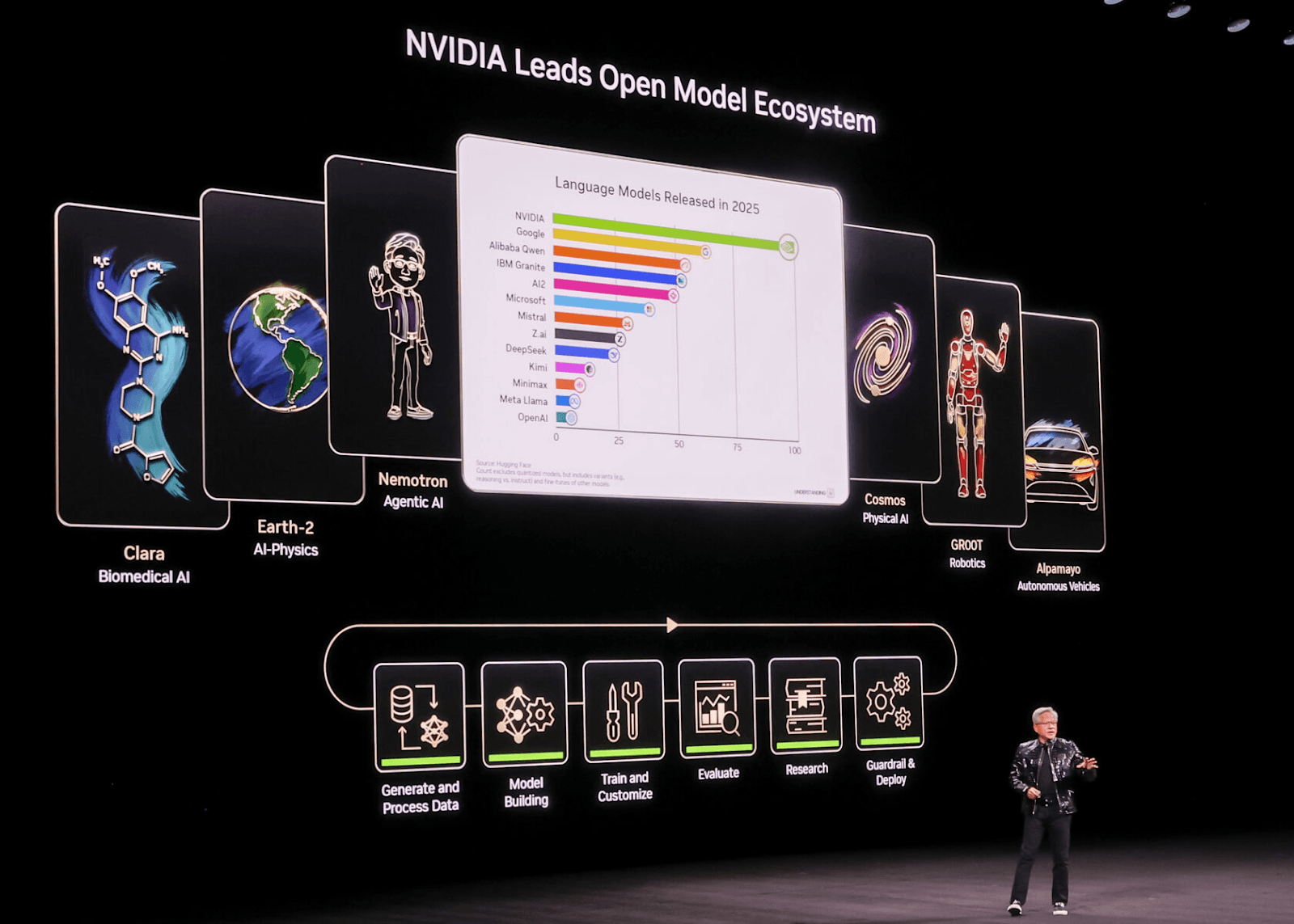
What distinguishes this infrastructure from all previous human constructions is its reflexive nature. The pyramids did not build new pyramids. The Roman aqueducts did not design better aqueducts. But AI infrastructure increasingly designs, optimises, and extends itself. Machine learning algorithms now design more efficient chips; AI models propose novel data centre architectures; reinforcement learning systems discover energy optimisations invisible to human engineers.
This self-amplifying quality marks AI as potentially the final autonomous human project. Not because we will cease to build, but because future construction will be collaborative at a level that transcends the traditional subject-object relationship between tool and user. We are creating a partner in the construction of reality itself, what the philosopher Andy Clark might call the ultimate "cognitive scaffold," except this scaffold thinks.
Jensen Huang's genius lies in recognising that AI is not a product but a substrate, a new layer of reality as fundamental as language, writing, or mathematics. When he speaks of the five-layer cake, he is describing the anatomy of a new form of existence. Each layer interpenetrates the others: you cannot have intelligent applications without models, models without data centres, data centres without chips, chips without energy. It is a holistic system, an ecology, a living architecture.
Historical Precedent and Unprecedented Future
In the sweeping perspective of deep time, we can identify previous infrastructural transformations: the irrigation systems of Mesopotamia that enabled civilisation itself; the road networks of Rome that unified an empire; the printing press infrastructure that democratised knowledge; the electrical grids that powered industrial modernity; the Internet that created global instantaneous communication. Each represented a phase transition in human capability.
But AI infrastructure differs in kind, not merely degree. It is not about moving matter (roads), energy (electricity), or information (Internet), it is about moving intelligence itself, making cognition as accessible and distributable as electricity. When Huang states this is the "largest infrastructure buildout in human history," he speaks truth: the capital investment alone is projected to exceed $1 trillion globally over the next decade, dwarfing the Marshall Plan, the Interstate Highway System and the Apollo Programme combined.
Yet the true scale is not measured in dollars but in ontological transformation. We are not building infrastructure within civilisation; we are building the infrastructure that will become civilisation.
Each Human Being IS Humanity
In this epochal moment, the ancient wisdom that each human being contains the totality of humanity takes on new resonance. The AI we create emerges from the collective output of billions of individual minds, every text, image, conversation and creative act fed into the training corpus represents a human being's unique instance of universal humanity. The infrastructure Huang describes is not separate from us; it is the crystallisation of human thought, the exteriorisation of our interior life, the making-material of millennia of accumulated wisdom and folly.
As we approach the threshold where artificial intelligence matches and potentially exceeds human cognitive capacity in specific domains, we must remember: this "alien intelligence" is also profoundly ours. It is trained on our literature, our science, our art, our conversations. It reflects our biases, our brilliance, our contradictions. It is a mirror showing us the emergent patterns of collective human consciousness.
The Builders Become the Building
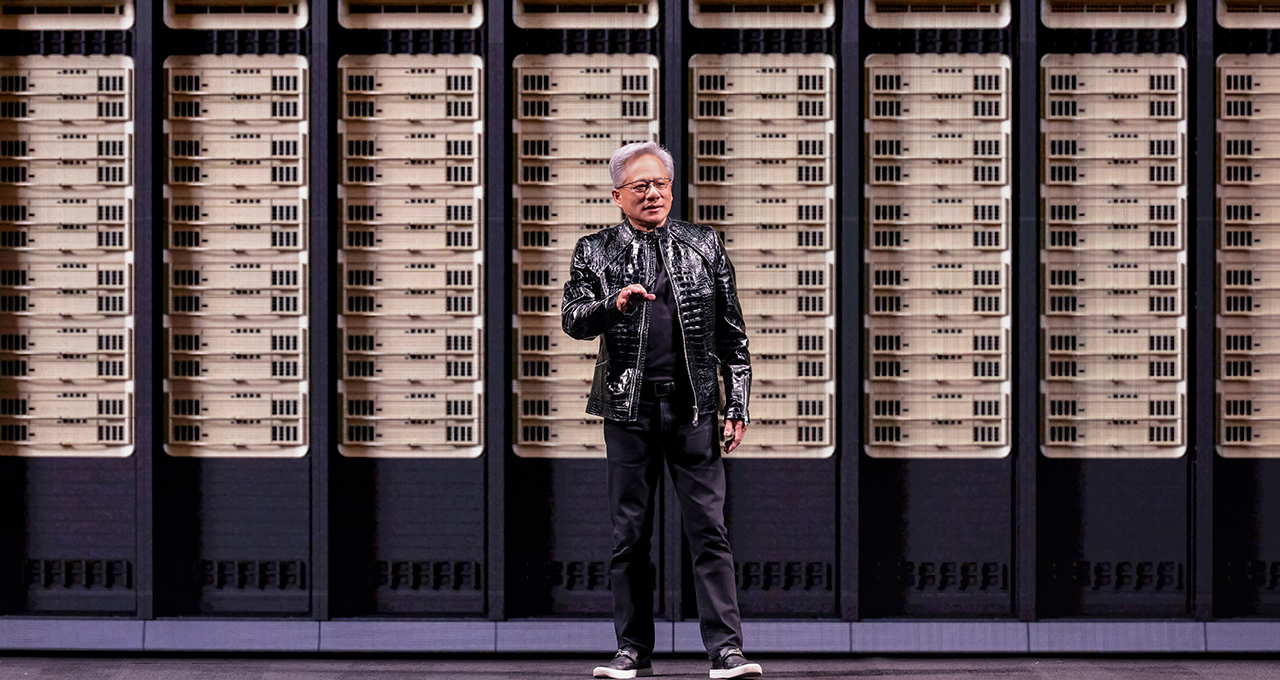
Jensen Huang stands as architect of this transformation not through singular invention but through systematic vision, seeing the whole before the parts, understanding that true revolution requires infrastructure, not isolated innovation. His five-layer framework provides humanity with a map through the territory we are creating, even as that territory creates us anew.
We are building the pyramids that will house not pharaohs but possibilities. We are constructing cathedrals not to worship gods but to explore godlike capabilities. And soon, perhaps within decades, the distinction between builder and building, between humanity and our tools, will blur into something unprecedented: a conscious symbiosis, an evolutionary partnership, a new iteration of what it means to be human.
The five-layer cake rises before us. Each layer a foundation for the next. Each layer transforming the one below. And at the top? Not an ending, but an opening, into a future we will build together with the intelligence we have brought into being. The largest infrastructure in human history is not just technological. It is existential. It is us, becoming more than we have ever been.


