
business resources
Building Professional Reputation Guide for Developers Who Hate Self-Promotion
25 Feb 2026

You didn't get into software development to become an influencer.
You got into it because you like solving problems and building things. Figuring out why something breaks at 2 AM and fixing it before anyone notices. The idea of "personal branding" probably makes you want to close this tab and open a terminal instead.
I get it. Most personal branding advice sounds like it was written for people who already love talking about themselves. Post daily on LinkedIn. Share your "journey." Build your "thought leadership platform."
For the average developer eyeing a tech lead or engineering manager role, that advice isn't just unhelpful. It's repulsive.
But here's what most people miss: the developers who move into leadership positions aren't the loudest ones. They're the ones whose work and reputation quietly precede them into every room, every Slack channel, every hiring conversation.
That's personal branding. And you're probably already doing parts of it without realizing.
Your Code Has Always Been Your Brand
Every pull request you've submitted, every architecture decision you've documented, every code review where you explained your reasoning instead of just approving: that's branding.
The problem is that this work is invisible outside your immediate team. Your tech lead knows you write clean, well-tested code. Your manager knows you're the person who actually reads the RFCs before the meeting. But the VP two levels up? The recruiter scanning LinkedIn? The conference organizer looking for speakers? They have no idea you exist.
The gap between "respected inside your team" and "recognized in your field" isn't about self-promotion. It's about making your existing work visible to a slightly wider audience.
This distinction matters. You don't need to manufacture a persona. You need to let the work you're already doing travel further.
Start with the lowest-effort, highest-impact move: write up something you've already figured out. That database migration strategy that saved your team three weeks? That's a blog post. The mental model you use for debugging distributed systems? That's a conference talk. The opinion you keep repeating in architecture reviews? That's a LinkedIn post.
You're not creating content from nothing. You're documenting decisions you've already made.
The LinkedIn Problem (And How to Solve It Without Losing Your Soul)
LinkedIn feels performative. The humblebrags, the "I'm thrilled to announce" posts, the corporate headshots that look like they belong on a real estate billboard.
But here's the thing nobody mentions: LinkedIn is where technical hiring decisions start. Engineering managers, CTOs, and recruiters form first impressions there before they ever read your GitHub. A 2024 study found that profiles with professional photos receive 14 times more profile views than those without.
You don't need to become a LinkedIn content machine. You need three things: a profile photo that looks like you actually care about your career, a headline that says what you do (not just your current job title), and one post every couple of weeks sharing something you learned or built.
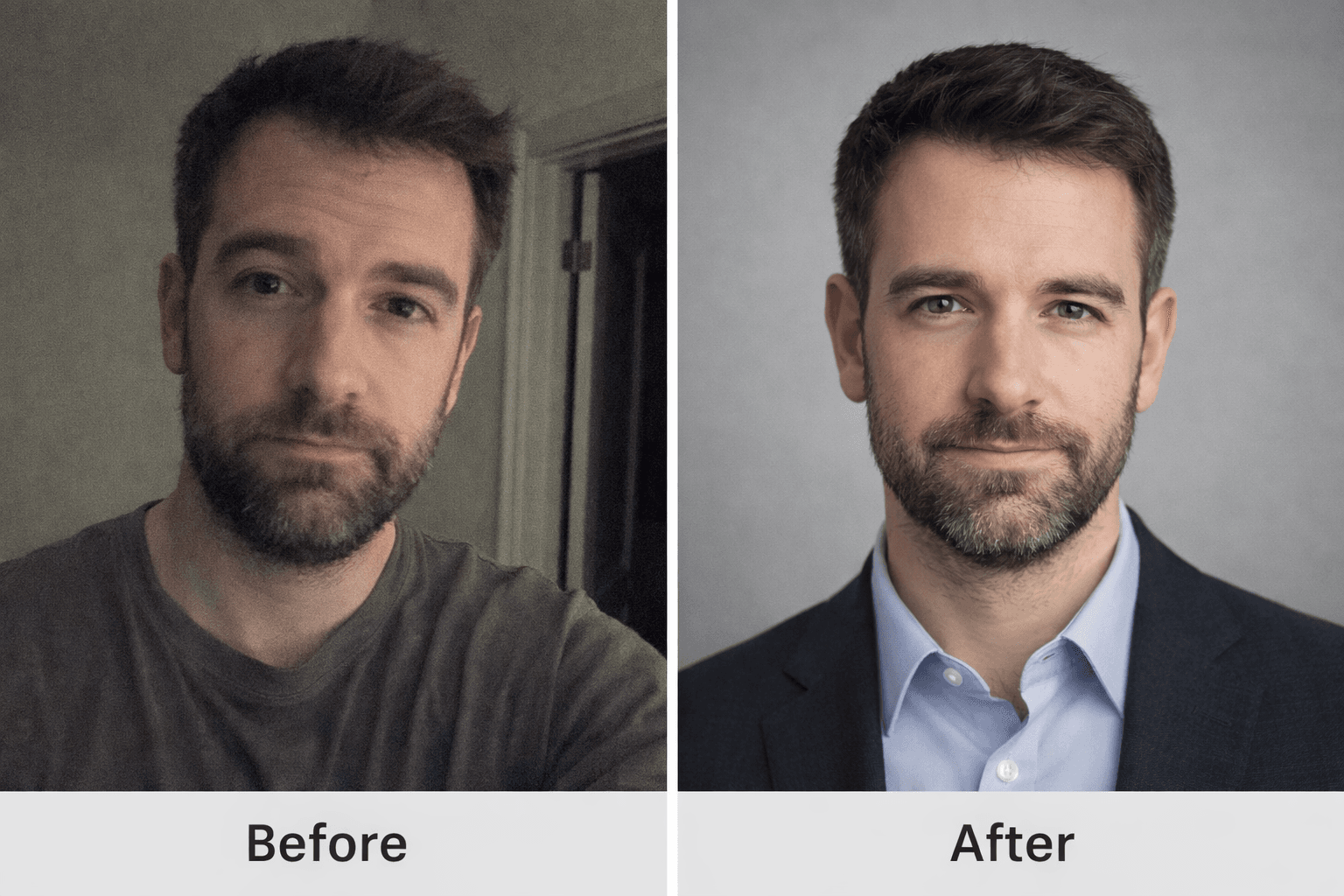
The photo piece is worth pausing on. Most developers either use a blurry conference photo, a five-year-old selfie, or no photo at all. Each of these signals the same thing to a hiring manager: this person isn't thinking about their career trajectory.
You don't need to book a studio session. AI-powered tools like HeadshotPhoto.io can generate a polished, professional headshot from casual photos you already have on your phone. It removes the biggest excuse ("I don't have time to schedule a photographer") and costs a fraction of what traditional photography charges.
For developers specifically, optimizing your LinkedIn photo matters more than you think. It's not vanity. It's the visual equivalent of writing clean documentation: it signals competence and intentionality to people evaluating you before you've said a single word.
Reputation Architecture: Building Visibility That Doesn't Feel Gross
The developers who transition into leadership roles successfully tend to follow a pattern I call "reputation architecture." It's not about volume. It's about strategic placement.
Here's what this looks like in practice:
Internal visibility first. Volunteer to present at team demos. Write the post-mortem that everyone will read. Be the person who summarizes complex technical decisions in plain language for stakeholders. These aren't "branding activities." They're leadership behaviors. But they build your internal reputation faster than any LinkedIn post.
Selective external presence. You don't need to be everywhere. Pick one channel and commit to it for six months. If you like writing, start a blog or contribute to your company's engineering blog. If you prefer talking, apply to speak at one local meetup. If you like neither, answer questions on Stack Overflow or contribute to open source documentation.
The key word is "selective." The developers who burn out on personal branding are the ones who try to do everything. The ones who build lasting reputations pick one thing and do it consistently.
Compound your existing work. Every presentation you give internally can become a blog post. Every blog post can become a conference proposal. Every conference talk can become a series of short LinkedIn posts. You're not creating five pieces of content. You're creating one piece and letting it travel through different formats.
This is where it gets interesting. The compounding effect means that six months of consistent, low-effort output creates more visibility than a single viral post ever could.
The "Anti-Brand" Brand
Some of the most recognized names in tech built their reputations by explicitly rejecting traditional self-promotion. They didn't brand themselves. They just kept showing up with useful things to say.
Think about the engineers you respect most in your field. Chances are, they're known for one thing: deep expertise in a specific domain, communicated clearly and consistently. They're not "personal brand strategists." They're people who write about what they know.
That's the model worth following. Not the influencer playbook. Not the motivational poster version of career advice. Just: know things, share what you know, and make it easy for people to find you when they're looking for someone who knows those things.
The practical version of this is straightforward. Update your LinkedIn profile so it accurately reflects what you do and what you're good at. Get a professional photo that doesn't look like it was taken at a company picnic in 2019. Write one thing per month about a problem you solved. Say yes to one speaking opportunity this year, even if it's a five-minute lightning talk at a local meetup.
That's it. That's the whole strategy.
What Changes When You Do This
The shift is subtle at first. A recruiter reaches out with a role that actually matches your skills instead of a generic "exciting opportunity." A colleague from another company mentions they read your blog post. A conference organizer invites you to submit a talk proposal.
None of these things happen because you "built a personal brand." They happen because you made your existing competence slightly more visible to slightly more people.
For developers moving into tech leadership, this visibility becomes essential. Leadership roles are filled differently than individual contributor roles. Technical skills get you in the door, but reputation and perceived judgment get you the offer. The hiring committee needs to believe you can communicate, influence, and represent the team. A visible track record of doing exactly that, even in small doses, changes the conversation entirely.
You don't need to become someone you're not. You don't need to post inspirational quotes or share your morning routine. You just need to stop being invisible.
The best personal brand for a developer who hates self-promotion is simple: be genuinely good at what you do, and make it slightly easier for the right people to notice.


