


resources
Explore Texas: A Comprehensive Map Featuring Major Cities
10 Jan 2026

Considering a journey to the Lone Star State? Texas is undeniably vast, and a clear understanding of its principal cities is exceptionally valuable for effective trip planning. This article aims to provide you with a comprehensive visual of the Texas map with cities, allowing you to grasp the state's expansive layout and pinpoint your desired destinations. It isn't simply about recognizing the major names; it's about comprehending how these urban centers integrate within the immense Texas landscape. Let's embark on an exploration of what this colossal state truly offers, city by city.
Key Takeaways
- Texas encompasses numerous large cities, strategically dispersed throughout its vast expanse.
- Major urban centers such as Houston, Dallas, San Antonio, and Austin serve as pivotal hubs of economic and cultural activity.
- Consulting a map of Texas with cities provides invaluable insight into the interconnectedness of the state's diverse regions.
- These key cities present unique attractions, significant historical sites, and excellent springboards for discerning travelers.
- Grasping the geographic spread of these cities substantially aids in orchestrating any Texas adventure, be it for business or leisure.
Navigating the Texas Landscape: A City Map Overview
Understanding the Scope of Texas Cities
Texas is an immense state, and its urban centers certainly echo that scale. We're discussing far more than just a few scattered settlements here and there; we're referring to sprawling metropolises, venerable historic centers, and burgeoning communities that collectively forge the state's unique identity. When you first observe a map of Texas, the sheer number and extensive spread of its urban areas might initially seem a tad daunting. It's quite beneficial, then, to gain an overarching perspective on how these cities are positioned relative to one another and the vast geography they occupy. Think of it like getting your bearings before an epic road trip – wouldn't you want to know the major landmarks and their interconnections?
Key Urban Centers on the Map
Certain cities prominently feature on any Texas map, largely owing to their considerable size and far-reaching influence. These are, in essence, the places most readily brought to mind when one hears "Texas cities." We're talking about the quintessential metropolises: Houston, Dallas, San Antonio, Austin, and El Paso. These are far more than mere population centers; they are dynamic hubs of commerce, cultural vibrancy, and crucial transportation networks. Grasping the strategic location of these major players provides a solid foundation for exploring the wider state. Indeed, they often serve as ideal starting points or significant waypoints for any journey through the heart of Texas.
Geographic Distribution of Major Cities
The principal cities in Texas are by no means uniformly concentrated. Instead, they are judiciously dispersed across distinct regions, each possessing its unique character and an intrinsic connection to its surrounding landscape. You'll encounter dense urban areas within the northern and central parts of the state, while others are strategically situated along the Gulf Coast or proximate to the international border. This distribution, interestingly, is hardly coincidental; it's frequently tied to historical development, access to vital resources, and established transportation routes. As you scrutinize the map, these patterns begin to emerge, offering a compelling visual narrative about the state's evolution and its remarkably diverse environments.
Texas's urban centers function as the anchors of its vast geography, each drawing people and activity to its particular corner of the state. Their strategic placement reveals a compelling story of history, economic drivers, and the very land itself.
Major Metropolitan Hubs Across Texas
Texas is an immense state, and its urban centers certainly reflect that grandeur. We're discussing far more than just a few towns; we're talking about sprawling urban centers that are veritable economic powerhouses and vibrant cultural melting pots. These are not simply places to reside; they are compelling destinations that attract individuals from across the globe for professional pursuits, educational opportunities, and diverse entertainment.
The Largest Cities and Their Significance
When you consult a map of Texas, certain cities quite literally leap out due to their sheer magnitude and profound influence. Houston, San Antonio, Dallas, and Austin consistently sit at the forefront of consideration, each boasting its own distinct character and formidable economic drivers. Houston, for example, stands as a global epicenter for the energy industry and hosts a world-class medical complex. Dallas, conversely, is a major hub for finance and technology, while Austin has become almost synonymous with the thriving tech boom and its exceptionally vibrant music scene. San Antonio, rich in historical tapestry, beautifully intertwines its heritage with a robust, growing economy.
Economic and Cultural Centers
These major cities are precisely where much of the state's dynamic activity unfolds. They actively attract businesses, generate substantial employment opportunities, and function as vital centers for the arts, culture, and higher education. Consider, for example, the world-class museums in Dallas, the prolific live music venues in Austin, the historical missions in San Antonio, or the incredibly diverse culinary landscape in Houston. These urban areas are, without question, magnets for talent and innovation.
Regional Importance of Urban Areas
Beyond their immediate city limits, these metropolitan areas exert a profound influence on their surrounding regions. They function as essential service centers, critical transportation hubs, and destinations where residents from smaller communities frequently journey for shopping, specialized healthcare, and various professional services. El Paso, for instance, serves as a crucial gateway to Mexico and is a pivotal economic force in West Texas, while cities like Fort Worth maintain their own distinct identities and economic strengths, often complementing their larger neighbors rather remarkably.
It's certainly easy to feel overwhelmed by the sheer scale of Texas, but comprehending these major hubs offers a much clearer perspective on where the state's energy and opportunities are predominantly concentrated. They are, in essence, the anchors that steadfastly hold the vast Texas landscape together.
Exploring Texas: A Visual City Guide
Locating Cities on Your Texas Map
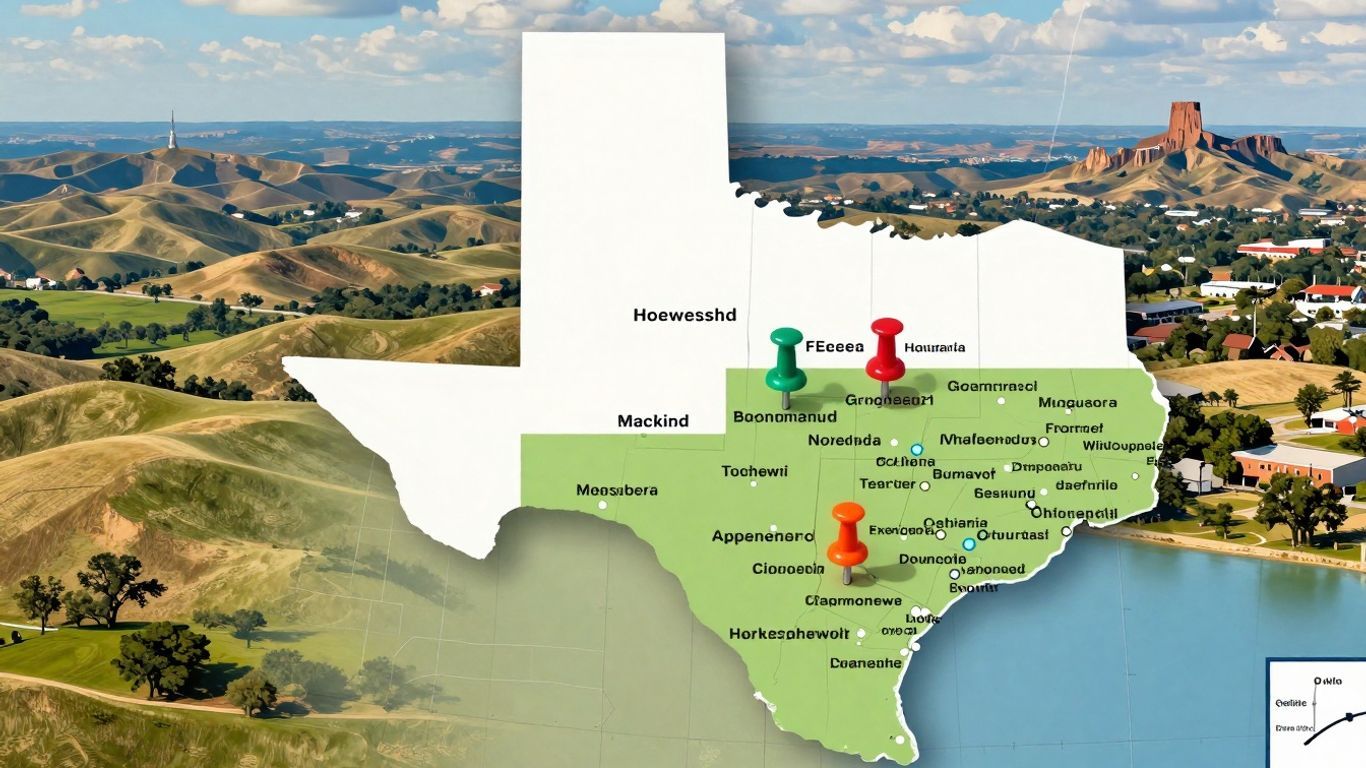
With your Texas map unfurled and ready for perusal, the immediate task is to identify key locations. It's unquestionably an immense state, and pinpointing the main urban centers can initially seem somewhat daunting. But fear not, let's simplify this process. Envision the map as a colossal puzzle, wherein the major cities represent the prominent, unmistakable pieces that reveal the entire picture. We're specifically referring to places like Houston, Dallas, San Antonio, and Austin – you'll observe them clearly delineated, typically with larger markers or bolder typography. While numerous smaller cities are also present, these larger entities serve as your essential anchors.
Understanding City Size and Influence
As you examine the map, you'll undoubtedly notice that some cities are represented with more expansive circles or bolder text than others. This is hardly a mere aesthetic choice; rather, it's an intentional visual cue indicating which cities are the most populated and possess the highest levels of economic activity. Houston and Dallas, for instance, are veritable economic powerhouses, not solely for Texas, but for the nation as a whole. Their profound influence extends considerably beyond their municipal boundaries, impacting employment markets, cultural trends, and even the patterns of intra-state travel. While smaller cities may hold significant regional importance, these urban giants are the ones that truly and profoundly shape the broader Texas landscape.
Interconnectedness of Texas Urban Areas
The essence isn't merely about the geographical placement of these cities, but crucially, about their intricate connections. Texas boasts a rather extensive network of highways and railways, seamlessly linking its major urban centers. These vital routes are readily discernible on a detailed map, providing insight into the relative ease or challenge of traveling between, say, El Paso and Beaumont. This intricate interconnectedness is fundamental to comprehending the movement of goods, the dynamics of commuter traffic, and how different parts of Texas interact. Planning a journey? Knowing these connections can significantly streamline your trip and mitigate potential complications – it's akin to observing the veins and arteries of the state, showcasing the vibrant flow of life and commerce between these urban areas.
Key Destinations on the Texas Map
Prominent Cities for Travelers
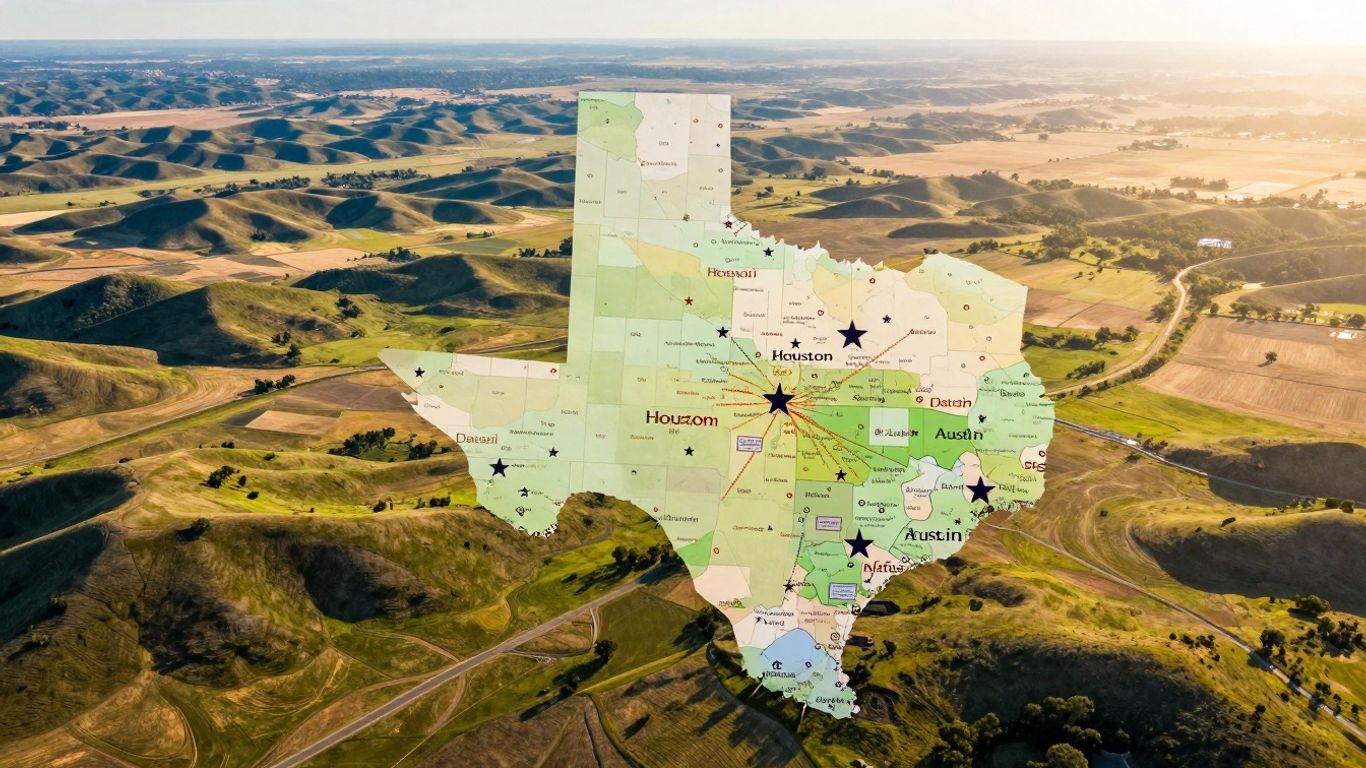
Texas, being a vast state, presents a wealth of attractions for any visitor, and its cities certainly reflect this diversity. When you're perusing a map, certain places prominently feature because of their distinct offerings. Houston, for example, serves as a major hub for space exploration, exemplified by its renowned Space Center, and is also celebrated for its incredibly diverse culinary scene. Then there's San Antonio, famous for the historic Alamo and the charming River Walk, which is ideal for a leisurely promenade. Austin, the state capital, vibrates with a dynamic live music scene and houses the impressive Texas State Capitol building. For those intrigued by the quintessential cowboy way of life, the Fort Worth Stockyards provide a genuine, immersive glimpse into that rich heritage.
Cities with Historical Significance
History enthusiasts will discover a veritable treasure trove of historical sites across Texas. Beyond the iconic Alamo in San Antonio, cities such as Dallas hold a notable position in modern American history, particularly due to Dealey Plaza. El Paso, strategically situated directly on the border, boasts a rich history profoundly shaped by its unique location and potent cultural influences. Waco, while perhaps more recently recognized for a certain popular television show, also possesses a rich heritage intrinsically linked to the state's broader development. Each city, in its own right, narrates a vital chapter of the Texas story, from its nascent beginnings to its evolution into the modern era.
Cities Known for Unique Attractions
Texas transcends mere expansive urban centers and historical narratives; it's also home to a collection of truly unique and distinctive attractions. Amarillo, located in the Texas Panhandle, is renowned for the iconic Cadillac Ranch, an open-air art installation where visitors are encouraged to spray-paint old Cadillacs half-buried in the ground. South Padre Island offers an idyllic coastal escape, complete with pristine beaches and a plethora of water activities. For nature lovers, the areas surrounding cities like Midland and Odessa provide access to extraordinary geological formations and the vast, rugged West Texas landscape. These places impart a distinct character to any Texas road trip, vividly showcasing the state's remarkable variety.
Texas's major cities are far more than just points on a map; they are gateways to diverse experiences, ranging from pivotal historical landmarks to modern marvels and captivating natural wonders. Planning your itinerary around these key destinations can help you truly grasp the breadth of what the Lone Star State has to offer.
The Fabric of Texas: Cities and Their Regions
Texas is a colossal state, and its cities are far from arbitrarily dispersed. Instead, they demonstrate a tendency to aggregate within distinct regions, each imbued with its own characteristic ambiance and overarching purpose. A thoughtful consideration of these regions proves instrumental in gaining a clearer understanding of the intricate workings of Texas.
North Texas Urban Centers
This area is home to the expansive Dallas-Fort Worth metroplex, a region that functions as an undeniable powerhouse for business, transportation, and culture. Dallas itself serves as a major financial hub, while Fort Worth, with its historic Stockyards, evokes a stronger sense of classic Western heritage. Together, they form one of the largest and most dynamic urban areas in the entire country. Other cities in North Texas, such as Denton and McKinney, are experiencing rapid growth, often functioning as residential communities for the larger cities but simultaneously cultivating their own distinct identities.
South Texas Metropolitan Areas
Venturing southward, one encounters cities such as Houston, the state's largest, which is a global center for energy and aerospace – and remarkably diverse, too. Further south along the border, you'll find cities like Laredo and McAllen, which are pivotal centers for international commerce with Mexico. These cities possess a unique cultural tapestry, largely shaped by their border proximity and a strong Hispanic influence. Corpus Christi, positioned on the Gulf Coast, is significant for both its bustling port and burgeoning tourism industry.
Central and West Texas Cities
Central Texas proudly hosts Austin, the state capital and a vibrant hub for technology and live music. It possesses a distinct ambiance from the other major cities, frequently characterized by a more relaxed and eclectic charm. San Antonio, also nestled in Central Texas, is steeped in history, celebrated for the Alamo and its rich Spanish colonial heritage. Moving westward, one discovers cities like El Paso, which is strategically positioned directly on the border with Mexico and boasts a unique fusion of Texan and Mexican cultures. Lubbock and Amarillo are significant urban centers for the Panhandle region, with economies often intricately tied to agriculture and energy sectors.
Here's a quick look at some of the major players:
- North Texas: Dallas, Fort Worth, Plano, Frisco
- South Texas: Houston, San Antonio, Corpus Christi, Laredo, McAllen
- Central Texas: Austin, Waco, Bryan-College Station
- West Texas: El Paso, Lubbock, Amarillo, Midland
Understanding these regional groupings can significantly streamline travel planning. You can either focus intently on a specific geographical area or curate a route connecting cities across different regions to experience the full breadth of what Texas has to offer.
A Comprehensive Texas City Map
Identifying Major Cities on the Map
When you first observe a map of Texas, the immense scale of the state is immediately striking. Pinpointing all the major cities can initially present as a considerable undertaking, but fortunately, they demonstrate a tendency to coalesce within specific geographical areas, thereby making them easier to locate. Consider the prominent ones – Houston, Dallas, San Antonio, and Austin – they form the very core of Texas's urban landscape. Beyond these, there are other significant cities like El Paso out west, or Corpus Christi situated on the coast, each contributing its own unique character and strategic importance to the state.
Understanding Texas's Urban Network
Texas boasts a remarkably intricate urban network. It's far more than just a collection of disparate large cities scattered around; these centers are seamlessly connected by an extensive system of highways and deep-seated economic ties. For instance, the "Texas Triangle" is a widely recognized concept, effectively linking Houston, Dallas-Fort Worth, San Antonio, and Austin. This area, in particular, constitutes a veritable powerhouse for commerce, culture, and population growth. Understanding these crucial connections provides vital insight into how the diverse regions of the state interact synergistically.
- The Texas Triangle: A major economic and population corridor.
- Interstate Highways: Key routes like I-10, I-35, I-45, and I-20 connect major urban centers.
- Regional Hubs: Cities like El Paso, Lubbock, and Amarillo serve as important centers for their respective regions.
The growth of Texas cities has been exceptionally swift, driven by a confluence of factors, notably burgeoning job opportunities, a propitious business environment, and a steadily expanding population. This dynamic expansion has fostered a vibrant and intricately interconnected urban system across the entirety of the state.
Planning Your Texas Journey with City Locations
Having a solid grasp of where these major cities are geographically located is exceptionally valuable for planning any journey through Texas. Whether you intend to drive across the state or fly into a specific region, knowing the city locations facilitates the strategic planning of your route and helps you accurately estimate travel times. Furthermore, it imparts a crucial sense of the distances involved – Texas is vast, and one certainly cannot traverse from one major urban center to another in mere minutes.
Here's a quick look at some of the top cities and their general locations:
| City | Region |
|---|---|
| Houston | Southeast Texas |
| Dallas-Fort Worth | North Texas |
| San Antonio | South Central |
| Austin | Central Texas |
| El Paso | West Texas |
| Corpus Christi | South Texas (Coast) |
Familiarity with these key spots on the map significantly streamlines the planning of your Texas adventure.
Your Texas Journey Continues
Having explored some of the major cities across the grand state of Texas, from the bustling thoroughfares of Houston and Dallas to the historic charm of San Antonio and the vibrant culture of Austin, it's clear there's a veritable tapestry of sights to behold. This map is merely a foundational overview, of course. Texas is immense, and each city possesses its own unique character and a wealth of attractions awaiting discovery. Whether you're meticulously planning an extensive road trip or simply curious about the Lone Star State, we sincerely hope this guide serves to orient you more effectively. There's always more to uncover, so we wish you pleasant travels!
Frequently Asked Questions
What are the biggest cities in Texas?
Texas is home to quite a number of expansive urban centers! The largest ones include Houston, San Antonio, Dallas, Austin, and Fort Worth. These places are densely populated and bustling with activity.
Where can I find a map of Texas cities?
Maps of Texas cities are readily available online and within comprehensive travel guides. They're exceptionally useful for visualizing the geographical placement and interconnections of the state's principal cities.
What are some famous places to visit in Texas?
Texas is replete with iconic destinations! Consider, for instance, The Alamo in San Antonio, the impressive Texas State Capitol in Austin, or the renowned Space Center Houston. There are also magnificent natural areas like Big Bend National Park.
How are the cities spread out across Texas?
Texas cities are distributed rather broadly. You'll find significant concentrations in North Texas (such as Dallas and Fort Worth), Central Texas (like Austin), and South Texas (including San Antonio and Houston). West Texas also features prominent cities like El Paso.
Are there specific cities known for certain things?
Indeed, many are! Some cities are celebrated for their rich historical narratives, like San Antonio with The Alamo. Others are known for being vibrant centers for culture and music, such as Austin. And places like Houston are prominent for advancements in space exploration and various industries.
Why is it useful to know about Texas cities on a map?
Knowing the cities on a map proves invaluable for travel planning. You can accurately gauge distances between locations, determine optimal travel routes, and gain a better understanding of Texas's diverse regions. It undeniably simplifies the experience of exploring the Lone Star State!


