
business resources
Future-Proofing Your Nursing Career: Essential Skills and Knowledge for Success
15 Jan 2026

The healthcare industry is continually evolving, challenging nurses to proactively enhance their professional journeys. Staying ahead in the nursing field is not only about dedication to patient care, but also about embracing ongoing learning and innovative advancements. Today’s nurses can ensure career sustainability by pursuing online MSN programs or similar educational opportunities, allowing them to adapt to the latest advancements without putting their current job on hold.
Moreover, nurses who anticipate change and prepare accordingly are better equipped to step into leadership roles, drive interprofessional collaboration, and serve as advocates for their patients and the broader community. Remaining adaptable, resilient, and open to learning is paramount, especially as new technologies and medical protocols reshape patient care environments.
Nurses must also recognize that future-proofing their careers goes beyond clinical acumen; it encompasses skills such as communication, ethical advocacy, and knowledge of emerging technologies. These skills enable nurses to foster trust, effectively manage workplace challenges, and make a more significant contribution to their organizations.
Understanding these multiple avenues for growth empowers nurses to take charge of their career progression and elevates the entire profession. For additional insights, the American Medical Association’s guide on essential nursing skills is a valuable resource for professionals seeking to expand their competencies.
Continuous Education: A Lifelong Commitment
Continuing education stands at the forefront of career longevity. Nurses who pursue advanced degrees, like a Master of Science in Nursing (MSN), not only deepen their clinical expertise but also open doors to specialized and leadership positions. Flexible learning options, such as online programs, including those offered by Arkansas State University, make it increasingly practical for working professionals to stay current amid expanding job roles and patient care needs.
These advancements ensure that nurses remain competent and competitive, keeping pace with rapidly evolving healthcare guidelines and evidence-based practices. Credentialing and certifications help underline areas of expertise and commitment to the highest standards in patient care.
Embracing Technological Advancements
Incorporating the latest technologies is crucial for nurses who want to remain current and relevant. From electronic health records (EHRs) and telehealth to wearable health monitors and artificial intelligence, the pace of change is accelerating. Nurses who actively seek out and master such technologies can improve patient outcomes and workflow efficiencies.
Engagement in professional training, webinars, and seminars is highly recommended. As noted by HealthIT.gov, such skills not only automate routine tasks but also enhance data accuracy and patient safety. Keeping up with tech-based trends increases a nurse’s value in a digital-first healthcare environment.
Developing Strong Communication Skills
Communication is a powerful tool in every nurse’s arsenal. Clear information exchange, active listening, and empathic interactions foster trust, minimize errors, and streamline teamwork among healthcare professionals. Nurses who excel in verbal, nonverbal, and written communication can navigate challenging conversations and provide emotional support to patients and their families.
Practical Communication Strategies
- Practice reflective listening and ask clarifying questions.
- Utilize patient-friendly language and explanations.
- Engage in regular self-assessment and seek feedback for ongoing improvement.
Cultivating Leadership Qualities
Leadership is not confined to titled positions. Nurses can lead from the bedside by modeling best practices, mentoring newer staff, and advocating for quality improvement initiatives. Participation in mentorship programs, leadership training, and professional organizations provides practical avenues for building these essential skills. True leaders in nursing champion ethical care, uphold organizational values, and foster a collaborative work environment.
Engaging in Interdisciplinary Collaboration
Collaborative care is the cornerstone of effective modern healthcare. Nurses now routinely work alongside physicians, pharmacists, social workers, and a spectrum of allied health professionals. Building strong interdisciplinary relationships requires respect for each team member’s expertise, clear communication, and shared decision-making to address complex patient needs holistically.
This team-based approach yields better health outcomes, higher patient satisfaction, and a more dynamic work environment for all practitioners.
Upholding Ethical Practice and Advocacy
Nurses bear the professional and moral responsibility to act with integrity, advocate for patients’ rights, and ensure equitable treatment regardless of personal or cultural differences. Advocacy includes educating patients, voicing their wishes, and intervening when care falls short of acceptable standards.
Continued engagement with ethics resources and advocacy groups enhances a nurse's ability to navigate complex scenarios and contribute to policy development within their institution.
Building a Professional Network
Expanding one’s professional network opens doors to mentorship, continuing education opportunities, job referrals, and exposure to best practices from peers in diverse settings. Active participation in local, regional, and national nursing associations encourages knowledge exchange and advocacy for industry-wide improvements.
Networking also keeps nurses aware of new research and regulatory updates, providing a direct link to innovative thinking in the field.
In addition to these professional connections, nurses can benefit from staffing solutions like those provided by the PRN professional nurse staffing agency, which offer flexible job opportunities that align with their career goals, ensuring they remain adaptable in a dynamic healthcare environment.
Fostering Adaptability and Resilience
The dynamic nature of healthcare means constant adaptation is essential. Resilient nurses manage workplace stress, recover from setbacks, and thrive in the face of uncertainty. Developing a growth mindset, building strong support systems, and utilizing stress management strategies enable nurses to deliver quality care while maintaining their own well-being.
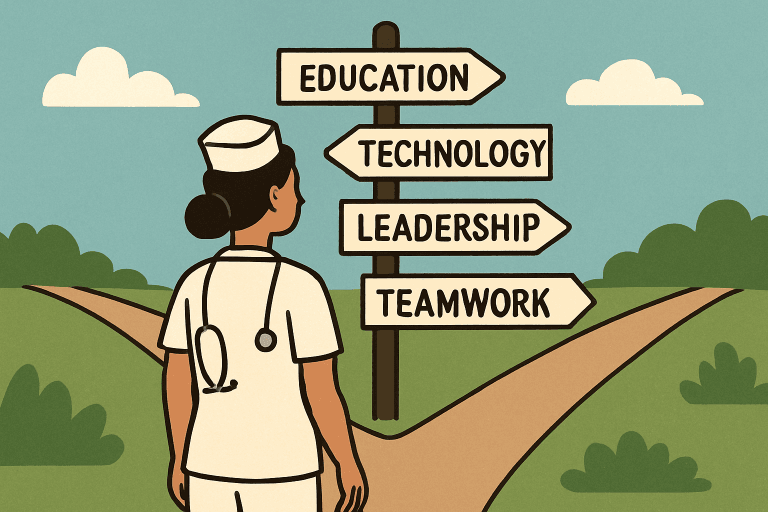
By prioritizing continuous improvement, embracing technological change, and focusing on teamwork and ethics, nurses can ensure their careers flourish, regardless of what the future holds.
Key Takeaways:
- Embracing continuous education and technological advancements is crucial for the longevity of a nursing career.
- Developing strong communication and leadership skills enhances professional growth and patient care.
- Engaging in interdisciplinary collaboration and ethical practice strengthens the nursing profession.


