
resources
Smart City Los Angeles 2028: Pioneering a Digital Future for LA
19 Dec 2025

Los Angeles is embarking on an ambitious digital transformation, with the clear goal of becoming a truly smart city by 2028. Envision it as a comprehensive, city-wide upgrade, strategically deploying cutting-edge technology to significantly enhance daily life for all residents. The overarching aim is to foster an urban environment that operates with greater efficiency, demonstrates enhanced environmental stewardship, and broadens opportunities for everyone who calls LA home. Essentially, it’s all about cultivating a more connected and streamlined metropolis for living, working, and visiting, particularly as the highly anticipated Olympic Games approach.
Key Takeaways
- The 2028 smart city plan for Los Angeles is fundamentally about optimizing urban functions through technology, encompassing everything from traffic management to the delivery of public services.
- A crucial component of this initiative is ensuring universal digital access, enabling all citizens to connect online and utilize these new tools, irrespective of their socioeconomic status or geographic location.
- Residents can anticipate significant enhancements in urban mobility, including smarter traffic signals and more efficient public transportation networks designed to mitigate congestion.
- The city is also keenly focused on promoting environmental sustainability, aiming for reduced energy consumption and more judicious management of vital resources like water.
- Advanced technology will play a pivotal role in bolstering community safety and elevating public health standards through measures such as improved environmental monitoring.
Transforming Los Angeles: The 2028 Smart City Vision
A Connected and Efficient Urban Environment
Los Angeles is truly gearing up for a substantial digital overhaul. At its core, the 2028 Smart City vision is dedicated to making the entire urban system function more effectively for everyone. Think of it as providing LA with a robust, modern technological backbone. This translates into more sophisticated connectivity across the board—from traffic lights communicating seamlessly to public services responding with greater agility. The ultimate goal is to cultivate a city that feels inherently more organized and navigably smooth. It's not merely about deploying flashy new gadgets; rather, it’s about implementing practical improvements that genuinely streamline everyday life.
Leveraging Technology for Enhanced Quality of Life
This forward-thinking initiative seeks to harness technology to significantly improve the overall quality of life in Los Angeles. Can you imagine spending less time stalled in traffic, breathing cleaner air, and benefiting from public services that are far more responsive to your individual needs? The recent global health crisis certainly underscored the critical importance of robust digital tools, and LA is wisely building upon those lessons. The focus, quite rightly, is on how these technological advancements can directly benefit residents, transforming the city into a more pleasant and functional place to call home. Ultimately, the aim is to forge a city that genuinely serves its people.
Building on Momentum from Digital Advancements
LA has, in fact, already made considerable strides in integrating digital tools, and the 2028 vision is precisely about accelerating and deepening that progress. It involves taking the valuable lessons learned and the technologies that have proven effective, then embedding them more profoundly into the very fabric of the city. This isn't a matter of starting from scratch; it’s about amplifying existing momentum and meticulously preparing the city for its future trajectory. The comprehensive plan scrutinizes how to build upon successful existing frameworks and apply innovative ideas to cultivate a truly advanced urban experience.
Pioneering Digital Infrastructure for Urban Advancement
The Role of Data as the City's Nervous System
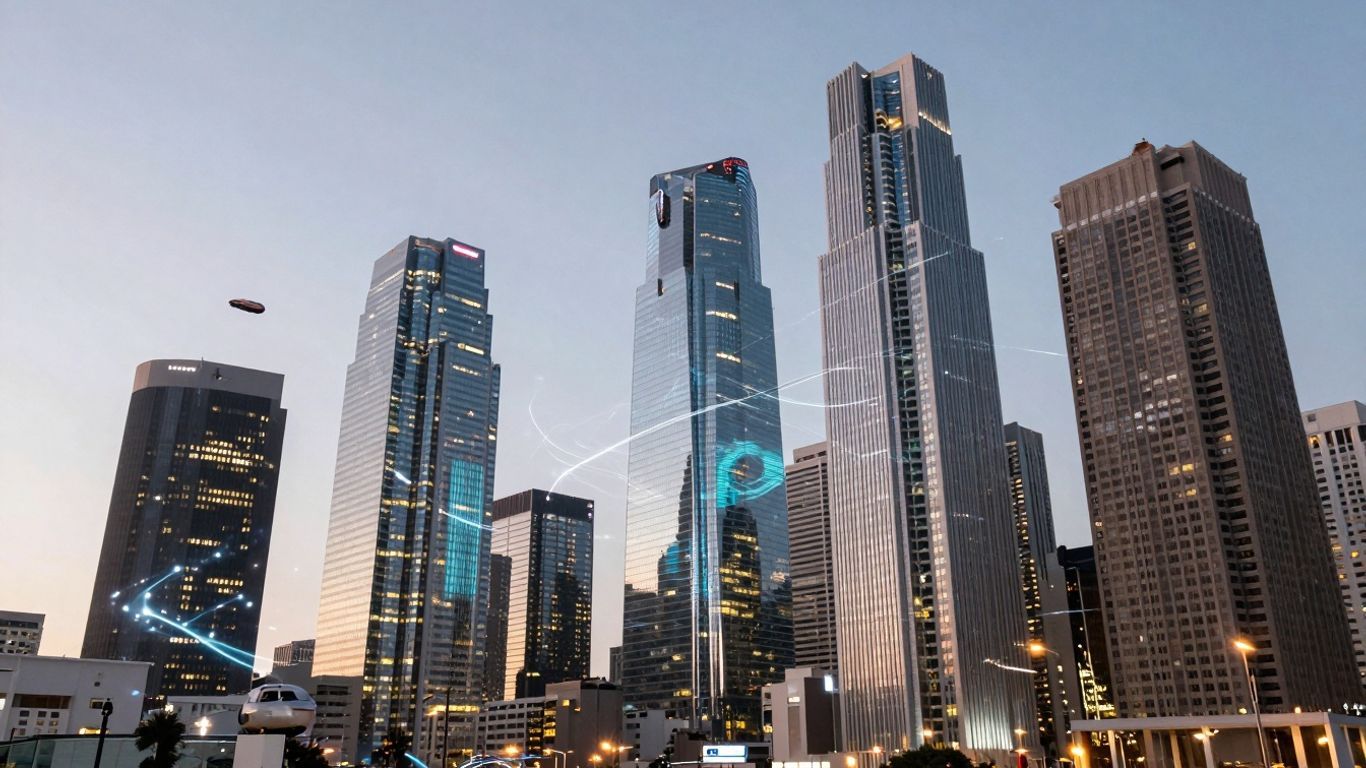
Consider data as the city's fundamental nervous system—it's the intricate network through which various parts of Los Angeles communicate, enabling the metropolis to adapt, learn, and evolve. Without reliable data and the capacity to share it effortlessly, even the most sophisticated technology would fall short of its potential. For Los Angeles in 2028, this means establishing a robust system to meticulously collect, process, and strategically utilize information derived from a multitude of sources. This invaluable information is what ultimately empowers the city to operate more efficiently and respond with greater agility to unfolding events.
Integrating Internet of Things Devices for Real-Time Information
The Internet of Things, or IoT, revolves around connecting everyday objects to the internet, transforming them into intelligent data points. In LA's context, this translates to deploying sensors on traffic lights, installing smart meters in residential properties, placing air quality monitors on lampposts, and even integrating smart technology into waste receptacles. These devices are designed to continuously gather real-time information about the city's dynamic environment. Can you picture traffic lights that dynamically adjust their timing based on actual vehicle density, or streetlights that intelligently dim when no one is present to conserve energy? It’s truly like creating a colossal, interconnected network that’s perpetually gathering vital intelligence.
The overarching objective is to establish a seamless, continuous feedback loop where information gleaned from across the city directly informs and enhances services, ultimately making them more effective for everyone.
Data-Driven Decision Making for Responsive City Services
All this meticulously collected data isn't merely for observation; its primary purpose is to significantly enhance the functionality of city operations. By diligently analyzing the information streamed from IoT devices and other diverse sources, municipal officials are empowered to make more informed, smarter choices. For instance, a deep understanding of traffic patterns can facilitate the optimization of bus routes or pinpoint exactly where road infrastructure requires urgent attention. Similarly, accurate knowledge of energy consumption can lead to substantial waste reduction and significant cost savings. This represents a profound shift from relying on educated guesses to basing decisions on tangible, real-world facts. Here’s a closer look at how data stands to revolutionize city management:
- Traffic Management: Fine-tuning traffic light synchronization to effectively alleviate congestion.
- Energy Use: Identifying specific times and locations where energy can be utilized more efficiently within public buildings.
- Waste Collection: Crafting optimized routes for trash pickup, informed by real-time data from smart bins indicating their fullness.
- Public Safety: Leveraging data patterns to strategically deploy police and fire services to areas of greatest need.
This innovative approach is instrumental in making city services inherently more responsive and efficient for residents. It's also an integral part of a broader, concerted effort to prepare for major events like the 2028 Olympic and Paralympic Games, where flawless and efficient operations will undoubtedly be paramount.
Enhancing Urban Mobility and Sustainability
Optimizing Transportation Systems and Alleviating Congestion
Navigating Los Angeles is poised to become considerably smarter and much smoother. The 2028 Smart City initiative places a strong emphasis on refining our transportation systems to work better for everyone, all while being more environmentally conscious. We’re really talking about a future where time spent stuck in traffic becomes far less common, public transit emerges as a preferred choice, and simply moving from point A to point B feels significantly more effortless.
Public transit forms a substantial part of this intricate puzzle. The central idea is to elevate the quality of bus and train services to such an extent that more people naturally opt for them over driving solo. This translates into tangible benefits like real-time tracking, so you'll know precisely when your bus or train is arriving—effectively eliminating those frustrating guessing games. Furthermore, we’re actively exploring mechanisms for transit routes to dynamically adjust on the fly in the event of major traffic disruptions. Can you imagine a bus that instinctively reroutes to avoid a snarl-up? Beyond that, paying for your journey is set to become much simpler, facilitating quicker boarding and alighting.
- Real-time arrival information: You'll consistently know the exact estimated time of arrival for your ride.
- Smart route adjustments: Transit systems will be able to alter paths dynamically to bypass congestion.
- Easier payment options: Enjoy quick and straightforward methods for paying your fare.
Beyond the enhancements to buses and trains, considerable efforts are also underway to make walking and cycling safer and more enjoyable. This encompasses the strategic addition of more bike lanes, particularly those physically separated from vehicular traffic for enhanced safety. Sidewalks are receiving significant attention as well, with plans to make them wider and more inviting for pedestrians. Crosswalks, too, will be made clearer and safer for those on foot. The overarching objective is to facilitate shorter trips in healthier ways by actively promoting walking and cycling.
The city is diligently working to engineer a transportation network that prioritizes not just speed, but also unwavering reliability and the consistent adoption of environmentally sound choices.
Championing Sustainability and Reducing Carbon Emissions
Los Angeles in 2028 isn't solely about dazzling new technology; it’s equally focused on evolving into a healthier, greener place for its inhabitants. The Smart City plan dedicates substantial energy to environmental stewardship. This entails seamlessly integrating more natural elements back into the urban landscape and deploying intelligent solutions to actively curtail pollution and waste. It’s fundamentally about making the city feel cleaner and ensuring the air is easier to breathe.
We're actively pursuing significant green initiatives. Picture an abundance of new parks, the widespread adoption of green roofs on buildings, and the extensive planting of countless more trees. These efforts aren't merely for aesthetic appeal; they serve crucial functions like improving rainwater management, mitigating urban heat during warmer periods, and actively purifying the air. It’s about enhancing the city's liveability by fostering a deeper connection with nature.
- Planting native trees and vegetation species that inherently require minimal water.
- Establishing verdant pathways along existing streets and river corridors.
- Utilizing permeable surfaces that allow water to effectively soak through, significantly aiding with drainage.
Technology, undoubtedly, plays a pivotal role in significantly reducing our collective carbon footprint. Smart grids facilitate more efficient electricity management, and buildings are being designed with inherent energy-saving capabilities. When traffic flows more smoothly, vehicles inherently produce fewer emissions. This represents a pragmatic approach to utilizing our precious resources more wisely.
Smart Energy Use and Advanced Water Management
Vigilantly overseeing our city’s vital resources, such as energy and water, is absolutely paramount. We’re deploying sophisticated smart sensors to monitor air quality in real-time, which allows us to precisely pinpoint the origins of pollution. Regarding water, the primary emphasis is on more intelligent management practices and a concerted effort to minimize waste. We’re also actively exploring innovative methods for waste disposal, with a view towards enhancing recycling rates and transforming waste into valuable materials. This comprehensive approach is designed to cultivate a city that consistently utilizes its resources efficiently and generates less refuse.
Here's a glimpse at how some key environmental metrics are currently being tracked:
| Metric | Baseline (2024) | Target (2028) | Actual (2025) |
|---|---|---|---|
| Energy Consumption | 100 Units | 80 Units | 92 Units |
| Waste Diversion Rate | 40% | 60% | 48% |
| Citizen Satisfaction | 70% | 90% | 75% |
Strengthening Public Safety and Community Well-being
Los Angeles is decidedly elevating its commitment to ensuring everyone's safety and health, with technology emerging as a crucial enabler. This initiative transcends merely installing more cameras; it’s about making the entire city smarter and far more responsive to the genuine needs of its populace. Picture emergency services reaching you with greater speed, or accessing essential medical assistance without needing to leave your home. These transformative changes are all geared towards building a city that inherently feels more secure and is, quite simply, a better place to live.
Empowering First Responders with Advanced Technology
In situations where every second truly counts, possessing the right tools can make an undeniable difference. Smart city technology is actively equipping our police, firefighters, and paramedics with enhanced capabilities to execute their vital duties. This translates directly into quicker response times, primarily because sophisticated systems can pinpoint emergencies with superior accuracy and facilitate the dispatch of the closest available units. It also entails fostering improved communication channels among diverse emergency teams, ensuring everyone operates on the same page during a crisis. Imagine, if you will, a system capable of analyzing real-time traffic data to clear a swift path for an ambulance—that’s precisely the kind of intelligent foresight we're discussing.
- Faster emergency vehicle dispatch: Expediting the process of getting critical help en route.
- Smarter resource allocation: Ensuring the right personnel and equipment are sent precisely where they're most needed.
- Improved inter-agency communication: Enhancing the effective dialogue among all responding parties.
The primary objective is to leverage technology not merely to react, but to proactively anticipate and act with greater velocity and precision, thereby making our city inherently safer for every individual.
Fostering More Secure and Resilient Communities
Beyond addressing immediate emergencies, the smart city vision is resolutely aimed at cultivating communities that are intrinsically more secure and possess a greater capacity to recover from challenges. This includes thoughtfully utilizing data to discern patterns that might indicate potential safety concerns, thereby enabling proactive preventative measures. It also means guaranteeing the unwavering reliability of essential services, even when unforeseen difficulties arise—such as during severe weather events. Consider, for instance, smart streetlights that can intelligently adjust their brightness based on detected activity, or systems that continuously monitor critical infrastructure to avert potential failures.
Environmental Monitoring for Public Health Safeguards
Maintaining the health of Angelenos is inextricably linked with public safety. Smart sensors are being actively deployed to diligently monitor vital indicators like air quality in real-time. Should pollution levels surge in a particular vicinity, the city can swiftly identify the underlying cause and implement corrective actions, such as issuing health advisories or dynamically adjusting traffic flow. This immediate, real-time information is instrumental in safeguarding residents from environmental hazards. Telehealth is also becoming an increasingly significant component of this strategy, making it simpler for individuals to consult with a doctor from the comfort of their homes—an especially beneficial option for those with mobility challenges or who reside far from medical clinics. The city is indeed making substantial investments in the digital tools and internet access required to ensure these vital services are accessible to everyone.
| Metric | Baseline (2024) | Target (2028) | Actual (2025) |
|---|---|---|---|
| Emergency Response Time | 15 minutes | 10 minutes | 13 minutes |
| Telehealth Appointments | 10,000 | 50,000 | 25,000 |
| Air Quality Index Exceedances | 30 days | 15 days | 22 days |
Fostering Economic Growth and Innovation
The Smart City Los Angeles 2028 initiative isn't solely focused on gleaming new gadgets and lightning-fast internet; it also represents a significant strategic impetus to invigorate LA's economy and generate a broader spectrum of employment opportunities. The underlying principle is to cultivate an environment where new businesses can readily emerge and thrive, and where high-quality jobs are accessible to a diverse cross-section of the population. This commitment entails exploring avenues to support local enterprises from their inception, alongside channeling investment into pioneering green technologies.
Supporting Local Startups and Innovation Hubs
LA is already renowned as a hub of fresh ideas, and this plan aims to further simplify the journey for startups to launch and flourish. The city is actively investigating methods to furnish nascent businesses with the necessary support, which might include invaluable mentorship from seasoned professionals and improved access to crucial funding. Can you imagine new co-working spaces equipped with hyper-fast internet, streamlined bureaucratic processes for permit acquisition, and perhaps even direct municipal grants to help innovative companies get off the ground? The explicit goal is to demystify and reduce the complexities often associated with initiating and expanding a business right here in Los Angeles. Furthermore, cultivating robust collaborations with local universities is deemed essential for translating cutting-edge research into tangible products and services.
Investment in Clean Technology Sectors
Los Angeles is making a pronounced and deliberate effort to enhance its environmental friendliness, a commitment that naturally translates into increased investment in clean technology. This extends well beyond the familiar realms of solar panels or electric vehicles. It’s about championing companies that are pioneering novel approaches to diminish pollution, conserve vital resources, and construct a more sustainable future. Such enterprises could encompass those dedicated to superior waste management techniques or those innovating more energy-efficient building materials. To effectively attract these types of companies, the city intends to offer compelling incentives, including tax breaks and strategic grants.
Generating Novel Employment Opportunities
As these innovative technologies and groundbreaking ideas evolve, it's inevitable that the workforce will require new skill sets to thrive in these burgeoning industries. This is precisely where targeted job training programs become exceedingly important. These programs are meticulously designed to equip individuals with the knowledge and competencies necessary for securing well-paying roles within the smart city economy. This could encompass training in high-demand fields such as computer coding, data analysis, or renewable energy. It’s truly about more than simply matching people with existing jobs; it’s about empowering them with the proficiency to excel in a dynamically shifting job market. The city plans to collaborate closely with local colleges and vocational training centers to develop programs that are precisely aligned with employer needs.
Here's a snapshot of some of the ambitious goals set for economic growth:
| Metric | Baseline (2024) | Target (2028) | Actual (2025) |
|---|---|---|---|
| Number of Tech Startups | 500 | 1,200 | 750 |
| Clean Tech Investment ($M) | 150 | 500 | 220 |
| Jobs in Digital Economy | 50,000 | 150,000 | 70,000 |
True economic growth must, by its very nature, be inclusive. The benefits derived from these smart city projects ought to be broadly distributed, not confined to a select few. This necessitates ensuring that job training and new employment opportunities are genuinely accessible to individuals from all backgrounds and across every precinct of the city. Moreover, it involves critically examining factors such as affordable housing and efficient transportation, thereby enabling everyone to participate fully in this burgeoning new economy.
Ensuring Equitable Access to Digital Resources
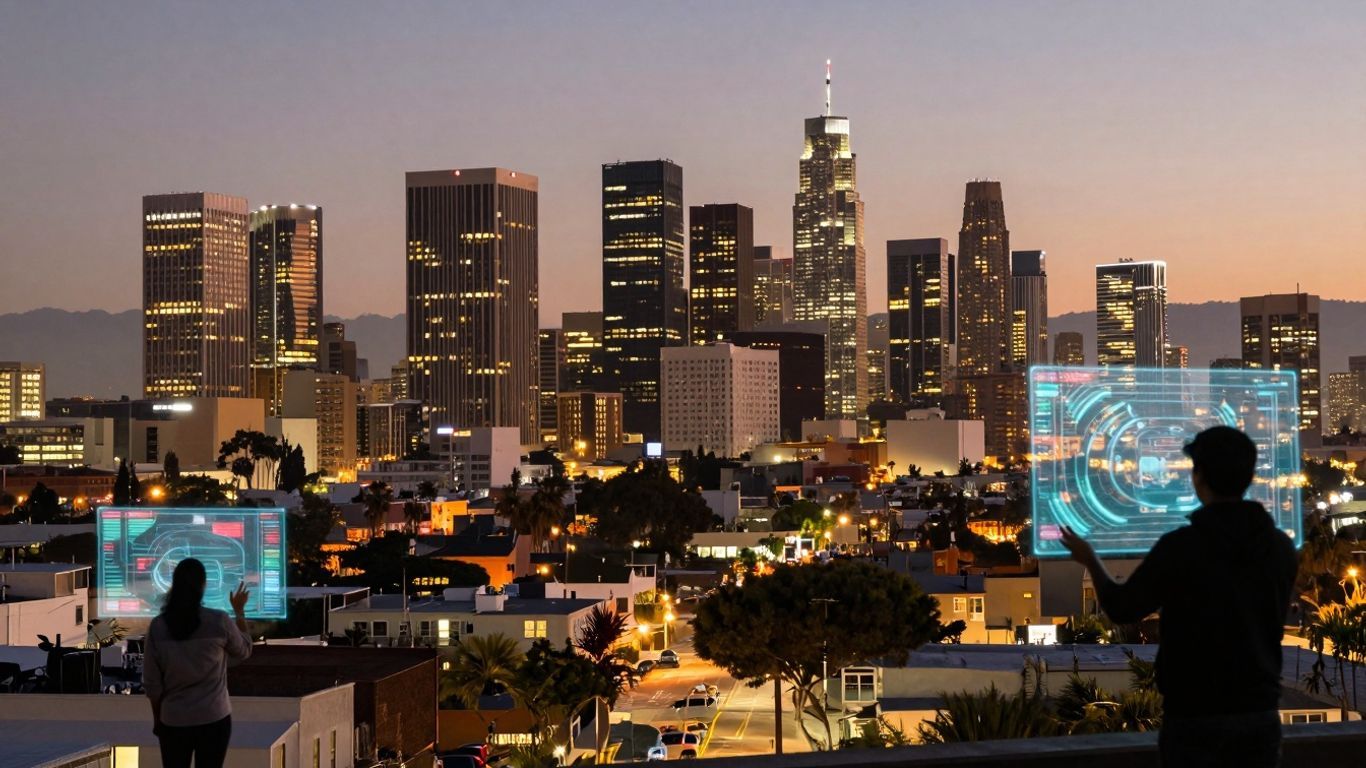
A truly smart city isn't merely defined by its sophisticated technology; it's fundamentally about guaranteeing that everyone can effectively utilize it. The SmartLA 2028 plan explicitly acknowledges that for Los Angeles to genuinely progress, no one can afford to be marginalized. This commitment necessitates actively working to close the persistent gap between those who enjoy convenient access to digital tools and those who do not. It's undoubtedly a substantial undertaking, but it’s an indispensable one for constructing a city that genuinely serves all its residents.
Bridging the Digital Divide for Inclusivity
Consider for a moment just how profoundly we depend on the internet in our daily lives—for work, for education, for maintaining social connections, and even for simply accessing essential information. When certain individuals lack the ability to get online or possess insufficient knowledge to navigate available digital tools, they inevitably miss out on a wealth of opportunities. The SmartLA initiative is firmly committed to rectifying this imbalance. It’s about meticulously ensuring that the transformative benefits of a connected city are equitably dispersed, rather than concentrated solely in affluent neighborhoods or among those already able to acquire the latest gadgets. How else can we truly ensure a level playing field?
Expanding Access to Affordable Internet
Providing reliable internet connectivity to every household and community stands as a paramount priority. This crucial endeavor involves a series of carefully considered strategies:
- More Public Wi-Fi: Establishing an increased number of free Wi-Fi hotspots in public parks, libraries, and community centers, empowering residents to get online while out and about.
- Low-Cost Plans: Collaborating with internet service providers to develop more affordable subscription plans specifically tailored for families and individuals facing financial constraints.
- Exploring New Options: Actively investigating innovative approaches to extend broadband access to underserved areas, potentially through city-supported infrastructure or strategic partnerships.
Providing Comprehensive Digital Literacy Training
Possessing internet access, however, represents only half the battle. Individuals must also be equipped with the knowledge to utilize it both safely and effectively. The plan thoughtfully incorporates:
- Community Workshops: Offering complimentary classes at local libraries and community centers that cover fundamental computer skills, smartphone usage, internet navigation, and—crucially—how to identify and avoid online scams.
- One-on-One Support: Connecting residents with knowledgeable mentors or dedicated tech helpers who can provide personalized assistance, ensuring no one is left struggling in isolation.
- Resources for All Ages: Developing tailored training materials that cater to diverse age groups and skill levels, from seniors learning to video call family to young people keen on developing coding competencies.
The fundamental goal is to construct a city where technology functions as a conduit for opportunity, not as an impediment. This implies a commitment to investing in people just as robustly as we invest in infrastructure, thereby cultivating a Los Angeles where everyone is afforded the genuine chance to participate fully in the unfolding digital age.
Indeed, this focused emphasis on making digital resources universally accessible is precisely what will ultimately determine the success of the SmartLA 2028 vision. It’s truly about forging a connected future that unequivocally embraces every single person within the city.
Looking Ahead: LA's Digital Horizon
As we conclude our exploration of Los Angeles's 2028 smart city initiatives, it's abundantly clear that the city is resolutely charting a course toward a more connected and efficient future. This ambitious endeavor transcends mere technological upgrades; it's fundamentally about harnessing innovation to elevate daily life for all residents—from refining urban mobility to optimizing energy consumption. The recent global pandemic underscored the indispensable role of digital tools, and LA is judiciously building upon those insights. A central pillar of this vision is ensuring that the benefits are universally accessible, enriching everyone irrespective of their background. Ultimately, it’s about prudently deploying technology to cultivate a city that genuinely works for all its people. The journey has only just begun, and it will undoubtedly be fascinating to observe how these groundbreaking ideas sculpt Los Angeles into a veritable leader in smart urban living.
Frequently Asked Questions
What is the main idea behind making Los Angeles a 'smart city' by 2028?
At its core, the initiative seeks to leverage new technology to significantly enhance Los Angeles by 2028. This includes streamlining transportation, bolstering public safety, and improving environmental sustainability. Essentially, it's about making the city function more intelligently for all who reside here.
How will technology help with traffic problems in LA?
Smart technology is poised to revolutionize traffic management. Imagine traffic lights that dynamically adjust based on real-time vehicle presence, or applications that intuitively guide you to the quickest routes. The comprehensive plan also aims to optimize public transportation efficiency and actively encourage walking or cycling.
What does it mean to 'bridge the digital divide'?
Bridging the digital divide refers to ensuring that every individual in Los Angeles can access and benefit from technology, irrespective of their income level or geographic location. The city is committed to providing affordable internet, offering digital literacy training, and ensuring technology serves all neighborhoods equitably.
How will this plan make Los Angeles more eco-friendly?
The plan encompasses planting additional trees and establishing more green spaces, implementing energy-efficient designs for buildings, and managing water resources more judiciously. Furthermore, it involves real-time air quality monitoring to foster a healthier environment for both residents and the planet.
Will technology be used to improve safety for residents?
Absolutely, technology will play a pivotal role in enhancing safety. It's designed to facilitate quicker response times for emergency services, improve communication protocols among police and firefighters, and assist in monitoring environmental factors like air quality to safeguard public health.
How will this 'smart city' plan help businesses and jobs?
The city aims to stimulate business growth by providing resources and simplifying the process for new enterprises to establish themselves. Crucially, it also intends to invest in emerging clean technologies, which are expected to generate novel and diverse employment opportunities for Angelenos.


