
resources
The Definitive 2028 Smart City List: Innovations and Predictions
03 Dec 2025

As we cast our gaze forward to 2028, the evolution of urban landscapes promises to be nothing short of remarkable. What exactly does the smart city of the near future entail? We're talking about urban environments that are increasingly self-regulating, leveraging a diverse array of technologies to significantly enhance the quality of life for residents. From optimizing our daily commutes and finding parking to managing essential services, cities are poised for a comprehensive upgrade. This discussion delves into some of the most compelling innovations on the horizon, offering a glimpse into what we can anticipate. It’s all aimed at cultivating smarter, cleaner, and ultimately, more desirable places to live. So, let's explore this definitive 2028 smart city roadmap and discover what awaits us.
Key Takeaways
- Cities are rapidly advancing their intelligence, deploying technology to manage aspects like parking and waste collection with unprecedented efficiency.
- Expect an increased prevalence of interconnected systems, with ubiquitous sensors and sophisticated data platforms forming the operational backbone of urban centers.
- Artificial intelligence and advanced data analysis are set to play a pivotal role in areas such as traffic flow optimization and the predictive assessment of urban needs.
- There's a significant impetus towards sustainability, as smart cities prioritize clean energy initiatives and strategies to substantially reduce their carbon footprint.
- Collaborative public-private partnerships will prove instrumental in the successful development and implementation of these advanced urban environments.
1. Intelligent Parking Solutions
Finding a parking spot in a bustling city can often feel like an exasperating treasure hunt, can’t it? Fortunately, smart cities are revolutionizing this experience with intelligent parking solutions. These sophisticated systems harness technology to vastly simplify the process of locating and paying for parking.
Imagine this: sensors embedded in parking spots, providing real-time information on availability. This crucial data can be instantly relayed to your smartphone via a dedicated app, or prominently displayed on digital signs strategically placed throughout the city. The days of endlessly circling the block in frustration could soon be behind us!
Here’s a general overview of their operation:
- Sensor Deployment: Compact sensors are meticulously installed in individual parking spaces, frequently embedded within the pavement or mounted on overhead poles.
- Data Transmission: These sensors adeptly detect the presence or absence of a vehicle, transmitting this data wirelessly to a centralized system.
- Information Dissemination: The central system processes this incoming data, subsequently making it accessible through various channels, including mobile applications or public display boards.
- User Interaction: Drivers then utilize these applications or displays to pinpoint available spots, and in many instances, can even reserve or complete payment for them directly.
The overarching goal is to significantly curtail the time drivers spend searching for parking, which, in turn, directly alleviates traffic congestion and reduces vehicle emissions. This represents a genuine win-win scenario for both motorists and the environment.
Beyond simply locating a spot, these systems also streamline the payment process. Instead of fumbling for loose change or navigating multiple pay stations, you might find yourself paying effortlessly through an app, with charges automatically applied to your account based on duration. Some advanced systems even integrate with vehicle identification, rendering the entire process completely hands-free.
Smart parking transcends mere convenience; it stands as a crucial component in the broader endeavor to create more livable and efficient urban areas. By meticulously optimizing the utilization of existing parking infrastructure, cities can reclaim valuable public space and substantially diminish the environmental impact associated with daily commutes.
2. Smart Trash Collection
Do you recall the days of perpetually overflowing bins and frustratingly missed collection schedules? Smart trash collection is poised to consign those headaches to the past. This innovative approach centers on leveraging technology to render waste management more efficient and less burdensome for everyone involved.
Fundamentally, this system operates by deploying sensors within trash bins. These sensors perform a straightforward yet critically important function: they precisely measure the bin's fill level. Once a bin reaches a predetermined capacity, it promptly transmits a signal. This signal is sent to a central system, which then acquires precise knowledge of exactly which bins require emptying.
What this means in practice is that garbage trucks are no longer constrained to following a fixed route every single day, thereby avoiding the wasteful expenditure of fuel and time checking bins that are still largely empty. Instead, they are intelligently directed only to those bins that genuinely require attention. This yields several significant benefits:
- Optimized Routes: Collection trucks traverse only necessary routes, leading to substantial fuel savings and a reduction in emissions.
- Reduced Costs: Lower fuel consumption and fewer truck operational hours translate directly into diminished operational expenses for municipalities.
- Cleaner Streets: Bins are consistently emptied before reaching an overflowing state, effectively preventing litter and notably enhancing public spaces.
- Data Insights: Over time, the data gathered from these sensors provides cities with invaluable insights into waste generation patterns, thereby assisting in superior planning and more effective resource allocation.
Consider it akin to this: rather than a daily newspaper delivery to every household, you receive a delivery only when you actually wish to read the news. It's simply a more intelligent approach to resource utilization.
The transition from a rigidly scheduled approach to a demand-driven system for trash collection exemplifies how data can directly elevate the quality of city services. It decisively moves away from mere guesswork, instead embracing precise, highly responsive operations that unequivocally benefit both the municipality and its residents.
This technology offers more than just convenience; it marks a significant stride toward more sustainable urban living. By diminishing unnecessary truck journeys and preventing unsightly waste accumulation, smart trash collection makes a tangible contribution to a cleaner, more efficient city environment.
3. Intelligent Lighting
Streetlights are currently undergoing a profound transformation. We are witnessing the advent of lighting systems that do far more than simply illuminate at dusk and extinguish at dawn. These innovative smart lights boast a remarkable array of capabilities. They can, for instance, intelligently dim themselves when pedestrian or vehicular traffic is absent, leading to substantial energy savings. Picture this: a street devoid of cars or pedestrians no longer needs to be ablaze with light as if it were midday.
Beyond merely conserving power, these advanced lights are evolving into vital hubs for other smart city technologies. Many come equipped with integrated sensors capable of monitoring diverse metrics such as air quality, ambient noise levels, or even real-time traffic flow. Some can even detect instances of illegally parked vehicles or serious accidents. This crucial information is then promptly relayed back to city managers, empowering them to make swifter decisions and maintain smooth urban operations.
Here’s a concise overview of what makes smart lighting so impactful:
- Energy Savings: Brightness levels are automatically adjusted based on real-time requirements, leading to significant power conservation.
- Enhanced Safety: Brighter illumination can be dynamically activated in areas where activity or emergencies are detected, boosting security.
- Data Collection: Integrated sensors diligently gather valuable environmental and traffic data, enriching urban intelligence.
- Reduced Maintenance: Self-diagnostic capabilities can proactively alert maintenance crews to potential issues well before they escalate into major problems, ensuring greater reliability.
The true paradigm shift lies in the ability of these lights to dynamically adapt to the very rhythm of our city. They learn precisely when and where activity occurs, adjusting their output accordingly. This isn't just about shaving a few dollars off electricity bills; it's about fostering a more responsive and efficient urban environment for everyone.
Smart lighting systems are unequivocally transcending their traditional role of simple illumination. They are emerging as integrated nodes within the expansive smart city network, actively contributing data and functionality that underpins a vast array of urban services. This profound evolution signifies that our streetlights are now active participants in the intelligent management of city resources and the continuous enhancement of daily life.
4. Sensor Technology Networks
Envision sensor networks as the intricate nervous system of a smart city. These consist of innumerable devices, ranging from minuscule environmental monitors to more complex traffic cameras, all diligently gathering information about their surroundings. This wealth of data is then dispatched for processing, empowering city managers to gain real-time insights into everything from local air quality to dynamic traffic flow.
These networks are attaining extraordinary levels of sophistication. We are now seeing sensors capable of detecting not just fundamental parameters like temperature, but also more nuanced data such as pedestrian movement patterns, the structural integrity of vital bridges, or even the precise fill level of public trash bins. The sheer volume and unparalleled diversity of data amassed by these networks are precisely what render smart city initiatives genuinely feasible.
Below is an overview of some prevalent sensor types you'll encounter:
- Environmental Sensors: These meticulously monitor air quality (e.g., CO2, particulate matter), ambient noise levels, and prevailing weather conditions.
- Traffic Sensors: Designed to detect vehicle presence, speed, and count, enabling effective traffic light management and the identification of congestion hotspots.
- Smart Meter Sensors: Track energy and water consumption with precision across residential and commercial properties.
- Occupancy Sensors: Widely employed in parking lots, public spaces, and buildings to accurately gauge usage and density.
The continuous stream of data emanating from these sensors empowers cities to react with agility to fluctuating conditions, optimize the allocation of vital resources, and meticulously plan for future needs based on actual usage patterns rather than mere conjecture.
As these networks expand, they are also becoming increasingly interconnected. This means, for instance, that a sensor detecting a severe traffic jam might simultaneously trigger adjustments in public transport schedules or dispatch immediate alerts to emergency services. It's all about cultivating a profoundly responsive and efficient urban environment.
5. Data Platforms
Consider data platforms as the central nervous system for any thriving smart city. These are the highly sophisticated systems meticulously designed to collect, securely store, process, and proficiently manage the colossal amounts of information that continuously stream in from countless sensors, diverse devices, and myriad applications spread across the urban landscape. Without a robust and well-structured data platform, all that diligently collected information would simply remain a chaotic jumble, utterly impossible to utilize effectively.
These platforms are engineered to adeptly handle massive volumes of diverse data—encompassing everything from intricate traffic flow patterns and energy consumption metrics to precise air quality readings and urgent public safety alerts. They must exhibit unparalleled robustness, scalability, and security, possessing the capability to seamlessly integrate data from disparate sources, which frequently "speak" different digital languages. This integration is absolutely paramount; it enables various city services to share critical information and collaborate with enhanced efficiency.
Here’s an exploration of the fundamental components that power a data platform:
- Data Ingestion: This is the initial gateway where data from all the city's myriad sensors and systems enters the platform. It must capably manage both real-time streams and scheduled batch uploads.
- Data Storage: Secure and systematically organized storage is an absolute imperative. This can involve a variety of database types, ranging from conventional relational databases to innovative NoSQL solutions specifically engineered for big data.
- Data Processing: Raw data often necessitates rigorous cleaning, transformative actions, and enrichment before it can undergo meaningful analysis. This stage renders the data genuinely usable.
- Data Governance: Establishing clear rules and comprehensive policies for data access, stringent privacy protocols, and robust security measures constitutes a substantial aspect of any effective platform. This ensures that data is utilized both responsibly and ethically.
The ultimate objective of a smart city data platform is to transmute raw information into actionable insights that demonstrably improve city operations and elevate the lives of its residents.
Constructing and diligently maintaining these platforms is by no means a trivial undertaking. It demands substantial investment in cutting-edge technology and a cadre of highly skilled personnel. Cities frequently forge partnerships with specialized technology companies to develop and manage these inherently complex systems, which, on occasion, can elicit pertinent questions regarding data ownership and overarching control. It is, undeniably, a delicate balancing act between harnessing cutting-edge technology and rigorously safeguarding the public interest.
6. Data Analytics
Data analytics serves as the powerful engine that transmutes raw information into actionable insights for smart cities. Consider it the meticulous process of sifting through vast mountains of data—originating from traffic sensors, utility meters, public transit logs, and even social media—to unearth patterns and trends that would otherwise remain completely concealed. This empowers city planners and managers to make profoundly informed decisions, transitioning beyond mere guesswork to embrace evidence-based strategies.
For instance, incisive analysis of traffic flow data can precisely pinpoint bottlenecks at specific times and locations. This intelligence can then be leveraged to dynamically adjust traffic light timings, reroute public transport, or even strategically plan new road infrastructure. Similarly, energy consumption data harvested from smart grids can reveal areas of heightened demand or inefficiency, thereby prompting targeted upgrades or impactful public awareness campaigns.
Here's a glimpse into the diverse achievements of data analytics:
- Optimizing Public Services: Accurately identifying peak usage times for critical services such as waste collection or public transport to allocate resources with greater effectiveness.
- Improving Safety and Security: Detecting unusual patterns within crime data or emergency service calls to proactively predict and prevent incidents.
- Enhancing Urban Planning: Gaining a deep understanding of citizen movement patterns to design superior public spaces, parks, and pedestrian zones.
- Boosting Efficiency: Pinpointing precisely where energy or water is being needlessly wasted, leading to substantial cost savings and tangible environmental benefits.
The sheer volume of data generated by a modern metropolis is, frankly, staggering. Without sophisticated analytical tools, much of this invaluable information would regrettably remain inert. Data analytics furnishes the essential methods and technologies to process this data, rendering it comprehensible and eminently useful for refining city operations and enriching the lives of its inhabitants. It's fundamentally about discerning the signal amidst the noise, transforming intricate datasets into clear, actionable directions for progress.
As cities become increasingly interconnected, the importance of robust data analytics will only escalate. It is the undeniable key to comprehending how a city truly functions and how its performance can be continuously elevated. The U.S. digital twin market, for example, is experiencing rapid expansion, signaling a future where virtual models of cities are meticulously analyzed to predict outcomes *before* real-world changes are even contemplated—a powerful testament to the efficacy of advanced data analysis.
Key stages in the data analytics process frequently encompass:
- Data Collection: Systematically gathering information from diverse sensors and operational systems.
- Data Cleaning: Meticulously removing errors, inconsistencies, and addressing missing values.
- Data Processing: Transforming raw data into a readily usable and actionable format.
- Data Analysis: Applying sophisticated statistical techniques and algorithms to uncover meaningful patterns.
- Data Visualization: Presenting findings in an easily digestible format, such as informative charts and compelling graphs.
7. Predictive Modelling

Predictive modeling essentially serves as a crystal ball for urban planning, though its power stems not from magic, but from data and advanced mathematics. It's a methodical approach to analyzing historical patterns to generate well-informed forecasts about future events. Consider traffic management: by meticulously analyzing past flow, real-time sensor data, and even prevailing weather patterns, cities can anticipate where congestion is likely to escalate. This foresight enables them to proactively adjust traffic signals or reroute vehicles before problems intensify. This isn't merely about convenience; it stands to save considerable time and significantly reduce environmental pollution.
Here’s an outline of its typical operation:
- Data Collection: Amassing a comprehensive array of information—including traffic counts, energy usage statistics, public transport ridership figures, and even social media sentiment.
- Model Building: Employing sophisticated statistical techniques and algorithms to discern underlying relationships and trends within the collected data.
- Testing and Refinement: Rigorously evaluating how accurately the model predicts past occurrences and meticulously fine-tuning it to enhance its precision.
- Deployment: Activating the refined model to forecast future scenarios and inform critical decision-making processes.
The profound strength of predictive modeling resides in its capacity to shift cities from a reactive problem-solving paradigm to one of proactive, foresightful management. For example, energy grids can leverage predictive models to anticipate surges in demand, allowing them to optimize power generation and avert potential blackouts. Similarly, public health officials might employ these models to forecast the spread of diseases, based on population movement and environmental factors, thereby facilitating swifter, more effective responses. This technology represents a crucial element in constructing more resilient and efficient smart city infrastructure.
While the notion of forecasting the future with data sounds straightforward, it's vital to remember that models are inherently only as reliable as the data they are fed. Biased or incomplete data can regrettably lead to skewed predictions, which, in turn, could have unintended and potentially detrimental consequences for urban planning and resource allocation. Consequently, scrupulous consideration of data sources and meticulous attention to model limitations are absolutely paramount.
Predictive modeling also plays an indispensable role in resource management. Water utilities, for example, can meticulously analyze consumption patterns and weather forecasts to predict demand, thereby aiding in more effective supply management and the early identification of potential leaks or inefficiencies before they escalate into major issues. This proactive methodology is becoming increasingly indispensable as urban centers expand and precious resources become more constrained.
8. Internet Of Things
The Internet of Things, or IoT as it's commonly known, fundamentally revolves around connecting everyday physical objects to the internet. Consider it akin to granting a digital voice to items that traditionally lack one. These objects—ranging from streetlights and waste bins to automobiles and even articles of clothing—are outfitted with sensors and specialized software that empower them to gather data about their surroundings, communicate that data, and in some instances, even react autonomously to it. This isn't merely about having a greater number of gadgets online; it's about forging a vast, interconnected network of devices capable of sharing information and collaborating seamlessly.
This inherent interconnectedness is precisely what renders the concept of smart cities attainable. Imagine a scenario where sensors embedded in roadways detect traffic congestion and automatically reroute vehicles, or where smart meters within homes adjust energy usage based on real-time demand. The sheer proliferation of these connected devices is escalating at an astonishing pace. Estimates suggest we have already surpassed 10 billion connected devices globally, and that figure is projected to climb substantially higher in the coming years.
Here’s a look at how IoT contributes:
- Environmental Monitoring: Sensors can meticulously track air quality, noise pollution levels, and water contamination, providing invaluable real-time data for city managers.
- Resource Management: Smart grids leverage IoT to optimize energy distribution, while intelligent water systems can detect leaks and manage consumption with enhanced efficiency.
- Infrastructure Maintenance: Connected sensors strategically placed on bridges or buildings can proactively alert authorities to potential structural vulnerabilities before they become critical.
- Public Safety: IoT devices, encompassing networked cameras and various sensors, can significantly aid in monitoring public spaces and facilitating faster responses to emergencies.
The core philosophy is to imbue our physical world with greater intelligence by seamlessly integrating digital capabilities. This enables a level of data collection and automated response that was previously inconceivable, culminating in urban environments that are more efficient, highly responsive, and fundamentally sustainable.
The true potency of IoT lies in its unparalleled ability to gather and disseminate data, which subsequently fuels other cutting-edge smart city technologies such as data analytics and AI. Without this continuous, rich stream of information from connected devices, many of the advanced functionalities we anticipate from a truly smart city would simply not be possible.
9. Cloud Computing
Cloud computing serves as the indispensable backbone supporting a myriad of smart city initiatives. Envision it as a colossal, shared digital infrastructure that empowers cities to securely store, proficiently process, and readily access vast quantities of data without the burden of owning and meticulously maintaining all the physical hardware themselves. This pivotal capability means that city services, spanning from intricate traffic management to robust energy grids, can operate with superior efficiency and unparalleled flexibility.
The cloud furnishes the scalable computing power and extensive storage capacity requisite to adeptly handle the constant influx of information generated by sensors and devices dispersed throughout a smart city. It transcends mere data storage; it’s fundamentally about rendering that data actionable. Cloud platforms generously offer an array of tools for sophisticated analysis, agile application development, and secure data sharing—all of which are absolutely vital for seamless city operations.
Here’s a breakdown of cloud computing’s significant role:
- Scalability: Cities can effortlessly adjust their computing resources, scaling up or down precisely based on demand. Requiring enhanced processing power for a major event? The cloud can readily accommodate it. Experiencing reduced demand? Scale back resources and realize cost savings.
- Accessibility: Authorized personnel can access crucial city data and applications from virtually any location, thereby facilitating remote work capabilities and enabling swifter responses to emerging issues.
- Cost-Effectiveness: By judiciously utilizing shared resources, cities can significantly diminish the initial capital investment in hardware and substantially reduce ongoing maintenance expenditures.
- Innovation Hub: Cloud platforms frequently provide access to advanced tools and cutting-edge services, such as AI and machine learning, which can be harnessed to develop novel smart city solutions.
The profound shift to cloud computing has fundamentally reshaped how cities can meticulously manage their resources and deliver essential services. It marks a decisive move away from siloed, on-premise systems towards a more interconnected and inherently agile approach, thereby enabling quicker adaptation to novel challenges and emerging opportunities. This robust digital foundation is precisely what underpins many of the groundbreaking smart city innovations we witness today.
Leading cloud providers, such as Amazon Web Services (AWS), Microsoft Azure, and Google Cloud, are pivotal players in this domain, furnishing the infrastructure that powers countless smart city projects across the globe. They deliver a comprehensive spectrum of services, ranging from fundamental storage and computing to highly specialized tools for advanced data analytics and the Internet of Things (IoT).
10. Smart Energy
Smart energy in 2028 will represent far more than simply controlling lights; it will embody a sophisticated system meticulously engineered to elevate the efficiency and sustainability of our urban environments. Consider it the intricate nervous system governing power distribution and consumption. This entails the seamless integration of renewable sources—like solar and wind—directly into the urban grid, often facilitated by localized energy networks.
We are observing a significant migration towards distributed generation, meaning power is produced in closer proximity to its point of use. This approach not only diminishes transmission losses but also enhances the overall resilience of the grid. Smart meters are an integral component of this transformation, furnishing both consumers and utility providers with real-time data on energy usage. Such data enables superior demand management, particularly during peak consumption periods.
Here’s how smart energy is taking shape:
- Grid Modernization: The critical upgrade of existing electrical infrastructure to adeptly handle two-way power flow and seamlessly integrate diverse energy sources.
- Demand Response Programs: Initiatives designed to incentivize consumers to strategically shift energy usage away from peak hours, thereby balancing the grid.
- Energy Storage Solutions: The implementation of battery systems and other innovative storage technologies to effectively balance supply and demand, a crucial aspect particularly with intermittent renewables.
- Smart Appliances: Devices engineered to communicate with the grid and autonomously adjust their energy consumption, optimizing efficiency.
The seamless integration of digital technologies with energy systems is rendering our cities profoundly more responsive. This agility means we can react with greater speed to fluctuations in supply and demand, leading to reduced energy waste and a more stable, reliable power supply for every resident.
Utilities are increasingly prioritizing customer relationships to adeptly manage the escalating demand on the electric grid, notably from intensive consumers such as data centers. This focused approach is critical for ensuring that services remain both affordable and reliable in the foreseeable future. The ultimate objective is to cultivate a more flexible, efficient, and environmentally cleaner energy landscape for modern urban living.
11. Smart Water
When we discuss smart cities, water management, despite its paramount importance, often doesn't receive the attention it truly merits. Yet, it constitutes a substantial and foundational piece of the urban puzzle. Consider this: readily available, clean water is absolutely fundamental to every facet of life, from daily routines to industrial operations. Smart water systems are entirely dedicated to leveraging technology to ensure we utilize this invaluable resource judiciously and with maximum efficiency.
At its core, smart water involves an intricate network of sensors and advanced smart meters meticulously deployed throughout the entire water infrastructure. These devices continuously monitor critical parameters such as water pressure, precise flow rates, and overall quality. Crucially, they possess the capability to detect leaks almost instantaneously—a truly significant advancement. The loss of water due to leaks represents colossal waste, and these systems empower cities to pinpoint the exact location of a problem, often long before it escalates into a major crisis.
Here’s a concise overview of what defines smart water management:
- Leak Detection: Sensors are expertly designed to identify unusual flow patterns or pressure drops that unequivocally signal the presence of a leak.
- Quality Monitoring: Real-time data on chemical levels, turbidity, and other vital indicators consistently ensures the safety and purity of the water supply.
- Demand Management: Smart meters provide highly detailed usage data to both utility providers and consumers, thereby fostering conservation and enabling more precise billing.
- Infrastructure Health: Continuous monitoring of pipe integrity and pressure actively helps prevent bursts and significantly extends the operational lifespan of the system.
The primary objective is to transition from a reactive approach—where problems are addressed only after they manifest—to a profoundly proactive one, where potential issues are identified and effectively mitigated before they negatively impact the public. This paradigm shift translates directly into less waste, superior service, and a more dependable supply for everyone.
Beyond simply addressing leaks, smart water technology also plays a crucial role in strategic planning. By meticulously analyzing usage data over extended periods, cities can more accurately predict future demand, particularly during peak seasons or periods of population expansion. This intelligence is indispensable for making informed decisions regarding infrastructure upgrades and optimal resource allocation. It's not just about pipes and pumps; it's about harnessing data to secure a sustainable water future for urban populations.
12. Smart Transportation
Smart transportation is fundamentally about making how we navigate our cities more efficient, significantly safer, and considerably cleaner. Envision fewer traffic jams, notably quicker commutes, and a tangible reduction in environmental impact. This concept extends beyond just self-driving cars, though they certainly constitute a major component of the vision. It also encompasses real-time traffic flow management, the seamless integration of diverse modes of transport, and the strategic use of technology to furnish citizens with superior travel options.
We are witnessing a pronounced shift towards interconnected systems. Traffic lights, for instance, are learning to adjust their timings based on actual traffic volume, rather than rigid timers. Public transport schedules are becoming remarkably more accurate, and intuitive apps can now expertly guide you to the most effective way to travel from point A to point B—whether that involves a bus, train, bike-share, or even a shared electric scooter. The core objective is to forge a cohesive network where information flows unrestrictedly, thereby enabling everyone to move with greater fluidity and ease.
Here’s a closer look at some pivotal areas:
- Intelligent Traffic Management: Leveraging sensors and comprehensive data analysis to diligently monitor traffic conditions and dynamically adjust signals, reroute vehicles, and manage parking availability. This effectively mitigates congestion and reduces travel times.
- Integrated Public Transit: Seamlessly connecting various public transport options (e.g., buses, trains, trams) to render journeys simpler to plan and execute. Real-time updates and unified payment systems are rapidly becoming standard.
- Autonomous and Connected Vehicles: The ongoing development and integration of self-driving cars and vehicles capable of communicating with each other and with infrastructure, promising heightened safety and efficiency.
- Mobility as a Service (MaaS): Innovative platforms that consolidate diverse transport services into a single, on-demand mobility solution, frequently accessed through a convenient smartphone application.
The future of urban mobility is profoundly reliant on data. By diligently collecting and analyzing information from vehicles, infrastructure, and users, cities can make acutely informed decisions to optimize their transportation networks, substantially reduce pollution, and ultimately enhance the overall quality of life for their residents. This data-driven methodology is precisely what truly defines smart transportation.
Cities are also actively exploring avenues to foster more sustainable modes of travel. This includes bolstering infrastructure for walking and cycling, championing the adoption of electric vehicles, and investigating novel forms of shared mobility. It represents a complex puzzle, but the disparate pieces are progressively converging to forge a more interconnected and highly responsive urban travel experience.
13. Smart Buildings
Smart buildings are undeniably a cornerstone in the endeavor to enhance urban functionality. Consider them, in a sense, as structures endowed with a degree of autonomous intelligence. They harness technology to automatically manage critical functions such as lighting, heating, and cooling. This isn't solely about providing convenience; it represents a monumental stride towards substantial energy conservation and the significant reduction of waste.
These sophisticated buildings are outfitted with an array of sensors and interconnected systems that continuously monitor ambient conditions. This steady stream of data empowers them to dynamically adjust settings in real-time. For instance, lights might intelligently dim when a room is unoccupied, or heating systems could automatically lower temperatures in vacant areas. The overarching objective is to meticulously optimize resource utilization without compromising occupant comfort.
Here’s an overview of some pivotal features:
- Automated Climate Control: Systems intelligently adjust temperature and ventilation based on occupancy levels and prevailing external weather conditions. This can lead to substantial reductions in heating and cooling expenditures.
- Intelligent Lighting: Lights autonomously activate or deactivate, and precisely adjust their brightness, in response to natural light availability and the presence of individuals.
- Energy Monitoring: Detailed, continuous tracking of energy consumption facilitates the identification of areas ripe for improvement and potential cost savings.
- Security Integration: Smart systems can manage access control, surveillance operations, and emergency alerts with markedly greater efficiency.
The seamless integration of smart technology into buildings signifies that they can actively communicate with the broader city infrastructure. This interoperability enables superior management of essential resources like electricity and water, thereby making a tangible contribution to the overall efficiency of the urban environment. It's fundamentally about transforming static structures into dynamic environments that actively champion a city's sustainability objectives.
By judiciously employing advanced materials and sophisticated smart controls, buildings can significantly diminish their environmental footprint. This encompasses superior insulation to prevent energy loss and adaptive systems designed to respond to evolving needs. It represents a profound shift from static constructions to dynamic environments that actively contribute to a city's overarching sustainability goals.
14. Smart Government
Smart government in 2028 is fundamentally oriented towards rendering city services more accessible and remarkably responsive. Envision fewer protracted queues and a greater prevalence of seamless digital interactions. It's about leveraging technology to streamline municipal operations and profoundly enhance how citizens engage with their local authorities. The core tenet is to cultivate a public sector that is both more efficient and unequivocally citizen-centric.
This transformative evolution encompasses several pivotal shifts:
- Digital Service Delivery: The migration of essential services online—ranging from permit applications to bill payments—thereby significantly diminishing the necessity for physical visits.
- Data-Driven Decision Making: The strategic utilization of collected data to gain a deeper understanding of citizen needs and to allocate resources with enhanced effectiveness.
- Citizen Engagement Platforms: The creation of intuitive channels through which residents can readily provide feedback, report issues, and actively participate in local governance.
- Open Data Initiatives: The public dissemination of non-sensitive city data to foster transparency and stimulate innovation from third-party entities.
Cities are increasingly investigating how to integrate various digital tools to construct a more cohesive and user-friendly experience. This comprehensive approach spans everything from real-time updates on public transport to sophisticated digital platforms for soliciting community feedback. The objective is to render interactions with municipal government as straightforward and intuitive as possible. Such an approach actively cultivates trust and contributes to making the city a more agreeable place to reside and work. It represents a substantial departure from traditional administrative methodologies, and it's unfolding at an accelerated pace. The focus is squarely on forging a more connected and interactive urban environment, thereby improving the digital landscape.
The efficacy of smart government hinges critically on its capacity to adeptly adopt and seamlessly integrate emergent technologies while steadfastly prioritizing citizen needs. It's not merely about possessing the technology; it's about deploying it judiciously to truly serve the populace.
By 2028, we can reasonably anticipate a greater number of cities embracing integrated platforms that facilitate superior coordination among disparate government departments. This translates into a smoother experience for citizens, as information can be more readily shared between agencies, leading to swifter problem resolution and the formulation of more informed policy. The ultimate aim is to cultivate a government that is not only efficient but also proactively responsive to the evolving needs of its residents.
15. Video Surveillance
Video surveillance is rapidly becoming a cornerstone of smart city infrastructure, having evolved significantly beyond mere conventional CCTV.
Today's intelligent city video surveillance systems are seamlessly integrated with advanced analytics, empowering them to perform tasks far more sophisticated than simply recording footage. Envision real-time monitoring capabilities, automated incident detection, and even nuanced crowd analysis. These cutting-edge systems are meticulously engineered to enhance public safety, manage traffic flow with heightened effectiveness, and furnish invaluable data for urban planning endeavors. The profound integration of AI with video feeds is fundamentally transforming passive observation into active, actionable intelligence.
Key capabilities frequently encompass:
- Facial Recognition: Identifying individuals for purposes of security or access control, where applicable and legally permissible.
- Object Detection: Pinpointing specific items such as unattended bags or particular types of vehicles.
- Behavioral Analysis: Recognizing unusual patterns of movement or activity that might warrant further attention.
- License Plate Recognition: Automating the identification and tracking of vehicles for various management purposes.
These advanced technologies are deployed across a diverse range of applications within a smart city context:
- Public Safety: Providing crucial assistance to law enforcement in the prevention and investigation of criminal activities.
- Traffic Management: Diligently monitoring traffic density, promptly detecting accidents, and optimizing signal timings for smoother flow.
- Infrastructure Monitoring: Regularly assessing the condition of public assets and detecting unauthorized access to critical areas.
- Emergency Response: Furnishing real-time situational awareness to facilitate more effective responses during critical events.
While the benefits are undeniably clear, the widespread deployment of video surveillance also invariably sparks important discussions concerning privacy and data security. Cities are increasingly seeking solutions that judiciously balance pressing public safety imperatives with the fundamental protection of individual liberties. Companies like Iveda are actively developing advanced AI video analytics platforms designed to manage these large-scale deployments with enhanced efficiency, aiming for automated camera discovery and simplified configuration. This concerted push towards smarter, more integrated surveillance represents a significant facet of the evolving smart city landscape.
The expanding role of video surveillance in urban environments constitutes a complex development, offering tangible benefits in enhanced security and operational efficiency while concurrently raising profound questions regarding personal privacy and the ethical stewardship of collected data. Striking the appropriate balance is a significant challenge that municipalities worldwide are actively addressing.
16. Public-Private Partnerships
Building a truly smart city is undeniably a collaborative undertaking, not something any single municipality can accomplish in isolation. It necessitates the coordinated efforts of numerous stakeholders, and it is precisely here that public-private partnerships (PPPs) assume their crucial role. Consider it this way: the city government articulates the vision and identifies the public need, yet often lacks the substantial financial resources or the highly specialized technological expertise to bring that vision to fruition. This is where private companies step in, contributing capital, innovative solutions, and essential operational skills to the equation.
These partnerships are absolutely instrumental for both funding and executing a wide array of smart city projects. We're discussing everything from sophisticated smart grids and advanced traffic management systems to widespread public Wi-Fi networks and intricate data analytics platforms. The fundamental objective is to synergize the inherent strengths of both sectors to cultivate urban environments that are more efficient, sustainable, and ultimately, more livable. It represents an effective mechanism for launching large-scale projects that might otherwise languish due to bureaucratic impediments or insufficient funding.
Here’s a look at how these collaborations frequently operate:
- Defining Roles: Clearly delineating the responsibilities of each partner is the initial, critical step. The public sector typically oversees policy formulation, regulatory frameworks, and safeguarding public interest, while the private sector focuses on technology deployment, service delivery, and ongoing maintenance.
- Risk Sharing: PPPs inherently involve the sharing of both financial and operational risks. This characteristic can render large-scale projects more viable and consequently more attractive to private investors.
- Innovation and Efficiency: Private companies are frequently driven by strong incentives to innovate and operate with maximal efficiency to achieve profitability, which often translates into superior services for citizens.
- Long-Term Vision: Many smart city initiatives demand a sustained, long-term commitment, and PPPs can furnish the stable framework necessary for continuous development and upgrades.
The enduring success of these collaborations is deeply contingent upon clear communication and a shared set of objectives. For example, initiatives such as SmartLA 2028 have demonstrably illustrated how cities can effectively engage with private entities to fund and manage innovative projects that directly benefit their residents.
It's not merely about allocating financial resources to problems. Rather, it's about meticulously constructing a framework where public imperatives and private enterprise can converge, innovate, and deliver tangible enhancements to urban life. This often necessitates a re-evaluation of traditional procurement and service delivery models, fostering greater flexibility and a stronger orientation towards measurable outcomes.
These partnerships are becoming increasingly commonplace as cities actively seek methods to finance ambitious projects and adeptly adopt cutting-edge technologies. They serve as a vital driving force for smart city development, effectively bridging the gap between aspirational plans and practical, on-the-ground implementation.
17. Renewable Energy Plans
Cities in 2028 are unequivocally demonstrating a serious commitment to their power sources. The conversation has evolved beyond simply having electricity; it's now critically focused on its origin and its ecological footprint. We are witnessing a significant and deliberate shift towards energy plans that are heavily reliant on renewable sources such as solar and wind. This isn't just a fleeting trend; it's progressively becoming an intrinsic component of contemporary urban planning.
These comprehensive plans frequently involve a synergistic blend of strategies. Consider large-scale solar farms strategically situated on the urban periphery, or robust offshore wind turbines generating power for coastal cities. However, the focus also extends to localized efforts. Many cities are actively pursuing the integration of solar panels onto the rooftops of public buildings, while simultaneously encouraging businesses and residents to adopt similar initiatives. Some are even exploring the potential of geothermal energy or advanced waste-to-energy systems.
Here’s an overview of common elements found within these renewable energy plans:
- Diversification of Sources: Relying solely on a singular renewable source can introduce vulnerabilities. Smart cities therefore aim for a judicious mix—solar, wind, hydro, geothermal—to ensure a resilient and stable supply.
- Grid Modernization: Legacy power grids were not engineered to accommodate the inherently intermittent nature of renewables. Essential upgrades to smart grids are paramount, facilitating superior management of energy flow and storage capabilities.
- Energy Storage Solutions: Battery systems, whether large-scale grid storage or smaller residential units, are becoming indispensable for storing surplus energy generated during peak production times, to be utilized when demand is high or production is low.
- Incentives and Policies: Cities are actively implementing policies designed to stimulate renewable adoption, such as tax abatements for solar installations or mandates for new construction to incorporate renewable energy components.
The ultimate objective is to forge energy systems that are not only impeccably clean but also inherently resilient and economically viable. This transition is bolstered by significant development efforts, with developers planning to complete a substantial volume of wind and solar projects before 2028, many of which will benefit from financial incentives, signaling a significant push towards renewable energy development.
It is becoming patently clear that a city's energy blueprint is inextricably linked to its overarching sustainability and economic vitality. Cities that proactively embrace renewable energy are strategically positioning themselves for a more secure and environmentally responsible future.
Beyond merely generating power, these comprehensive plans also place a strong emphasis on reducing overall energy consumption. This includes advocating for energy-efficient building designs, encouraging the widespread adoption of public transport, and implementing smart technologies that optimize energy utilization across the entire urban fabric. It represents a holistic and integrated approach to energy management.
18. Clean Tech
Clean tech, an abbreviation for clean technology, is fundamentally dedicated to the development and deployment of products and services that demonstrably mitigate negative environmental impacts. Consider it innovation imbued with a conscience, striving to enhance our lives without unduly compromising the planet. This field is experiencing explosive growth, and smart cities are proving to be prime proving grounds for these groundbreaking concepts.
The core tenet is to engineer solutions that are simultaneously environmentally sound and economically viable. It transcends merely being "green"; it's about meticulously constructing a sustainable future that genuinely works for everyone. This necessitates a holistic examination of every facet, from how we generate power to how we proficiently manage waste and water resources.
Here are some pivotal areas within clean tech that are profoundly shaping smart cities:
- Renewable Energy Integration: Smart cities are increasingly incorporating solar, wind, and other renewable sources. This extends beyond simply installing panels on rooftops; it involves advanced smart grids capable of managing the inherent variability of these energy sources, thereby ensuring a stable and reliable power supply.
- Energy Efficiency: Technologies that reduce energy consumption in buildings, transportation, and infrastructure are absolutely vital. This encompasses intelligent lighting that dims when unnecessary, advanced insulation materials, and highly efficient appliances.
- Waste Management Innovations: From smart bins that signal when full to sophisticated recycling and advanced waste-to-energy systems, clean tech is revolutionizing how cities process their refuse.
- Water Conservation Technologies: Smart water meters, proactive leak detection systems, and advanced water treatment processes empower cities to utilize this invaluable resource with greater prudence.
The drive for clean tech is not merely an environmental imperative; it is rapidly emerging as a significant economic catalyst. Cities that robustly embrace these technologies are strategically positioning themselves as leaders in both innovation and sustainability, thereby attracting investment and retaining talent. It represents a truly synergistic scenario, where progress and planetary health advance hand-in-hand.
We are observing substantial investment in domains such as advanced battery storage, which is critical for bolstering the reliability of renewable energy. Furthermore, technologies designed to capture carbon emissions are gaining momentum, although they remain in earlier stages of development. The overarching objective is to transition towards a circular economy where resources are perpetually reused and waste generation is minimized. This fundamental shift is actively supported by comprehensive policies and robust public-private partnerships that actively promote the widespread adoption of these innovative solutions.
19. Clean Water
Access to clean water is an absolutely fundamental necessity, and smart cities are increasingly dedicating their focus to innovative methodologies for managing and conserving this vital resource. It's not merely about ensuring an adequate supply of water; it's about meticulously safeguarding its quality, ensuring its efficient distribution, and fostering its responsible utilization.
Smart water management entails an intricate network of sensors and sophisticated data analytics designed to continuously monitor water quality, detect leaks in real-time, and judiciously optimize supply based on demand fluctuations. This advanced technology significantly aids in reducing water loss, which can be substantial in aging infrastructure. Consider this: a minor leak, remaining undetected for weeks, can lead to the wasteful expenditure of thousands of gallons. By rapidly pinpointing these issues, cities can conserve both water and financial resources.
Here are some pivotal areas where smart technology is making a tangible difference:
- Water Quality Monitoring: Sensors strategically deployed throughout the water system continuously test for contaminants, providing immediate alerts if levels transgress safe thresholds.
- Leak Detection and Prevention: Advanced acoustic sensors and sophisticated pressure monitoring systems can identify leaks at an early stage, often before they escalate into significant problems.
- Smart Metering: Digital water meters furnish real-time consumption data to both utility providers and end-consumers, thereby encouraging conservation and facilitating more accurate billing.
- Optimized Distribution: Data gleaned from usage patterns and system pressure allows for more efficient routing of water, consequently reducing the energy required for pumping and minimizing wastage.
The paramount goal is to transition from a reactive approach—where problems are rectified post-occurrence—to a proactive one, where potential issues are identified and addressed *before* they adversely impact the public. This paradigm shift translates into reduced waste, enhanced service quality, and a more reliable supply for every resident.
Beyond simply fixing leaks, smart water technology also assists significantly in strategic planning. By meticulously analyzing usage data over time, cities can more accurately predict future demand, particularly during peak seasons or periods of population growth. This intelligence is indispensable for making informed decisions concerning infrastructure upgrades and optimal resource allocation. It's not just about pipes and pumps; it's about leveraging data to secure a sustainable water future for urban populations.
20. Carbon Footprint Reduction
Reducing a city's carbon footprint represents a monumental undertaking, and by 2028, smart cities are projected to have made significant advancements in this regard. This isn't merely about planting more trees, though that certainly plays a part. We're talking about a comprehensive systemic overhaul, touching nearly every aspect of urban existence, from construction methodologies to daily transportation habits.
The overarching objective is to significantly diminish the volume of greenhouse gases released into the atmosphere, primarily carbon dioxide, which largely originates from the combustion of fossil fuels. This necessitates a multifaceted approach that permeates virtually every dimension of urban life.
Here are some pivotal areas where smart cities are concentrating their efforts:
- Energy Efficiency: This primarily entails ensuring that buildings consume less power for heating, cooling, and illumination. Smart grids also play an instrumental role, aiding in the more effective management of energy distribution and the seamless integration of renewable sources.
- Sustainable Transportation: Actively encouraging walking, cycling, and the widespread use of public transport are absolutely vital. Smart cities are investing substantially in enhanced public transit systems, dedicated bike lanes, and robust infrastructure for electric vehicles, including accessible charging stations.
- Waste Management: Smarter waste collection systems can notably reduce the number of collection trucks on urban roadways, thereby curtailing emissions. Comprehensive recycling and composting programs also contribute significantly by diverting waste from landfills, where it can generate methane—a particularly potent greenhouse gas.
- Green Building Practices: New construction projects and the retrofitting of existing buildings with energy-saving materials and innovative technologies can dramatically cut a building's carbon output throughout its entire lifespan.
The profound shift towards a lower carbon footprint is not merely an environmental imperative; it is progressively becoming a substantial economic advantage. Cities that successfully reduce their emissions frequently experience diminished energy costs, notably improved air quality, and consequently, a more attractive environment for both residents and businesses alike.
Consider the impact of advanced manufacturing techniques, such as 3D printing, which can significantly reduce the energy expenditure associated with shipping goods. Furthermore, cutting-edge building technologies can render structures substantially more energy-efficient. Modernizing the electric grid and strategically deploying digital technologies within smart cities enhances reliability and enables bidirectional energy flow between suppliers and consumers. It's an intricate puzzle, but assembling these pieces is precisely how we pave the way for a cleaner, more sustainable future.
21. Sustainable Living Models
Cities in 2028 are evolving beyond merely being "smart" to actively championing sustainable living models for their inhabitants. This goes far beyond the simple presence of recycling bins that signal when they're full—though that is indeed a component. It's about meticulously crafting urban environments where adopting an eco-conscious lifestyle becomes the most straightforward and inherent choice.
Consider, for a moment, how we consume resources. Smart cities are seamlessly integrating systems designed to help us manage our energy and water consumption with heightened effectiveness. For instance, smart grids possess the capability to expertly balance energy loads, thereby making more efficient use of renewable sources like solar and wind power. Water systems are also becoming increasingly intelligent, with sensors proactively detecting leaks at an early stage and optimizing distribution to significantly reduce wastage. The paramount goal is to establish resource efficiency as a default setting within urban life.
These transformative models also actively encourage a fundamental shift in how we navigate our surroundings and consume goods. We are observing the emergence of more comprehensively integrated public transport networks that are not only highly efficient but also increasingly powered by clean energy. Bike-sharing programs are becoming ubiquitous, and cities are meticulously designing infrastructure that renders walking and cycling safer and significantly more appealing. Even food systems are undergoing a re-evaluation, with urban farming initiatives and enhanced logistics for locally sourced produce collectively diminishing the carbon footprint associated with our meals.
Here are some key facets of these sustainable living models:
- Resource Management: Encompassing smart grids, intelligent water distribution systems, and proactive waste reduction programs.
- Sustainable Mobility: Featuring integrated public transport, expanded cycling infrastructure, and vigorous promotion of electric vehicles.
- Circular Economy Principles: Actively encouraging repair, reuse, and localized production to minimize waste generation.
- Green Spaces and Biodiversity: Thoughtfully incorporating more parks, green roofs, and vital urban wildlife habitats.
The transition to sustainable living models transcends mere technological advancements; it fundamentally involves reshaping behaviors and expectations. Cities are evolving into dynamic platforms where citizens can engage more actively in environmental stewardship, rendering it simpler to make choices that simultaneously benefit personal well-being and the health of the planet.
22. Digital Infrastructure
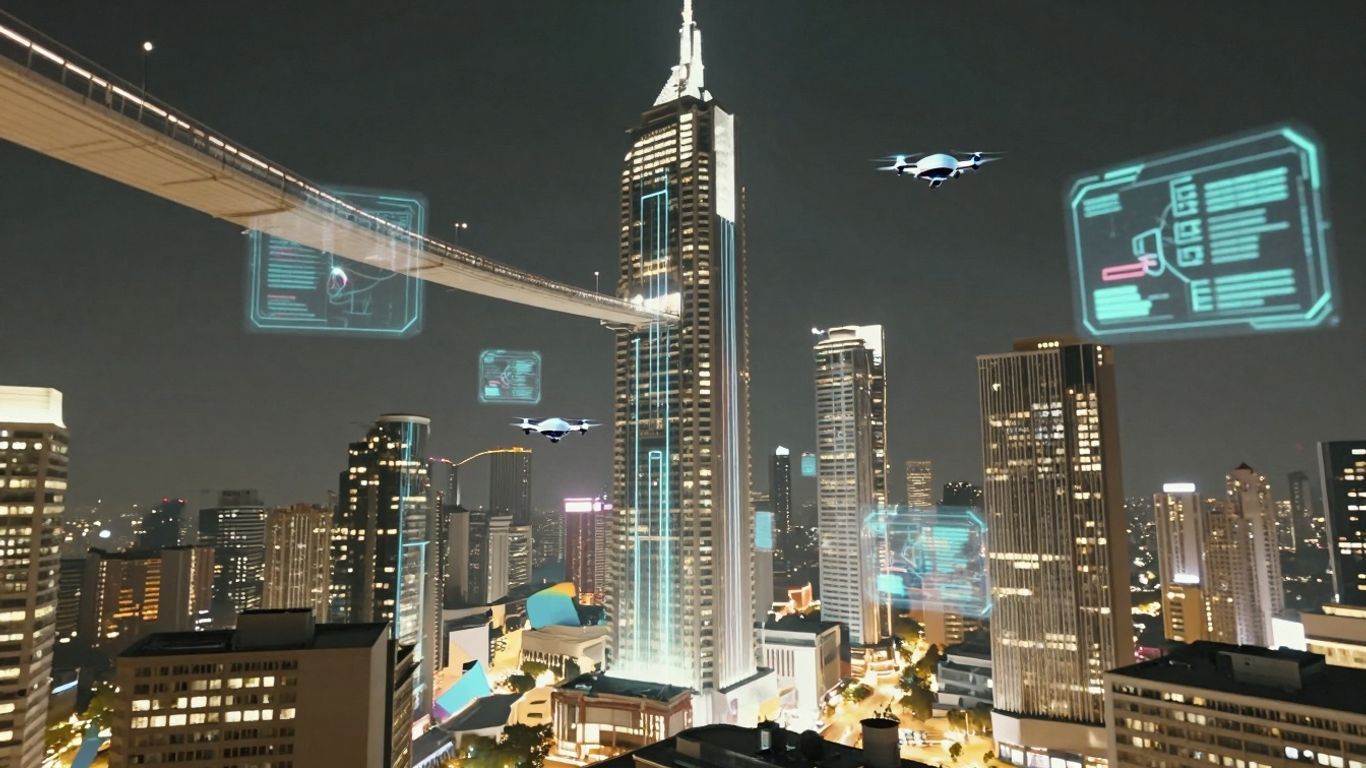
Envision digital infrastructure as the intricate nervous system of a smart city. It forms the indispensable backbone that seamlessly interconnects everything, from traffic lights and waste bins to public safety cameras and complex energy grids. Without a robust digital foundation, all the sophisticated smart city concepts would simply be inoperable.
This infrastructure comprises a multitude of diverse components working in concert. We're talking about high-speed communication networks, such as 5G, which enable devices to communicate instantaneously. Then there are the data centers, akin to the city's brain, diligently storing and processing the vast quantities of information collected. And let's not overlook the sensors themselves, strategically dispersed throughout the urban landscape, gathering real-time data.
Here’s a detailed breakdown of what constitutes a city's digital infrastructure:
- Connectivity: Robust networks (fiber optics, 5G, Wi-Fi) that facilitate ceaseless and efficient communication.
- Data Storage & Processing: Secure and scalable data centers, frequently leveraging the power of cloud computing.
- Sensor Networks: Devices embedded ubiquitously to meticulously collect environmental, traffic, and usage data.
- Cybersecurity: Advanced measures rigorously implemented to safeguard all this interconnected data and critical systems from evolving threats.
The ongoing expansion of new digital infrastructure, notably data centers, is a pivotal component of modern smart city development. It's not merely about possessing the technology; it's about guaranteeing its reliability, ensuring its security, and confirming its capacity to evolve in tandem with the city's burgeoning needs. Cities are increasingly gravitating towards cloud-based solutions for their inherent scalability and cost-effectiveness, although on-premises options continue to be favored for highly sensitive public safety applications due to stringent security considerations. This profound interconnectedness is precisely what enables functionalities like AI-driven traffic flow management and intelligent energy grids to operate effectively, thereby fostering a more efficient and responsive urban environment. Establishing this digital substratum is a monumental endeavor, but it serves as the bedrock upon which all other smart city innovations are meticulously constructed. It's about cultivating a connected ecosystem capable of dynamic adaptation and continuous evolution. The future of urban living hinges significantly on the strength and adaptability of this crucial digital infrastructure.
23. Open-Sourced Software Systems
When we delve into the realm of smart cities, much of the underlying magic unfolds behind the scenes, within the software that orchestrates seamless interoperability. And increasingly, that software is open-source. Consider this: rather than a single corporation holding proprietary control, open-source signifies that the foundational code is publicly accessible for anyone to view, utilize, and even enhance. This dynamic represents a profound advantage for municipalities.
Why is this distinction so paramount? Well, for starters, it liberates cities from vendor lock-in. They gain the flexibility to meticulously select the optimal tools for specific tasks, and should one system prove inadequate, they can transition without the costly burden of starting anew. Moreover, it invites a greater collective scrutiny of the code, which often translates into superior security and fewer bugs. Crucially, it fosters a spirit of collaboration. Developers from across the globe can contribute their expertise, accelerating the pace of innovation. We're observing this phenomenon across a spectrum of applications, from sophisticated traffic management systems to expansive public data platforms.
Here are a few compelling reasons why open-source software is a game-changer for smart cities:
- Cost-Effectiveness: Frequently, there are no licensing fees involved, which can result in substantial financial savings for cities. These freed-up budgetary resources can then be strategically redirected to other critical areas.
- Flexibility and Customization: Municipalities gain the invaluable ability to adapt the software precisely to their unique requirements, rather than attempting to contort their needs to fit a pre-packaged solution.
- Transparency and Trust: With publicly accessible code, there's an inherent clarity regarding how systems function, which significantly bolsters public confidence and trust.
- Community Support: A vibrant global community of developers stands ready to offer support, share collective knowledge, and expedite problem resolution.
Projects like OpenStreetMap, for instance, provide highly detailed maps that can be leveraged by a myriad of city services. Similarly, numerous smart city initiatives are constructed upon open-source operating systems and frameworks, facilitating greater interoperability among diverse systems. This collaborative methodology is instrumental in constructing resilient and adaptable urban environments. The anticipated growth in AI infrastructure, with global spending projected to exceed $200 billion by 2028, also benefits immensely from open-source contributions, rendering advanced technologies more accessible for urban development, particularly within AI infrastructure.
The discernible shift towards open-source software in smart city development is not merely a fiscal consideration; it's about meticulously constructing a more collaborative, transparent, and inherently adaptable future for urban technology. It profoundly democratizes access to potent tools and empowers cities to innovate with unprecedented freedom.
24. AI Traffic Flow Management
Managing traffic in a perpetually growing city can often feel like an exasperating attempt to herd cats, can't it? Well, artificial intelligence is now stepping in to considerably alleviate that challenge. AI traffic flow management employs sophisticated systems to meticulously analyze real-time traffic data and make dynamic adjustments on the fly. Imagine it as a highly intelligent conductor orchestrating the city's complex transportation symphony.
The core imperative is to sustain smooth vehicular movement, significantly mitigate congestion, and improve overall travel times for everyone. This isn't just about making daily commutes less frustrating; it's also about substantially reducing vehicular emissions and cultivating more livable urban environments. By diligently processing information from an array of sensors, cameras, and even interconnected vehicles, AI can accurately predict traffic jams *before* they even materialize and proactively reroute traffic accordingly.
Here’s how it generally functions:
- Data Collection: Sensors embedded in roadways, strategically placed traffic cameras, and GPS data from vehicles diligently gather comprehensive information regarding traffic volume, speed, and any incidents.
- Analysis: Advanced AI algorithms then process this immense volume of data to identify intricate patterns, accurately predict future traffic conditions, and promptly detect anomalies.
- Action: Based on this astute analysis, the system can automatically adjust traffic signal timings, display dynamic route guidance on prominent digital signs, or even communicate directly with connected vehicles to suggest optimal alternative paths.
This technology constitutes a pivotal element in elevating the efficiency of urban mobility. It is fundamentally transforming how cities adeptly manage the persistent challenge of moving both people and goods. The market for AI in smart cities, particularly within the domain of traffic management, is experiencing rapid growth, unequivocally demonstrating the increasing importance of these solutions.
The profound integration of AI into traffic management systems represents a significant leap forward in contemporary urban planning. It decisively moves beyond purely reactive measures to embrace a proactive methodology, anticipating issues and optimizing flow *before* problems can escalate. This intelligent orchestration of traffic is absolutely key to constructing more sustainable and efficient urban environments for the foreseeable future.
Cities are progressively seeking out these advanced systems to effectively manage the escalating pressures of urbanization. The ultimate objective is to cultivate a more predictable and considerably less frustrating travel experience for all residents. This is a crucial area where artificial intelligence is vital for informed urban decision-making.
25. Climate Positive Cityscapes and more
By 2028, cities are not simply aspiring to be smart; they are actively striving to become climate positive. This ambitious goal transcends merely reducing their environmental impact; it's about demonstrably improving the environment. Envision urban centers that generate more clean energy than they consume, or that capture a greater volume of carbon dioxide than they emit. It represents a profound paradigm shift from merely being 'less bad' to actively being 'good' for the planet.
This far-reaching transformation encompasses several critical domains:
- Renewable Energy Integration: Cities will experience the widespread adoption of solar panels on building rooftops, wind turbines seamlessly integrated into urban design, and geothermal energy systems becoming standard practice. The ultimate aim is to power urban life exclusively with clean, locally sourced energy.
- Green Infrastructure: Anticipate a proliferation of green roofs, innovative vertical farms, and extensive urban forests. These elements serve more than aesthetic purposes; they actively aid in stormwater management, significantly reduce the urban heat island effect, and markedly improve air quality.
- Circular Economy Principles: Cities will progressively adopt systems where waste generation is minimized and resources are perpetually reused. This includes sophisticated recycling programs, comprehensive composting initiatives, and vigorous encouragement of goods repair and reuse.
- Sustainable Transportation Networks: Beyond merely electric vehicles, cities will prioritize integrated public transit, enhanced cycling infrastructure, and expansive pedestrian zones—all powered by renewable energy sources.
The concept of a climate-positive city centers on forging urban environments that contribute tangibly and positively to the planet's health. It embodies a proactive stance, moving decisively beyond mere sustainability to actively regenerate natural systems and cultivate a healthier future for all residents.
We are also observing a noticeable rise in the utilization of open-source software for city management. This collaborative approach empowers different cities to readily share innovations, thereby accelerating the global adoption of smart and sustainable technologies. Imagine, for instance, a city's traffic management system being enhanced by a developer in a distant country, or a novel waste reduction strategy being shared and implemented across multiple continents. This collaborative ethos is absolutely critical for effectively tackling complex environmental challenges on a grand scale. It extends beyond mere technology; it's about meticulously constructing smarter, greener, and ultimately more resilient communities for everyone.
Looking Ahead: The Evolving Smart City
As we conclude our exploration of the smart cities poised for 2028, it becomes unequivocally clear that this journey of innovation is far from complete. We've witnessed firsthand how municipalities are increasingly harnessing data and advanced technology to enhance the lives of their residents—from streamlining traffic and optimizing energy consumption to refining essential public services. It’s important to understand that this isn't solely about sophisticated gadgets; it's fundamentally about cultivating urban environments that are more livable, inherently efficient, and demonstrably sustainable. While formidable challenges undoubtedly persist, such as ensuring equitable access to benefits and maintaining seamless system operations, the trajectory of progress is undeniable. Cities will continue to connect, adapt, and innovate, perpetually shaping the urban experience in ways we are only just beginning to truly grasp. The smart city of tomorrow is actively being constructed today, one interconnected solution at a time.
Frequently Asked Questions
What exactly is a smart city?
A smart city is essentially an urban area that leverages technology and extensive internet connectivity to significantly enhance the quality of life for its inhabitants. It's akin to endowing a city with an intelligent 'brain' to manage critical elements like traffic flow, energy consumption, and waste disposal with superior efficiency. This intelligent management contributes to making cities cleaner, safer, and considerably more convenient to reside in.
How will smart cities help the environment?
Smart cities possess a remarkable capacity to benefit our planet! They can drastically reduce energy consumption, manage waste more effectively to minimize landfill contributions, and conserve precious water resources. Moreover, many smart cities are actively pursuing goals to create more verdant green spaces and transition entirely to clean energy sources, which collectively plays a crucial role in mitigating climate change.
What kind of technology is used in smart cities?
An impressive array of cutting-edge technology, indeed! Think of intelligent sensors that guide you to available parking spots, smart streetlights that autonomously dim when no one is present, and sophisticated systems that coordinate waste collection only when bins are nearing capacity. The Internet of Things (IoT) serves to interconnect all these diverse devices, while powerful computing platforms meticulously analyze the wealth of collected information.
Will smart cities replace all traffic lights?
That is, in fact, a prediction some experts have ventured! In the future, advanced smart traffic management systems might become so proficient at regulating vehicular flow using intelligent sensors and comprehensive data analysis that the traditional necessity for traffic lights could diminish. The entire premise centers on ensuring traffic moves smoothly and safely through urban arteries.
Who builds and manages smart cities?
It's typically a collaborative endeavor! Municipal governments work hand-in-hand with specialized technology companies and, quite often, with private businesses. These entities converge to meticulously plan, construct, and oversee the sophisticated smart systems that optimize city operations for the collective benefit of all residents.
Are smart cities safe and private?
That is an absolutely paramount question! While smart cities do collect substantial amounts of data to function optimally, experts are diligently striving to ensure this information is maintained securely and confidentially. Protecting individuals' privacy remains a significant focus, even as technology is leveraged to enhance urban life.


