
business resources
What Is The Best Trading Broker For You In 2025?
19 Dec 2025

Choosing where to manage your investments is a pretty significant decision, isn't it? With a sea of options available, figuring out which trading broker is the best for you in 2025 can feel like solving a complex puzzle. We’ve done the legwork and reviewed a host of them to help you find the right fit, whether you're just dipping your toes in the market or you’ve been trading for years. Ultimately, it all comes down to aligning your personal needs with what a broker brings to the table. Let's break down some of the top contenders to help you make a more informed choice.
Key Takeaways
- Fidelity frequently comes out on top, particularly for beginners. It offers a vast array of investment choices, incredibly helpful tools, and top-notch customer support—plus, they pay a competitive yield on your uninvested cash.
- Interactive Brokers is another powerhouse, especially for more active traders, thanks to its extensive investment options and aggressive pricing. They also offer a great yield on idle cash.
- Charles Schwab and E*Trade are both incredibly solid choices with a well-rounded mix of features, making them suitable for just about any type of investor. Schwab shines with its massive selection of mutual funds, while E*Trade is a strong contender for bond investors.
- For those who lean towards a streamlined, mobile-first experience, Robinhood and Webull are popular picks. Just keep in mind they might not have the same depth of research tools or investment variety as the larger, more established firms.
- When it's time to choose, really think about what you need. Are you a newcomer who could use a lot of guidance? An active trader hunting for advanced tools? Or maybe someone who just wants to buy and hold ETFs for the long haul? The key is matching your unique needs to a broker's specific strengths.
Fidelity
Fidelity is a titan in the investing world, and for very good reason. They’ve cultivated a reputation for being exceptionally investor-friendly, offering a wealth of free research and tools that can genuinely help you get your bearings. What's more, their customer support is known for being both responsive and helpful, which is a massive relief when you're dealing with your finances.
One of the standout qualities of Fidelity is how easy they make it to get started. You can trade stocks, ETFs, and a staggering number of mutual funds without paying a dime in commission fees. If keeping costs low is a priority, you'll be pleased to find they don't nickel-and-dime you with a lot of extra account fees. And here's the kicker—there's no minimum to open an account, and you can even buy fractional shares for as little as $1. This truly lowers the barrier to entry for people who don't have a large sum of cash to begin investing.
Fidelity also has plenty to offer if you're looking for a bit of guidance:
- Fidelity Go®: This is their robo-advisor service. For balances under $25,000, there are no advisory fees. Once your balance surpasses that, a small annual fee kicks in, but you also gain access to one-on-one coaching calls with a Fidelity advisor.
- Managed Portfolios: For investors who'd prefer more hands-on management, Fidelity provides various strategies where experts take the reins of your investments.
- Retirement Accounts: They offer a comprehensive suite of retirement account options, including Traditional, Roth, and Rollover IRAs.
It certainly seems like Fidelity has a service for just about everyone—from beginners just testing the investing waters to seasoned individuals who want a more managed approach. Their vast educational resources are a huge draw, cementing their status as a solid choice for those who want to learn as they invest.
When you look at the fee structure, Fidelity is generally quite competitive. They provide commission-free trading for stocks and ETFs and have zero transaction fees on over 3,400 mutual funds. Options trades come with a small contract fee, but it’s still quite reasonable. They also maintain a network of physical branches across the U.S., which is a wonderful option if you ever prefer some face-to-face assistance.
Interactive Brokers
Interactive Brokers is often hailed as the go-to platform for serious traders, and it's easy to see why. While its interface might appear a bit spartan at first glance, don't let that simplicity fool you. This broker pours its energy into features that active traders truly value, like swift and efficient trade execution. It's a popular pick for those who meticulously watch the fine details of trading and demand rock-solid performance.
A major draw for Interactive Brokers is its cost structure, particularly for high-volume traders. They present a couple of distinct pricing plans:
- Lite Service: This plan provides commission-free trading for stocks and ETFs, making it a straightforward choice for many investors.
- Pro Service: Tailored for more active traders, this plan charges a small commission per trade—often starting at just $1—but can include volume discounts. This setup can be remarkably cost-effective if you're executing a large number of trades.
Looking beyond stocks and ETFs, Interactive Brokers grants access to an enormous selection of over 20,000 mutual funds, a large portion of which can be traded without any transaction fees. This is one of the most extensive collections you'll find anywhere in the industry. They also tend to steer clear of common charges like account maintenance or transfer fees, which helps keep your overall costs in check.
For investors who are comfortable navigating a more professional-grade platform and require access to a broad spectrum of global markets and trading tools, Interactive Brokers truly shines. Their clear focus on active traders means that features like low-cost margin rates and expansive market access are top priorities.
Interactive Brokers is also well-known for its global reach. It’s an excellent option if you're an investor residing outside the U.S., as they welcome citizens and residents from a multitude of countries to open accounts. They even offer extended trading hours, which is a fantastic perk for anyone in a different time zone.
Charles Schwab
Charles Schwab has earned its reputation as a powerhouse choice for a wide spectrum of investors, from complete novices to seasoned market veterans. They've skillfully blended a user-friendly experience with a suite of potent tools, making it an exceptional all-around option.
One of Schwab's most compelling advantages is its dedication to keeping costs low. You'll enjoy commission-free trading on stocks and ETFs, alongside a massive selection of over 4,000 mutual funds that are free of transaction fees. This makes it much easier to manage your investment costs without having to sacrifice access to a broad market.
For those who value having a clear plan, Schwab offers several pathways. Their robo-advisor service, Schwab Intelligent Portfolios®, delivers automated investment management. For a more hands-on approach that includes professional guidance, Schwab Intelligent Portfolios Premium™ is available, offering personalized financial roadmaps and one-on-one advice from Certified Financial Planners (CFPs).
Let's take a look at some of its key features:
- Investment Options: You get access to stocks, bonds, ETFs, mutual funds, and Certificates of Deposit (CDs).
- Trading Platforms: The highly acclaimed thinkorswim® platform, famous for its advanced charting and analytical tools, is now available to all Schwab clients.
- Account Minimums: Generally, you won't need a minimum deposit to open a brokerage account for active investing.
- Fractional Shares: Schwab lets you purchase fractional shares—what they call "slices"—of many S&P 500 companies, starting with as little as $5.
Charles Schwab has carefully built a reputation for putting its customers first, offering extensive educational resources designed to help investors learn and grow. When you couple that with their 24/7 customer support, it's clear they aim to foster a supportive environment for every account holder.
While Schwab brings a lot to the table, it’s worth noting that certain transactions might still have fees, and their premium robo-advisor service includes both a planning fee and a monthly advisory fee. Still, for many investors, the combination of low trading costs, deep research, and access to sophisticated platforms like thinkorswim makes Charles Schwab a truly compelling choice for their investment journey.
Read More:
E*Trade
E*Trade is another heavy-hitter, particularly if you're an active trader. They offer a few highly-regarded trading platforms that are loaded with research and valuable market insights. You can manage a diverse range of investments here, including stocks, bonds, options, ETFs, and a vast selection of mutual funds—many of which come without any transaction fees.
When it comes to costs, E*Trade's pricing is straightforward:
- $0 for stock and ETF trades.
- $0.65 per options contract, which drops to a discounted $0.50 for those making 30 or more trades per quarter.
For anyone interested in automated investing, E*Trade presents its Core Portfolios service. This robo-advisor requires a $500 minimum to get started and carries an annual advisory fee of 0.30%. They also have a great lineup of retirement accounts, including Traditional, Roth, Rollover, and SEP IRAs.
E*Trade's platform is celebrated for its intuitive interface and powerful tools, making it accessible enough for beginners while still providing the depth that experienced traders demand. The integration with Morgan Stanley—which acquired E*Trade in 2020—has only strengthened its research capabilities.
Their educational resources are quite impressive, featuring a library of articles, videos, and webinars that cover a wide range of investment topics. This makes it an excellent place to expand your investing knowledge. Plus, customer support is available 24/7 via phone, email, and online chat, a fantastic perk when you need assistance outside of standard business hours.
Merrill Edge
Merrill Edge truly shines, especially for individuals who are already Bank of America customers. The seamless integration between the two services is a massive plus, offering a consolidated view of your complete financial picture. Moving money between your bank and brokerage accounts is incredibly simple and convenient.
One of the biggest draws for Merrill Edge is the exceptional quality of research available to its clients. They employ a dedicated team of analysts who produce in-depth reports on a wide variety of companies. This, along with insightful market commentary and economic data, provides investors with a solid foundation for making well-informed decisions. For Bank of America customers, the perks can be quite substantial, especially through the Preferred Rewards program.
Here’s a quick breakdown of their fee structure:
| Trade Type | Commission |
|---|---|
| Stocks / ETFs | $0 |
| Options Contract | $0.65 |
If you're searching for a broker that integrates smoothly with your banking, Merrill Edge is definitely worth a serious look. The ability to manage both your banking and investments in one place, complemented by powerful research tools, makes it a compelling option. The rewards and benefits tied to your Bank of America accounts can also add significant value, depending on your balance and banking activities.
The synergy between Merrill Edge and Bank of America creates a remarkably streamlined experience for managing your personal finances. This integration can simplify transactions and potentially unlock a host of additional benefits for account holders.
Ally Invest
Ally Invest is a fantastic choice, particularly if you're already part of the Ally Bank family. It operates as a full-service brokerage, handling trades for stocks, ETFs, bonds, and mutual funds. For those with an interest in foreign exchange, forex trading is also on the menu, catering to more seasoned traders.
When it comes to costs, Ally Invest likes to keep things simple. Like many of its online peers, it has eliminated commissions for stock and ETF trades. A significant advantage is their competitive pricing for options contracts, which are just 50 cents per contract—a major plus for active options traders. They also offer commission-free trading on a huge selection of over 17,000 mutual funds, though it's good to remember that standard fund expenses may still apply depending on the fund.
Here's a quick peek at their fee structure:
| Trade Type | Commission |
|---|---|
| Stocks & ETFs | $0 |
| Options Contract | $0.50 |
Ally Invest furnishes a respectable set of analytical tools, including charts and calculators, which can help investors make more thoughtful decisions. However, when compared to some of the larger competitors, the platform might feel a bit lighter on specialized tools. For example, it doesn't include features like a mutual fund screener or a spending tracker. The educational resources are there in the form of articles, but they lack the podcasts and video content you might find with other brokers.
For those who place a high value on the integration between their banking and investing, Ally Invest offers a very convenient package. The platform is designed to provide a straightforward trading experience, and this is especially true for existing Ally Bank clients.
If you're on the hunt for a broker that marries banking convenience with solid investment capabilities, Ally Invest deserves consideration. It’s a great option for those who want low trading costs and an uncomplicated platform, especially if you appreciate the synergy of having your bank and investments under one roof. You can explore various investment strategies and options on their platform, which can be helpful when you're investing in 2026.
Firstrade
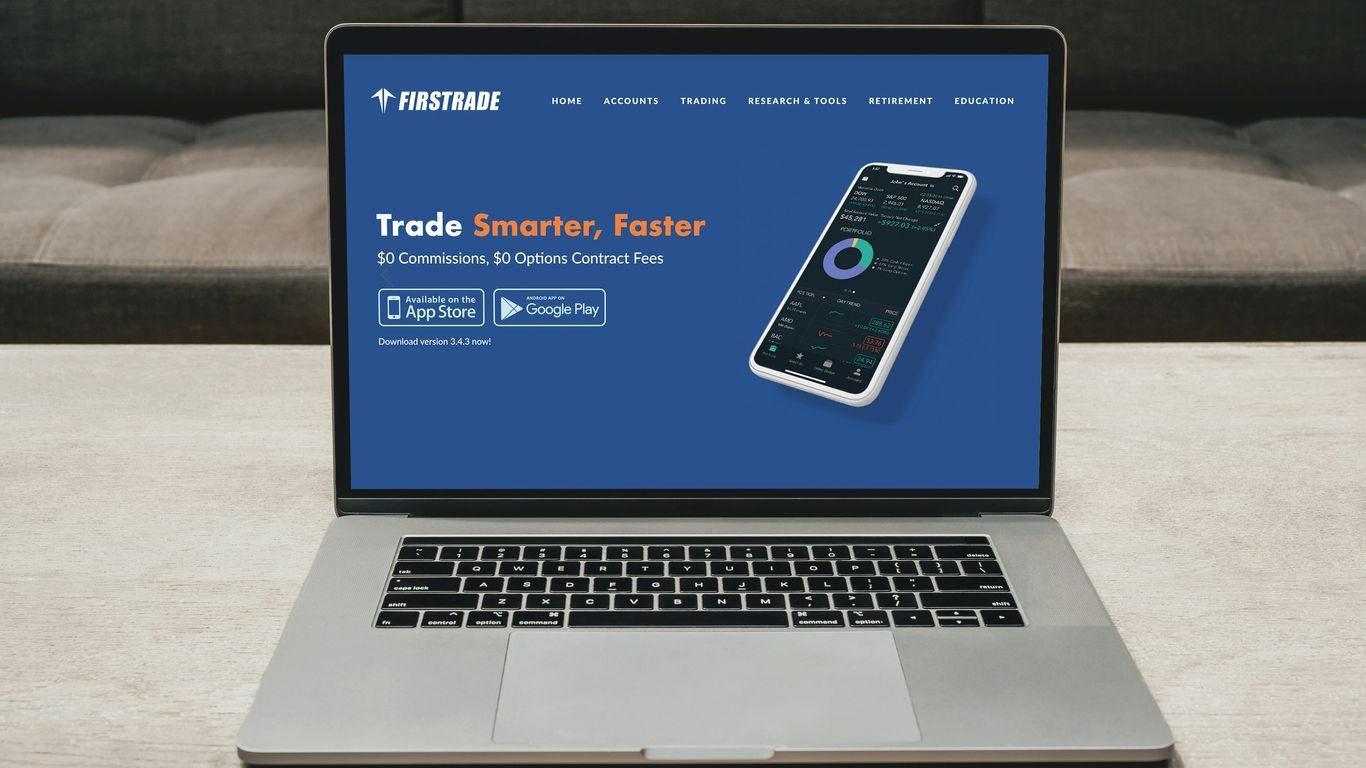
Firstrade is a brokerage that's caught the eye of many investors by offering commission-free trading for stocks, ETFs, and options. That's a pretty compelling deal, especially the commission-free options trading, which isn't something you'll find at every broker. They also provide a solid selection of account types, including various IRAs and education savings accounts. If you're looking for research tools, Firstrade has some robust options on hand. Plus, their mobile app consistently receives positive reviews and includes some advanced features that users seem to really appreciate.
One of its standout features is the vast range of mutual funds—over 11,000 of them—that you can trade without a fee. It's important to keep in mind, however, that the funds themselves might still carry their own sales commissions. For those interested in buying a piece of an expensive stock, Firstrade allows for fractional shares starting at just $5. This makes it much easier to invest in big-name companies without needing a large amount of capital upfront.
Here’s a quick rundown of what Firstrade brings to the table:
- Commission-Free Trading: Covers stocks, ETFs, and options contracts.
- Account Variety: A good selection including IRAs and education savings accounts.
- Fractional Shares: Available for both stocks and ETFs starting at just $5.
- Mutual Funds: Access to over 11,000 mutual funds with no trading fees.
- Mobile App: Highly rated and packed with advanced features.
Firstrade presents itself as a great choice for investors who want to trade options without racking up extra fees and for those who value the flexibility of buying fractional shares. The huge selection of no-trading-fee mutual funds is also a significant advantage for many investors.
Firstrade is particularly well-suited for options traders, investors who prioritize research capabilities, and individuals who prefer to manage their investments through a mobile app. The $0 commission on options contracts is undeniably a major draw for anyone active in options trading.
Robinhood
Robinhood certainly made a splash in the investing world by delivering a simple, commission-free trading experience. This has been particularly appealing to newcomers to the market or those who prefer managing investments from their phone. The platform lets users trade stocks, ETFs, options, and even some cryptocurrencies without charging per-trade fees, an approach that has made investing feel far more accessible to a broader audience.
One of Robinhood's defining features is its support for fractional shares. What does this mean for you? You don't have to buy an entire share of a high-priced stock; instead, you can purchase a small piece of it, making it easier to diversify your portfolio even with limited capital. For those planning for retirement, Robinhood also offers Individual Retirement Accounts (IRAs), sometimes sweetened with a matching contribution, which can be a nice little bonus.
For users looking to get a bit more out of their cash, Robinhood Gold—a premium subscription service—offers a competitive interest rate on uninvested cash balances. The platform also recently introduced an automated portfolio management service, adding another layer of convenience for users who favor a more hands-off strategy.
Here’s a snapshot of what Robinhood offers:
- Commission-Free Trading: No fees on stock, ETF, and options trades.
- Fractional Shares: The flexibility to buy portions of stocks.
- Cryptocurrency Trading: Access to trade a selection of digital currencies.
- Robinhood Gold: Premium perks like interest on cash balances and an IRA match.
- Automated Investing: A service designed to manage portfolios automatically.
While Robinhood's user-friendly interface and zero-commission model are undoubtedly attractive, it's crucial for investors to remember that regulatory transaction fees and trading activity fees may still apply. Additionally, users often need to rely on their own knowledge for portfolio construction, as extensive educational resources aren't the platform's strongest suit.
Robinhood's initial public offering (IPO) bonus, where new users can get a free share of stock after meeting certain conditions, has also been a popular incentive. For new investors, this can be a small but encouraging way to get started.
Webull
Webull is a trading platform that has quickly gained traction, especially among newer investors, because of its commission-free trading on stocks and ETFs. It also extends this commission-free model to options and cryptocurrencies, which is a major draw for many. One particularly useful feature is the availability of 24/7 customer service by phone—a convenience that isn't always a given with other brokers.
The platform delivers a mobile-first experience complete with impressive charting tools. Each stock has its own dedicated page that includes links to relevant news and content from various sources. You can also get a feel for market sentiment by seeing what other traders are discussing about a particular stock. Webull provides instant funding for accounts and supports the purchase of fractional shares, making it much easier for individuals to start investing, even with smaller amounts of money.
Webull's key strengths are its commission-free trading structure and its intuitive mobile app, making it highly accessible for those just starting their investment journey.
Let's take a look at some of Webull's key features:
- Commission-Free Trading: Stocks, ETFs, options, and cryptocurrencies can all be traded without commission fees.
- Mobile-Centric Design: The platform is built around its mobile application, which boasts advanced charting and a clean, modern interface.
- Fractional Shares: Investors can buy portions of shares, which lowers the barrier to entry for high-priced stocks.
- 24/7 Customer Support: You can get access to customer service around the clock via phone.
While Webull provides a solid trading environment, some users have pointed out that its educational resources could be more comprehensive. This is something worth considering if you're looking for a platform that offers in-depth learning materials alongside its trading tools.
Webull is focused on providing a straightforward and cost-effective trading experience, especially for those who prefer managing their investments on a mobile device. Its commission-free model and features like fractional shares are intentionally designed to appeal to a wide spectrum of investors, from beginners to more active traders.
J.P. Morgan Self-Directed Investing
J.P. Morgan Self-Directed Investing is a platform that aims to merge the formidable financial backing of a major institution with accessible tools for the individual investor. It’s about more than just buying stocks; it’s about having a connection to a much broader network of financial expertise.
One of the more interesting aspects of J.P. Morgan Self-Directed is its take on advisory services. While it doesn't provide a fully automated robo-advisor service, it does offer hybrid options and full-service plans through J.P. Morgan Wealth Management. This means you can get a blend of digital tools and human guidance, or even opt for a dedicated advisor who can help craft a portfolio tailored specifically to you. The minimum for a dedicated advisor is typically around $100,000—which is actually lower than what some competitors require.
Here's a glimpse at some of the features:
- Investment Options: You get access to stocks, ETFs, mutual funds, and bonds.
- Fractional Shares: The platform allows you to buy portions of ETFs, which can make investing in certain funds much more accessible.
- Security: J.P. Morgan Self-Directed mandates two-factor authentication, adding an essential extra layer of protection for your account.
- Advisory Tiers: It offers hybrid services and full-service plans, connecting you directly with J.P. Morgan Wealth Management.
When it comes to fees, J.P. Morgan Self-Directed maintains competitive pricing, especially within its advisory services. For accounts with a substantial balance—say, $750,000—advisory fees can be as low as 0.50% annually, though some may be higher. It's also worth noting that while day-to-day trading of stocks, ETFs, and mutual funds is often commission-free, there can be other costs, such as markups on individual bonds.
J.P. Morgan Self-Directed Investing positions itself as an excellent choice for those who value the security of a large financial institution and are looking for a clear path toward more personalized investment advice as their portfolio grows.
Plus500
Plus500 is a trading platform that really hones in on making online trading accessible. They provide a proprietary platform called WebTrader, which is designed to be incredibly straightforward and easy to navigate, even for those who are just starting out. Better yet, this platform is available across various devices, allowing you to trade on the go.
One of the cornerstone features of Plus500 is its fee structure. They typically don't charge commissions on trades. Instead, their costs are woven into the spread—the difference between the buying and selling price of an asset. This can make it a cost-effective choice for certain traders, especially those who trade with high frequency.
Plus500 offers access to a diverse range of financial instruments, including Contracts for Difference (CFDs) on various asset classes like forex, indices, commodities, shares, and cryptocurrencies. It's vital to understand that CFDs are complex instruments and come with a high risk of losing money rapidly due to leverage. Plus500 is particularly well-regulated, holding licenses from financial authorities in several countries, which adds a crucial layer of security and trust for its users.
While Plus500 earns praise for its simplicity, it might lack some of the advanced charting tools or the extensive third-party integrations that more experienced traders often seek. They don't usually support platforms like MetaTrader 4 or 5, which are quite popular among a certain segment of the trading community.
Key aspects of Plus500 include:
- User-Friendly Platform: Their WebTrader is intentionally designed for ease of use.
- Cost Structure: Primarily relies on spreads rather than direct commissions.
- Asset Variety: Offers CFDs across a wide array of markets.
- Regulation: Operates under the strict oversight of multiple regulatory bodies.
Trading CFDs involves a significant risk of loss. It is absolutely essential to understand these risks before trading and to only invest money you are prepared to lose. Plus500's model is built around delivering a clear and direct trading experience, which appeals to those who prefer a less complicated approach to the markets.
FxPro
FxPro is a well-respected online broker that has carved out a significant niche for itself, especially among forex and CFD traders. They are laser-focused on providing a robust trading environment with a strong emphasis on transparency and reliability. If you’re searching for a platform that delivers a variety of advanced trading tools and a secure trading experience, FxPro is certainly worth a closer look.
One of the most notable features of FxPro is its commitment to offering multiple trading platforms. This isn't a one-size-fits-all situation; instead, they give you access to industry standards like MetaTrader 4 (MT4), MetaTrader 5 (MT5), and cTrader. Each platform comes with its own set of strengths, catering to different trading styles and preferences. For instance, MT4 has long been a favorite among forex traders for its stability and extensive charting tools. MT5 offers more asset classes and advanced order types, while cTrader is often lauded for its clean interface and direct market access execution. This variety means you can choose the platform that truly fits how you like to trade.
FxPro also makes a point of maintaining competitive pricing. They offer tight spreads, which can make a real difference in your trading costs over time—especially if you trade frequently. They have different account types available as well, which can help you find one that aligns with your trading capital and strategy. You can find accounts with fixed spreads, variable spreads, and even an ECN (Electronic Communication Network) account for those who prefer direct access to liquidity providers.
Here's a quick peek at some of their account features:
- FxPro Standard Account: This account offers fixed spreads, which can provide more predictability in pricing.
- FxPro MT4/MT5 Variable Spread Account: Features dynamic spreads that can become even tighter during active market hours.
- FxPro cTrader Account: This one utilizes ECN execution with raw spreads and a commission-based structure.
Beyond the platforms and pricing, FxPro invests a great deal of effort into educating its clients. They provide a rich array of resources, including webinars, insightful market analysis articles, and educational materials. This is incredibly helpful, whether you're just starting out or looking to sharpen your existing trading strategies. They seem to understand that informed traders are often more successful, and they invest in helping their clients gain that critical knowledge.
Customer support is another area where FxPro works to excel. They offer 24/7 customer service, and it's available in multiple languages. This round-the-clock support is a huge advantage, especially for traders operating in different time zones or facing urgent issues outside of typical business hours. They are also regulated by some very serious financial authorities, like the FCA in the UK and CySEC in Cyprus, which adds a significant layer of trust and security to their operations.
FxPro’s approach skillfully combines advanced trading technology with a strong regulatory framework and a genuine focus on client education. This blend makes it a fantastic choice for traders who value a secure, feature-rich, and well-supported trading environment.
Overall, FxPro stands as a strong contender for traders seeking a reliable platform with diverse trading options, competitive costs, and excellent educational support. Their multiple platform choices and commitment to regulation make them a trustworthy option in the crowded online brokerage space.
Wrapping Up Your Broker Search
At the end of the day, finding the right trading broker really boils down to knowing yourself and your needs. It's definitely not a one-size-fits-all scenario, you know? Some people might crave all the bells and whistles for active trading, while others simply need a straightforward platform to begin their long-term investing journey. We've explored a variety of brokers, and while some are clear standouts for beginners with their educational tools and support, others are tailor-made for experienced traders. The best advice? Take your time, think about your own financial goals, and find a broker whose offerings align with them. The most important step, though, is just getting started. Don't let the paradox of choice paralyze you; pick a solid option and start building your financial future today.
Frequently Asked Questions
So, what exactly makes a trading broker a good fit for beginners?
For anyone just starting their investment journey, the best bet is a broker that's easy to use and provides plenty of learning materials. Great customer support is also critical so you can get answers when you need them. Brokers offering clear guides, helpful videos, and accessible research tools can really help you grasp the fundamentals of investing and master their platform.
Are there any hidden fees I should watch out for when picking a broker?
That's a great question. While many brokers now offer commission-free stock trades, you might still encounter fees for things like options trading, transferring your assets to another firm, or closing your account. Some brokers may also charge for premium services like advanced research tools or real-time data. It's always a smart move to review a broker's full fee schedule before you commit.
Can I trade different kinds of investments with these brokers?
Absolutely. Most of these brokers allow you to buy and sell common investments like stocks, mutual funds, and exchange-traded funds (ETFs). Some also provide access to individual bonds, while others might include more niche assets like cryptocurrencies or foreign stocks. The variety of investment options can differ quite a bit, so it's a good idea to check if they offer what you're interested in trading.
What’s the real difference between a beginner-friendly broker and one for pros?
Generally, beginner-friendly brokers feature simpler, more intuitive platforms and a stronger emphasis on educational resources to help new investors learn the ropes. In contrast, brokers geared toward experienced traders often provide more advanced analytical tools, faster trade execution, and more complex trading options—which can frankly be a bit overwhelming for someone new to the scene.
How important is customer service when I'm choosing a broker?
Customer service is incredibly important, especially when you're just starting out. Having reliable support means you can get help quickly if you have questions or run into any trouble. Brokers that offer support via phone, live chat, and email—and are available during convenient hours—are usually a safe bet.
Do I need a ton of money to start trading with these brokers?
Here's some great news: most of the brokers we've reviewed don't require a minimum deposit to open an account. This means you can begin investing with even a small amount of money, which is perfect for learning the process and gradually building your portfolio over time.


