
business resources
Why Productivity Rises or Falls With Management Design
27 Jan 2026

Productivity is often treated as a personal attribute, something employees either have or lack. When performance falls short, organizations tend to look for motivation gaps, engagement issues, or individual shortcomings. In reality, productivity is shaped far more by the environment people work within than by effort alone. The systems that govern how work is planned, approved, measured, and communicated quietly determine how much meaningful output employees can produce.
Every organization operates inside a management system, whether it is formally designed or not. These systems influence how priorities are set, how decisions move through the business, and how accountability is enforced. When management systems are clear and aligned, employees spend less time navigating uncertainty and more time delivering results. When systems are fragmented or inconsistent, even highly capable teams struggle with delays, rework, and decision fatigue.
Employee productivity improves when management systems remove friction instead of adding it. Clear goals reduce wasted effort. Defined decision authority shortens execution cycles. Thoughtful performance measurement reinforces the right behaviors rather than rewarding activity for its own sake. Over time, these structural choices compound, creating either a productive operating rhythm or a constant drag on performance.
Understanding Management Systems Beyond Org Charts
Management systems are often confused with organizational charts, job titles, or leadership styles. While those elements are visible and easy to point to, they represent only a small part of how work actually gets done. In practice, management systems consist of the processes, rules, tools, and feedback mechanisms that guide work from initial idea to final execution. They define how priorities are set, how decisions move through the organization, how performance is evaluated, and how issues are escalated when something goes wrong.
These systems include planning and budgeting cycles, reporting structures, performance measurement frameworks, approval thresholds, communication norms, and informal expectations that shape daily behavior. Some of these elements are written down and formally enforced, while others evolve over time through habit and precedent. Together, they form the operating environment employees must navigate every day.
Employees interact with management systems constantly, even if they are not consciously aware of them. Each time someone asks who needs to approve a decision, how success will be measured, or which task should take priority, they are responding to signals from the system. When those signals are clear and consistent, employees can move quickly and confidently. Work flows with fewer interruptions, and decisions do not require repeated clarification.
When management systems are unclear or inconsistent, productivity suffers. Employees spend time guessing expectations, negotiating priorities, or reworking decisions after receiving conflicting feedback. Effort increases, but output does not. Over time, this uncertainty creates frustration and slows execution, not because employees lack capability, but because the system they are operating within fails to provide reliable guidance.
Clarity of Direction as a Productivity Multiplier
One of the most powerful ways management systems influence productivity is through clarity of direction. Employees perform at a higher level when they understand what truly matters, how their work connects to broader business goals, and how to make trade-offs when priorities compete. Clarity reduces hesitation and allows people to focus their energy on work that delivers real value.
Strong management systems turn strategy into actionable guidance. High-level objectives are translated into annual goals, then broken down into quarterly targets, team priorities, and individual responsibilities. Each layer reinforces the next, creating a clear line of sight between daily tasks and organizational outcomes.
“When priorities are clear, people stop guessing and start executing, Clear direction removes friction and allows teams to move faster without constant oversight,” says Tal Holtzer, CEO of VPSServer.
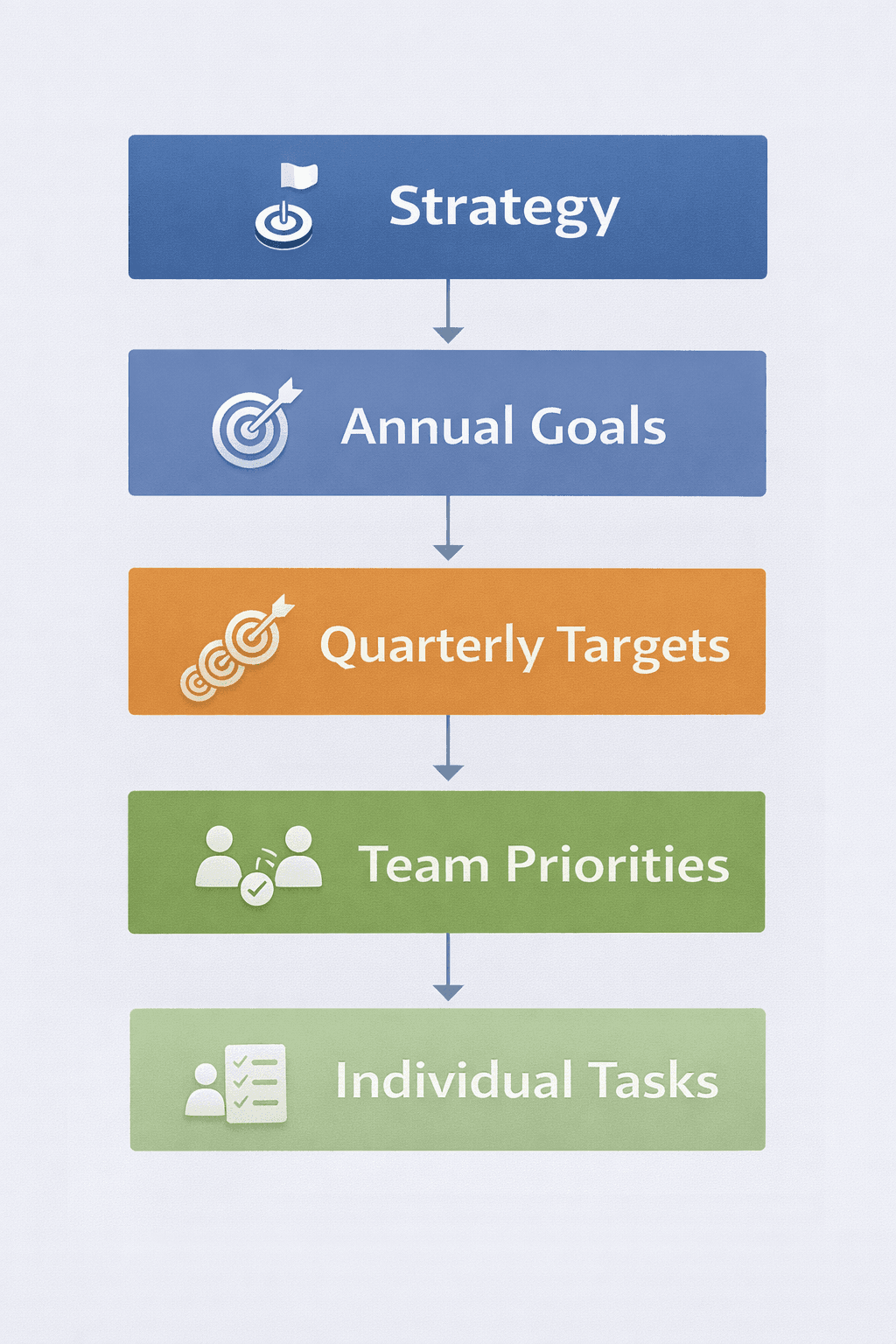
When this alignment exists, employees can make decisions confidently without constant supervision or repeated clarification.
Clear direction also reduces unnecessary coordination. Teams do not need to repeatedly check whether they are working on the right things because the system already defines what success looks like. Work moves faster, accountability improves, and productivity becomes more consistent across the organization.
In one organization, priorities shift week to week, and teams respond to the loudest request or most recent message. Work frequently changes direction midstream, leading to delays and rework. In another, priorities are clearly defined at the start of each quarter and reinforced through team goals, so employees know what takes precedence and what can wait. Fewer decisions require escalation, work flows more smoothly, and results are delivered more consistently. When management systems lack this clarity, urgent tasks crowd out important ones, effort becomes fragmented, and productivity suffers not because employees lack effort, but because direction is unreliable.
Decision-Making Systems and Cognitive Load
Productivity is constrained not only by time and resources, but also by cognitive load. Every ambiguous decision introduces mental friction that slows execution and drains focus. Management systems play a central role in determining how many decisions employees must resolve on their own and how many are already resolved by clear rules, standards, and authority structures.
Well-designed decision-making systems reduce hesitation by clarifying decision rights. Employees know which decisions they can make independently, which require consultation, and which must be escalated. When these boundaries are explicit, work moves forward with fewer delays. Clear approval paths prevent bottlenecks while still maintaining appropriate oversight, allowing teams to act decisively without drifting into unchecked autonomy.
“Poorly designed systems have the opposite effect. Unclear decision authority forces employees to second-guess themselves, seek unnecessary approvals, or pause work to avoid making the wrong call,” says Sharon Amos, Director at Air Ambulance 1. Conflicting feedback from multiple stakeholders often leads to rework, as decisions are revisited after execution has already begun. Over time, this pattern creates decision fatigue, slows execution, and reduces overall output, even when employees are putting in long hours.
In these environments, productivity declines not because people are unwilling to decide, but because the system makes every decision feel risky.
The cumulative mental strain of navigating uncertainty becomes a hidden tax on performance, quietly eroding efficiency across the organization.
Process Design and the Flow of Work
Process Design Shapes Quality, Cost, and Cash Flow
At the operational level, productivity is shaped by process design. Processes determine how work moves across teams, where errors surface, and how predictable outcomes are. When processes are well designed, productivity improves without additional effort.
Well-designed processes:
- Catch errors early
- Reduce rework
- Shorten cycle times
- Improve predictability
These improvements directly affect quality, operating costs, and cash flow. Work that moves smoothly requires fewer corrections, less manual coordination, and fewer emergency interventions. As a result, organizations complete work faster, invoice sooner, and forecast revenue more accurately. Costs stay lower because problems are addressed before they become expensive.
“The strongest productivity gains rarely come from working faster. They come from designing processes that surface problems early and reduce friction across the system,” says David Lee, Managing Director at Functional Skills.
In one organization, product reviews happen only at the final stage. Errors surface late, triggering last-minute fixes, delayed launches, and overtime work. Costs rise, timelines slip, and cash flow becomes harder to predict.
In another organization, the process includes early checkpoints and clear handoffs. Issues are identified while changes are still inexpensive to make.
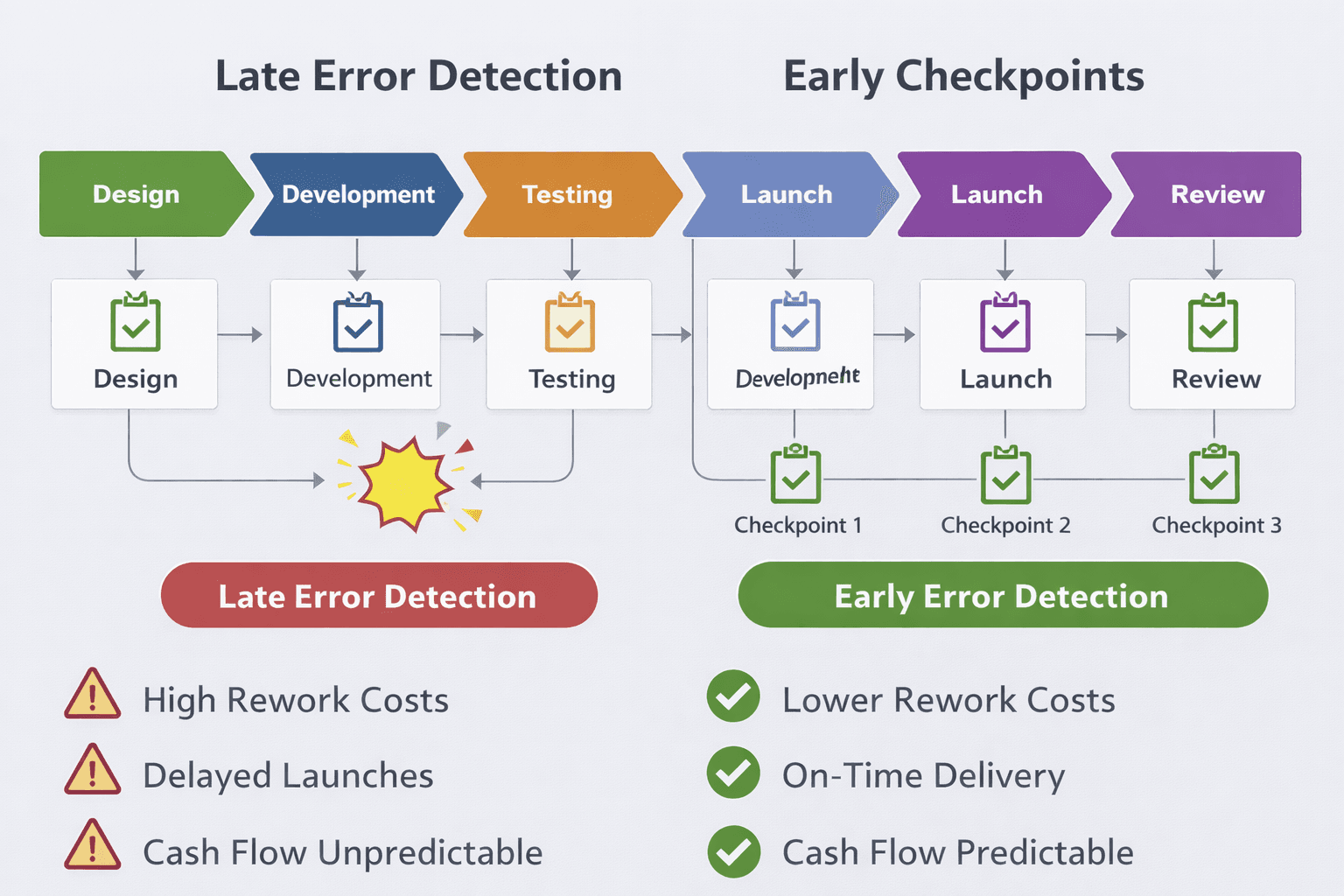
Projects move faster, quality improves, and delivery dates become reliable. Productivity increases not because people work harder, but because the process removes unnecessary friction.
Poorly designed processes create hidden work that never appears in plans or reports. Employees rely on workarounds, duplicate effort, and informal coordination to keep things moving. While this may sustain output in the short term, it steadily erodes productivity, increases burnout, and quietly drives up costs.
Performance Measurement and Behavioral Signals
What organizations choose to measure sends powerful signals about what they truly value. Metrics influence how employees allocate time, make trade-offs, and define success in their day-to-day work.
Good performance metrics:
- Focus on outcomes, not activity
- Reinforce collaboration
- Support learning and improvement
Poorly designed metrics do the opposite. They encourage busywork, reward speed without quality, and push individuals to optimize their own numbers at the expense of team results. Over time, employees learn to manage appearances rather than improve performance.
As Paul Posea, Outreach Specialist at Superads, put it, “People rarely resist accountability. They resist metrics that measure effort without reflecting real results.” This distinction explains why some measurement systems motivate improvement while others quietly erode trust.
Consider a customer support team. One organization measures success by the number of tickets closed per day. Agents respond quickly, but often resolve issues superficially. Customers reopen tickets, satisfaction declines, and total workload increases. The metric rewards speed, not resolution.
Another organization measures first-contact resolution and customer satisfaction. Agents take slightly more time per ticket, but issues are solved properly. Repeat requests decline, team collaboration improves, and overall workload becomes more predictable. Productivity rises because effort is aligned with outcomes that matter.
Effective management systems use metrics as feedback tools rather than punishment mechanisms.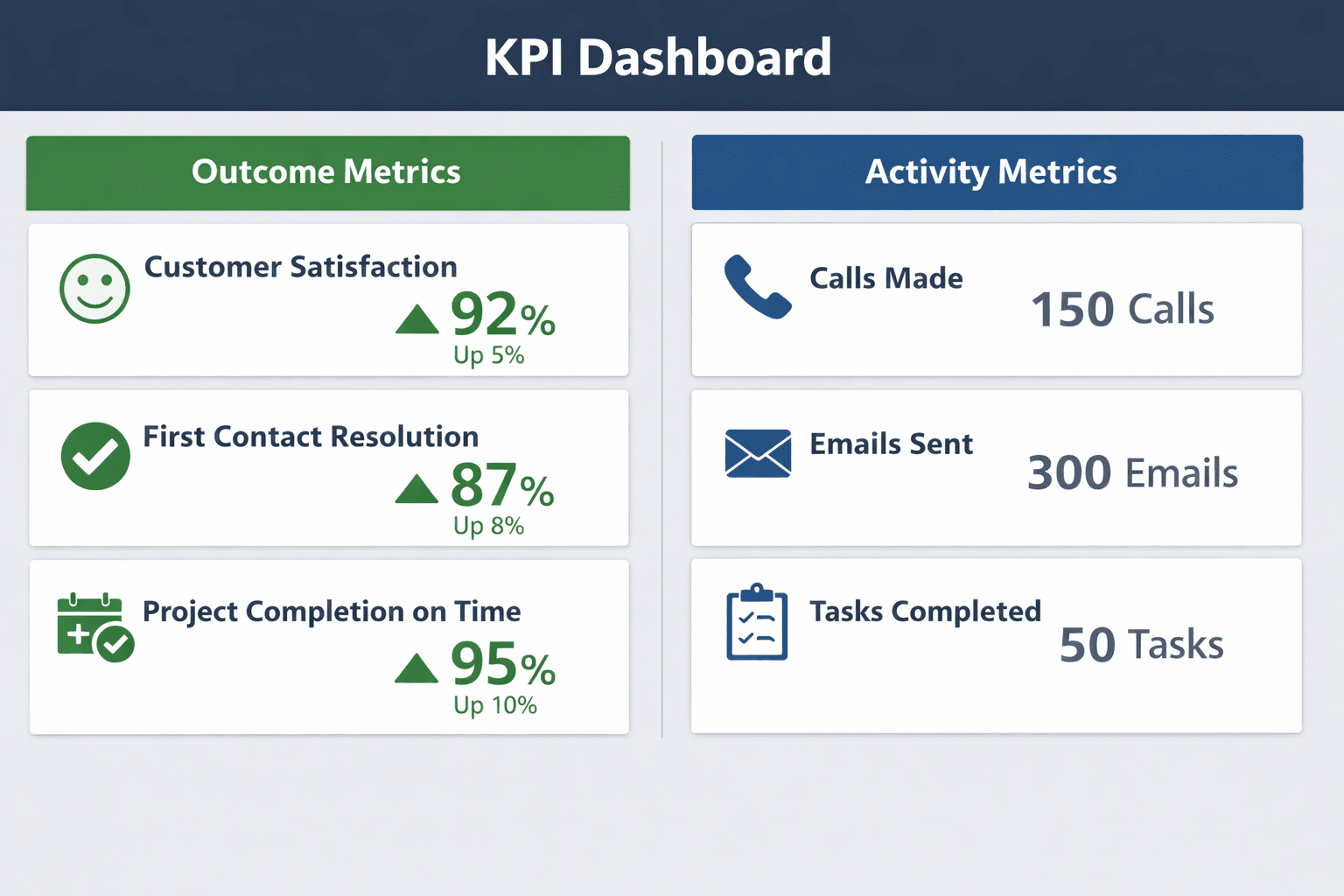
When employees can see how their actions affect quality, cost, or customer outcomes, they adjust naturally. Productivity improves not through pressure, but through clarity.
Communication Systems and Information Flow
Productivity depends on timely access to accurate information. Management systems determine how information moves through the organization, whether through meetings, reports, dashboards, or informal channels. The goal is not more communication. It is clearer, more intentional communication that supports decision-making.
Effective communication systems define three things clearly: what information is shared, who needs to see it, and how often it should be updated. When these rules are consistent, noise is reduced and critical signals stand out. Employees spend less time searching for answers, clarifying expectations, or following up, and more time executing work that matters.
“Most productivity losses come from missing or delayed information, not lack of effort, When information flows predictably, teams make better decisions with less friction,” says Beni Avni, founder of New York Gates
In dysfunctional systems, information flow breaks down in predictable ways.
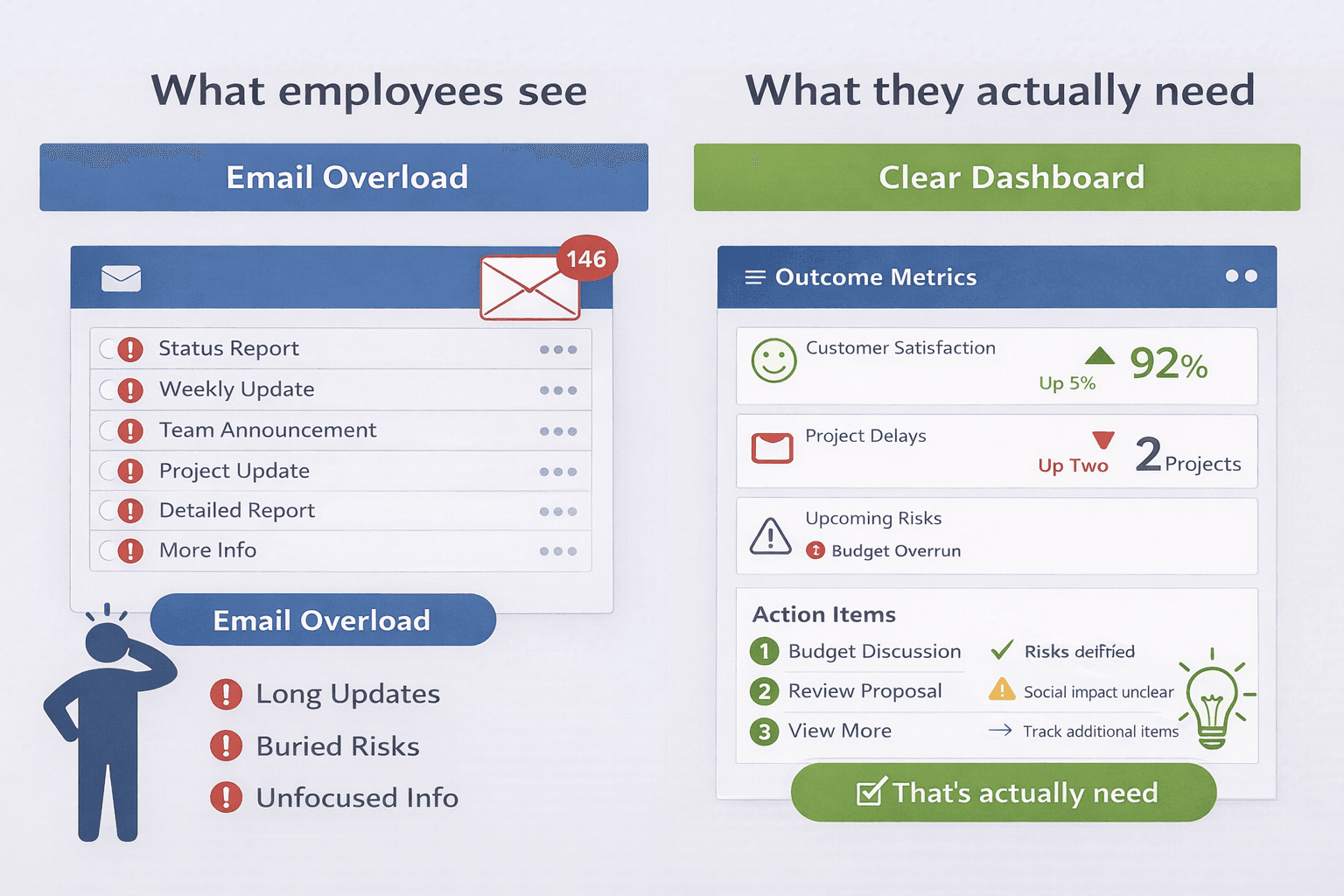
Information is either hoarded by a few individuals or pushed out in excessive volume. Employees rely on rumors, side conversations, or personal networks to stay informed. Both scenarios slow decision-making, increase the risk of errors, and create unnecessary friction that quietly erodes productivity.
The Role of Feedback Loops
Productivity improves when management systems support continuous feedback. Feedback loops allow employees to see the impact of their work, adjust quickly, and improve over time. Rather than relying on annual reviews alone, effective organizations embed feedback directly into how work is planned, executed, and reviewed.
Well-designed management systems integrate multiple feedback mechanisms into daily operations, including:
- Performance reviews that focus on learning and improvement rather than retrospective judgment
- Team retrospectives that surface process issues before they become entrenched
- Customer feedback that highlights quality gaps and unmet expectations
- Operational metrics that reveal delays, errors, and inefficiencies in real time
When feedback is frequent and actionable, small adjustments happen early. Teams correct course before minor issues escalate into costly failures. This reduces rework, improves quality, and keeps productivity on an upward trajectory without requiring heroic effort.
“Feedback only drives productivity when it arrives early enough to change behavior,” says William Fletcher, CEO at Car.co.uk. “Delayed feedback turns improvement into postmortem instead of progress.”
In organizations without strong feedback loops, learning is slow and uneven. Employees repeat the same mistakes or continue inefficient practices because there is no structured way to connect actions with outcomes. Problems are discovered late, often after quality has suffered or deadlines have slipped. Productivity stagnates not because employees lack effort, but because the system fails to provide the insight needed to improve.
Technology as an Extension of Management Systems
Technology Reflects How Work Is Designed
Technology does not replace management systems. It amplifies them. Every tool reflects assumptions about how work should be planned, approved, tracked, and completed. When management systems are well designed, technology reinforces clarity by automating routine tasks, improving visibility, and reducing the need for manual coordination. In these environments, tools make work simpler because they are built on clear processes and decision rules.
When systems are unclear, technology exposes those weaknesses rather than fixing them. Tools cannot compensate for vague ownership, inconsistent priorities, or poorly defined workflows. Instead of improving productivity, they often magnify confusion by adding layers of complexity.
When Technology Increases Friction Instead of Productivity
In organizations with weak management systems, technology frequently becomes a source of friction. Employees are forced to juggle disconnected platforms, re-enter the same data multiple times, and navigate conflicting workflows across teams. Information is fragmented, responsibilities overlap, and accountability becomes harder to trace.
As a result, productivity declines even as technology investment increases. Time that should be spent on value-creating work is redirected toward managing tools rather than outcomes. Employees adapt by creating workarounds, shadow systems, or informal processes that further weaken consistency and control.
Aligning Tools With Management Design
Successful organizations treat technology as an extension of management design, not as a substitute for it. Tool selection follows clarity around decision rights, process flow, and performance measurement. Systems are simplified before they are digitized.
When technology aligns with management systems, it supports faster decision-making, reinforces accountability, and makes work easier to manage at scale. Visibility improves without increasing reporting burden. Coordination improves without constant meetings. In these environments, technology strengthens productivity because it is built on a foundation of coherent system design rather than layered on top of unresolved structural issues.
Culture as a Systemic Outcome
Culture is often described as something intangible, shaped by values, personalities, or leadership style. In practice, culture is largely a byproduct of systems. Management systems determine which behaviors are rewarded, which are tolerated, and which carry consequences. Over time, these repeated signals shape how employees think, act, and prioritize their work, creating cultural norms that either reinforce or undermine productivity.
A culture of ownership, learning, and trust emerges when management systems are fair, transparent, and consistent. Clear expectations reduce fear of making decisions. Reliable feedback encourages improvement rather than blame. Consistent accountability builds confidence that effort and results will be recognized. In these environments, employees invest energy not because they are told to care, but because the system reliably converts effort into meaningful outcomes.
When management systems are unpredictable or misaligned, a very different culture develops. Inconsistent rules, shifting priorities, and unclear evaluation criteria teach employees to protect themselves rather than take initiative. Risk avoidance replaces problem-solving. Information is withheld rather than shared. Productivity declines not because employees care less, but because the system makes productive behavior feel unsafe or unrewarded.
Over time, these patterns become self-reinforcing. Employees adapt to what the system actually values, not what leaders say they value. Changing culture, therefore, requires changing the systems that shape daily behavior. Without systemic alignment, cultural initiatives remain superficial, and productivity gains remain difficult to sustain.
Designing Systems for Sustainable Productivity
The most productive organizations do not rely on heroics. They design systems that make good performance the default.
Sustainable productivity comes from:
- Clear priorities
- Predictable decision-making
- Supportive feedback
- Low-friction processes
Improving productivity is not about asking employees to work harder. It is about designing management systems that remove obstacles, clarify expectations, and support effective decision-making.
When systems are aligned, productivity becomes repeatable, scalable, and resilient.
Conclusion
Employee productivity is shaped less by individual effort and more by the systems that surround that effort. Management systems define how work flows, how decisions are made, and how success is measured. When these systems are aligned, productivity becomes predictable and scalable. When they are fragmented, productivity depends on individual workarounds and personal resilience.
Organizations that invest in thoughtful management system design create environments where employees can perform consistently, adapt quickly, and deliver meaningful results. In the long run, productivity is not a motivational problem. It is a systems problem, and systems can be designed.


