
business resources
How Business Professionals Are Reinventing Themselves With AI
Business Professionals, Business Professionals and AI, Artificial intelligence
01 Dec 2025

From automated analysis to decision-intelligence systems, AI is redefining what it means to be a “skilled professional.” With 40% of companies already integrating AI into core functions, human expertise now depends on data fluency, strategic oversight, and ethical judgment.
Artificial intelligence has moved past its early identity as a niche technology. It now sits at the centre of modern business transformation, shaping how organisations operate, how work is produced, and how decisions are made.
McKinsey has reported that more than three-quarters (75%) of global organisations have experimented with generative AI, and nearly 40% of respondents have implemented it into at least one core business function. The World Economic Forum (WEF) indicates that by 2030, there may be as many as 85 million jobs displaced, while there will also be 97 million new jobs created requiring collaborative efforts between business professionals and AI systems.
In the professional services sector, the shift is even more pronounced: A 2024 survey by PwC found that 61% of business leaders believe that AI skills are more critical today than experience; Nearly 70% of employees use AI tools in their daily work and many do so outside of formal organisational policies.
The productivity growth have also increased significantly; For example, studies show that AI improves task efficiencies by 40% or more, reduces the amount of time spent on administrative work by 70%, and enables strategic decision-making to be performed at 5-7 times the speed of traditional decision-making processes based upon industry.
One noticeable, key change taking place within these environments to ensure that business professionals are not only evolving in terms of their job responsibilities as a result of advancements in technology will also require them to re-think how they view the relationship between themselves as human beings, as well as their role in the organisation.
All professions across every sector, ranging from finance and health care to digital marketing, supply chain management and government policy development have been significantly affected by a fundamental change in the way those business professionals have learned to apply their skills in an ever-changing landscape driven by technological innovation.
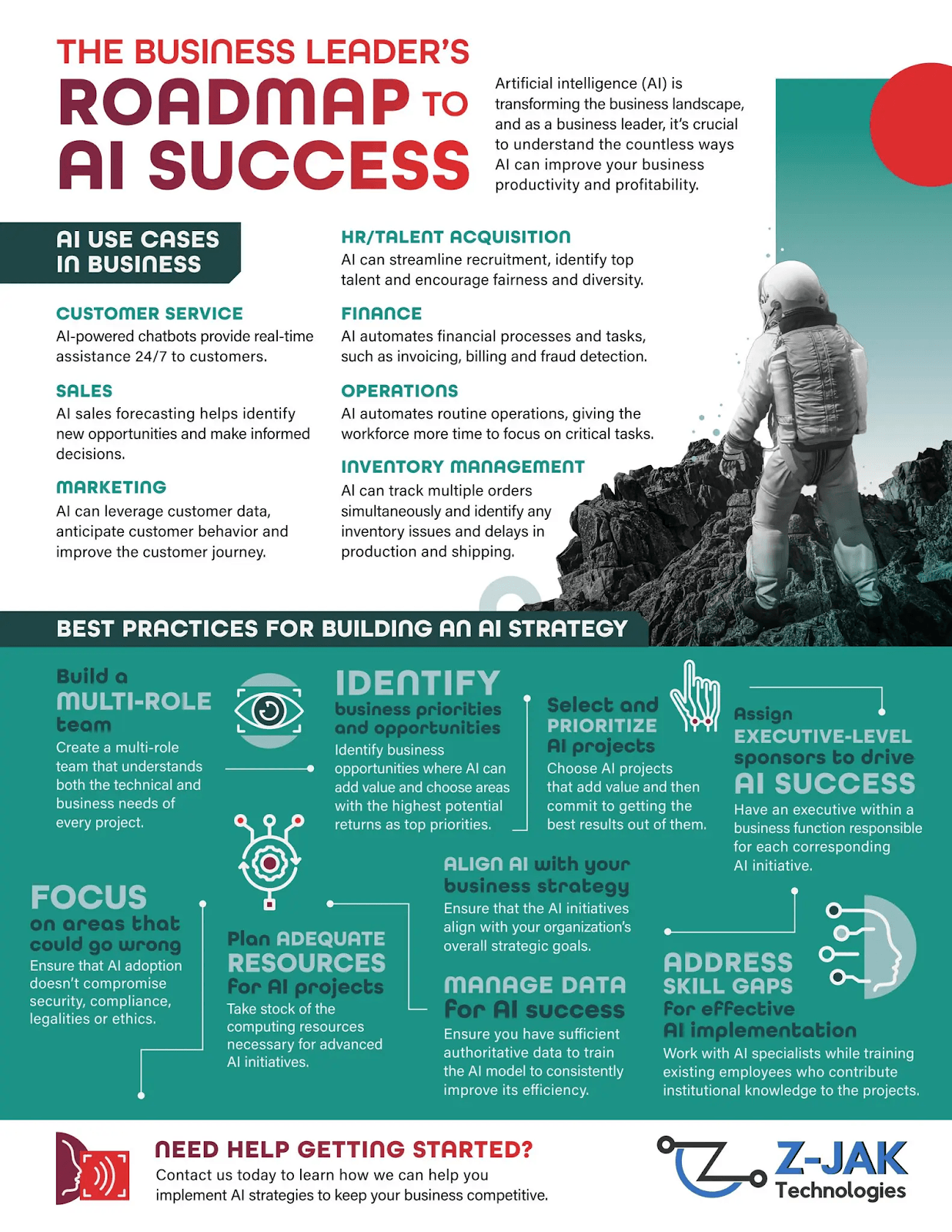
The changing definition of professional expertise
Throughout the last several decades, the definition of professional "expertise" was based primarily on a combination of education, practical experience, and the accumulation of "situational knowledge" over a period of time.
It was thought that a "senior manager" had greater insight into decisions about business strategy than did his/her junior counterpart, because a "senior" had spent more time in the industry or field, allowing that person to develop skills in:
- Patterns
- Judgment
- Leadership maturity
The introduction and widespread proliferation of AI into businesses has created a new level of complexity within this hierarchy. Millions of business professionals today are now working in concert with machines that have the ability to analyse market trends at speeds greater than human analysts; summarise information contained in hundreds or thousands of reports in a much more efficient manner than administrative staff; and produce high-quality creative products (e.g., newsletters, advertisements, etc.) that required a certain degree of specialised training. While professional expertise is still relevant and valuable, it has been reframed.
AI now requires a different type of "expertise". The ability to work with a smart machine requires:
- Interpreting AI-generated insights
- Understanding the limitations and biases of algorithms
- Knowing when to trust the system and when to override it
- Training AI tools with high-quality inputs
- Translating data into strategic decisions
The intelligent professional: A new digital persona
Professional titles and hierarchy were the dominant indicators when determining if someone was a professional in yesterday's workplace. In today's context, the professional is best defined by their ability to adapt and implement AI technology.
Digital transformation has created a need for all professions (finance, law, manufacturing, creative, etc.) to quickly and ethically interpret large amounts of information and create clear decisions based on this data.
For example, within financial services, portfolio managers rely on AI to develop predictive models to better understand market volatility by capturing the experiences of many years of professional judgment, along with the use of algorithms to identify trends in data.
In law firms, natural language processing models provide quick access to case law, allowing attorneys to spend time developing creative arguments and strategies. Within marketing departments, business professionals use analytical tools, consumer behaviour information and generative capabilities to align their marketing actions with consumer sentiment, instead of being reactive.
These modern business professionals possess cognitive flexibility (the ability to explore, evolve, and collaborate with artificial intelligence) rather than simply coding skills. AI-literate professionals can communicate in data language and understand the complexities of the human decision-making process.
This convergence produces hybrid thinkers (those who view intelligence as a combined effort of human and machine) and challenges the conventional wisdom that applied expertise is exclusively the domain of the human mind; rather, establishing competence for success is measured by a person's ability to work with intelligent technologies.
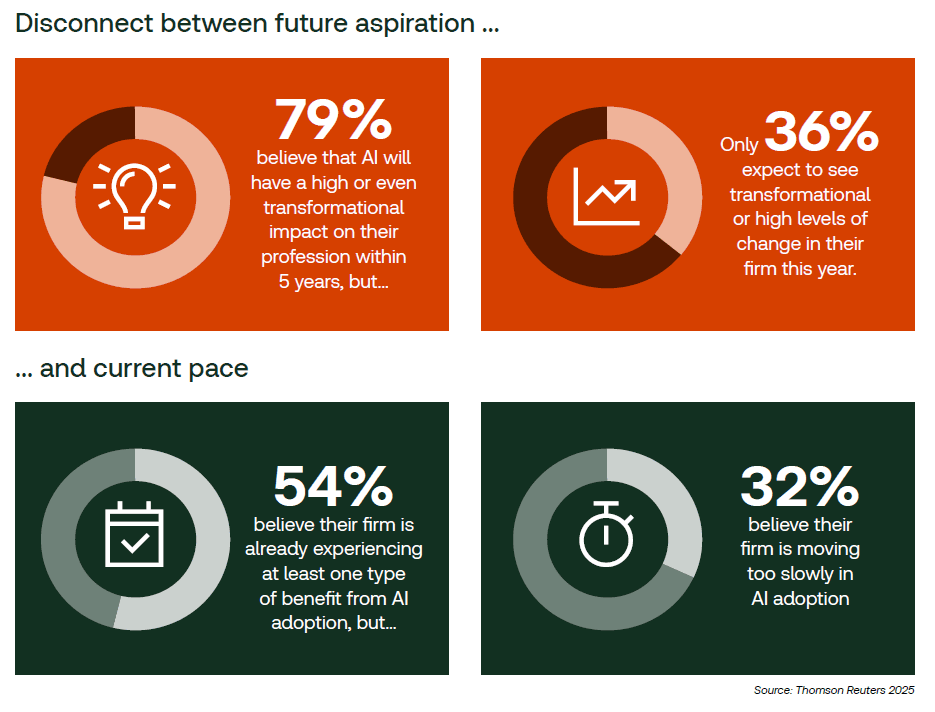
The shift from static knowledge to continuous learning
The rapid evolution of AI and continuing evolution of Business through increased use of Automation, AI Technologies and need for speed of Learning, has led many Business Schools and Corporate Learning Programs to also evolve. AI Literacy modules, Data Visualisation training and simulation exercises that mirror the real-world environments in which a business makes decisions, are incorporated in Today's Executive Education programs.
As organisations take advantage of the rapid rate of development and expansion of AI Technologies, many are developing and implementing customised learning paths through internally developed AI Tutors that assess Employees' Skills Gaps and create individualised recommendations for ongoing training and development.
The reincarnated Learning Philosophies usher in a shift in thinking regarding professional development. Where prior to automation, Experience was viewed as an indicator of an employee's capability, with the introduction of AI, Experience has transitioned into a continuous cycle of learning.
Learning will no longer be viewed as part of a linear path; rather, learning will now occur around the clock, every day. With this continuous learning process, AI will not only act as an enabler but also as a Supportive Partner.
Trust, accountability, and human oversight
While there is friction in the process of reinventing ourselves, it is important not only to be aware of both our experience and our intelligence but also to understand the nature of trust and accountability in their relationship. As such, a professional should know how and when to utilise artificial intelligence (AI), as well as when they should question the output of AI.
In healthcare, AI diagnostic tools are able to detect anomalies in a radiology study better than human radiologists. However, the contextual understanding of a physician (e.g., personal history, social determinants, ethical complexities) cannot be automated. Thus, the most successful clinicians are those who integrate AI-generated probabilities with empathic and ethically driven clinical decision-making.
Likewise, financial services are using automated trading systems to conduct millions of trades within seconds, but human oversight is vital in ensuring that systemic risk and bias do not result from the decisions made. The same holds true for all business sectors; while AI provides analytical insight, human analytical ability is necessary to provide social and ethical interpretation, as well as emotional interpretation.
The above points out a key reality of the AI era: intelligence may be decentralised, but responsibility is still held by humans. The more organisations adopt intelligent tools, the larger the demand for humans to provide sound judgment that will keep intelligent tools within ethical guidelines.
Empathy, creativity, and the irreplaceable human element
As Artificial Intelligence advances and becomes increasingly intelligent, the emphasis on human value has transitioned from repetition to creative/imaginative efforts. Business professionals will be able to leverage the uniquely human abilities; including but not limited to empathetic behaviour, narrative thinking, and cross-disciplinary reasoning as their core strengths.
Artificial Intelligence can create musical compositions, write business documents, and optimise scheduling. Artificial Intelligence will never be able to duplicate the feeling of emotional connection or moral intuition.
Therefore, empathy provides a strategic advantage to a professional leader during communication, negotiation, and leadership: the role of a professional leader today is evolving from the basic role of a decision-maker to the emerging role of a professional leader as a "sense-maker."
Professional leaders of the future will contextualise AI-generated insights within the context of complexity and change associated with human desire and motivation.
Creativity has also taken on new meaning. By utilising creative innovation, professionals can play an active role in how Artificial Intelligence will be used in the workplace. By utilising innovative ideas, business professionals can work within and alongside the popular collaborative platforms and algorithms that enable a broader and wider range of imagination to occur.
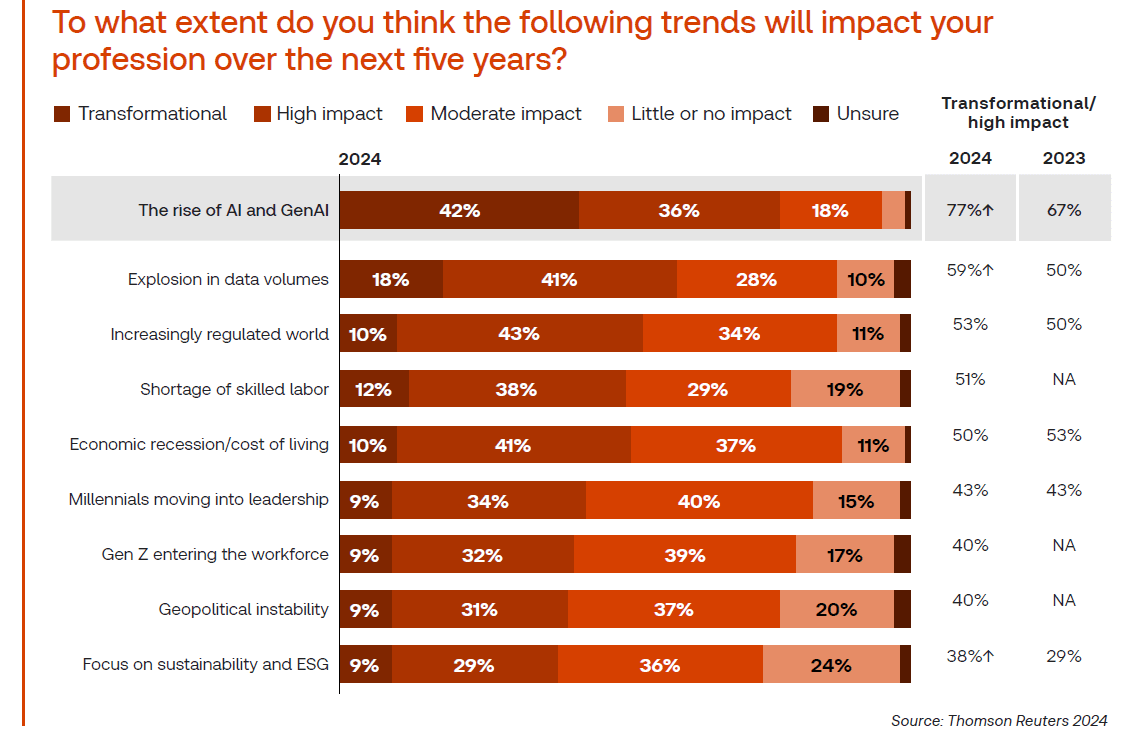
Industries in transition
Across many industries, we are seeing the emergence of a new type of worker: the Professional. Machine-learning-driven predictive maintenance is reshaping the way we think about manufacturing operations and how we develop our technical intuition as engineers.
Lawyers’ research time has decreased through automation of documents and creation of automated legal assistants, however, the human decision-making skills of lawyers will continue to be needed for a number of important functions, such as understanding the morality behind decisions, writing compelling arguments for the courts, and negotiating complex legal issues that cannot be captured in written form.
Marketers have transitioned away from relying on gut feelings or instinct to relying on data analytics and data visualisation tools to monitor customer behaviour throughout their purchasing journey.
They also utilise multiple types of predictive models and engagement algorithms to continually adapt and improve their marketing strategies.
Even in the most "human" industry - healthcare - we are seeing rapid advancements powered by AI. Whether it's through diagnostic support, robotic-assisted surgery or custom medicine, we are witnessing how technology is changing the way healthcare providers interact with their patients.
However, empathy, patient communication, and ethical decision-making continue to be integral components of providing healthcare.
Within the arts community(s), business professionals are now redefining authorship through their use of generative AI tools. For example, artists and designers are collaborating with these tools to create visual and conceptual artwork together; similarly, musicians utilise AI to generate harmonic compositions and treat the algorithms as collaborative partners rather than competitors.
Ultimately, the end result is the establishment of a co-creation model whereby the collaboration of artificial and human creative sources results in a heightened level of creativity.
Leadership in an intelligent organisation
Today, a leader's role is not solely based on authority and position but instead is based on their ability to adapt. To meet this challenge, executives today must build human teams and AI-enabled systems while fostering a culture within their organisations that allows for both curiosity and data literacy to coexist.
In order to become successful in leading today's organisations, strategic leaders will also need to have an understanding of AI ethics and the ethical implications of biased algorithms and how to interpret the data generated by machines. It is important to understand that the foundation of intelligent organisations is not solely based on the technologies they use but also on trust, inclusion and a willingness to learn through trial and error.
In such an environment, the effective leader must be able to provide the analytical and emotional components of leadership — integrating them to form successful organisations. Through their integration of strategy, data, ethics and social impact, they turn AI and the technology behind it into cultural, as opposed to purely technical, assets.
Redefining value and professional identity
As AI continues to grow in power and capability, professionals must reassess the basic principles of value. In a world where machines can take care of the technical aspects of many professions, there is only one thing left that separates humans from machines: The capacity to integrate and derive meaning from information, or the ability to synthesise information.
In the future, professionals will not just be known for what they know, but how they think—through their questioning, design, and interpretation of complex situations. Expertise is no longer based solely on experience or instinct; it is now based on how well someone is able to interpret data as part of an ongoing conversation between people and machines.
Industry-oriented job classifications are changing into knowledge-based roles characterised by the ability to combine knowledge from different disciplines (i.e., creative analytics, digital empathy, ethical reasoning) and the increased demand for flexible, adaptable business professionals that can work in a variety of business settings, regardless of their industry affiliation.
The psychological shift
Technology and skill in this field are only one aspect of a larger change taking place throughout the profession. Many professionals are attempting to navigate the tension between curiosity and fear regarding AI. On one hand, they are excited about what AI could mean for their careers, and on the other hand, they are worried about how they will "fit" into this new world.
What is interesting about the way we think about our future in regards to AI is that most of us are currently thinking in terms of reinvention, not replacement. The human experience is what drives the narrative in the business world. It is through the human experience that intelligence can be applied in a meaningful way.
Those who embrace AI are learning to translate their pride in their past accomplishments into a willingness to continue re-inventing themselves with AI. Learning from AI is a sign of humility and wisdom.
Final thoughts
Experience will not always evolve into Intelligence. Experience is a constant interaction between human awareness and Artificial Intelligence. AI is changing the way we view the quality of our work by introducing new ways to access and share expertise.
The capacity for human adaptability, questioning, and creation is the most valuable resource in this new era of intelligent technology. The individuals who master the skill set of balancing these factors will be the architects of the future of business intelligence, not just the end-users of it.


