
Businesses
NVIDIA Launches OpenShell Reference Architecture to Secure AI Agents at Enterprise Scale
21 Oct 2026

NVIDIA introduces a full-stack security architecture combining Vera Rubin, Vera CPUs, BlueField-4 and OpenShell to help enterprises deploy autonomous AI agents with stronger isolation, continuous monitoring and policy enforcement.
NVIDIA has launched its OpenShell Reference Architecture for Safe AI Agents at GTC Berlin 2026, introducing a full-stack approach to securing autonomous artificial intelligence systems across enterprise infrastructure and edge computing environments. Announced during CEO Jensen Huang's keynote on October 21, the architecture brings together NVIDIA Vera Rubin, Vera CPUs, BlueField-4 data processing units and OpenShell secure runtime software.
The new architecture is designed to help organisations build, operate, monitor and control AI agents capable of accessing business applications, processing sensitive information and carrying out increasingly complex tasks. It extends NVIDIA's existing OpenShell runtime into a broader infrastructure framework that integrates computing performance with security controls.
The announcement comes as enterprises move beyond AI assistants that generate text or answer questions towards autonomous systems that can execute workflows, interact with tools and make operational decisions. NVIDIA is positioning agent security as a fundamental requirement for scaling these technologies across businesses and critical industries.
What Is NVIDIA's OpenShell Reference Architecture?
The OpenShell Reference Architecture provides a framework for deploying autonomous AI agents within controlled computing environments, combining processing infrastructure with software-based isolation and hardware-supported security enforcement.
At its foundation is NVIDIA OpenShell, an open-source runtime designed to restrict what AI agents can access and execute. It uses isolated environments and policy controls to help prevent agents from operating beyond their approved permissions.
Unlike traditional AI applications, autonomous agents can interact directly with external systems, use software tools, access files and execute commands. These capabilities create significant opportunities for enterprise automation but also introduce new security challenges.
An agent assigned to analyse customer information, for example, may need permission to read selected business records but should not automatically have access to financial transactions, employee credentials or unrelated internal databases.
OpenShell provides a technical mechanism for defining and enforcing such boundaries. The new reference architecture expands this approach across the underlying computing infrastructure, allowing organisations to combine agent execution, monitoring and hardware-level security.
During the keynote, Huang emphasised the importance of securing agents as they become more capable, particularly because their access to files, networks and software tools creates risks that conventional application safeguards may not fully address.
Vera Rubin, Vera CPUs and BlueField-4: How the Architecture Works
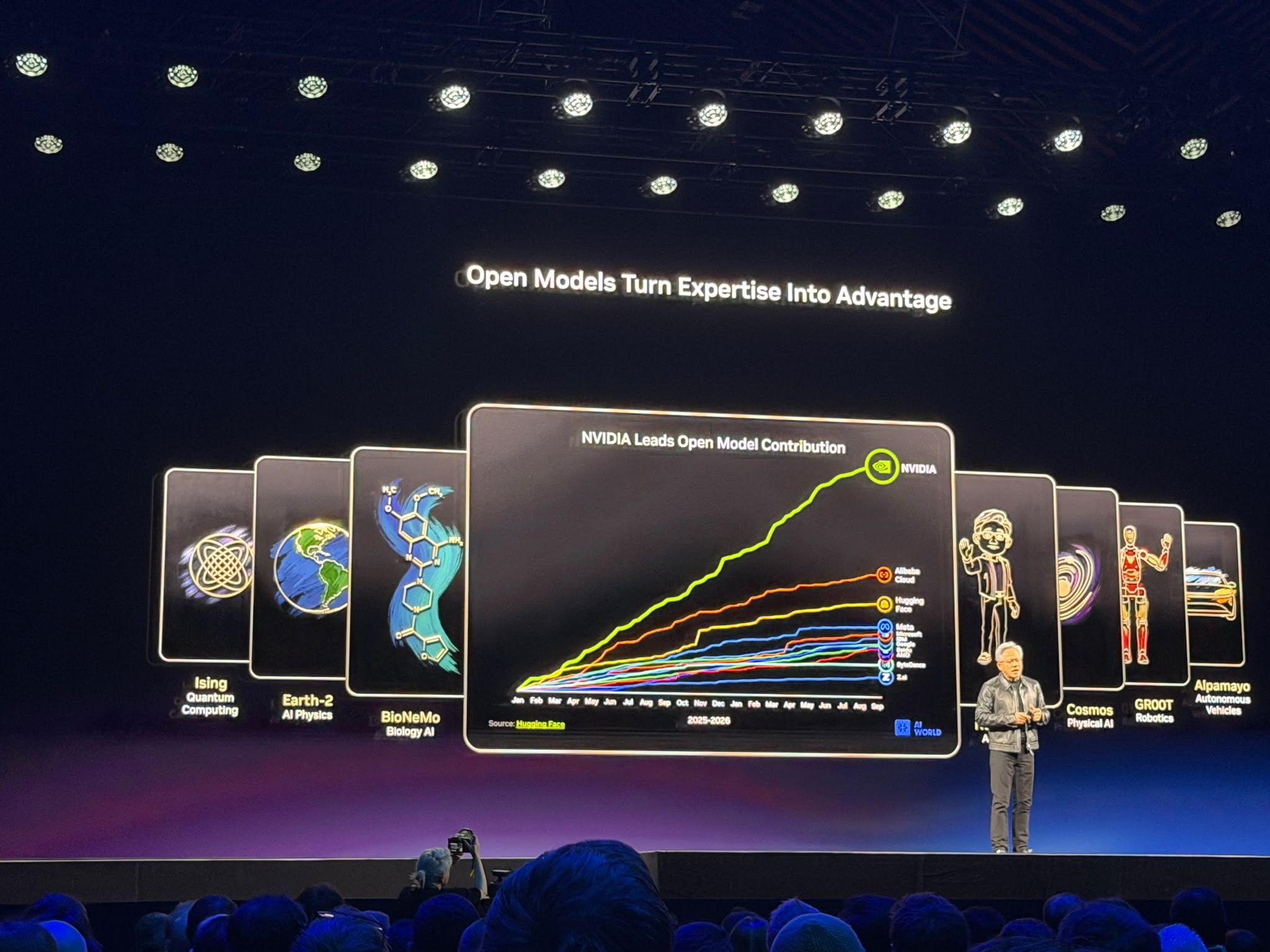
NVIDIA's reference architecture assigns different responsibilities to three major computing components.
The Vera Rubin accelerated computing platform provides the processing infrastructure for running AI models, including enterprise workloads built with NVIDIA Nemotron and other open or proprietary models.
NVIDIA Vera CPUs support agent harnesses, orchestration and tool execution. These systems manage the processes that allow an agent to coordinate tasks, retrieve information and interact with external applications.
NVIDIA BlueField-4 data processing units provide an additional security layer through NVIDIA Sentry, the company's monitoring and policy-enforcement framework.
Sentry is designed to observe agent behaviour from a separate computing environment and enforce restrictions when an agent attempts to operate outside its approved boundaries.
According to NVIDIA, BlueField-4 and Sentry can identify and quarantine agents that violate security policies in milliseconds. The company also reports that its implementation can increase agent capacity by up to 20%, although actual performance will depend on system configuration and workload characteristics.
This separation of responsibilities is central to the architecture. Rather than relying exclusively on the AI model or application software to follow security instructions, NVIDIA aims to establish controls within the infrastructure on which the agent operates.
The company's broader work on these technologies was previously covered in Businessabc's article on NVIDIA's Open Agent Safety Platform, which examined the introduction of OpenShell, Sentry and enterprise security controls.
More Than 100 Partners Support NVIDIA's Agent Safety Ecosystem
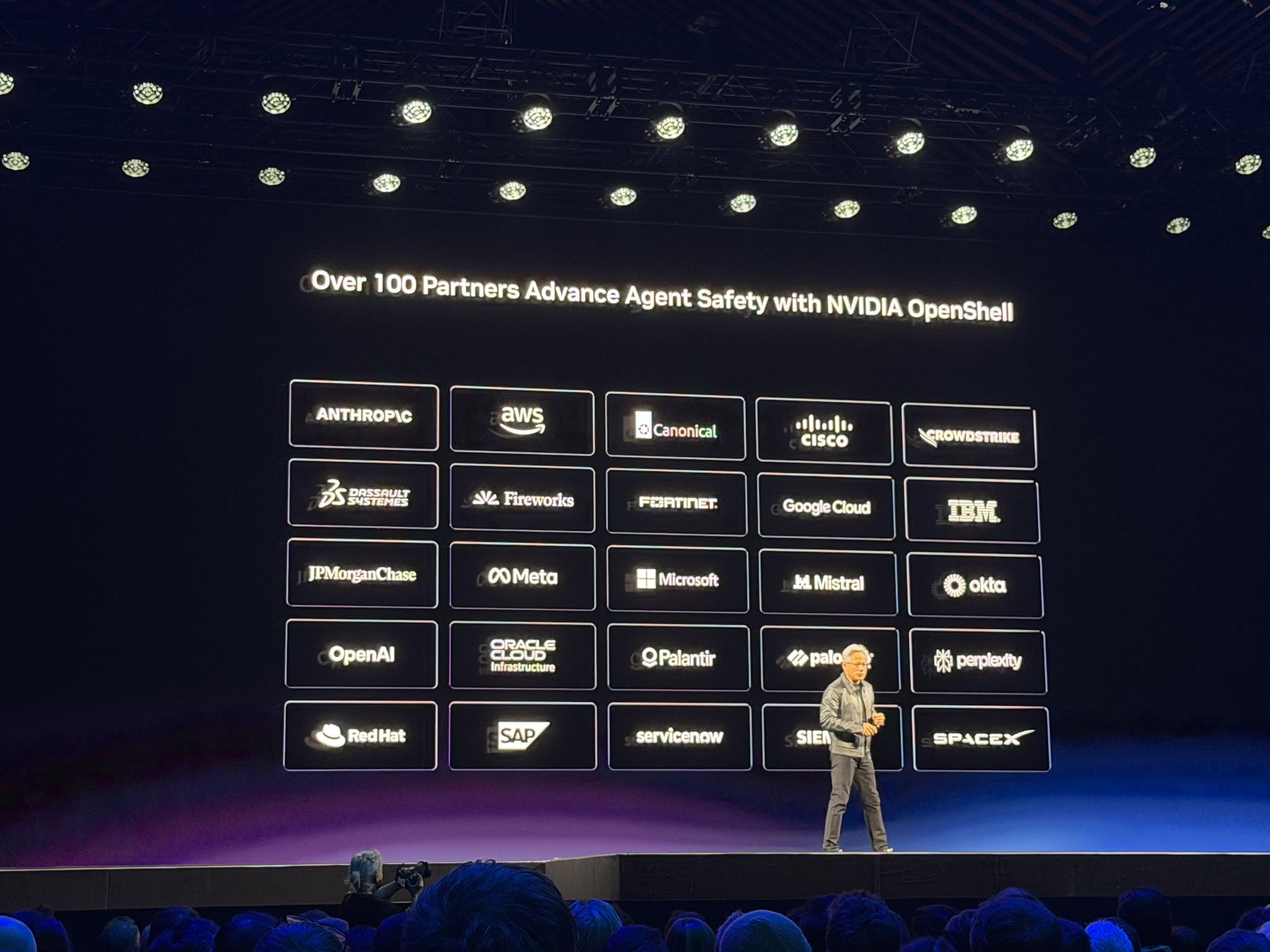
NVIDIA is working with an extensive network of cloud providers, cybersecurity companies, enterprise software developers and computing manufacturers to support secure AI agent deployments.
Technology companies including Microsoft, Google Cloud, AWS, Anthropic, OpenAI, Meta, IBM and Perplexity are among those working with the OpenShell Reference Architecture.
Cybersecurity specialists such as Cisco, CrowdStrike, Palo Alto Networks, Fortinet, Okta and Zscaler are also involved in developing or integrating security solutions around the architecture.
The participation of these companies reflects the growing complexity of enterprise AI environments, where agents may interact with multiple cloud services, internal business applications, databases and external software tools.
NVIDIA is also collaborating with enterprise software providers including SAP, ServiceNow, Siemens and Dassault Systèmes to extend agent security into existing business systems.
SAP is integrating the OpenShell Reference Architecture with its Joule Studio runtime, connecting enterprise governance capabilities with controlled agent execution.
ServiceNow has announced the general availability of ServiceNow Arc, a long-running AI agent whose actions are governed through ServiceNow's control systems and enforced using NVIDIA OpenShell. Its AI Passport authority layer is also designed to support access revocation through OpenShell and NVIDIA Sentry.
These integrations illustrate how agent security is moving beyond standalone development tools towards enterprise-wide governance infrastructure.
Why Autonomous AI Agents Require Stronger Security
As organisations adopt agentic AI, traditional cybersecurity frameworks must account for systems capable of taking action with limited human supervision.
A conventional chatbot primarily generates information in response to user requests. An autonomous agent may execute software, modify files, access databases, initiate transactions or communicate with other agents.
These capabilities create additional security and operational risks, particularly when agents are connected to sensitive business environments.
An agent with excessive permissions could unintentionally expose confidential information, alter important records or execute actions that conflict with organisational policies.
Malicious instructions embedded in external documents or websites may also attempt to manipulate an agent into carrying out unauthorised tasks.
Infrastructure-level controls can reduce these risks by restricting access independently of the model's instructions.
However, technical isolation alone does not guarantee that an AI system will make correct decisions or operate in compliance with every organisational requirement.
Businesses must also establish accountability, human oversight, audit processes and clear rules defining which decisions agents can make independently.
Financial Services and Critical Industries Explore Agent Governance
NVIDIA's announcement has particular relevance for highly regulated sectors, where organisations must demonstrate control over access to information and operational systems.
Banks including BBVA and Santander are working with NVIDIA to explore the OpenShell Reference Architecture as a framework for strengthening agent safety, security and governance.
Financial institutions may use AI agents for research, document processing, customer support and internal operational tasks. However, the risks associated with autonomous systems increase when they interact with financial records, sensitive personal information or transaction-processing infrastructure.
Similar considerations apply to healthcare, manufacturing, telecommunications and public infrastructure.
In these environments, the consequences of unauthorised actions can extend beyond data security to service disruption, financial losses and physical safety.
NVIDIA is extending its reference architecture to edge computing environments through RTX Spark, DGX Spark and DGX Station systems, supporting use cases where agents operate closer to users, industrial equipment and physical processes.
The company's approach reflects a wider industry recognition that security must evolve alongside the growing capabilities of autonomous AI.
OpenShell and the Future of Enterprise AI Infrastructure

NVIDIA says the OpenShell Reference Architecture is now available and supports major enterprise operating systems and infrastructure environments, including Linux, Kubernetes and Microsoft Windows.
The framework is designed to work across different AI models and deployment platforms, giving organisations greater flexibility when developing their agentic AI strategies.
For technology leaders, the announcement raises an important strategic consideration: the security of an AI agent can no longer depend solely on the application in which it operates.
As companies introduce autonomous workflows, they will need infrastructure capable of enforcing permissions, observing activity and responding when systems operate outside approved boundaries.
NVIDIA's investment in Vera Rubin, Vera CPUs, BlueField-4 and OpenShell indicates that security is becoming an integral part of the wider AI computing architecture.
The broader business implications extend beyond cybersecurity. Organisations must determine how autonomous systems fit within existing governance frameworks, which activities require human approval and how responsibility is assigned when an agent makes a mistake.
AI agents have the potential to improve productivity and transform business operations, but successful deployment will depend on balancing autonomy with control.
NVIDIA's OpenShell Reference Architecture represents an effort to address that challenge at the infrastructure level, helping enterprises move towards more secure and accountable autonomous AI systems.
Sources
- NVIDIA Newsroom — NVIDIA Launches OpenShell Reference Architecture for Safe AI Agents (21 October 2026) https://nvidianews.nvidia.com/news/openshell-reference-architecture
- NVIDIA Blog — GTC Berlin 2026: Live Updates From NVIDIA CEO Jensen Huang's Keynote (21 October 2026) https://blogs.nvidia.com/blog/gtc-berlin-2026-keynote/
- NVIDIA Blog — How Autonomous AI Agents Become Secure by Design With NVIDIA OpenShell (23 March 2026) https://blogs.nvidia.com/blog/secure-autonomous-ai-agents-openshell/
- Businessabc — NVIDIA Launches Open Agent Safety Platform to Strengthen Enterprise AI Security (1 October 2026)https://businessabc.net/nvidia-open-agent-safety-platform-enterprise-ai-security
Share

Sara Srifi
Sara is a Software Engineering and Business student with a passion for astronomy, cultural studies, and human-centered storytelling. She explores the quiet intersections between science, identity, and imagination, reflecting on how space, art, and society shape the way we understand ourselves and the world around us. Her writing draws on curiosity and lived experience to bridge disciplines and spark dialogue across cultures.


