
first_page, citiesabc
Physical AI, Digital Twins, Super Factories and Smart Cities: Can We Create an Abundance Society?
22 Oct 2026

This article is adapted from the whitepaper “Physical AI, Digital Twins, Super Factories and Smart Cities: Can We Create an Abundance Society?” exploring the role of AI, digital twins, physical AI and AI factories in shaping the next generation of intelligent infrastructure.
Executive Summary
If every instrument could accomplish its own work, obeying or anticipating the will of others, like the statues of Daedalus, or the tripods of Hephaestus … chief workmen would not want servants, nor masters slaves.
— Aristotle, Politics, Book I (trans. Benjamin Jowett)
We stand at a crossroads between the dystopian world of Blade Runner and the technological optimism of Star Trek and Star Wars. A new cyberpunk era is emerging, one that could lead humanity towards either unprecedented abundance or profound technological disruption. Two and a half thousand years ago, Aristotle imagined the end of servitude as a thought experiment: tools that could perform their own work. In 2026, that thought experiment has an engineering roadmap, a supply chain and a capital expenditure line. Artificial intelligence has left the chat window. It is learning gravity, friction and inertia inside physics-accurate simulations before stepping onto factory floors, warehouse aisles, mines, hospitals and city streets.
This white paper maps the convergence of four technologies that, taken together, constitute the operating system of the next industrial era:
- Physical AI: AI systems that perceive, reason, plan and act within the constraints of the physical world, from robotic arms and autonomous mobile robots to humanoids and autonomous vehicles.
- Digital twins: living, data-synchronised virtual replicas of products, processes, buildings, factories and cities, increasingly built on the open Universal Scene Description (OpenUSD) standard.
- Super factories: software-defined facilities that are "born in simulation": designed, commissioned and continuously optimised inside a digital twin before and after a single brick is laid.
- Smart cities: the same technological stack applied to the largest machine humanity has ever built, the city, where digital twins of energy, mobility, water and buildings become instruments of governance.
The evidence assembled here, drawn from corporate disclosures, peer-reviewed research and our own work at ztudium since 2011, demonstrates that these technologies are already delivering measurable industrial benefits. Foxconn estimates that virtual factory modelling can reduce planning and set-up time by approximately 50%, with AI-accelerated computational fluid dynamics running up to 150 times faster. PepsiCo and Siemens report identifying up to 90% of potential issues before physical changes, alongside a 20% increase in throughput and 10–15% lower capital expenditure. Accenture reports 20% greater throughput and 15% capital savings in a consumer-goods warehouse digital twin deployment.

The scale of automation is equally significant. Amazon surpassed one million deployed robots in mid-2025 and reports that its DeepFleet foundation model improves robotic fleet travel efficiency by 10%. At BMW's Spartanburg plant, a fleet of Figure 02 humanoid robots handled approximately 90,000 sheet-metal parts over 11 months. The International Federation of Robotics counts 4.66 million industrial robots operating worldwide, with annual installations exceeding half a million units for four consecutive years.
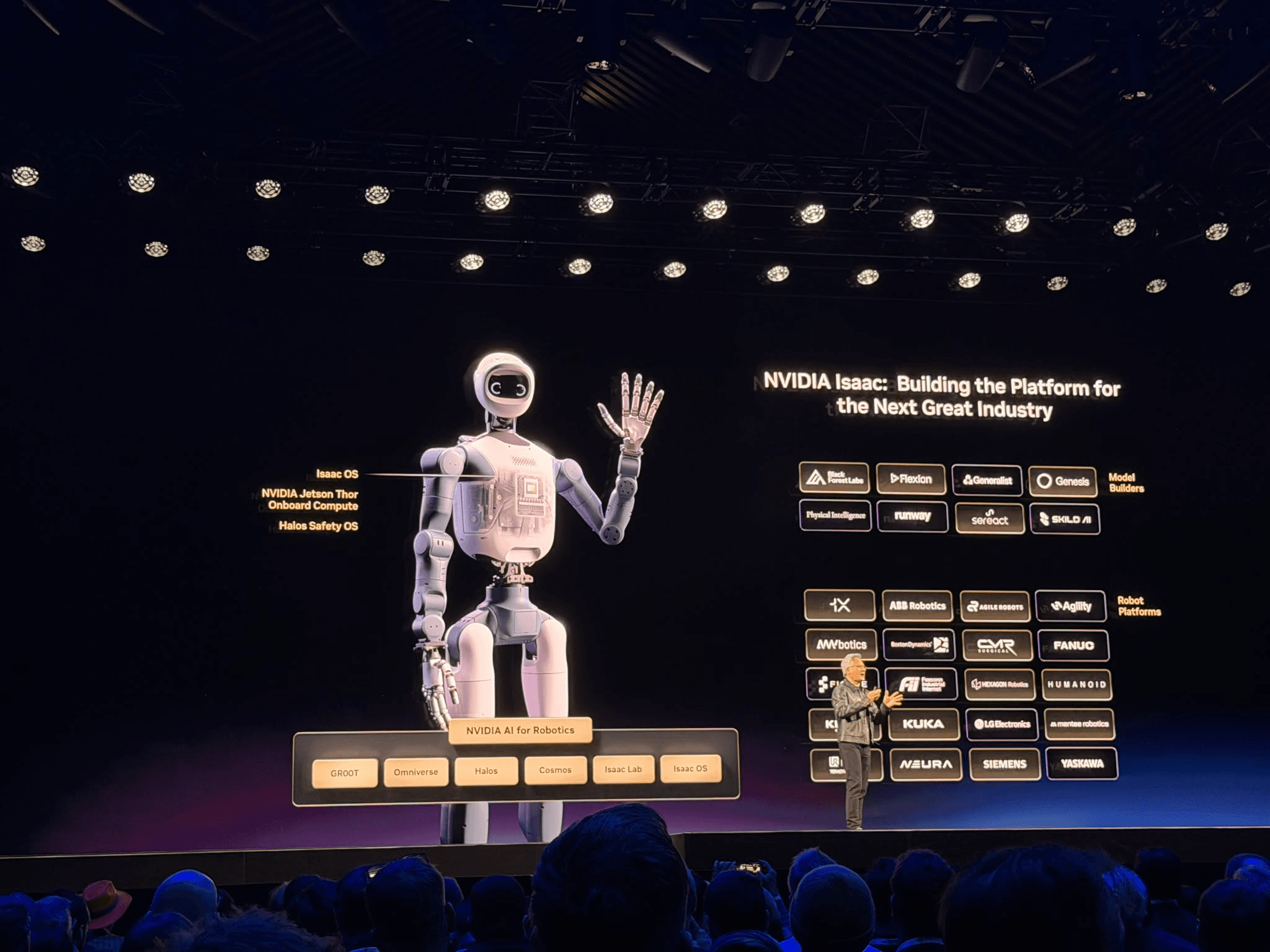
At the centre of this expanding ecosystem stands NVIDIA, whose three-computer architecture, DGX for training, Omniverse and Cosmos for simulation, and Jetson Thor for deployment, provides a foundational framework for Physical AI. Its ecosystem includes industrial leaders such as Siemens, Foxconn, ABB, FANUC, KUKA, YASKAWA, Microsoft and Accenture, alongside a developer community NVIDIA estimates at two million robotics developers.
Through our NVIDIA Ecosystem Atlas on IntelligentHQ, we have mapped the technologies, infrastructure, solutions and real-world applications shaping this transformation. The initiative reflects our broader work to connect accelerated computing and artificial intelligence with practical industrial use cases, business opportunities and the emerging digital economy.
Yet the central question is not merely technical but civilisational. These technologies could push the marginal costs of manufacturing, energy, logistics, healthcare and education towards zero, advancing the vision of an abundance society explored by Peter Diamandis, Steven Kotler and Jeremy Rifkin. Equally, they could accelerate what analysts describe as the "AI doom loop": a cycle in which automation-driven job losses reduce consumer demand, prompting businesses to pursue further automation.
Our conclusion is that abundance is achievable, but it is not automatic. It requires deliberate choices across five interconnected domains: open standards, distributed ownership of the means of intelligence, human-centric augmentation rather than substitution, energy abundance, and an education system rebuilt for a world of thinking machines.
Technology can create a larger economic pie. Only institutions, governance and human choices will determine who benefits from it.
Prologue: From The Knight of Milan to the AI Computing Knights
Abundance is not about providing everyone on this planet with a life of luxury — rather it's about providing all with a life of possibility.
— Peter H. Diamandis and Steven Kotler, Abundance: The Future Is Better Than You Think (2012)
Around 1495, in the court of Ludovico Sforza in Milan, Leonardo da Vinci designed a mechanical knight: an armoured automaton driven by pulleys, cables and gears that could sit up, wave its arms, move its head and open its visor. The notebooks that describe it were scattered for centuries. In the early 2000s the roboticist Mark Rosheim reconstructed the design from Leonardo's fragments and found that it worked, and he later applied lessons from Leonardo's kinematics to robots designed for NASA. Leonardo had not only imagined a robot. He had produced, on paper, its first digital twin: a model precise enough that, five centuries later, it could be compiled into atoms.
That is the arc this paper follows. Humanity has always dreamed in two registers at once. In the Iliad (Book 18) Homer gives the smith-god Hephaestus golden handmaidens "with understanding in their hearts, speech and strength". In 1920 Karel Čapek's play R.U.R. gave us the word robot, from the Czech robota, forced labour, and with it our oldest anxiety: that the servants we build will replace us. Between the dream of the golden handmaidens and the nightmare of Čapek's revolt lies the real question of the 2020s. We now have the tools to build both.
In my 2024 essay AI Spatial Computing: Metaverse Ingenuity or Destructive Innovation? I quoted Marian Tupy of HumanProgress.org: for the first 290,000 of our species' 300,000 years we were foragers, and a person born in Sumeria in 4000 BC would have found the technology of Norman England strangely familiar. Then, from the eighteenth century, living standards took off. The question I posed then: "Are we on the verge of becoming human-virtual natives, human machines, or even on the brink of extinction?", has become sharper in two years. Generative AI taught machines to talk. Physical AI is teaching them to work. We are in the era of the knights of AI and computing!
Each person who reads this stands where the whole species stands: holding, in a single pair of hands, the full inheritance of 300,000 years of tool-making, and the choice of what to make next. And at the moment the world is managed and lead by the new knights of AI and super computing.
What Are Physical AI, Digital Twins and Super Factories?
Physical AI has arrived, every industrial company will become a robotics company.
— Jensen Huang, founder and CEO, NVIDIA, GTC San Jose, 16 March 2026
From perception to generation to action
Jensen Huang describes the history of modern AI as a sequence of waves. The first, from AlexNet in 2012, was perception AI: machines that could recognise images, speech and patterns. The second, which exploded with ChatGPT in late 2022, was generative AI: models that produce text, images, code and video. The third wave, now under way, is agentic AI, systems that reason, plan and use tools. The fourth, and potentially the one with the greatest economic weight, is Physical AI: systems that "perceive, reason and act" in the physical world, in Huang's phrase at GTC 2026.
The difference is not cosmetic. A language model operates primarily in a world of symbols, where a mistake can often be corrected through another attempt. A robot operates in a world of mass, momentum and friction, where a mistake can mean a broken part, a halted production line or an injured person. Physical AI must therefore understand the world's causal structure, what happens when a box is pushed, a cable is pulled or a pallet tilts, and not merely its statistical surface.
Definition. Physical AI is the class of AI systems that combine perception (cameras, lidar, force and tactile sensors), world models (internal representations that predict how the physical environment will evolve), and action policies (control outputs for motors, grippers, wheels and vehicles), trained substantially in simulation and deployed on edge computers inside machines.
The transition from simulation to real-world autonomy is already visible in transportation. NVIDIA's Hyperion autonomous driving platform, including developments involving Volvo and Bolt, illustrates how AI-powered perception, reasoning and planning are being integrated into next-generation mobility systems. These technologies extend Physical AI beyond industrial robotics into autonomous vehicles and, ultimately, the wider infrastructure of smart cities.
When OpenAI unveiled Sora in February 2024, NVIDIA's senior research scientist Dr Jim Fan described it as less a creative tool than a "data-driven physics engine", a model that had implicitly learned something about how objects move. That observation, which I quoted at the time, turned out to be prophetic. In January 2025, NVIDIA launched Cosmos, a family of "world foundation models" designed to generate physically plausible environments and scenarios for robots and autonomous vehicles to learn from. The platform introduced tools for processing and training on enormous volumes of video data, including a pipeline capable of processing 20 million hours of video in 14 days using NVIDIA Blackwell infrastructure.
By March 2026, NVIDIA had announced Cosmos 3, bringing synthetic world generation, vision reasoning and action simulation into a unified model architecture. Officially launched in May 2026, Cosmos 3 represents a further step towards machines that can understand complex physical environments, predict possible outcomes and develop appropriate actions before operating in the real world. This convergence of world models, simulation and autonomous decision-making is helping establish the technological foundations of Physical AI.
The digital twin: a short genealogy
The term digital twin has a precise lineage that is often lost in marketing.
- 1970: Apollo 13. NASA's engineers used physical simulators on the ground, synchronised with telemetry from the stricken spacecraft, to test recovery procedures. It is the canonical ancestor of the idea: a mirrored system used to make decisions about its distant original.
- 2002: Michael Grieves. At the University of Michigan, Grieves presented the "conceptual ideal for product lifecycle management": a real space, a virtual space, and a data link flowing between them. Grieves and John Vickers later formalised the model in Digital Twin: Mitigating Unpredictable, Undesirable Emergent Behavior in Complex Systems (2017).
- 2010–2012: NASA's technology roadmap. Shafto and colleagues defined the digital twin as "an integrated multiphysics, multiscale, probabilistic simulation of an as-built vehicle or system that uses the best available physical models, sensor updates, fleet history, etc., to mirror the life of its corresponding flying twin."
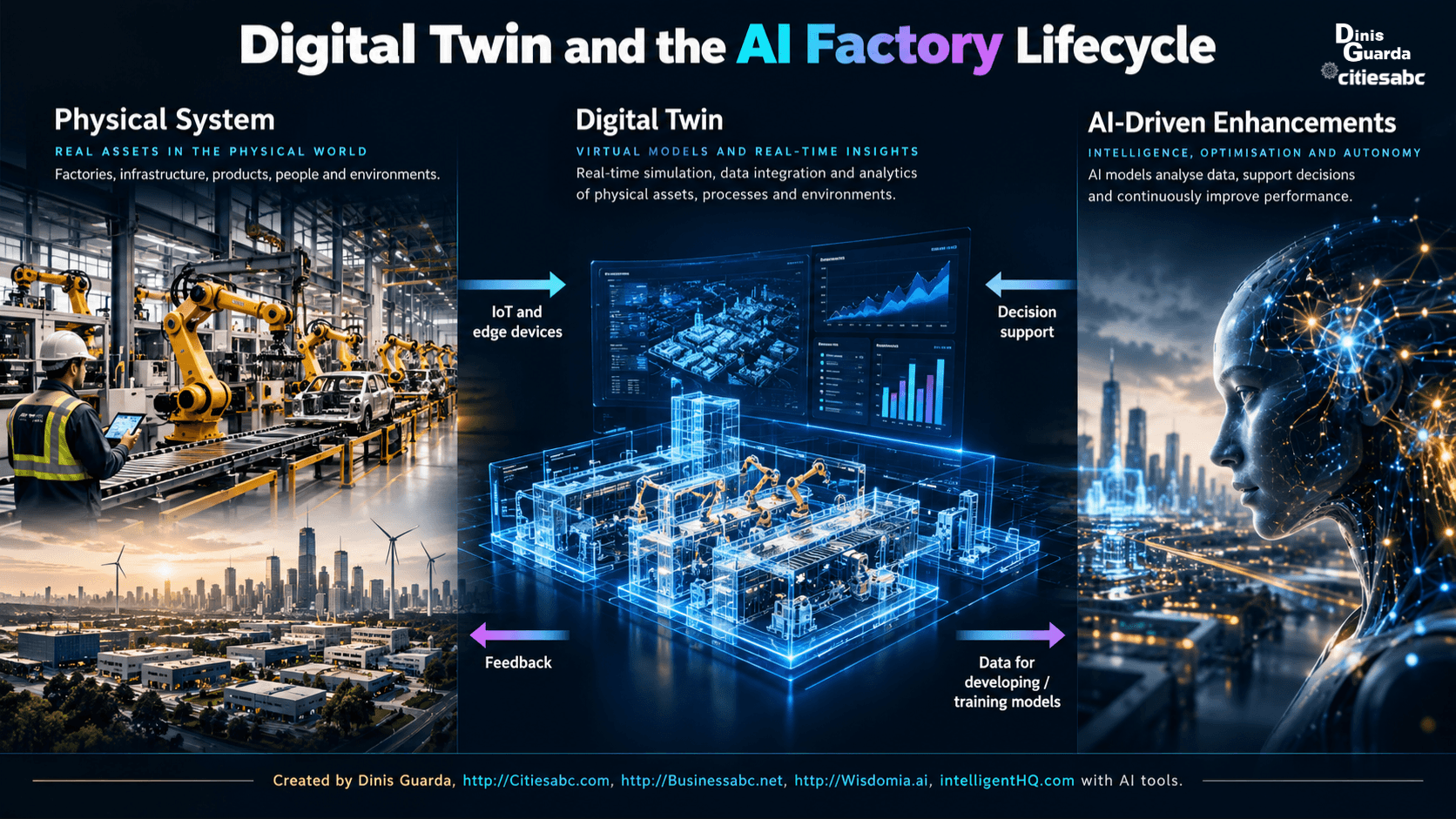
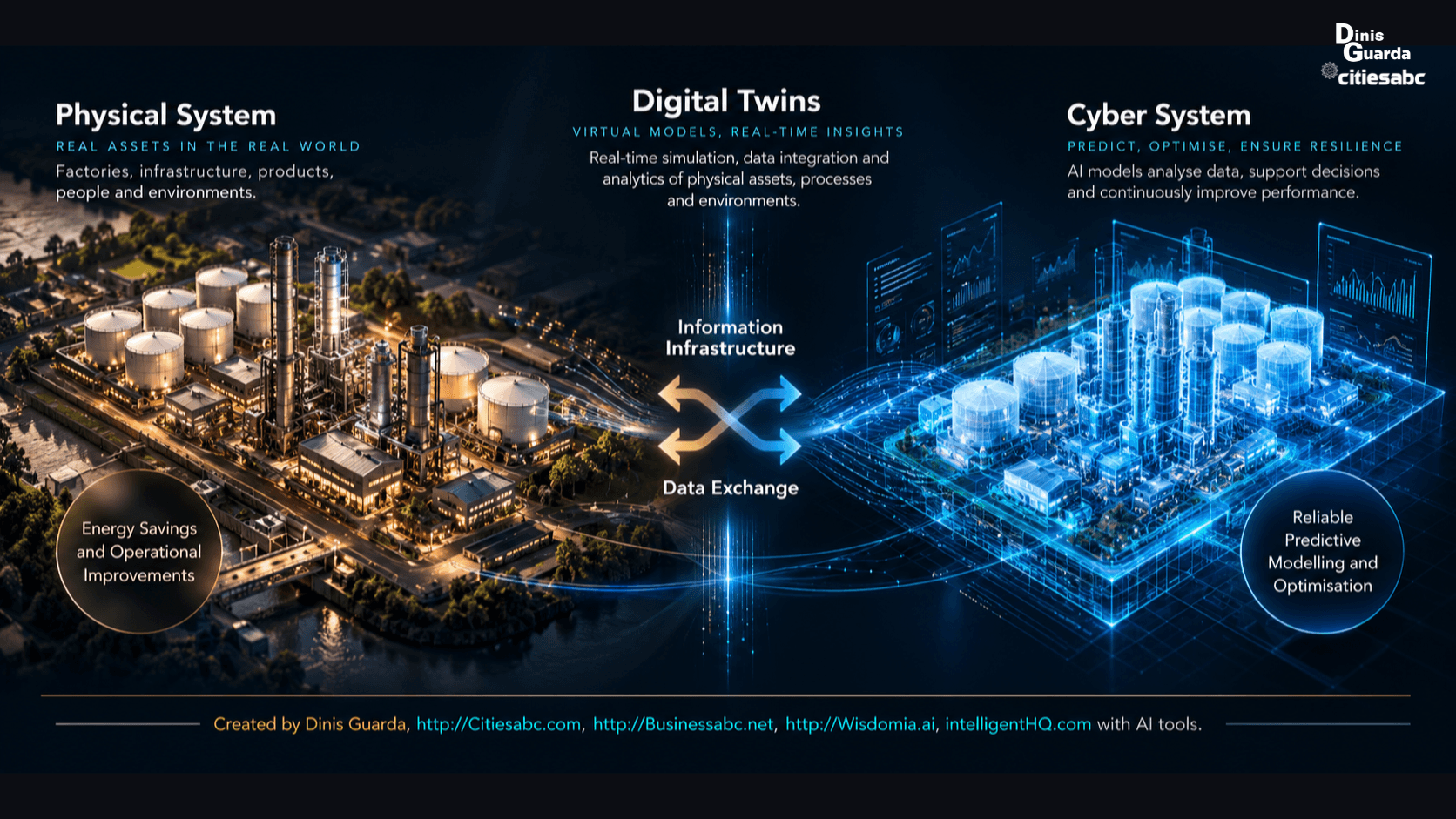
- 2018: Kritzinger's taxonomy. In a widely cited review in IFAC-PapersOnLine, Kritzinger, Karner, Traar, Henjes and Sihn distinguished three levels of integration: a digital model (no automatic data flow), a digital shadow (automatic one-way flow from physical to digital), and a true digital twin (automatic bidirectional flow, where the digital object can control the physical one).
- 2019: Industrial state of the art. Tao, Zhang, Liu and Nee's review in IEEE Transactions on Industrial Informatics mapped the twin across design, production, prognostics and health management, establishing the five-dimension model (physical entity, virtual entity, services, data, connections).
In our own Enterprise Metaverse Digital Twins ABC (ztudium, Metaverseabc), we defined the digital twin as "an up-to-date representation of an actual physical asset in operation" whose purpose is to "simulate, predict and optimise", and we mapped it across buildings, healthcare, fashion and textiles, automotive, aviation, shipping, mining, sport and cities. The key insight of that work was that the twin is not a 3D model. It is a data relationship. A beautiful rendering with no live data is a digital model; a modest wireframe that receives live telemetry and sends back optimised control signals is a digital twin.
Why 2025–2026 changed the twin
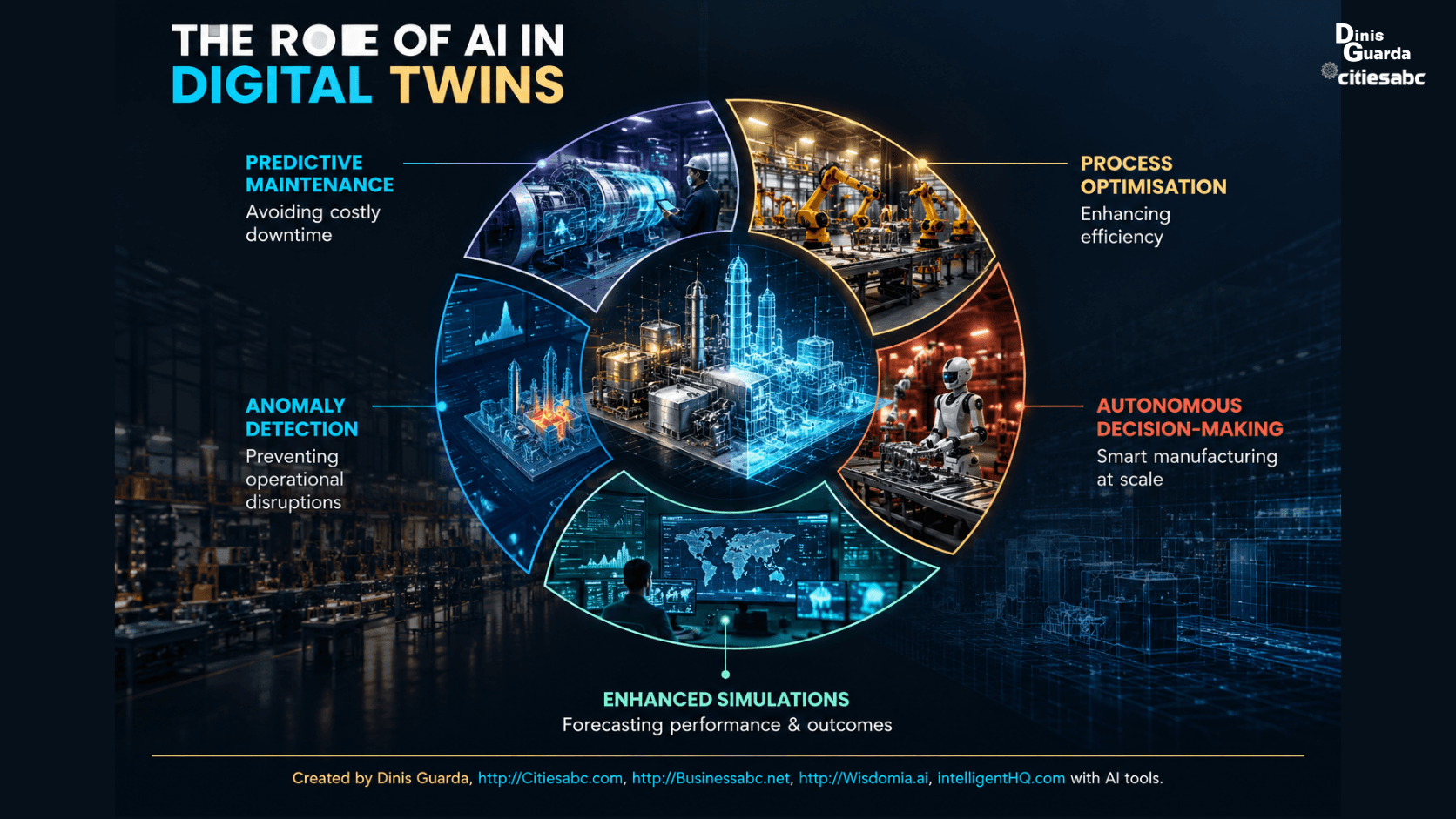
Three developments transformed the digital twin from a planning tool into the training ground for machine intelligence:
- OpenUSD as a lingua franca. Pixar's Universal Scene Description, open-sourced in 2016 and now governed by the Alliance for OpenUSD (founded in 2023 by Pixar, Adobe, Apple, Autodesk and NVIDIA), has become the "HTML of 3D". It lets CAD, BIM, simulation, robotics and rendering tools share a single scene graph, so a factory twin can be assembled from Siemens, Dassault, PTC, Autodesk and Bentley data without translation losses.
- Physics at GPU speed. NVIDIA's PhysicsNeMo (formerly Modulus) uses neural surrogate models to accelerate computational fluid dynamics; Foxconn reports CFD simulations up to 150 times faster, turning thermal analysis of data-centre cooling from hours into minutes. Lam Research reported in October 2026 plasma-prediction times were cut "from days to milliseconds".
- Synthetic data for robots. A twin that obeys physics can generate unlimited, perfectly labelled training data. The digital twin thus becomes what Huang calls a "gym" , the place where robots learn before they work.
What is a super factory?
Definition. A super factory (or AI factory in its manufacturing sense) is a production facility that is designed, validated and continuously operated through a physics-accurate digital twin, in which fleets of AI-driven machines, robotic arms, autonomous mobile robots, vision systems and, increasingly, humanoids, are orchestrated by software and improved through a continuous data feedback loop.
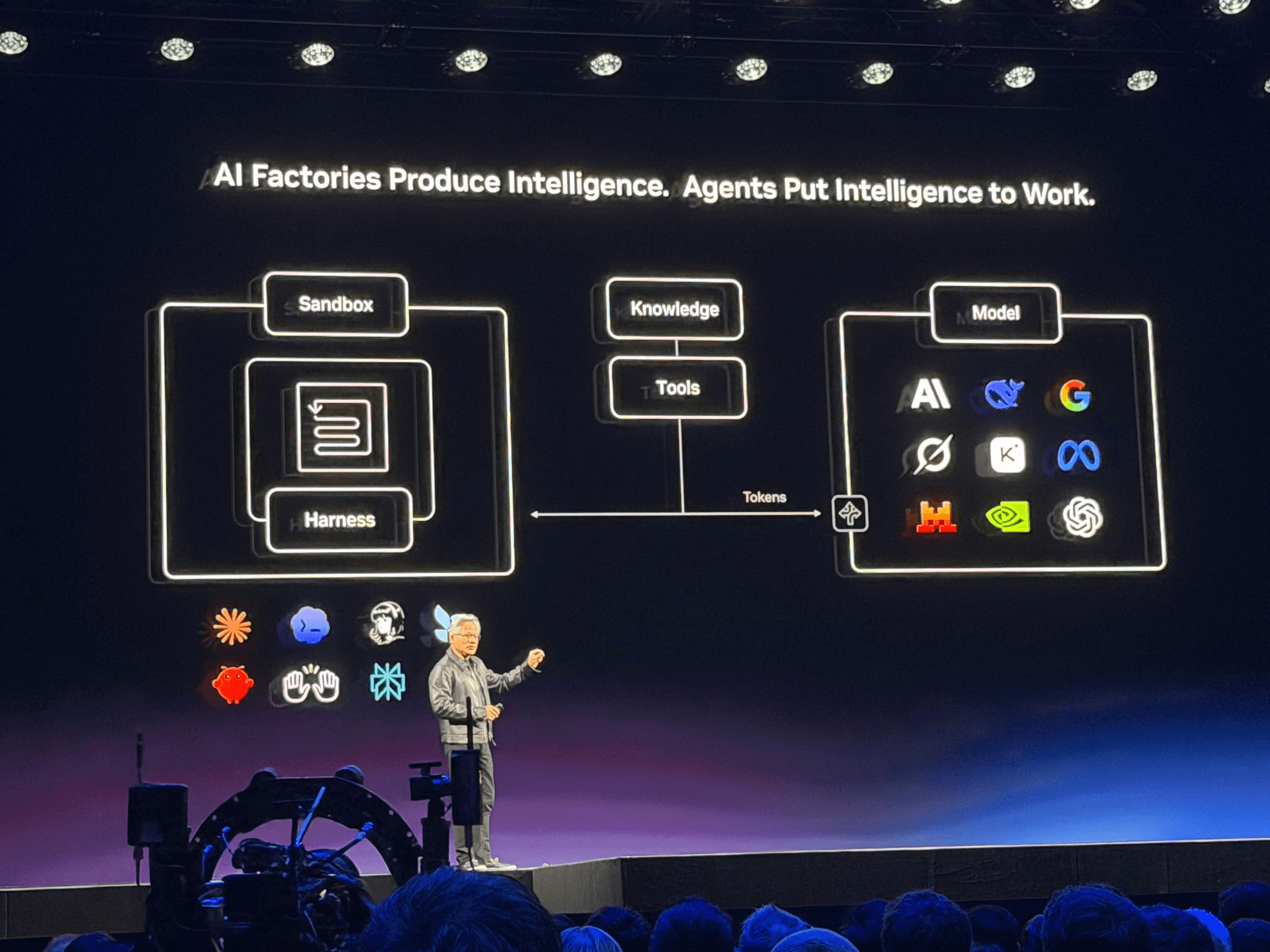
The term deserves careful handling because NVIDIA uses "AI factory" in two distinct but increasingly interconnected senses. The first is the data centre as a factory: a facility that takes in electricity and data and produces "tokens of intelligence". "This is your token factory. This is your AI factory," Huang told GTC in March 2026, adding that "tokens are the new commodity."
The second is the factory as a robot: Huang has described a future in which "the entire manufacturing line will be operated by robots, managed by more robots", transforming the facility itself into a giant, software-defined robotic entity.
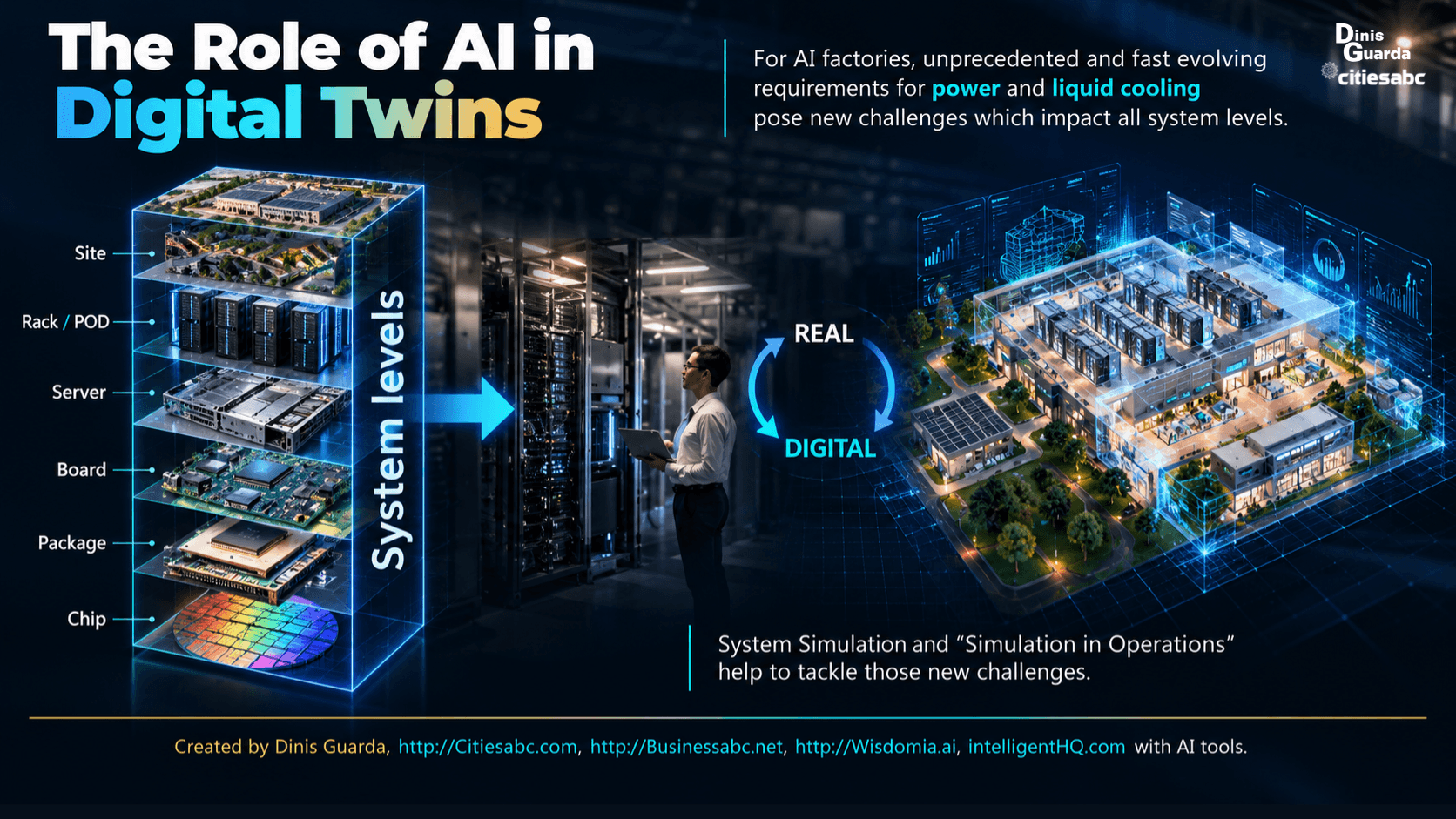
These two concepts are now converging. Foxconn's Houston facility is developing robotic manufacturing capabilities to produce servers for AI factories, while NVIDIA's Omniverse DSX blueprint uses digital twins to design and optimise gigawatt-scale AI data centres. Factories that produce intelligence are increasingly being built by factories powered by intelligence.
This transformation is already taking shape in Europe. Siemens and NVIDIA are advancing autonomous AI-powered manufacturing technologies, with reported potential to reduce engineering effort by up to 85% in specific applications. Their collaboration illustrates how digital twins, industrial AI and automation can reshape factory design, production planning and operational efficiency.
At NVIDIA GTC Berlin 2026, the company also introduced DSX POD, a modular AI factory architecture designed to accelerate infrastructure deployment. The announcement highlights the complementary side of this industrial transformation: while AI increasingly automates manufacturing facilities, digital twin technologies are also helping accelerate the construction and operation of the computing infrastructure that powers these systems.
The four pillars of building a super factory
Across the deployments reviewed for this paper, a common full-stack methodology emerges. We describe it as four structural pillars.
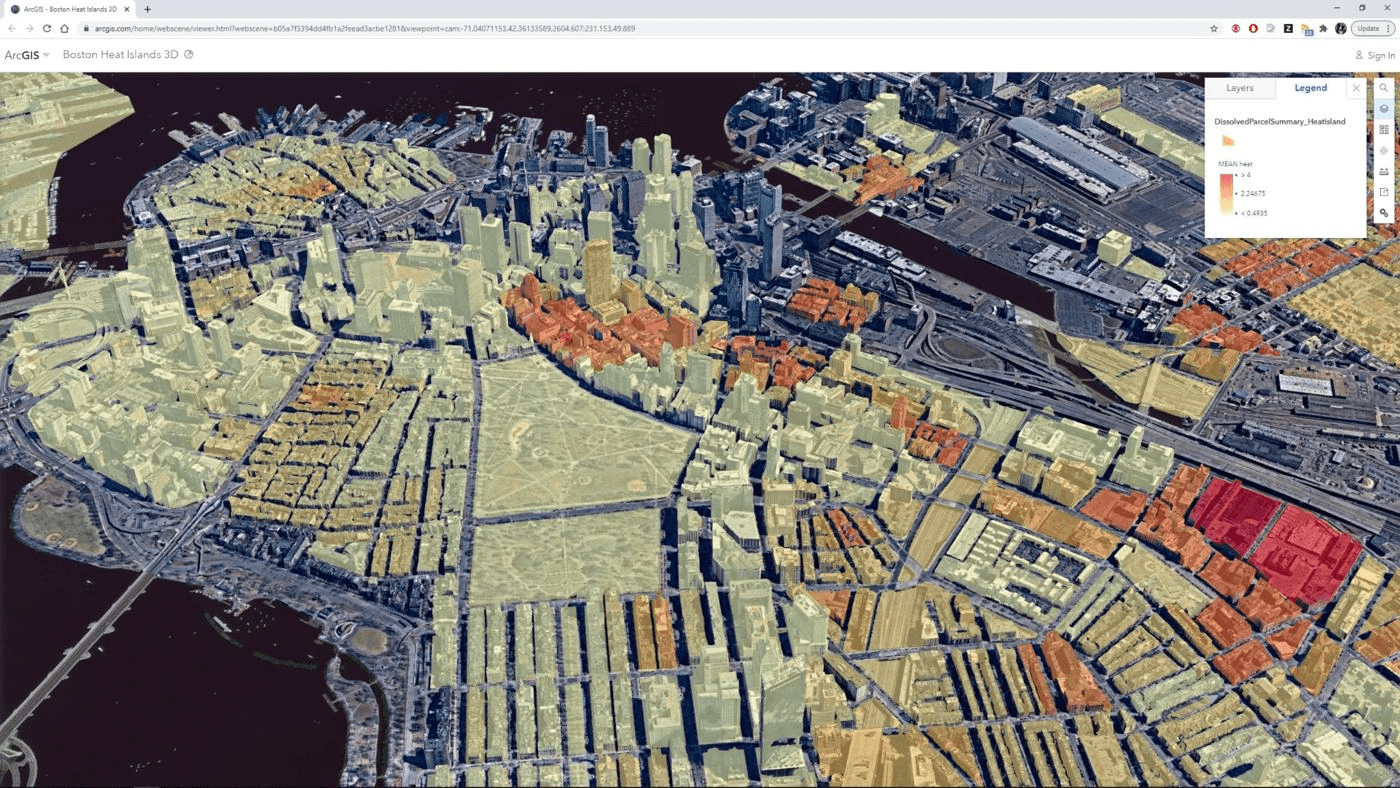
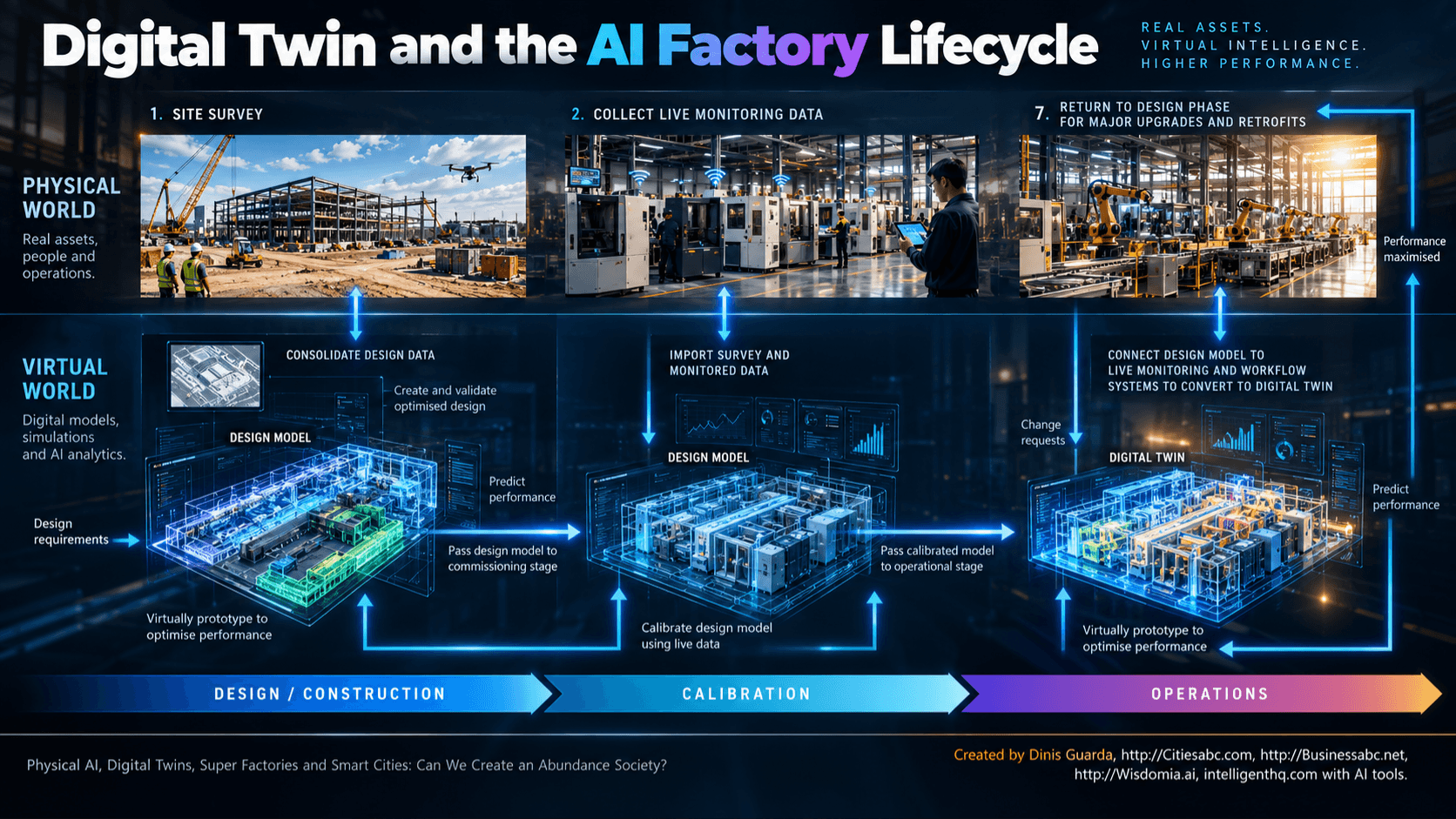
Pillar 1: Geometry foundation. 3D CAD and Building Information Modelling (BIM) data are converted into OpenUSD to create a one-to-one virtual replica of the site: building shell, mechanical, electrical and plumbing (MEP) systems, conveyors, racks, machines and robots. BMW, for example, began 3D-scanning all its vehicle and engine plants in 2020, and its Debrecen plant in Hungary became the first BMW facility planned and validated entirely virtually, across a production hall of roughly 1.4 km².
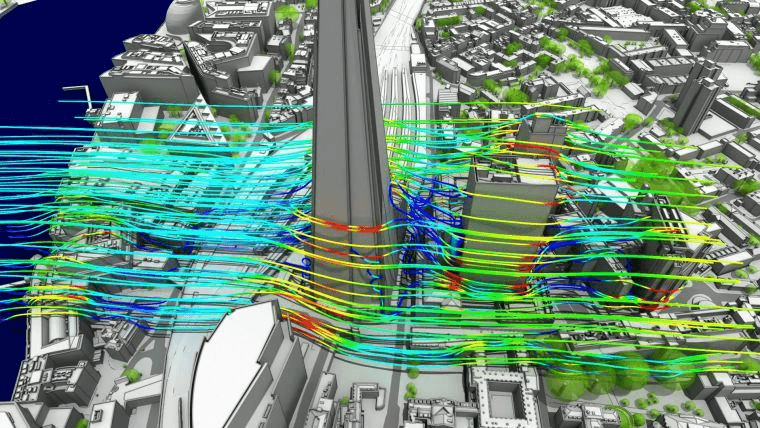
Pillar 2: Production and physics simulation. Workflows, logistics, climate and safety constraints are validated in the twin. Thousands of "what-if" scenarios test line balancing, robot reach, AGV routes, airflow and thermal loads. This is where the first large savings occur, because errors found in simulation cost a fraction of errors found in concrete and steel.
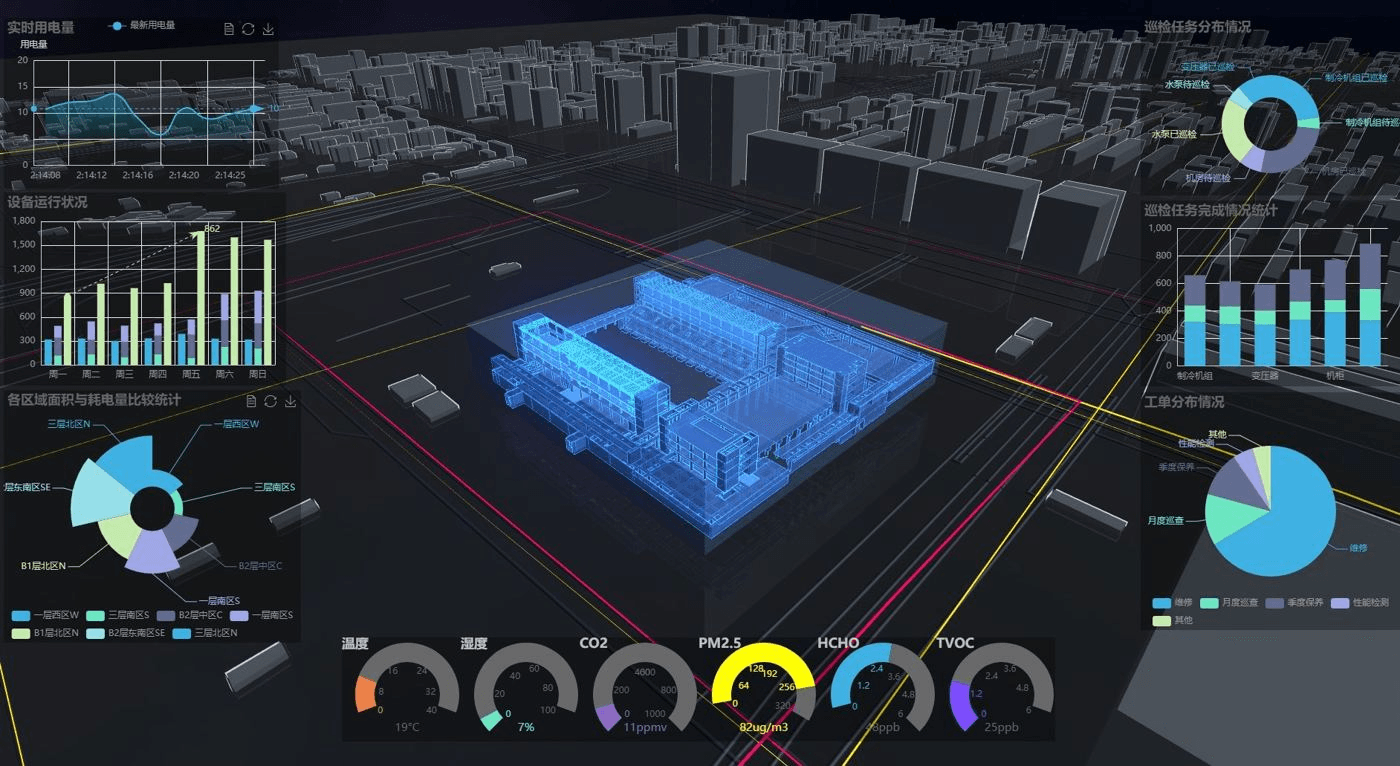
Created with digital twin and AI tools.
Pillar 3: Enterprise IoT data integration. Live machine data, Manufacturing Execution Systems (MES), Enterprise Resource Planning (ERP), shop-floor control and quality systems are connected to the twin. Foxconn's Fii Omniverse Digital Twin links MES, shop-floor control and automation systems to real-time KPI dashboards, giving global teams one command centre. At this point Kritzinger's "digital shadow" becomes a full twin.
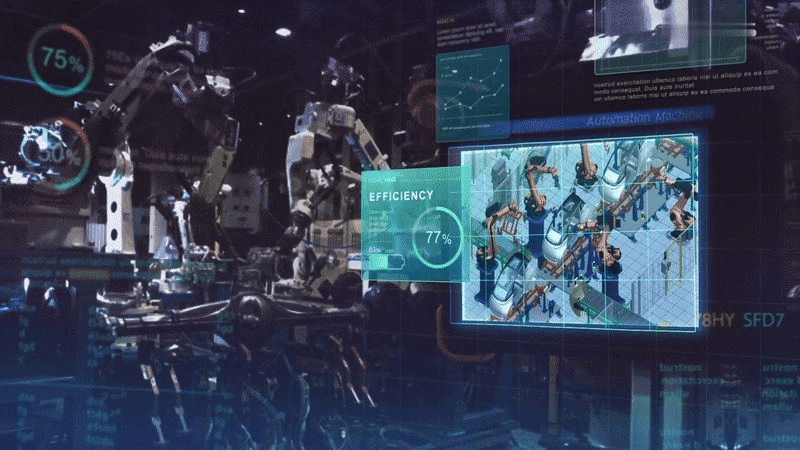
Pillar 4: AI-powered operations. Physical AI agents, multi-camera tracking, vision-based quality inspection and embodied robots (AMRs, manipulators, humanoids) run the facility, while a data flywheel feeds edge cases back into the simulation, retrains models and pushes over-the-air updates to the whole fleet. "When the site goes live," Huang said at GTC 2026, "the digital twin becomes the operator."
| Feature / goal | Digital twin implementation | Core real-world impact |
| Factory set-up and planning | Virtual assembly and validation of MEP layouts before breaking ground | Planning and deployment cycles cut by up to ~50% (Foxconn estimate) |
| Robotics deployment | Training AMRs, manipulators and humanoids in Isaac Sim / Isaac Lab before deployment | Optimised AGV logistics, virtual safety fences, fewer physical collisions |
| Power and energy management | Simulation of air and liquid cooling and dynamic power-block efficiency | Less stranded power, lower energy use, faster grid curtailment response |
| Operations and quality | Computer vision plus physical AI agents connected to MES/ERP data | Better forklift and AMR traffic, lower defect rates, shorter mean time to repair |
From super factories to smart cities
The city is the ultimate super factory: a complex system for producing health, mobility, culture, shelter and opportunity. In Blueprint for Smart Cities: A Social Contract, developed with Professor Kiran Fernandes and colleagues for citiesabc, we argued that smart cities require a human-centric ecosystem built through collaboration between government, universities, industry and citizens. We also warned against the risks of "cities governed by machines". The digital twin offers a technological foundation through which this social contract can be operationalised, enabling more informed planning, efficient resource allocation and transparent decision-making.
The leading examples are instructive. Virtual Singapore, launched by the National Research Foundation in 2014 and developed with the Singapore Land Authority, created a semantic 3D model of an entire nation-state for urban planning, solar potential, flood management and mobility analysis. Helsinki developed Kalasatama and city-wide 3D models as open data, enabling citizens, researchers and businesses to simulate energy consumption, wind conditions and noise. In our book, we documented these initiatives alongside ztudium's own city-twin prototypes for Lisbon, Porto and Évora, as well as Dubai's Museum of the Future, an architectural vision of a digitally connected environment.
The same OpenUSD and NVIDIA Omniverse technologies supporting Foxconn's industrial production lines are increasingly being applied to urban infrastructure, enabling simulations of transportation networks, energy grids, buildings and climate risks at city scale. NVIDIA has described Omniverse as "designed to hold the world's digital twin starting from the earth", reflecting an ambition to connect physical infrastructure with continuously evolving virtual environments.
This convergence is also becoming a strategic priority for European governments. At NVIDIA GTC Berlin 2026, Jensen Huang and German Chancellor Friedrich Merz outlined Germany's ambition to become a global leader in industrial AI, emphasising the integration of Physical AI, robotics, advanced computing and manufacturing expertise. Their cooperation illustrates how AI-powered industrial infrastructure could reshape not only factories but also cities, regional economies and the wider European innovation ecosystem.
For smart cities, the opportunities extend beyond operational efficiency. Digital twins could support more sustainable energy consumption, intelligent mobility systems, improved public infrastructure and better urban resilience. Yet their deployment also raises fundamental questions about data ownership, surveillance, cybersecurity, public accountability and the role of citizens in shaping increasingly automated environments.
The lesson from cities is ultimately the lesson of this paper: technology is necessary, but governance determines whether a digital twin becomes an instrument of human empowerment or a mechanism of surveillance and control.
Sources
Books and research by Dinis Guarda and ztudium
- Guarda, D. (2026). NVIDIA Ecosystem Atlas. IntelligentHQ
- Fernandes, K., Guarda, D. et al. Blueprint for Smart Cities: A Social Contract. citiesabc / IntelligentHQ
- Guarda, D. (2024). "AI Spatial Computing: Metaverse Ingenuity or Destructive Innovation?" IntelligentHQ / citiesabc / Businessabc / Medium.
Academic papers
- Grieves, M. & Vickers, J. (2017). "Digital Twin: Mitigating Unpredictable, Undesirable Emergent Behavior in Complex Systems." Springer
- Kritzinger, W. et al. (2018). "Digital Twin in Manufacturing: A Categorical Literature Review and Classification." IFAC-PapersOnLine, 51(11)
- Tao, F., Zhang, H., Liu, A. & Nee, A. Y. C. (2019). "Digital Twin in Industry: State-of-the-Art." IEEE Transactions on Industrial Informatics, 15(4)
- NVIDIA (2025). "Cosmos World Foundation Model Platform for Physical AI." arXiv:2501.03575
- Shafto, M. et al. (2012). Modeling, Simulation, Information Technology & Processing Roadmap (Technology Area 11). NASA.
Industry reports and primary sources (2023–2026)
- NVIDIA (16 Mar 2026). "NVIDIA and Global Robotics Leaders Take Physical AI to the Real World"
- NVIDIA (Mar 2026). GTC 2026 keynote transcript
- TechRepublic (Mar 2026). "5 Key Takeaways from Jensen Huang's GTC Keynote"
- NVIDIA (28 Oct 2025). "NVIDIA and Partners Build America's AI Infrastructure and Create Blueprint to Power the Next Industrial Revolution"
- NVIDIA (14 Oct 2026). "NVIDIA and Semiconductor Leaders Advance AI Across Chip Design and Manufacturing for AI-Defined Fabs"
- NVIDIA. "Foxconn Develops Physical AI-Enabled Smart Factories With Digital Twins" (case study)
- NVIDIA. "Building Gigawatt-Scale AI Factories with Digital Twins"
- NVIDIA Blog (6 Jan 2025). "NVIDIA Makes Cosmos World Foundation Models Openly Available"
- Accenture (28 Oct 2025). "Accenture Launches Physical AI Orchestrator"
- Siemens / Manufacturing.net (Jan 2026). "Siemens Bets on Nvidia to Push AI-Driven Manufacturing"
- BMW Group (21 Mar 2023). "Virtual production under way in future plant Debrecen"
- BGR (4 Dec 2025). "Humanoid AI Robot Retired After Working on Over 30,000 BMW X3 Cars"
- The Robot Report (1 Jul 2025). "Amazon Launches New AI Foundation Model, Deploys 1 Millionth Robot"
- TechInformed (29 Oct 2025). "Foxconn to Use Humanoid Robots at Houston AI Server Plant"
- International Federation of Robotics (Sep 2025). World Robotics 2025: "Global Robot Demand in Factories Doubles Over 10 Years"
- Capitol Technology University (2026). "The Risks of AI Doom Loops, Ghost GDP, and Automation in the Workplace"


