
Premium Tech Influencer Marketing Platforms & Best Practices (2025–2026)
30 Mar 2026

Introduction
Influencer marketing has matured into a $32.55 billion industry in 2025 and is forecasted to surpass $40 billion by 2026. Brands continue to shift budgets away from traditional ads toward creators because influencer campaigns produce an average return of $5.78 for every $1 spent (top performers deliver $18–$20). Micro‑ and nano‑influencers dominate—44 % of businesses prefer nano influencers and they deliver 10.3 % engagement on TikTok versus ~1–2 % for larger accounts. High‑impact tech campaigns rely on platforms that provide deep data, audience authenticity checks and the ability to link influencer activity directly to revenue.
This report compares the leading platforms for premium, B2B/SaaS and high‑technology influencer marketing, summarises their pricing and sign‑up requirements, highlights market statistics and explains what brands look for in creators. It also suggests best practices to optimise campaigns in 2025–2026.
1. Top Platforms for Premium Tech Creators
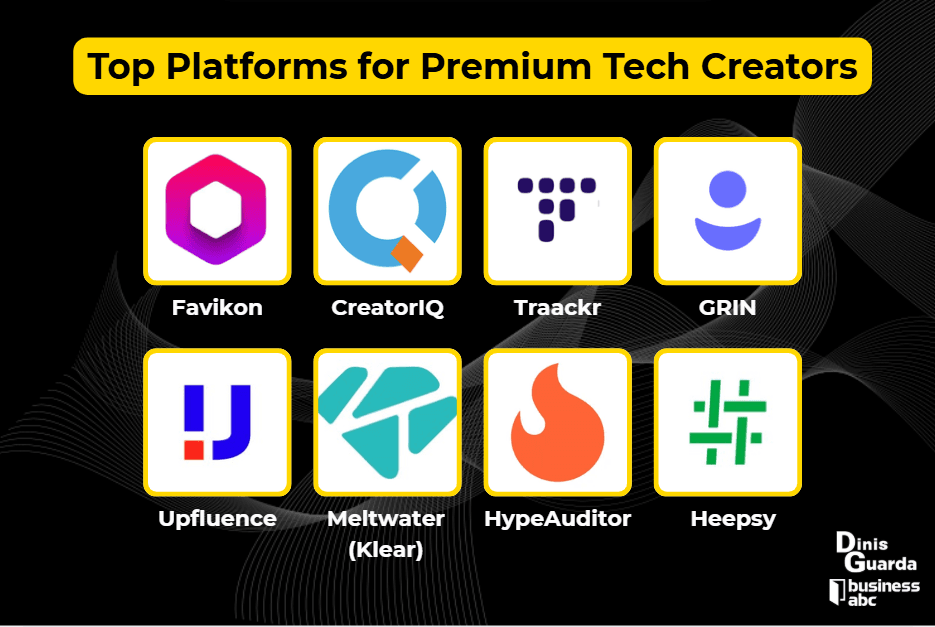
These platforms are rated highly for sourcing and managing premium tech influencers. Features include AI‑powered discovery, audience analytics, fraud detection, CRM, campaign management and e‑commerce integrations. Pricing figures are approximate and may vary by contract or user seats.
Platform | Key strengths & database | Pricing* | Key notes |
| Favikon | AI‑powered search across 9 channels (LinkedIn, YouTube, Instagram, TikTok etc.); merges creator profiles and provides authenticity score, brand fit, estimated price and audience demographics. Deep LinkedIn database for B2B and authority‑driven campaigns. | Starter $99/mo, Standard $199/mo, Pro $449/mo with increasing credits and campaign limits. | Ideal for B2B and SaaS companies seeking authority‑driven creators. Offers a creator storefront for influencers to manage performance and get brand deals. |
| CreatorIQ | Enterprise‑grade platform used by brands like Disney & Logitech; 15 million creators and a billion public accounts. Features content‑first discovery, AI recommendations, brand‑safety filters and flexible demographic filters. | Pricing not public; third‑party sources suggest from $36 k per year; requires a demo. | Large brands needing global governance, advanced fraud detection and cross‑network measurement. Creator sign‑up occurs via invitations from brands (see sign‑up section). |
| Traackr | Data‑driven platform for long‑term ambassador programs. Offers audience insights, competitive benchmarking and budgeting assistance. Traackr Studios (creator portal) allows creators to discover brands and manage campaigns; sign‑up collects basic details (name, email, password). | Standard plan from $32.5 k/year (5 users); Plus from $55 k/year (10 users); Enterprise custom. | Suitable for enterprises in beauty and tech; emphasises advocacy over vanity metrics and fosters long‑term partnerships. |
| GRIN | All‑in‑one platform connecting brands with creators; features integrated email, gifting management, affiliate management, a content library and advanced reporting. GRIN’s AI assistant Gia provides personalised tips to creators. | Lite $399/mo, Essentials $699/mo, Growth $1,149/mo, Complete $1,799/mo. | Strong e‑commerce integrations (Shopify/Magento/WooCommerce) and affiliate attribution. Good for DTC and high‑volume campaigns. |
| Upfluence | Database of ~12 million creators; modules for search, campaign management, payments and AI‑powered outreach. Emphasises integration with Shopify and other e‑commerce systems. | Pricing is custom; third‑party sources report modules starting around $478/mo. | Suited for affiliate‑driven tech campaigns. Creators can sign up for free, create a profile and apply to campaigns. |
| Meltwater (Klear) | Combines a large database (30 M profiles) with AI‑powered search, True Reach scores, CRM, e‑commerce integration and predictive analytics. | Custom enterprise pricing via demo. | Good for large organisations needing in‑depth audience analytics and market benchmarking. |
| HypeAuditor | AI‑powered database of 219.9 M+ creators with discovery, analytics, fraud detection and campaign management. Known for robust fake‑follower detection. | Pricing on request; offers modular plans with optional add‑ons. | Suitable when audience authenticity is critical. Provides Hafi for creators (free analytics). |
| Heepsy | Marketplace connecting brands with creators; free for creators. Offers campaign alerts, swift application process, flexible collaboration management and PDF media‑kit export. Requires ≥1 k followers on Instagram/TikTok/YouTube and public profiles. | Free for creators; brand plans start at $49/mo; Business $169/mo; Gold $269/mo. | Appeals to micro‑ and mid‑tier tech creators seeking to browse a variety of campaigns. |
*Prices in USD; subject to change and may vary by contract or number of user seats. Enterprise platforms often offer annual billing with custom quotes.
2. Specialised & Niche Platforms
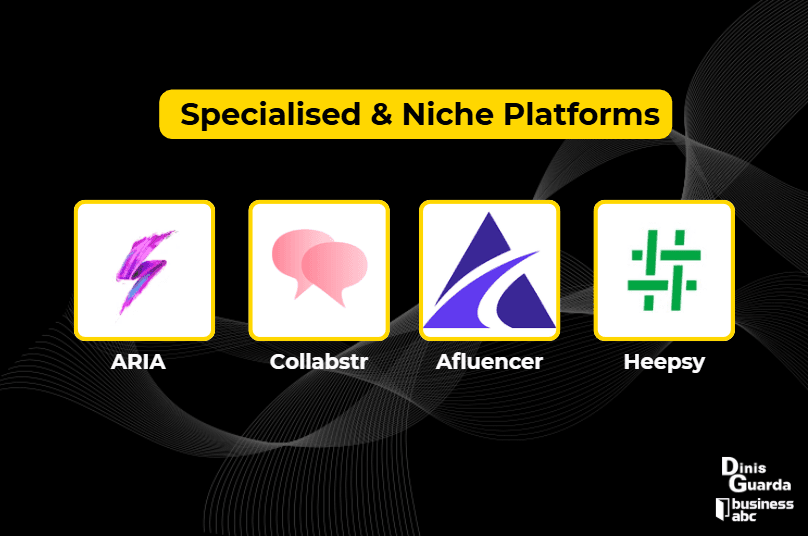
Platform | Focus | Key features | Pricing |
| Socially Powerful – ARIA | Search platform launched in 2024 for B2B technical creators (engineers, KOLs). Uses natural‑language queries, Amazon Rekognition for image search and predictive campaign outcome insights. | Free. | Democratises access to technical creators; strong for complex demos and SaaS launches. |
| Collabstr | Marketplace for quick transactional bookings across Instagram, TikTok & YouTube. Influencers must undergo identity verification and profile audits (fake follower check, previous brand deals). Brands can chat before hiring and track analytics. | Basic free (10 % marketplace fee), Pro $149/mo, Premium $199/mo. | Useful for one‑off tech campaigns or product reviews. |
| Afluencer | Curated environment focusing on niche, micro and high‑quality tech influencers. Brands get invitation credits and premium filters; influencers can upgrade to gain more application credits. | VIP $49/mo, Concierge $99/mo, Boss $199/mo for brands. Influencer plans: Micro (free), Macro $29/mo, Mega $79/mo. | Good for discovering specialised creators and for start‑ups looking for targeted collabs. |
| Heepsy vs. other alternatives | Heepsy provides free sign‑up for creators, paid plans for brands and emphasises authenticity. See sign‑up section for details. |
3. How to List Yourself as an Influencer on Major Platforms
Platform | Sign‑up procedure for creators |
| Favikon | Creators create a free account and verify their email. They must have the Creator Plan and use Favikon’s Chrome extension to claim their profile: navigate to their public social profile, click “Claim My Profile” via the extension and verify the connection. Additional social platforms can be claimed by repeating the process. Favikon is desktop‑only and requires a public account with at least one follower. |
| CreatorIQ | Creators cannot sign up independently; brands invite them to join a Creator Dashboard. The brand sends a link; creators click “Sign up here”, enter an email and password, agree to terms and check a welcome email for activation. During onboarding, they must connect requested social accounts, add personal and payment information and answer brand‑specific questions. |
| Traackr (Studios) | Traackr offers Studios, a creator platform where creators sign up directly by providing their first name, last name, email and a password (minimum eight characters). The portal includes a social calendar, campaigns and messaging tools to manage collaborations and supports multiple users. |
| GRIN | Creators download the GRIN mobile app (iOS/Android) and create a profile. They can connect social accounts, create commissionable links, track earnings and use Gia for personalised tips. Payment and partnership management occur within the app. |
| Upfluence Creator Marketplace | Creators sign up for free, create a profile and can either get discovered by brands or apply directly to campaigns. All campaign details (brief, budget, deliverables) are listed; creators chat with brands and get paid quickly. Upfluence highlights that new campaigns are posted weekly and that creators keep control over collaborationsupfluence.comupfluence.com. |
| Afluencer | Sign up for free, create a profile listing location, interests and avatar, and connect social media accounts for verification (Instagram must be linked via Facebook). After profile approval, creators browse collabs where all campaign details are displayed and can apply directly. |
| Collabstr | Create a free creator profile at collabstr.com/creator. The profile undergoes a review (identity and quality check). A credit card is required for identity verification but no charge is made. Once approved, upload high‑quality images and fill all fields to increase visibility. |
| HypeAuditor (Hafi) | Creators can register via the Hafi platform by providing an email (or using Google) to receive an in‑depth account audit and personalised growth insightsapp.hypeauditor.comapp.hafi.pro. |
| Heepsy | Free for creators; requires a minimum of 1 k followers on Instagram/TikTok/YouTube and a public profile. Create an account by linking social accounts for verification; optionally upload stats for trust. Heepsy does not charge creators on deals. Campaign types include paid, affiliate and content creation. |
For premium tech bloggers and YouTube influencers, the best platforms depend on whether you are monetising content directly through your audience or securing high-value brand partnerships.
Top Monetisation & Subscription Platforms
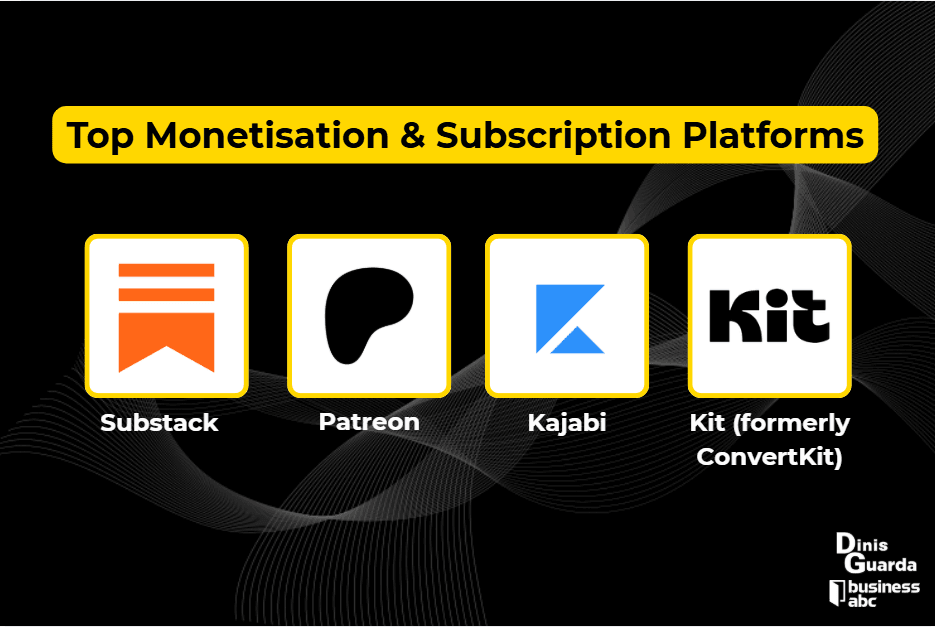
These platforms are ideal for creators building "premium" or exclusive content ecosystems away from standard ad revenue.
- Substack: The gold standard for tech bloggers and thought leaders. It supports newsletters, podcasts, and video, with a built-in discovery engine that helps premium writers reach new subscribers.
- Patreon: Best for YouTube influencers looking to offer tiered memberships. Fans pay for perks like early video access, exclusive discord servers, or behind-the-scenes tech builds.
- Kajabi: Best for tech experts selling structured educational programs or high-ticket courses (e.g., coding bootcamps or advanced software tutorials).
- Kit (formerly ConvertKit): A powerful tool for tech creators who use email as their primary monetization driver through paid newsletters and automated sales funnels.
Premium Influencer Marketing Platforms (for Brand Deals)
These platforms manage enterprise-level campaigns for "Big Tech" brands like Microsoft, Adobe, or Samsung.
- YouTube BrandConnect: Google’s official platform. It typically requires 150,000+ subscribers and connects vetted creators directly with major brands using proprietary Google data for matching.
- CreatorIQ: An enterprise powerhouse used by brands like Disney and Logitech. It focuses on large-scale campaigns and deep data integration, making it ideal for established tech influencers with significant reach.
- Favikon: Unique for its LinkedIn-native discovery, making it the top choice for B2B tech influencers and industry experts who command authority in professional circles.
- Traackr: Specializes in long-term relationship management rather than one-off deals. It is frequently used by consumer electronics brands to build "advocate armies".
Niche Platforms for Tech & Software Collaborations
Some marketplaces are specifically built to bridge the gap between software brands and tech-savvy creators:
- Thinkers360: A premier network for B2B thought leaders and tech experts. It is used by companies like IBM and SAP to find authentic industry authorities.
- Afluencer: Features a dedicated section for software brands looking for tech whizzes. Influencer perks often include high commission rates (up to 50%) for promoting SaaS and digital tools.
- Influentials: Known as a high-quality marketplace for creators to find professional, well-paid collaborations with trusted brand networks.
4. Performance Statistics & ROI
Influencer marketing’s effectiveness underpins why brands invest in premium platforms. Key statistics for 2025–2026 include:
- Strong ROI – The average campaign yields $5.78 for every $1 spent, and top campaigns deliver $18–$20.
- Higher trust than advertising – 69 % of consumers trust influencers more than brand‑created messages.
- Engagement advantage for micro/nano – Micro‑ and nano‑influencers produce 2.5–3 % engagement on Instagram and 10.3 % on TikTok, far above celebrity levels. They also cost about one‑tenth of macro influencers.
- Market growth – The global influencer marketing market is expected to reach $40 billion by 2026, with 86 % of US marketers planning to partner with influencers in 2025.
- AI adoption – Roughly 59 % of marketers use AI for influencer marketing, and 66 % of those report improved results. In B2B, 76 % of agencies use AI to identify the right creators and predict performance.
These statistics emphasise that high‑impact campaigns are data‑driven and often rely on micro‑level creators, strong authenticity checks and AI‑powered analytics.
5. What Brands Look for When Choosing Tech Influencers
Research shows that brands no longer chase vanity metrics; instead they evaluate deeper criteria. Important factors include:
- Audience relevance & demographic fit – Brands verify that the creator’s audience matches their ideal customer (age, gender, location, interests). Niche relevance matters—for example, a SaaS company prefers creators who review software or discuss business technology.
- Engagement quality – High engagement rate and meaningful interactions (comments over likes) outrank raw follower counts.
- Authenticity & credibility – Brands prioritise creators who authentically use or believe in the product and are seen as experts or thought leaders in their niche. Alignment of personal values with brand values is critical to avoid mis‑alignment.
- Performance history & ROI – Past campaign performance (conversions, engagement consistency, content quality) informs expected ROI. Hybrid compensation models (base fee + performance bonus) are common.
- Brand safety & professionalism – Brands conduct background checks to avoid controversies and verify audience authenticity (fake follower detection). Professional communication, timely responses and ability to handle feedback also influence selection.
- Consistency & long‑term potential – Posting frequency, content quality and audience growth trajectory signal reliability and potential for long‑term partnerships. Many brands prefer always‑on relationships rather than one‑off posts, especially in B2B campaigns.
6. Best Practices for Premium Tech Campaigns (2026 Trends)
- Embrace micro‑ & nano‑creators – With higher engagement and lower costs, micro/nano influencers deliver better ROI. Allocate budget to mid‑tier creators while using authenticity tools (e.g., HypeAuditor, Modash) to validate audiences.
- Prioritise technical expertise – For B2B/SaaS, partner with creators who possess genuine technical knowledge (e.g., engineers, cybersecurity experts) rather than general lifestyle influencers. Platforms like Favikon and ARIA excel at identifying technical KOLs.
- Cultivate long‑term partnerships – Always‑on programs outperform one‑off campaigns: two‑thirds of B2B marketers report mature influencer programs, and those integrated across the marketing mix are rated highly effective. Focus on relationship building, recurring activations and co‑creation of content.
- Leverage AI & predictive analytics – Use AI to source relevant creators, assess audience authenticity and predict campaign outcomes. Over 76 % of agencies integrate AI into their influencer selection process.
- Use cross‑platform strategies – Combine LinkedIn, X (Twitter), TikTok, podcasts and newsletters for B2B campaigns; LinkedIn alone is insufficient. For DTC, pair Instagram’s visual reach with TikTok’s virality. Manage multi‑platform campaigns through unified dashboards (e.g., CreatorIQ, Traackr).
- Integrate e‑commerce & affiliate tracking – Connect influencer content to product sales using affiliate links, trackable discount codes and direct platform integrations (e.g., GRIN, Upfluence, Impact.com). This links campaigns to revenue and allows performance‑based compensation.
- Ensure compliance & measurement – Implement clear contracts with deliverables, deadlines, disclosure requirements and payment terms. Use analytics to monitor engagement, conversions and ROI, and adjust campaigns accordingly.
- Promote authenticity & transparency – Encourage creators to share genuine experiences and discourage scripted content. Audience trust is key; 69 % of consumers trust influencers more than brand messages.
Conclusion
Premium tech influencer marketing in 2025–2026 thrives on data, authenticity and strategic partnerships. Leading platforms like Favikon, CreatorIQ, Traackr, GRIN, Upfluence, Meltwater/Klear, HypeAuditor and Heepsy offer advanced analytics, fraud detection and e‑commerce integrations to support sophisticated campaigns. Sign‑up processes vary: some (CreatorIQ) require brand invitations, while others (Traackr Studios, Upfluence, Heepsy) allow creators to register directly.
Brands seeking high‑impact tech collaborations should look beyond follower counts—focusing on audience relevance, engagement quality, authenticity and long‑term relationship potential. By embracing micro‑creators, leveraging AI tools and integrating campaigns across platforms, marketers can maximise ROI and build lasting brand trust in an evolving digital landscape.


