
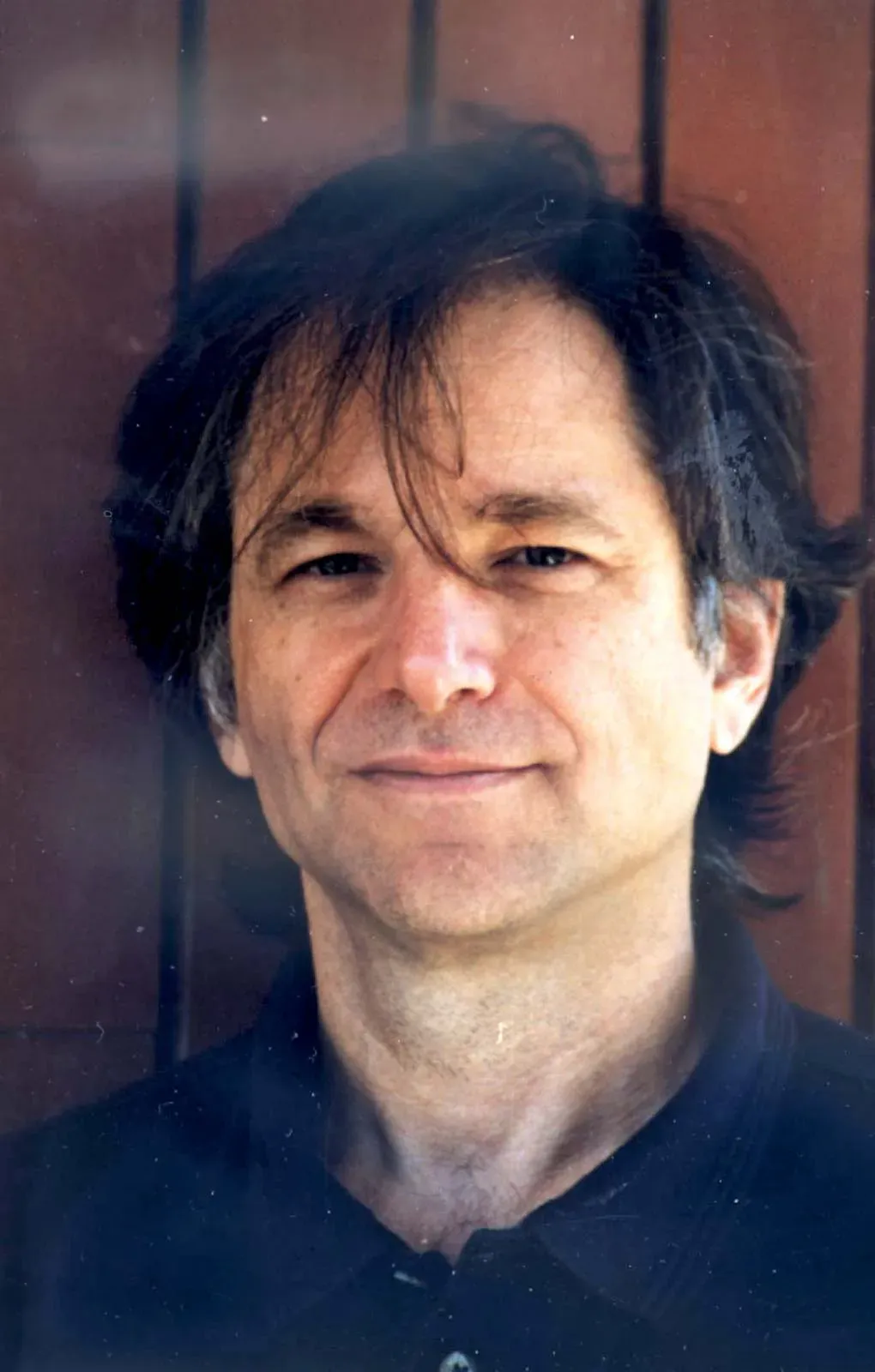
Leonard Adleman

Summary
Leonard Adleman (born 31 December 1945, San Francisco, California) is an American computer scientist best known for co-creating the RSA public-key cryptosystem and for founding the field of DNA computing. He is a recipient of the 2002 A.M. Turing Award, the highest honour in computer science.
Adleman was born into a Jewish family whose roots trace back to the Minsk region of present-day Belarus. He grew up in San Francisco and developed an early interest in science. He studied at the University of California, Berkeley, earning a bachelor’s degree in mathematics in 1968 and a PhD in computer science in 1976. His doctoral work, supervised by Manuel Blum, focused on number theory and computational complexity.
After completing his PhD, Adleman joined the Massachusetts Institute of Technology, where he taught mathematics from 1976 to 1980. During this period, he worked closely with Ronald Rivest and Adi Shamir. In 1977–78, the three researchers developed the RSA public-key cryptosystem, which made secure digital communication practical. RSA is based on the difficulty of factoring large prime numbers and became a foundation of modern internet security. For this work, Adleman, Rivest, and Shamir received the 2002 Turing Award and several earlier honours, including the Paris Kanellakis Award.
In 1980, Adleman joined the University of Southern California, where he has spent most of his career. He became the Henry Salvatori Professor of Computer Science and later a Distinguished Professor, with a courtesy appointment in molecular biology. At USC, his research expanded beyond cryptography into algorithms, number theory, and biology.
In 1994, Adleman published a landmark paper demonstrating DNA computing. He showed that DNA molecules could be used to solve a small instance of an NP-complete problem, the Hamiltonian path problem. This experiment is widely regarded as the birth of DNA computing, and Adleman is often called its founding figure. He later extended this work by solving more complex logical problems using biochemical methods.
Adleman also contributed to primality testing through the Adleman–Pomerance–Rumely algorithm and supervised early research on self-replicating programs. His student Fred Cohen credited him with coining the term “computer virus.” Beyond research, Adleman served as a mathematical consultant for the film Sneakers and has been elected to the National Academy of Engineering, the National Academy of Sciences, and the American Academy of Arts and Sciences.
Biography
Leonard Adleman was born on 31 December 1945 in San Francisco, California, into a Jewish family whose ancestors had emigrated from the Minsk region of what is now Belarus. His father worked as an appliance salesman and his mother as a bank teller. He grew up in San Francisco and showed an early interest in science, influenced by popular science programmes on television and books that explained scientific ideas in simple ways. As a child and teenager, he was curious about how things worked, especially in chemistry and mathematics, although his interests changed several times before he settled on his later career path.
Adleman entered the University of California, Berkeley, initially intending to study chemistry. During his undergraduate years, his interests gradually shifted towards mathematics, and he completed a bachelor’s degree in mathematics in 1968. After graduating, he worked briefly as a computer programmer, which gave him practical exposure to computing and strengthened his interest in the theoretical side of the subject. He then returned to Berkeley for graduate study and completed a PhD in computer science in 1976. His doctoral thesis, supervised by Manuel Blum, focused on number theory and computational complexity and examined how difficult certain mathematical problems are to solve using computers. This work placed him at the intersection of mathematics and theoretical computer science, a position that shaped much of his later research.
After completing his PhD, Adleman joined the Massachusetts Institute of Technology, where he taught in the mathematics department from 1976 to 1980. During this period, he met Ronald Rivest and Adi Shamir. Together, they worked on problems related to cryptography and secure communication. In 1977 and 1978, they developed the RSA public-key cryptosystem, which provided a practical method for secure digital communication and digital signatures. The system relied on the difficulty of factoring very large prime numbers, a problem for which no efficient general solution is known. RSA later became a core technology for securing email, online banking, and many other forms of digital communication. The three researchers patented the system and assigned the patent to the Massachusetts Institute of Technology, and their work played a major role in the later development of internet security.
In 1980, Adleman joined the University of Southern California, where he has spent most of his academic career. He became a full professor in 1983 and was appointed Henry Salvatori Professor of Computer Science in 1985. Later, he was named a Distinguished Professor and also held a courtesy appointment in molecular biology, reflecting his growing interest in biological systems. At USC, he continued his work in theoretical computer science, including research on algorithms, number theory, and computational complexity. He was one of the original contributors to the Adleman–Pomerance–Rumely primality test, an important result in the study of efficient methods for determining whether a number is prime.
During the early 1980s, Adleman also became involved in research on self-replicating computer programs. His student Fred Cohen carried out experiments that demonstrated such programs in practice, and Cohen credited Adleman with coining the term “computer virus” to describe them. This work helped shape early thinking about computer security and malicious software.
In the late 1980s and early 1990s, Adleman’s research took a strong interdisciplinary turn. Influenced by developments in molecular biology and by analogies between biological processes and computation, he began to explore the idea that biological molecules could perform computational tasks. In 1994, he published a paper demonstrating the use of DNA to solve a small instance of the Hamiltonian path problem, an NP-complete problem in graph theory. By encoding the problem into DNA strands and using biochemical operations to filter possible solutions, he showed that computation could be carried out at a molecular level. This experiment is widely regarded as the starting point of DNA computing. In later work, he and his collaborators solved more complex logical problems using similar biochemical methods, showing both the potential and the limits of this approach.
Alongside his work in computing and biology, Adleman contributed to other areas of mathematics, including research related to Fermat’s Last Theorem before its final proof in the 1990s. He also worked on mathematical models in biology, including studies related to immune system behaviour. In later years, he returned to pure mathematics and began developing a mathematical theory known as strata, which explores structures related to complex analysis and multi-valued functions.
Adleman has received many honours for his work. In 1996, he was elected to the National Academy of Engineering for contributions to computation and cryptography. He later became a member of the National Academy of Sciences and the American Academy of Arts and Sciences. In 2002, he shared the A.M. Turing Award with Rivest and Shamir for making public-key cryptography practical. He has also received other major awards recognising the impact of his research.
Outside academic research, Adleman served as a mathematical and cryptography consultant for the film Sneakers, which focused on computer security. He is also known for personal interests that include amateur boxing and wide-ranging discussions on history, culture, and science. Throughout his career, Leonard Adleman has worked across mathematics, computer science, and biology, contributing foundational ideas that continue to influence modern computing and scientific research.
Vision
Leonard Adleman’s vision is centred on understanding computation as a fundamental process that extends beyond machines into mathematics, biology, and natural systems. He aims to explore how abstract mathematical ideas can lead to practical tools that improve secure communication, problem solving, and scientific knowledge. His work reflects a belief that difficult problems can be approached by linking disciplines rather than isolating them. By connecting computer science with number theory and molecular biology, he seeks to expand the limits of how computation is defined and applied. His vision supports long-term thinking, careful theory, and responsible innovation that benefits science and society.
Recognition and Awards
Leonard Adleman has received major international recognition for work that shaped modern computer science, digital security, and interdisciplinary research. He is best known for co-creating the RSA public-key cryptosystem with Ronald Rivest and Adi Shamir in 1977, a breakthrough that made secure digital communication practical and remains central to internet security. For this contribution, the three researchers received the ACM A.M. Turing Award in 2002, regarded as the highest honour in computer science, and the Paris Kanellakis Theory and Practice Award in 1996.
Adleman is also widely recognised for founding the field of DNA computing after demonstrating, in 1994, how DNA molecules could be used to solve a computational problem. This work led to his recognition as the “Father of DNA Computing”. In 2021, he was inducted into the National Inventors Hall of Fame for his lasting technological impact.
His honours also include election to the National Academy of Engineering, the National Academy of Sciences, and the American Academy of Arts and Sciences. In addition, he is credited with coining the term “computer virus” in the early 1980s.
References
- Leonard Adleman | Wikipedia
- Leonard M. Adleman | American Computer Scientist & Cryptographer | Britannica
- Leonard M. Adleman - A.M. Turing Award Laureate | ACM Turing Award
- Leonard Adleman - PKC | Obsidian Publish
- Leonard Adleman | Grokipedia
- Leonard Adleman | National Inventors Hall of Fame
- Leonard Max Adleman | American Academy of Arts and Sciences
- Leonard Adleman - Genealogy | Geni
- Leonard Adleman (1945 - ) - Biography | MacTutor History of Mathematics
- Leonard M. Adleman | DBLP
- Leonard Adleman | Neocities
- Leonard Adleman | Stanford University
- Leonard Adleman | Computer Hope
Discover up-to-date information on Business, Industry Leaders and Influencers, Organizations, Education, and Investors – connecting you to the knowledge you need.
